1. Nchekwa dị mkpa
Please read all instructions carefully before using your Acekool Espresso Machine. Keep this manual for future reference.
- Ensure the appliance is placed on a stable, level surface away from water sources.
- Ejila ngwa, eriri ọkụ, ma ọ bụ nkwụnye na mmiri ma ọ bụ mmiri mmiri ndị ọzọ.
- Wepụ ihe mkpuchi ahụ na ebe a na-esi ekpofu ihe mgbe a naghị eji ya na tupu e hichaa ya. Hapụ ya ka ọ jụọ oyi tupu ịtinye ma ọ bụ wepụ akụkụ ya.
- Ejila ngwa ọ bụla nwere eriri ma ọ bụ plọg mebiri emebi rụọ ọrụ, ma ọ bụ mgbe ngwa ahụ dara ma ọ bụ mebie n'ụzọ ọ bụla.
- Nleba anya dị mkpa mgbe ụmụaka na-eji ngwa ọ bụla ma ọ bụ nso.
- Jiri naanị ngwa ndị nrụpụta kwadoro.
- Zere kọntaktị na akụkụ ndị na-akpụ akpụ.
- Ejila n'èzí.
- Always ensure the water tank is filled to the appropriate level before operation.
- Kpachara anya mgbe ị na-ejikwa elu ọkụ na uzuoku.
2. Ngwaahịa gafereview
The Acekool Espresso Machine is designed to provide a professional coffee experience at home or in the office. It features a 20-bar Italian pump, a built-in grinder with 30 adjustable settings, and a powerful steam wand for milk frothing.
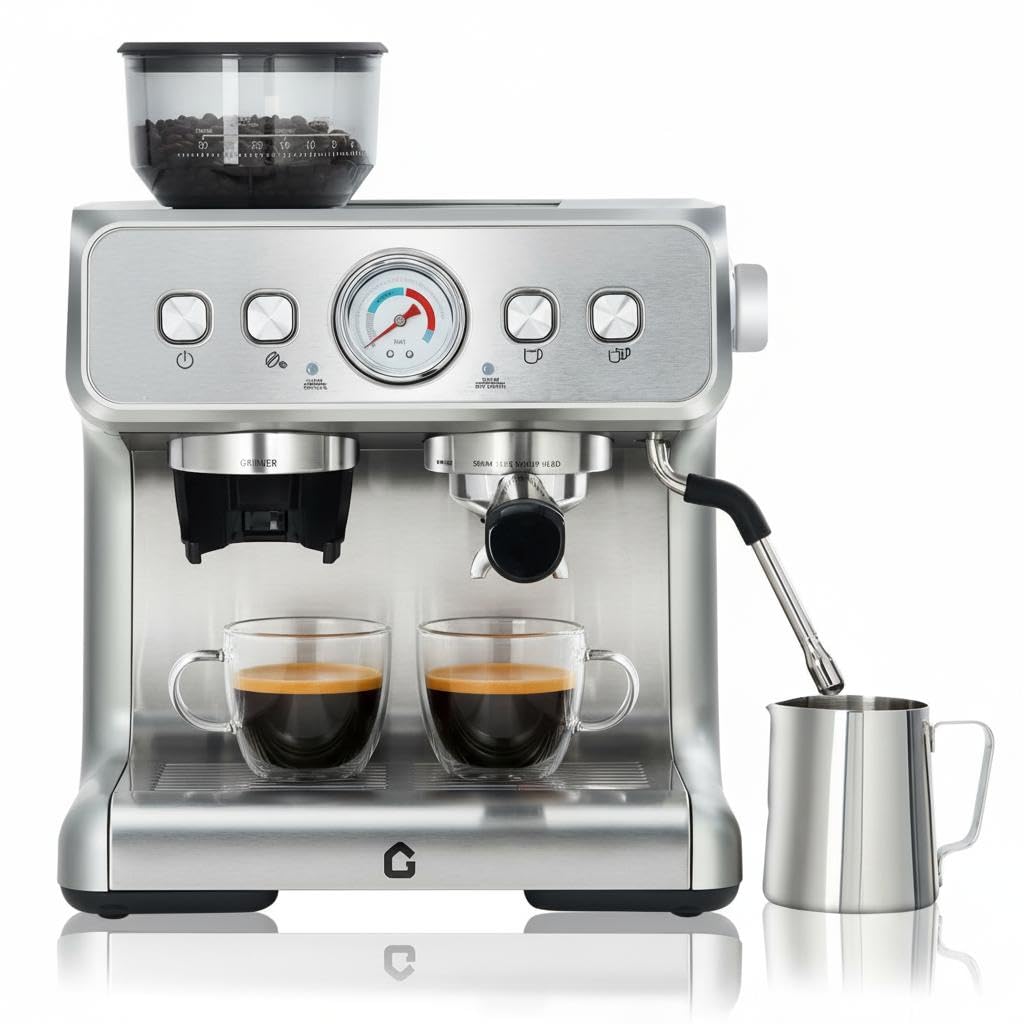
N'ihu view of the Acekool Espresso Machine, showcasing its sleek design and a pressure gauge indicating 20 Bar high pressure extraction.
Akụkụ ndị bụ isi:
- 20-Bar Professional Pump: Delivers optimal pressure for rich espresso with perfect crema.
- Igwe ihe n'ime ya: Features 30 adjustable settings for fresh grounds directly into the portafilter.
- 1450W Powerful Steam System: Creates silky and dense milk foam for lattes and cappuccinos.
- Customizable Coffee Experience: Adjust grind coarseness and shot volume for personalized brews.
- Removable Water Tank (0.74 Gallon / 2.8 Liters): Ọ dị mfe imeju ma dị ọcha.
- Tray Drip nwere ike iwepụ: Na-eme ka nhicha na mmezi dị mfe.
- Ọrụ Nhicha Akpaaka: For convenient maintenance.
Ngwa gụnyere:

Image showing all components included with the Acekool Espresso Machine, such as the portafilter, filter baskets, tamper, milk jug, and cleaning brush.
- Pressure Funnel
- Single Cup Filter Screen
- Double Cup Filter Screen
- Igwe mmiri ara ehi igwe anaghị agba nchara
- Tamper
- Igbe nhazi
- Brewing Head Cleaning Brush
- Akwụkwọ ntuziaka (akwụkwọ a)
3. Nhazi
Follow these steps for initial setup of your espresso machine.

Visual guide for the initial setup process, including adding water, coffee beans, adjusting grind, and starting the preheating cycle.
- Iwepu: Jiri nlezianya wepụ ihe niile e ji ekpuchi ihe ma tinye igwe ahụ n'elu ebe siri ike, dị larịị, nke na-anaghị ekpo ọkụ.
- tank mmiri: Remove the 0.74 Gallon (2.8 Liters) water tank from the back of the machine. Fill it with fresh, cold water up to the MAX line. Replace the tank securely.
- Njikọ ike: Tinye eriri ọkụ n'ime oghere eletrik gbadoro ụkwụ.
- Na-ekpo ọkụ: Press the power button to turn on the machine. The machine will begin to preheat. Wait until the indicator lights signal that the machine has reached the optimal temperature.
- Ntucha mbụ: Before first use, run a few cycles of hot water through the brewing head and steam wand without coffee to clean the internal components.
- Ntọala igwe ihe: Open the lid of the bean hopper and fill it with fresh whole coffee beans. Ensure the lid is securely closed.
4. Ntuziaka ọrụ
4.1 Ịkụ Kọfị

Illustration of the 30 grind settings available on the built-in grinder, ranging from coarse to fine, with recommendations for extraction speed.
- The machine features a built-in conical burr grinder with 30 adjustable settings.
- Rotate the grind size selector dial to choose your desired fineness. Finer settings (lower numbers) are for espresso, while coarser settings (higher numbers) are suitable for pour-over or French press.
- Place the portafilter under the grinder chute. Press the grind button to dispense fresh grounds directly into the portafilter.
- Jiri t dị na yaamper to compress the coffee grounds evenly.
4.2 Espresso Extraction

Diagram illustrating the benefits of 20 Bar extraction and pre-infusion for optimal coffee flavor and complete extraction.
- Insert the prepared portafilter into the brewing head and lock it into place.
- Tinye iko espresso gị n'elu tray mmiri dị n'okpuru oghere portafilter.
- Select your desired shot volume (single or double) using the control panel. The machine will automatically perform a pre-infusion cycle, followed by 20-bar pressure extraction.
- The built-in pressure gauge will display the extraction pressure during the process. Aim for the optimal pressure range for best results.
4.3 Steam Wand Operation (Milk Frothing)

Image demonstrating the 1400W powerful steam system, showing the steam wand in action and options for hot water and adjustable steam.
- Fill the stainless steel milk jug with cold milk (dairy or non-dairy).
- Turn the steam knob to activate the steam function. Wait for the steam indicator light to illuminate, indicating the steam is ready.
- Submerge the steam wand tip just below the surface of the milk. Open the steam valve to release steam.
- Move the jug up and down gently to create microfoam. Once desired texture and temperature are reached, close the steam valve.
- Jiri mgbasa ozi hichaa akpa uzuoku ozugboamp akwa iji gbochie mmiri ara ehi fọdụrụnụ ihicha.
4.4 Ọrụ Mmiri ọkụ
- The machine can dispense hot water for tea or Americanos.
- Refer to your machine's control panel for the specific hot water button or setting.
5. Nlekọta
Ịsacha na idozi ya mgbe niile na-eme ka igwe espresso gị rụọ ọrụ nke ọma ma na-adịte aka.

Image highlighting the removable water tank and drip tray for easy cleaning, along with descaling instructions.
5.1 Nhicha kwa ụbọchị
- Ntapu atịpị: Empty and clean the removable drip tray daily. Wash with warm, soapy water and rinse thoroughly.
- Portafilter na nzacha nzacha: Mgbe ejiri ya mee ihe ọ bụla, wepụ ihe e ji kọfị emefusịa ma sachaa ihe nzacha ahụ ma tinye ya n'ime mmiri ọkụ.
- Ụdị Steam: Always wipe the steam wand immediately after frothing milk with a damp cloth. Purge the wand briefly to clear any internal milk residue.
- Mputa: Jiri nwayọ hichaa mpụta igwe, damp akwa . Ejila ihe nhicha abrasive.
5.2 Ichacha tankị mmiri
- Remove the water tank and wash it with mild detergent and warm water. Rinse thoroughly to remove any soap residue.
- Refill with fresh, cold water.
5.3 calhapụ ịda
- Descaling is essential to remove mineral buildup and should be performed regularly (e.g., every 2-3 months, depending on water hardness).
- Use a commercial descaling solution specifically designed for espresso machines, following the manufacturer's instructions.
- Alternatively, a solution of white vinegar and water (1:1 ratio) can be used.
- Run the descaling solution through the machine's brewing head and steam wand.
- After descaling, run several cycles of fresh water through the machine to rinse thoroughly.
5.4 Nhicha ihe e ji gweri ihe
- Periodically clean the grinder burrs to prevent oil buildup and ensure consistent grinding.
- Refer to the machine's specific instructions for removing and cleaning the grinder burrs. Use the provided cleaning brush to remove coffee grounds.
6. Nchọpụta nsogbu
If you encounter issues with your Acekool Espresso Machine, refer to the following common problems and solutions.
| Nsogbu | Ihe nwere ike ime | Ngwọta |
|---|---|---|
| Enweghị kọfị na-enye | Water tank empty; Clogged filter; Machine not preheated | Fill water tank; Clean filter basket; Allow machine to preheat fully |
| Weak espresso / Too fast extraction | Kọfị e tinyere n'ime ya siri oke ike; Kọfị ezughi oke; Enweghị ike zuru okeamping | Adjust grinder to a finer setting; Increase coffee dose; Tamp more firmly |
| Bitter espresso / Too slow extraction | Coffee grounds too fine; Too much coffee; Over-tamping | Adjust grinder to a coarser setting; Reduce coffee dose; Tamp with less force |
| Enweghị uzuoku sitere na wand | Steam wand clogged; Machine not at steam temperature | Clean steam wand hole; Wait for steam indicator light |
| Mmiri na-agbapụta site na igwe | Tankị mmiri adịghị nọdụ nke ọma; Tray ntapụ juru; Nsogbu mechie | Ensure water tank is properly inserted; Empty drip tray; Contact customer support if issue persists |
If the problem persists after attempting these solutions, please contact Acekool customer support.
7. Nkọwapụta
Detailed technical specifications for the Acekool Espresso Machine.
| Njirimara | Nkọwa |
|---|---|
| Ụdị | Acekool |
| Aha Nlereanya | 8414234206350 |
| Nọmba Nlereanya ihe | ZlzuMUw6KjChKeiuzu5nOQ7vaG4X |
| Agba | Ọlaọcha |
| Akụkụ ngwaahịa (D x W x H) | 15.67" x 16.61" x 18.86" |
| Ibu Ibu | 25.4 pound |
| Ike | 2.8 lita (ụgbọ mmiri) |
| Mgbapụta mgbapụta | 20 Ogwe |
| Ike | 1450W |
| Njirimara Pụrụ Iche | Auto Clean Function, Built-in Grinder, Steam Wand |
| Ngwa gụnyere | Milk Frother (Stainless Steel Milk Jug) |
| UPC | 820567835323 |
| GTIN | 820567835323 |
8. Akwụkwọ ikike na nkwado
Your Acekool Espresso Machine is built for reliable performance and comes with comprehensive support.
- Akwụkwọ ikike: This product is covered by a 1-year limited warranty from the date of purchase.
- Nkwado ndị teknuzu: Acekool provides lifetime technical support for this product.
- Asambodo: The machine is ETL-certified, ensuring it meets recognized safety standards.
- Nkwado kọntaktị: For warranty claims, technical assistance, or any questions regarding your machine, please visit the official Acekool Store or contact their customer service directly. You can find more information at Acekool Store on Amazon.


