1. Okwu mmalite na gafereview
The Zoom PodTrak P4next is a portable podcast recorder designed for high-quality audio capture and production. This device offers a comprehensive solution for podcasters, featuring multiple inputs, advanced audio processing, and flexible recording options. Its compact design and battery power capability make it suitable for both studio and on-the-go recording environments.
Akụkụ ndị bụ isi:
- Ogo ọdịyo kachasị elu: 4 XLR inputs with -125 dBu EIN for professional-grade recordings.
- Nbugharị ebulitere: Lightweight (10.58 oz / 300g) and compact (4.95 x 4.72 x 1.57 inches) for mobile use.
- Ndụ batrị agbatịkwuru: Up to 8.5 hours of continuous recording with lithium batteries.
- Ọdịnaya siri ike: Sturdy construction for demanding environments.
- Intuitive Ease of Use: Clear 128 x 64 OLED display and user-friendly controls.
- Mmetụta arụnyere: AI Noise Reduction, Tone, and Compression.
- Njikọta dị iche iche: Phone input for call-in guests, USB audio interface mode.
- Mpempe ụda: Customizable sound pads for instant playback.
2. Nhazi
2.1 Ịkwanye ngwaọrụ
The PodTrak P4next can be powered in multiple ways:
- Batrị AA: Insert 2 AA batteries into the battery compartment located on the underside of the device.
- Ike USB-C: Connect a USB-C cable to the DC 5V port on the side of the unit and to a compatible USB power adapter or power bank.

Ọgụgụ 2.1: N'azụ view of the PodTrak P4next, illustrating the battery compartment for 2 AA batteries.

Foto 2.2: Akụkụ view of the PodTrak P4next, highlighting the microSD card slot and USB-C power input.
2.2 Ijikọ igwe okwu
The PodTrak P4next features 4 XLR inputs for connecting microphones. These inputs provide phantom power for condenser microphones.
- Connect your XLR microphones to the corresponding input jacks (1-4) on the top of the device.
- Ensure phantom power is enabled for condenser microphones via the dedicated switches if required.

Foto 2.3: N'ihu view of the PodTrak P4next, displaying the four XLR microphone inputs at the top.
2.3 Ejikọ ekweisi
Four independent headphone outputs are available for monitoring.
- Plug your headphones into the 3.5mm jacks (1-4) located on the front edge of the device.
- Each output has an individual volume control knob.

Foto 2.4: Akụkụ view of the PodTrak P4next, illustrating the four headphone output jacks and their respective volume controls.
2.4 Inserting SD Card
The PodTrak P4next records directly to an SD card.
- Open the microSD card slot cover on the side of the device.
- Insert a microSD card (up to 1TB supported) until it clicks into place.
Foto 2.5: Akụkụ view of the PodTrak P4next, indicating the microSD card slot for recording media.
2.5 Connecting to Phone/Computer
The device supports external connections for various recording scenarios.
- Ntinye ekwentị: Use a TRRS cable to connect your smartphone to the dedicated phone input for recording call-in guests.
- Interface ọdịyo USB: Connect the PodTrak P4next to a computer via USB-C to use it as an audio interface for recording directly to your digital audio workstation (DAW).

Figure 2.6: The PodTrak P4next connected to a smartphone, demonstrating its capability to integrate phone calls into your podcast.
3. Operating the PodTrak P4next
3.1 Ndekọ ndabere
Ka ịmalite ndekọ:
- Ensure microphones and headphones are connected and powered.
- Adjust the gain knobs for each microphone input to achieve optimal levels, avoiding clipping.
- Pịa uhie Dekọọ button to start recording. The button will illuminate.
- Pịa Dekọọ bọtịnụ ọzọ ka ịkwụsị ndekọ.
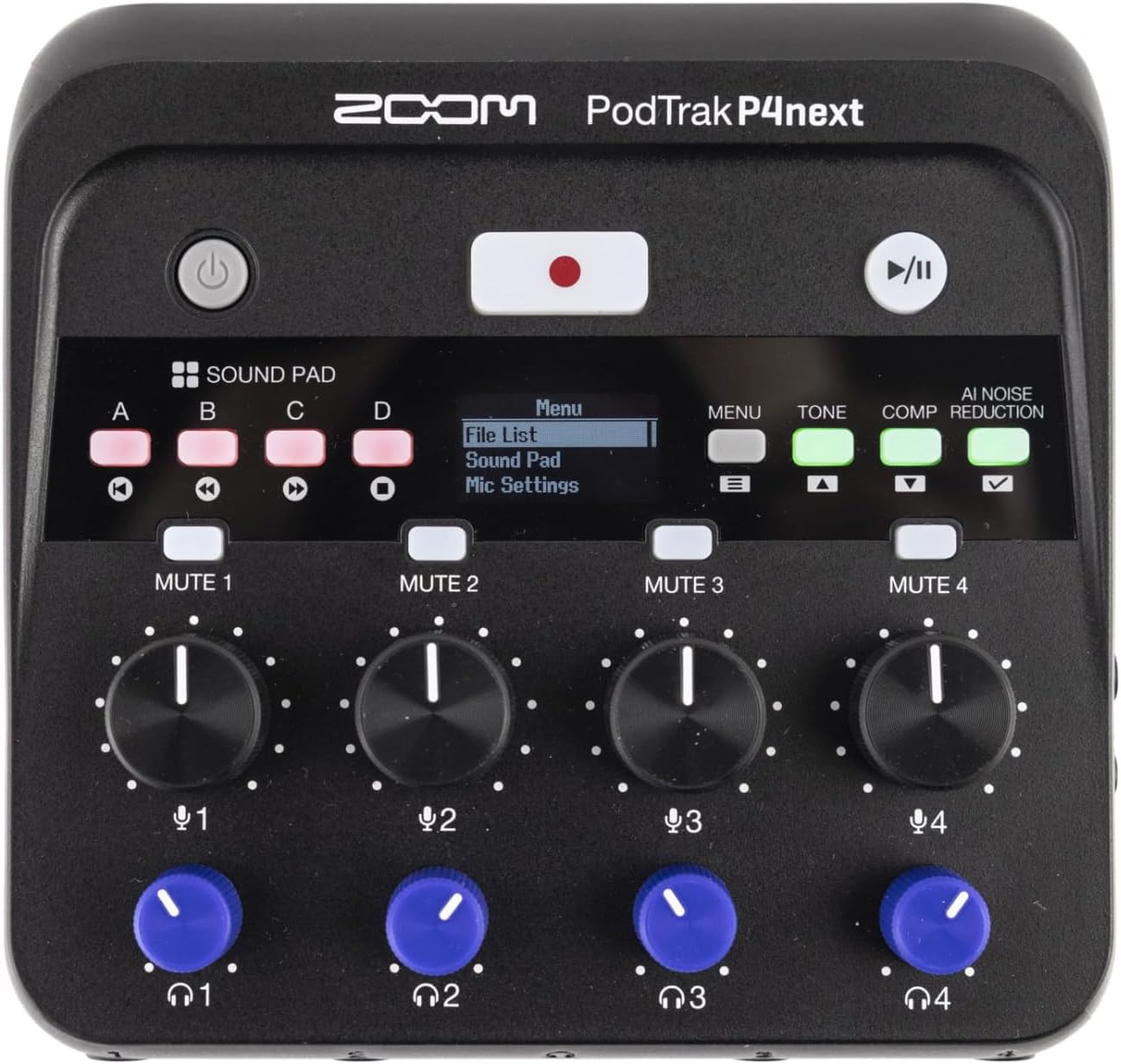
Ọgụgụ 3.1: N'elu-ala view of the PodTrak P4next, highlighting the main controls including the record button and input gain knobs.
3.2 Sound Pads
The four sound pads (A, B, C, D) can be used to trigger pre-recorded audio clips or sound effects during your podcast.
- Press a sound pad button (A, B, C, or D) to play the assigned sound.
- Adjust the volume of the sound pads using the dedicated knob.
3.3 bọtịnụ ogbi
Each microphone input has a dedicated mute button (MUTE 1-4) to quickly silence a participant.
- Pịa MUTU button for the desired channel to mute it. The button will illuminate to indicate it is muted.
- Pịa ọzọ ka iwepụ ụda.
3.4 Audio Effects (AI Noise Reduction, Tone, Comp)
Enhance your audio with built-in effects:
- Mbelata mkpọtụ AI: Activates intelligent noise cancellation to minimize background distractions.
- Ụda: Adjusts the tonal characteristics of the audio.
- Comp (Compression): Applies compression to even out audio levels.
- Press the respective buttons (AI NOISE REDUCTION, TONE, COMP) to toggle these effects on or off.

Ọgụgụ 3.2: nso nso view of the PodTrak P4next's control panel, highlighting the AI Noise Reduction, Tone, and Compression effect buttons.
3.5 Recording Phone Calls and USB Audio
The PodTrak P4next allows seamless integration of phone calls and USB audio.
- Connect your phone to the dedicated input using a TRRS cable. The device automatically creates a mix-minus feed to prevent echo for the caller.
- When connected as a USB audio interface, audio from your computer can be routed through the P4next and recorded alongside your microphones.
4. Nlekọta
Proper maintenance ensures the longevity and optimal performance of your PodTrak P4next.
- Nhicha: Use a soft, dry cloth to clean the exterior of the device. Avoid abrasive cleaners or solvents.
- Nchekwa: Store the unit in a cool, dry place away from direct sunlight and extreme temperatures. Remove batteries if storing for extended periods to prevent leakage.
- Mmelite femụwe: Lelee Zoom gọọmentị mgbe niile website for firmware updates to ensure your device has the latest features and bug fixes.
5. Nchọpụta nsogbu
If you encounter issues with your PodTrak P4next, refer to the following common solutions:
- Enweghị ike: Ensure batteries are correctly inserted and charged, or that the USB-C power source is functioning.
- Enweghị ntinye ọdịyo: Check microphone connections, ensure phantom power is on for condenser mics, and verify gain levels are appropriately set.
- No Headphone Audio: Confirm headphones are plugged in correctly and individual headphone volume knobs are turned up.
- Okwu ndekọ: Check if the SD card is properly inserted and has sufficient free space. Ensure the card is formatted correctly (FAT32).
- Echo on Phone Calls: The P4next features automatic mix-minus. Ensure your phone is connected via a TRRS cable to the dedicated phone input.
6. Nkọwapụta
| Njirimara | Nkọwapụta |
|---|---|
| Ibu Ibu | 12 ounces (340g) |
| Akụkụ ngwaahịa | 4.95 x 4.72 x 1.57 sentimita (12.57 x 11.99 x 3.99 cm) |
| Nọmba Nlereanya ihe | P4next/230EU |
| Ntinye igwe okwu | 4 x XLR (with -125 dBu EIN) |
| Mpụta ekweisi | 4 x 3.5mm stereo mini jack (with individual volume control) |
| Mgbasa ozi ndekọ | microSD/microSDHC/microSDXC card (up to 1TB) |
| Ndụ batrị | Up to 8.5 hours (with lithium batteries) |
| Audio Interface Mode | Akwadoro site na USB-C |
7. Official Product Video
Video 7.1: An official introduction to the Zoom PodTrak P4next, showcasing Nhazi ya na njirimara ya bụ isi.
8. Akwụkwọ ikike na nkwado
For warranty information, technical support, and additional resources, please visit the official Zoom websaịtị ma ọ bụ kpọtụrụ ngalaba ọrụ ndị ahịa ha. Debe ihe akaebe nke ịzụrụ ihe maka akwụkwọ ikike.
- Nkwado n'ịntanetị: Visit the Zoom Store on Amazon
- Ndebanye aha Ngwaahịa: Debanye aha ngwaahịa gị n'ịntanetị ka ị nweta mmelite na nkwado.


