Okwu mmalite
This manual provides detailed instructions for the proper setup, operation, maintenance, and care of your GOLABS CT1 2-Person Camping Tent. Please read this manual thoroughly before using the tent to ensure a safe and enjoyable experience. Retain this manual for future reference.
Ngwaahịa gafereview
Atụmatụ igodo
- Practical Size: Outer dimensions: 84.6 x 65 x 48.8 inches; inner dimensions: 82.7 x 59 x 48 inches. Designed for two adults.
- Nchekwa mmiri: Features PU1500mm waterproof coating and premium fabric to keep the interior dry.
- Ihe na-adịgide adịgide: Constructed with 190D polyester taffeta and strong fiberglass poles for reliability.
- Breathable Comfort: Mesh skylight and door provide ventilation and insect protection.
- Fechaa & Portable: Weighs approximately 4.4 lbs and packs into a 20.1 x 5.9 inch carry bag.
- Smart Interior Design: Includes one hook for lanterns or small items and two storage pockets.
Ngwa gụnyere
Verify that all components are present before attempting to set up your tent.

Image: All components of the GOLABS CT1 tent, including the tent body, poles, stakes, ropes, and carry bag.
- Tent Body (with integrated rainfly)
- Poles x 2 (Fiberglass)
- Ọnụ ego x7
- Ropes x 3
- Ebu akpa x 1
Ntuziaka nhazi
The GOLABS CT1 tent is designed for quick and easy setup, typically within 3 minutes for experienced users.

Image: Step-by-step visual representation of the tent setup process.
- Ịkwapu: Remove the tent and all components from the carry bag. Lay the tent body flat on a clear, level surface, ensuring the floor is spread out.
- Kpọkọta okporo osisi: Connect the sections of the two fiberglass poles.
- Fanye okporo osisi: Locate the pole sleeves on the tent body. Carefully slide each pole through its corresponding sleeve, forming an 'X' shape over the tent.
- Ogwe echedoro: Insert the ends of the poles into the grommets or pins located at the corners of the tent. This will raise the tent structure.
- Tinye obere vidiyo: Clip the tent body to the poles using the plastic clips along the pole sleeves.
- Buda: Secure the tent to the ground using the provided stakes. Insert stakes through the loops at each corner and along the sides. For added stability, especially in windy conditions, attach the ropes to the designated points and stake them out.
- Gbanwee: Ensure the tent is taut and stable. Adjust stakes and ropes as needed.
Ịrụ ọrụ n'ụlọikwuu ahụ
Igwe ikuku
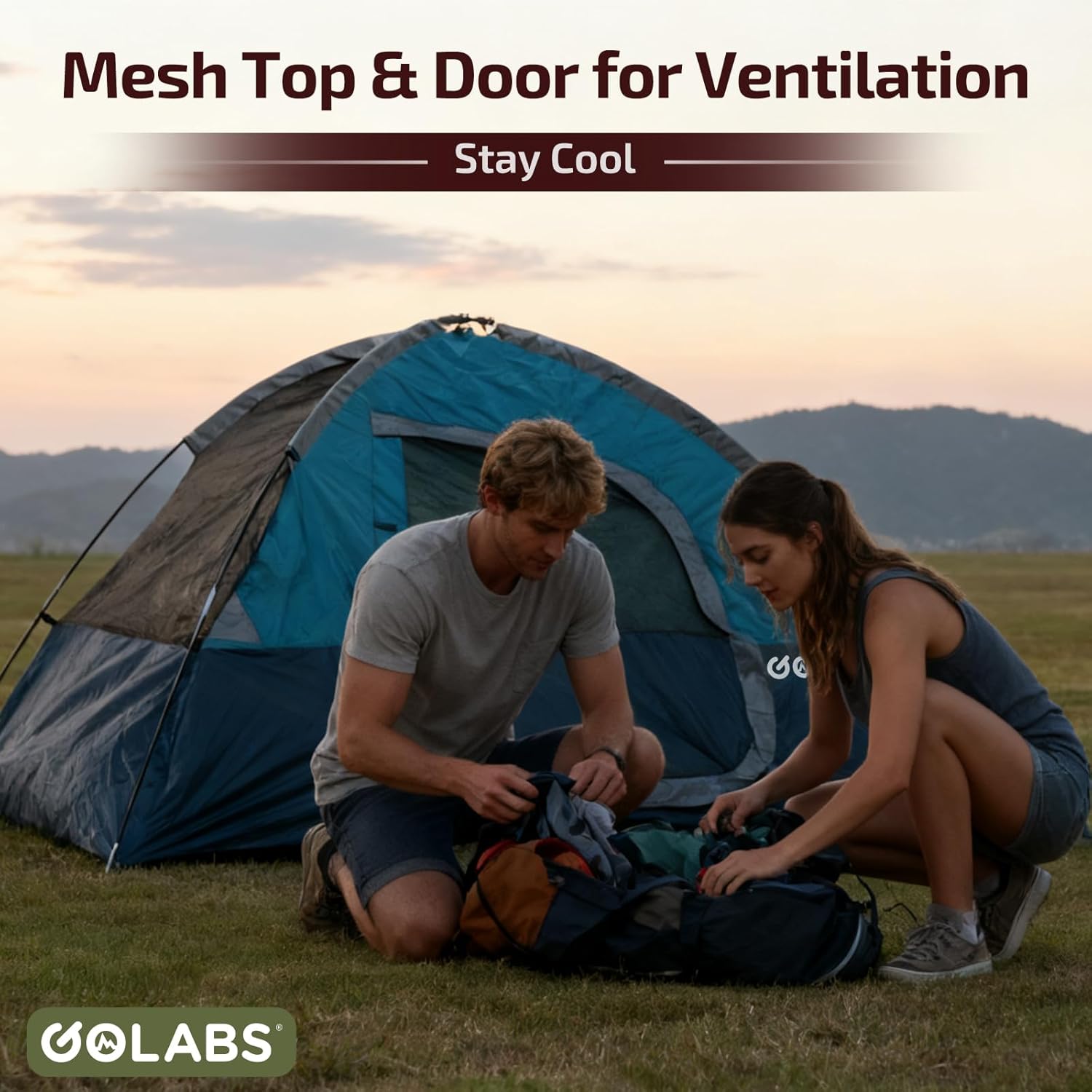
Image: The tent's mesh door and top provide airflow, keeping the interior cool.
The GOLABS CT1 tent features a mesh skylight and a mesh door. These elements are crucial for maintaining airflow and reducing condensation inside the tent. Keep the mesh door and skylight uncovered when conditions allow to maximize ventilation and keep insects out.
Waterproof Features

Image: The tent in a rainy environment, showcasing nhazi mmiri ya.
The tent is equipped with a PU1500mm waterproof coating. This coating, combined with the tent's fabric, provides protection against rain. Ensure all zippers are fully closed during rain to prevent water entry.
Njirimara ime

Foto: Zuru ezu view of the tent's internal hook and storage pockets.
- Nko Lantern: A built-in hook is provided at the top of the tent for hanging a lantern or other lightweight items.
- Akpa nchekwa: Two interior storage pockets are available to keep small essentials organized and within reach, such as phones, flashlights, or glasses.
Nlekọta
Proper maintenance extends the life of your tent and ensures its performance.
- Nhicha: Clean the tent with a soft sponge and mild soap (non-detergent) and lukewarm water. Do not use harsh chemicals, bleach, or machine wash. Spot clean only.
- ihicha: Gbaa mbọ hụ na ụlọ ntu ahụ akpọnwụwo kpamkpam tupu ịkwakọta ya. Mgbasa ozi mbukotaamp tent can lead to mildew, odor, and fabric degradation. Air dry in a shaded area.
- Nchekwa: Chekwaa ụlọikwuu ahụ n'ime akpa ebu ya n'ebe dị jụụ, nke kpọrọ nkụ, na-anọghị na ìhè anyanwụ kpọmkwem na oke okpomọkụ.
- Nlekọta osisi: Inspect poles for cracks or damage before and after each use. If a pole splinters, repair kits are available.
- Nlekọta Zipper: Debe zipa ndị ahụ ọcha ma ghara ịta unyi. Jiri mmanụ silikọn mee ka ha sie ike mgbe ụfọdụ.
Nchọpụta nsogbu
Condensation Inside Tent
- Ihe kpatara: Body heat and moisture from breathing, combined with cooler outside air, can cause condensation.
- Ngwọta: Maximize ventilation by keeping the mesh door and skylight open whenever weather permits. Ensure adequate airflow around the tent.
Mmiri na-agbapụta
- Ihe kpatara: Improper setup, damaged fabric, or worn seams.
- Ngwọta: Ensure the tent is pitched tautly and correctly. Check for small holes or tears and repair with a tent repair kit. Seams can be re-sealed with a seam sealer product.
Poles Not Fitting/Breaking
- Ihe kpatara: Incorrect pole assembly or excessive force during setup.
- Ngwọta: Ensure pole sections are fully seated. Avoid bending poles excessively. If a pole breaks, use a pole repair sleeve (often included in tent repair kits) or contact customer support for replacement parts.
Nkọwapụta
| Njirimara | Nkọwa |
|---|---|
| Ụdị | GOLAB |
| Aha Nlereanya | CT1 |
| Ọnụnọ | 2 Onye |
| Akụkụ ngwaahịa (L x W x H) | 83.5" x 59.8" x 45.7" |
| Ibu Ibu | 4.32 pound |
| Teknụzụ Nguzogide mmiri | PU1500mm |
| Oge | Oge 3 |
| Ihe onwunwe | 190D Polyester Taffeta, Fiberglass Poles |
| Mgbakọ chọrọ | Ee |
| Ngwa gụnyere | Tent, Poles, Stakes, Ropes, Carry Bag |
Ozi akwụkwọ ikike
The GOLABS CT1 2-Person Camping Tent na-abịa na a Akwụkwọ ikike nke afọ 1 from the date of purchase. This warranty covers manufacturing defects in materials and workmanship. It does not cover damage caused by misuse, improper setup, accidents, normal wear and tear, or modifications.
Biko dowe ihe akaebe nke ịzụrụ ihe maka akwụkwọ ikike.
Nkwado ndị ahịa
For any questions, concerns, or assistance with your GOLABS CT1 Camping Tent, please contact GOLABS customer support.
Websaịtị: www.golabs.com (Ọpụample Link, please refer to actual product packaging for official contact details)
Email: support@golabs.com (Ọpụample Email, please refer to actual product packaging for official contact details)


