Okwu mmalite
Thank you for choosing the ProtoArc KM310 Dual Mode Mechanical Keyboard and Mouse Kit. This kit provides a versatile and efficient solution for your computing needs, offering both 2.4G wireless and Bluetooth connectivity. The mechanical keyboard features a UK QWERTY layout with responsive red switches, while the ergonomic mouse offers adjustable DPI and quiet clicks. This manual will guide you through the setup, operation, and maintenance of your new device.
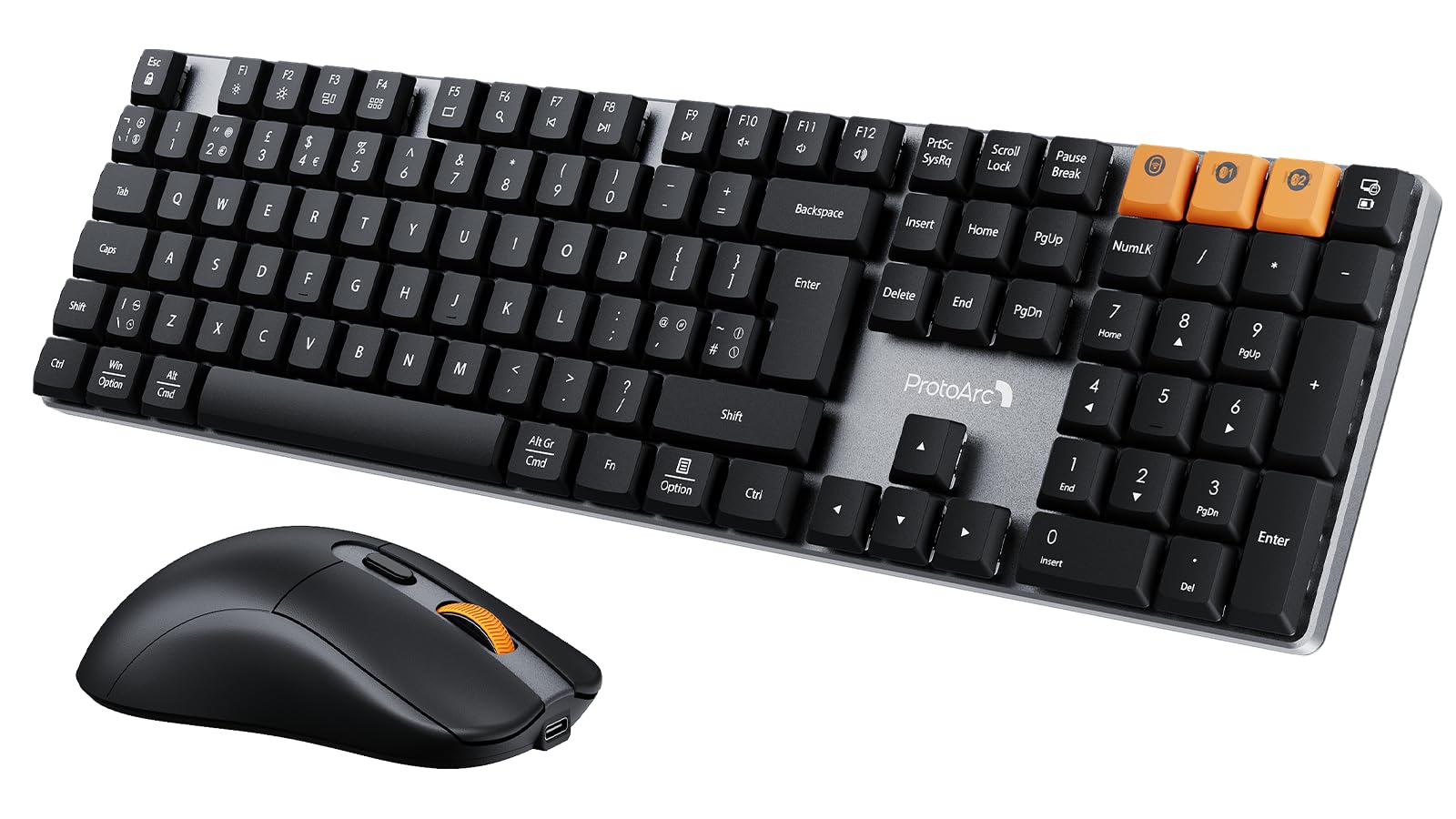
Image: The ProtoArc KM310 keyboard and mouse kit, showcasing its sleek design on a modern desk setup.
Ihe ngwugwu
- ProtoArc KM310 Mechanical Keyboard
- ProtoArc Wireless Mouse
- USB 2.4G Receiver (stored in the mouse battery compartment)
- USB-C eriri USB
- Akwụkwọ ntuziaka onye ọrụ
Ntuziaka nhazi
Mbido kiiboodu
The keyboard supports both 2.4G wireless and Bluetooth connectivity. You can connect up to three devices simultaneously (one via 2.4G, two via Bluetooth).
Njikọ ikuku 2.4G:
- Locate the USB 2.4G receiver, typically stored in the mouse's battery compartment.
- Tinye eriri USB n'ọdụ ụgbọ mmiri dị na kọmputa gị.
- Turn on the keyboard using the power switch located on the side or back.
- Pịa fn+4 to switch the keyboard to 2.4G mode. The indicator light will flash briefly, then remain solid when connected.
Njikọ Bluetooth (BT1 / BT2):
- Gbanwuo ahụigodo site na iji mgba ọkụ.
- Pịa Fn + Q (maka BT1) ma ọ bụ Fn + W (for BT2) to select a Bluetooth channel. The indicator light will flash slowly.
- Ka ịbanye ọnọdụ njikọta, pịa ma jide Fn + Q or Fn + W maka 3-5 sekọnd ruo mgbe ọkụ egosi na-enwu ngwa ngwa.
- On your device (computer, laptop, tablet), enable Bluetooth and search for "ProtoArc KM310".
- Select "ProtoArc KM310" to pair. The indicator light will stop flashing and remain solid when connected.
- Repeat for a second Bluetooth device using Fn + W.
Ntọala òké
The mouse also supports both 2.4G wireless and Bluetooth connectivity.
Njikọ ikuku 2.4G:
- Ensure the USB 2.4G receiver is plugged into your computer.
- Gbanye òké ahụ site na iji ihe mgba ọkụ dị n'okpuru ya.
- Press the mode switch button on the underside of the mouse until the indicator light shows 2.4G mode (usually green). The mouse should connect automatically.
Njikọ Bluetooth:
- Gbanwee òké site na iji mgba ọkụ.
- Press the mode switch button on the underside of the mouse to cycle through Bluetooth modes (BT1 or BT2, usually blue).
- Press and hold the mode switch button for 3-5 seconds until the indicator light flashes rapidly.
- On your device, enable Bluetooth and search for "ProtoArc Mouse".
- Select "ProtoArc Mouse" to pair. The indicator light will stop flashing and remain solid when connected.

Image: The ProtoArc KM310 keyboard and mouse connected to multiple devices (desktop, laptop, tablet) via 2.4G and Bluetooth.
Ntuziaka ọrụ
Ọrụ ahụigodo
- Igodo igwe: The keyboard features low-profile mechanical red switches for a smooth and responsive typing experience with low sound.
- UK QWERTY Layout: Standard UK QWERTY layout with a full numeric keypad.
- Igodo mgbasa ozi: Jiri ihe Fn key in combination with the F-keys (F1-F12) for various multimedia and shortcut functions (e.g., volume control, media playback, brightness adjustment). Refer to the keycap legends for specific functions.
- Ụkwụ Ntụgharị A Na-agbanwe agbanwe: The keyboard includes adjustable tilt legs on the underside, allowing you to set it at a 6° or 9° angle for improved ergonomic comfort during long typing sessions.

Foto: A nso nso view of the ProtoArc KM310 mechanical keyboard, highlighting the low-profile red switches and keycap design.

Image: The ProtoArc KM310 keyboard from a side angle, demonstrating the adjustable tilt legs set at a 9-degree angle.
Arụ Ọrụ
- DPI nwere ike imeghari: The mouse offers three adjustable DPI levels: 1000, 1600, and 2400. Press the DPI button (usually located behind the scroll wheel) to cycle through these settings and adjust cursor sensitivity.
- Pịa jụụ: Designed for quiet operation, reducing click noise by up to 90%.
- Nhazi Ergonomic: The mouse features an ergonomic grip for comfortable use, reducing hand fatigue during extended periods.
- Oke dị fechaa: Weighing approximately 63g, the mouse is designed to be ultra-light, contributing to efficient work and reduced fatigue.

Image: The ProtoArc wireless mouse illustrating its adjustable DPI settings (1000, 1600, 2400) and quiet click feature.

Image: A hand demonstrating the natural and ergonomic grip of the ProtoArc wireless mouse.

Image: A comparison showing the ProtoArc wireless mouse's ultra-lightweight design (63g) compared to a traditional mouse (100g), emphasizing reduced fatigue.
Ntuziaka Nchaji
Both the keyboard and mouse are equipped with built-in rechargeable batteries and use a USB-C charging port.
- Ịchaji: Connect the provided USB-C cable to the charging port on the keyboard/mouse and the other end to a USB power source (e.g., computer USB port, wall adapter).
- Ngosipụta chaja: An indicator light will typically show red during charging and turn off or change color when fully charged.
- Oge nchaji: A full charge usually takes 2-3 hours.
- Oge njikere: The devices offer a standby time of 150-200 days on a full charge.
- Ojiji n'oge ịchaji: Both devices can be used while charging.
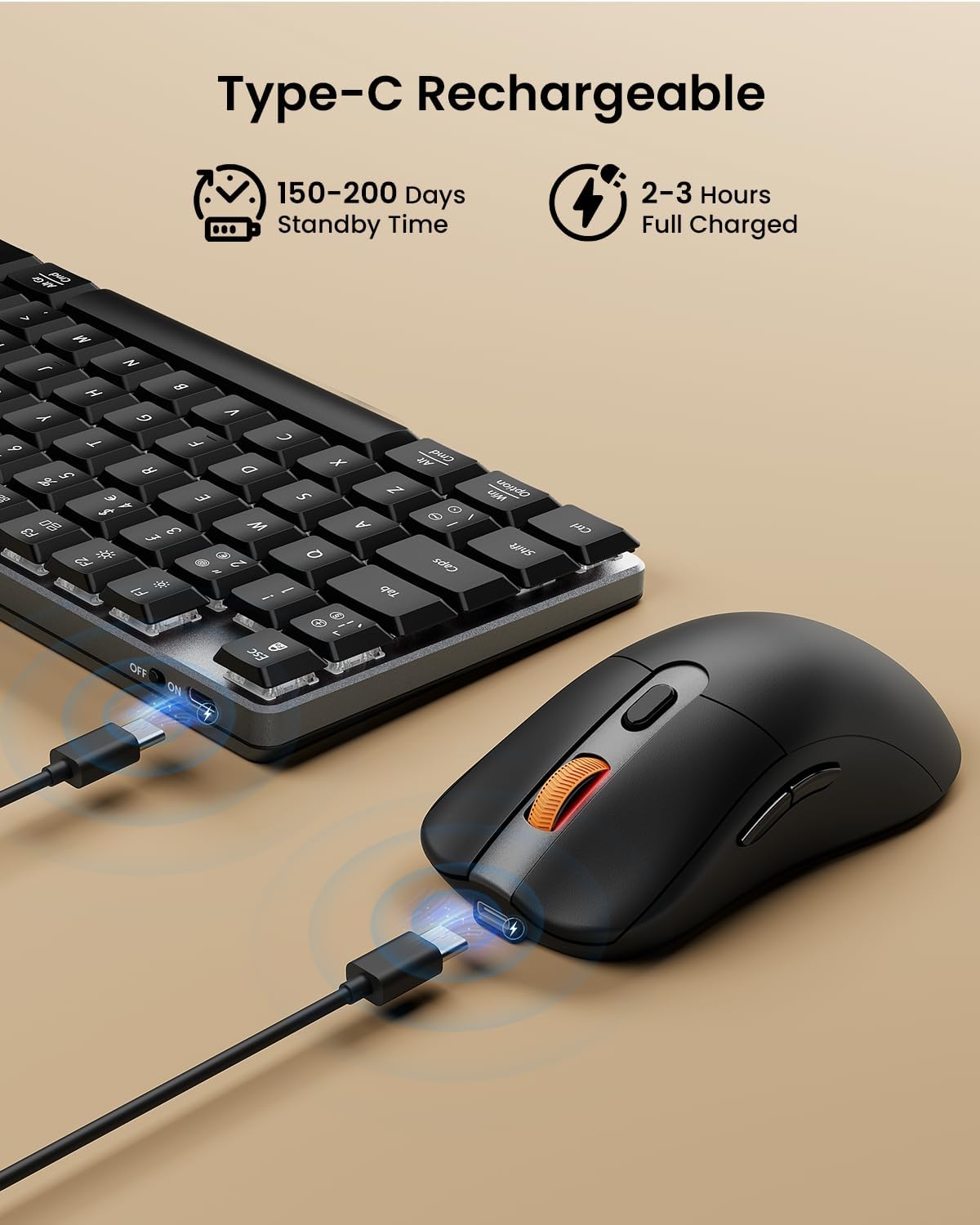
Image: The ProtoArc keyboard and mouse being charged simultaneously via USB-C cables, illustrating the charging ports and cables.
Nlekọta
- Nhicha: Use a soft, dry cloth to clean the surfaces of the keyboard and mouse. For deeper cleaning, especially between keys, use compressed air. Avoid using harsh chemicals or abrasive materials.
- Nchekwa: When not in use for extended periods, turn off the devices to conserve battery life. Store them in a cool, dry place.
- Nlekọta batrị: Avoid fully discharging the battery frequently. Charge the devices regularly to maintain optimal battery health.
Nchọpụta nsogbu
Ahụigodo/Òké anaghị aza:
- Ensure the devices are turned on.
- Check battery levels and charge if necessary.
- Maka njikọ 2.4G, hụ na e tinyere ihe nnata USB n'ime ọdụ USB na-arụ ọrụ nke ọma. Nwaa ọdụ USB dị iche.
- For Bluetooth connection, ensure Bluetooth is enabled on your device and the correct channel (BT1/BT2) is selected on the keyboard/mouse. Try re-pairing the device.
- Move the devices closer to the receiver/device to rule out interference.
Nkwụsị ma ọ bụ Nkwụsị:
- Ensure there are no strong sources of interference (e.g., Wi-Fi routers, other wireless devices) nearby.
- Try connecting via the other mode (e.g., if using 2.4G, try Bluetooth, or vice-versa).
- Update your computer's Bluetooth drivers if connecting via Bluetooth.
Keys Not Working Correctly:
- Check for any debris under the keycaps.
- Ensure the keyboard is not in a special mode that might alter key functions.
Nkọwapụta
| Ụdị | ProtoArc |
| Nọmba nlereanya | KM310 |
| Agba | Nwa |
| Teknụzụ Njikọta | Bluetooth, 2.4G USB Ikuku |
| Ndakọrịta sistemụ arụmọrụ | Windows, macOS, Linux |
| Atụmatụ Pụrụ Iche (ahụigodo) | Rechargeable mechanical keyboard, UK QWERTY layout, Red switches, Numeric keypad, Shortcut and multimedia keys, Adjustable tilt legs |
| Special Features (Mouse) | Adjustable DPI (1000/1600/2400), Silent click, Ergonomic grip, Ultra-lightweight (approx. 63g) |
| Ngwa dakọtara | Personal Computer, Laptop, Tablet |
| Nkọwa ahụigodo | Mechanical |
| Teknụzụ Nchọpụta Motion | Ngwa anya |
| Isi Iyi Ike | Akwadoro batrị (enwere ike ịnweta ya site na USB-C) |
| Oge Njikere Batrị | 150-200 ụbọchị |
| Oge nchaji zuru oke | 2-3 Awa |
Akwụkwọ ikike na nkwado
ProtoArc products are designed for reliability and performance. For any questions, technical support, or warranty claims, please contact ProtoArc customer service. Details can typically be found on the official ProtoArc websaịtị ma ọ bụ site na ikpo okwu ịzụrụ ihe.
Biko dowe ihe akaebe nke ịzụrụ ihe maka ebumnuche ikike.


