Okwu mmalite
The Intelbras SS 3532 MF is an advanced facial access controller from the Bio-T line, designed for secure and efficient access management. It supports multiple authentication methods including facial recognition, RFID MF 13.56 MHz cards, QR Codes, and passwords. This device is suitable for both indoor and outdoor environments and can be integrated with various door locking systems such as electric locks, electromagnets, or solenoids. This manual provides essential information for the proper installation, operation, and maintenance of your SS 3532 MF controller.
Ngwaahịa gafereview
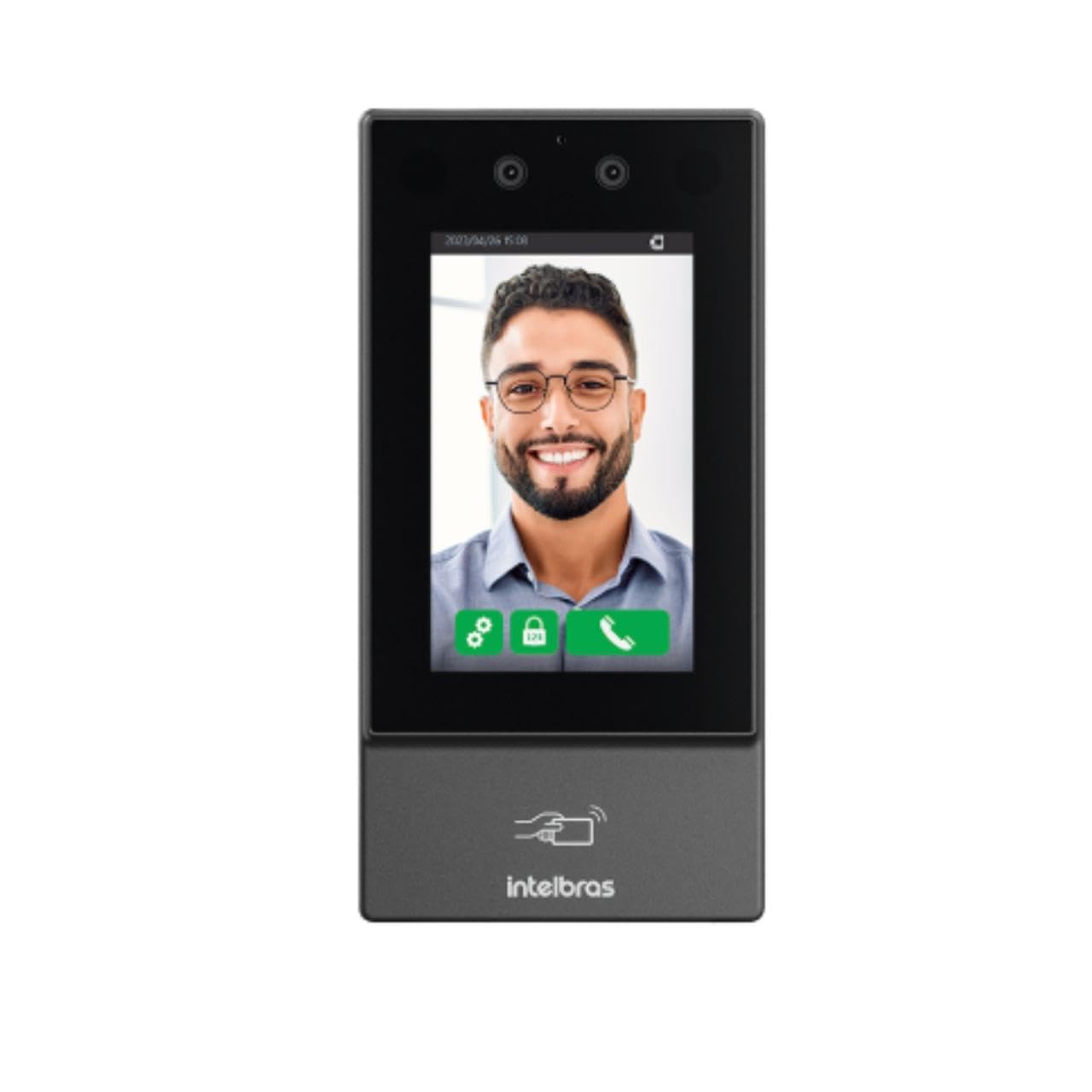
Foto: N'ihu view of the Intelbras SS 3532 MF Facial Access Controller. The device features a large screen displaying a smiling man's face, indicating successful facial recognition. Below the screen, the Intelbras logo and an RFID card icon are visible. The device is sleek and dark gray, designed for modern security applications.
Akụkụ ndị bụ isi:
- Nghọta ihu: Advanced anti-fake system prevents access via photos or videos.
- Multi-Authentication: Supports facial recognition, RFID MF 13.56 MHz cards, QR Codes, and passwords.
- Mask Detection: Alerts and/or blocks access if a mask is detected.
- Touchscreen LCD: Capacitive touch-sensitive LCD screen for intuitive operation.
- Ime ụlọ/n'èzí: IP55 protection rating suitable for various environments.
- Ike dị elu: Stores up to 10,000 users, 20,000 cards/QR Codes (up to 5 per user), 10,000 passwords (1 per user), and 10,000 facial templates (up to 2 per user).
- Fast Recognition: Facial recognition time of 0.2 seconds with over 99.5% verification accuracy.
- Nchekwa data: User data saved directly on the controller.
- Njikọta: Ethernet connection (no Wi-Fi).
- Ngwa Ngwa Ngwa: Compatible with InControl Web, Defense IA, and third-party software via SDK, API/CGI.
Ihe ngwugwu
Chọpụta na ihe niile dị na ngwugwu:
- 1 × SS 3532 MF Access Controller (without Wi-Fi connection)
- 1 × Set of wall plugs and screws
- 1 × Wall mounting bracket
- 1 × Ntuziaka onye ọrụ
Note: The XR 2201 relay module and power supply are not included.
Nkọwapụta
| Njirimara | Nkọwa |
|---|---|
| Ịnye ọkụ Voltage | 12 Vdc 2A (power supply not included) |
| Oriri kacha | 24 W |
| Akụkụ (W × H × D) | 90.1 × 180.1 × 27 mm |
| Okpomọkụ na-arụ ọrụ | -30 Celsius C ruo 60 Celsius |
| Iri iru mmiri na-arụ ọrụ | 0% ruo 90% RH (na-abụghị condensing) |
| Ogo nchekwa | IP55 (ime ụlọ na n'èzí) |
| Mkpokọta nha | 0.70 n'arọ |
| Ihe mkpuchi | PC+ ABS |
| Gburugburu nwụnye | Ime ụlọ na n'èzí |
| Njikọta | SDK, API/CGI |
| Facial Verification Accuracy | > 99.5% |
| Facial Recognition Time | 0.2 sekọnd |
| Mmelite firmware | Via DEFENSE IA |
Ntọala na nwụnye
1. Nkwadebe Ebe:
- Ensure the installation environment is suitable for an IP55 rated device, whether indoor or outdoor.
- Prepare a stable surface for mounting the device.
2. Mounting the Device:
- Use the provided wall mounting bracket as a template to mark drilling points on the wall.
- Gwuo oghere ma tinye mgbidi mgbidi.
- Chekwaa ihe nkwado mgbago na mgbidi site na iji skru ndị enyere.
- Attach the SS 3532 MF controller to the mounted bracket.
3. Njikọ ike:
- Connect a 12 Vdc 2A power supply (not included) to the device's power input.
- Gbaa mbọ hụ na ọkọnọ ọkụ na-ezute voltage and current requirements to prevent damage.
4. Njikọ netwọk:
- Connect an Ethernet cable to the device's network port for online operation and software integration.
- The device does not support Wi-Fi connectivity.
5. Lock Integration:
- Connect the device to your electric lock, electromagnet, or solenoid system as per the wiring diagram in the full user manual (not provided here).
- Note that the XR 2201 relay module is not included and may be required for certain lock types.
Ntuziaka ọrụ
1. Ike mbido:
- Once powered, the device will boot up and display the main interface on its LCD touchscreen.
2. Njikwa onye ọrụ:
- Access the device's menu via the touchscreen to add, edit, or delete users.
- Each user can be assigned facial templates, RFID cards, QR Codes, and passwords.
- The device supports up to 10,000 users and 10,000 facial templates (2 per user).
3. Authentication Methods:
- Nghọta ihu: Stand in front of the device's camera. The system will automatically detect and verify your face. The anti-fake system prevents unauthorized access using photos or videos.
- Kaadị RFID: Present your RFID MF 13.56 MHz card to the designated reader area on the device.
- Koodu QR: Present a valid QR Code to the device's camera for scanning.
- Okwuntughe: Enter your assigned password using the touchscreen keypad.
4. Mask Detection:
- The device can be configured to alert or block access if a user is detected wearing a mask, depending on security policies.
5. Software Integration:
- For advanced management, connect the device to InControl Web, Defense IA, or other compatible third-party software via Ethernet.
- Refer to the respective software manuals for detailed configuration and operation instructions.
Nlekọta
- Nhicha: Regularly clean the touchscreen and camera lenses with a soft, dry, lint-free cloth. Avoid abrasive cleaners or solvents.
- Mmelite femụwe: Keep the device's firmware updated via DEFENSE IA software to ensure optimal performance and security.
- Nyocha gburugburu: Periodically inspect the device for any signs of wear or damage, especially if installed outdoors. Ensure connections are secure.
Nchọpụta nsogbu
- Ngwaọrụ anaghị agba ọkụ:
- Check if the 12 Vdc 2A power supply is correctly connected and functioning.
- Verify the power outlet.
- Facial Recognition Failure:
- Ensure adequate lighting in front of the device.
- Hichaa oghere igwefoto.
- Confirm the user's facial template is properly enrolled and up-to-date.
- Adjust the user's distance and angle to the device.
- RFID Card Not Detected:
- Ensure the card is an RFID MF 13.56 MHz type.
- Present the card correctly to the reader area.
- Verify the card is enrolled for the user.
- Enweghị njikọ netwọkụ:
- Lelee njikọ eriri Ethernet.
- Verify network settings on the device and your network infrastructure.
- Ụzọ Anaghị Emeghe:
- Confirm successful authentication on the device.
- Check wiring to the electric lock/electromagnet/solenoid.
- Ensure the lock mechanism is functioning correctly.


