1. Okwu mmalite
This manual provides comprehensive instructions for the DAREU EK87PROTKL Wireless Mechanical Gaming Keyboard and the DAREU A950 4K Polling Rate Wireless Gaming Mouse. Please read this manual carefully before using the products to ensure proper setup and operation. Keep this manual for future reference.
2. Keyboard Features Overview (EK87PROTKL)
- Gasket Mount & PCB Single Key Slotting: Features a gasket structure with a 1.2mm thick FR4 PCB and single key slotted design for enhanced resilience, stability, and a softer, more responsive feel. Six-layer padding reduces noise and provides a focused, crisp sound.
- Njikọ Ụdị atọ: Supports Bluetooth 5.1, 2.4GHz wireless, and USB-C wired connections. Connects to up to five devices simultaneously.
- Na-ekpo ọkụ-Swappable: Equipped with a hot-swappable PCB supporting almost all 3-pin or 5-pin mechanical switches on the market. Comes with pre-lubed Cloud linear switches.
- Ọkụ RGB nke na-eche ihu na ndịda: Offers up to 26 backlight modes and 16.8 million colors. Brightness and speed are adjustable via the driver software.
- Ogologo ndụ batrị: Features a 4000mAh battery, providing up to 45 days of playtime in lights-off mode.

Figure 2.1: Keyboard Gasket Structure Diagram. This image details the layered construction of the keyboard, highlighting components that contribute to its sound and feel.

Figure 2.2: Keyboard Tri-Mode Connection. This image illustrates the three available connection methods and how to switch between them using Fn key combinations.

Figure 2.3: Keyboard RGB Lighting Controls. This image shows various RGB lighting modes and the Fn key combinations for adjusting brightness and color.
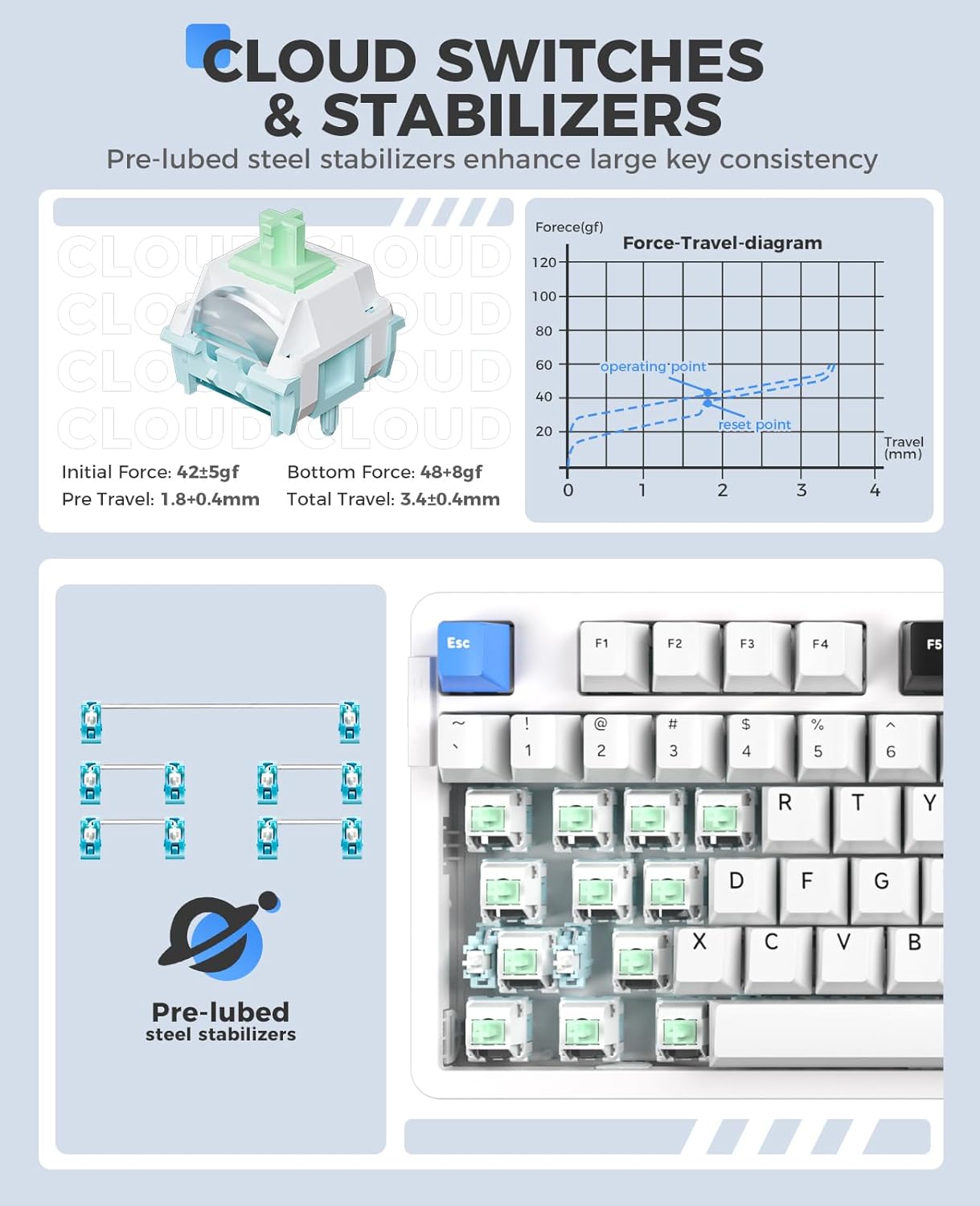
Figure 2.4: Cloud Switches and Stabilizers. This image details the characteristics of the pre-lubed Cloud linear switches and steel stabilizers.

Figure 2.5: Hot-Swappable PCB Socket. This image illustrates the hot-swappable design, allowing users to easily change switches.
3. Mouse Features Overview (A950)
- Ọnụego ntuli aka 4K: Equipped with a 4KHz receiver, sending signals to the computer in 0.25ms, which is four times faster than standard gaming mice.
- PAW 3395 Optical Sensor: Features a high-precision PAW 3395 sensor with up to 26000 DPI, 650 IPS tracking speed, and 50G acceleration for accurate tracking.
- Kailh Black GM8.0 Switches: Utilizes durable Kailh black GM8.0 mouse switches, rated for 80 million clicks.
- Tri-Mode Connection & Programmable: Supports multiple connection methods and offers programmable buttons via software.
- Nhazi dị arọ: Weighs 54g for comfortable and agile use.
- Nchaji ngwa ngwa: 300mAh battery with 30-minute fast charging to reach 90% power. Provides approximately 37 days of use in BT5.1 mode and 6 days in 2.4G mode (based on 4 hours of connection per day).

Figure 3.1: Mouse 4K Report Rate. This image shows the mouse and its 4K receiver, emphasizing the high report rate for responsiveness.

Figure 3.2: Mouse PAW3395 Optical Sensor. This image focuses on the mouse's sensor capabilities, including its high DPI and tracking speed.

Figure 3.3: Mouse Fast Charging Technology. This image provides details on the mouse's battery life and quick charging feature.
4. Nhazi ntuziaka
4.1 Keyboard (EK87PROTKL)
- Njikọ waya: Connect the keyboard to your computer using the provided USB-C cable. The keyboard will be automatically recognized.
- Njikọ ikuku 2.4GHz:
- Chọta onye nnata USB nke 2.4GHz.
- Tinye ihe nnata n'ọdụ ụgbọ mmiri USB dị na kọmputa gị.
- Turn on the keyboard and switch it to 2.4GHz mode (refer to the keyboard's mode switch or Fn key combination). The keyboard should connect automatically.
- Njikọ Bluetooth 5.1:
- Ensure the keyboard is in Bluetooth mode (refer to the keyboard's mode switch or Fn key combination, typically Fn + 1/2/3).
- Na kọmputa ma ọ bụ ngwaọrụ gị, gaa na ntọala Bluetooth wee chọọ ngwaọrụ ọhụrụ.
- Select "DAREU EK87PROTKL" from the list of available devices to pair.
- The keyboard can store up to three Bluetooth connections. Switch between them using fn+1, fn+2, ma ọ bụ fn+3.
4.2 Mouse (A950)
- Njikọ waya: Connect the mouse to your computer using the provided USB-C cable. The mouse will function immediately.
- Njikọ ikuku 2.4GHz:
- Plug the 4K USB receiver into an available USB port on your computer.
- Turn on the mouse and switch it to 2.4GHz mode. The mouse should connect automatically.
- Njikọ Bluetooth:
- Ensure the mouse is in Bluetooth mode.
- Na kọmputa ma ọ bụ ngwaọrụ gị, gaa na ntọala Bluetooth wee chọọ ngwaọrụ ọhụrụ.
- Select "DAREU A950" from the list of available devices to pair.
- Ịchaji: Connect the mouse to a computer USB port using the USB-C cable for charging. The mouse supports fast charging.
5. Ntuziaka ọrụ
5.1 Keyboard (EK87PROTKL)
- Njikwa ọkụ RGB:
- Fn + akụ elu: Mụbaa nchapụta.
- Fn + akụ ala: Belata nchapụta.
- Fn + { : Gbanwee agba ọkụ azụ.
- Fn + } : Change backlight mode.
- Operating System Switch: Jiri fn+1 (maka Windows) ma ọ bụ fn+2 (for Mac) to switch between operating system layouts.
- Akụrụngwa ọkwọ ụgbọala: For advanced customization of RGB lighting, macros, and key assignments, download and install the official DAREU driver software from the DAREU websaịtị.
5.2 Mouse (A950)
- Ndozi DPI: The mouse typically has a dedicated DPI button or can be adjusted via software. Refer to the DAREU driver software for precise DPI settings.
- Bọtịnụ enwere ike ime: Utilize the DAREU driver software to customize button functions, create macros, and adjust other performance settings.
6. Nlekọta
6.1 Nhicha izugbe
- Disconnect both the keyboard and mouse from your computer before cleaning.
- Jiri akwa dị nro na-enweghị ntụpọ dampened with water or a mild cleaning solution to wipe down the surfaces.
- For the keyboard, use compressed air to remove dust and debris from between the keycaps.
- Avoid using harsh chemicals, abrasive cleaners, or spraying liquids directly onto the devices.
6.2 Keyboard Switch Replacement
- Ensure the keyboard is disconnected from power.
- Use a keycap puller to carefully remove the desired keycap.
- Use a switch puller to gently grip and pull the switch vertically out of the PCB.
- Align the pins of the new 3-pin or 5-pin mechanical switch with the holes on the PCB.
- Press the new switch firmly into place until it clicks. Ensure it is seated correctly and not bent.
- Dochie okpu igodo.
7. Nchọpụta nsogbu
7.1 Okwu ahụigodo
| Nsogbu | Ngwọta enwere ike |
|---|---|
| Ahụigodo anaghị azaghachi (jikọrọ) | Check USB-C cable connection. Try a different USB port or cable. |
| Keyboard not connecting (2.4GHz) | Ensure the keyboard is in 2.4GHz mode. Re-insert the USB receiver. Try a different USB port. Ensure the keyboard battery is charged. |
| Ahụigodo anaghị ejikọta (Bluetooth) | Ensure the keyboard is in Bluetooth pairing mode (Fn + 1/2/3). Forget the device on your computer and re-pair. Ensure the keyboard battery is charged. |
| Ọkụ RGB anaghị arụ ọrụ / ezighi ezi | Adjust brightness/mode using Fn key combinations. Check settings in the DAREU driver software. Ensure the keyboard battery is charged. |
| Igodo anaghị edebanye aha | Check if the switch is properly seated. If hot-swappable, try re-seating or replacing the switch. |
7.2 Okwu òké
| Nsogbu | Ngwọta enwere ike |
|---|---|
| Mouse not responding (wired) | Check USB-C cable connection. Try a different USB port or cable. |
| Mouse not connecting (2.4GHz) | Ensure the mouse is in 2.4GHz mode. Re-insert the 4K USB receiver. Try a different USB port. Ensure the mouse battery is charged. |
| Mouse not connecting (Bluetooth) | Ensure the mouse is in Bluetooth pairing mode. Forget the device on your computer and re-pair. Ensure the mouse battery is charged. |
| Ihe nrụaka òké na-adịghị arụ ọrụ ma ọ bụ na ọ naghị arụ ọrụ | Clean the optical sensor. Ensure the mouse pad or surface is clean and suitable. Check DPI settings. |
| Òké anaghị akwụ ụgwọ | Ensure the USB-C cable is properly connected. Try a different USB port or charging cable. Use a computer USB port for charging, not a wall adapter. |
8. Nkọwapụta
8.1 DAREU EK87PROTKL Keyboard
- Nhazi: Gasket Mount, PCB Single Key Slotting
- PCB: FR4 material, 1.2mm thick, hot-swappable (3/5 pin switches)
- Mgbanwe: Pre-lubed Cloud Linear Switch
- Ihe nkwụsi ike: Pre-lubed Steel Stabilizers
- Njikọ: Bluetooth 5.1 / 2.4GHz Wireless / USB-C Wired (Tri-Mode)
- Batrị: 4000mAh
- Ọkụ: South-Facing RGB, 26 modes, 16.8 million colors
- Igodo: 87 keys, N-key rollover (all keys conflict-free)
8.2 DAREU A950 Mouse
- Ihe mmetụta: PAW 3395 Optical Sensor
- Ọnụego ntuli aka: 4KHz (with 4K receiver)
- DPI: Ruo 26000 DPI
- Ọsọ nsochi: 650 IPS
- Ọsọ ọsọ: 50G
- Mgbanwe: Kailh Black GM8.0 (80 million clicks)
- Arọ: 54g
- Njikọ: Bluetooth / 2.4GHz Wireless / USB-C Wired (Tri-Mode)
- Batrị: 300mAh, 30-minute fast charging (90% power)
9. Akwụkwọ ikike na nkwado
DAREU products come with a standard manufacturer's warranty. For specific warranty terms and conditions, please refer to the warranty card included with your product or visit the official DAREU website. For technical support, troubleshooting assistance, or driver downloads, please visit the DAREU official support page or contact DAREU customer service.
Official DAREU Websaịtị: www.dareu.com


