1. Okwu Mmalite na Product Overview
These maXpeedingrods extended brake lines are designed to replace standard rubber brake lines on Jeep Wrangler JK models (2-Door and 4-Door, 2WD and 4WD) manufactured between 2007 and 2018. They are specifically engineered for vehicles equipped with a 4-6 inch suspension lift kit.
When a vehicle's suspension is lifted, the distance between the chassis and the axle increases, requiring longer brake lines to prevent stretching or damage during full suspension articulation. These stainless steel braided lines provide the necessary additional length and offer enhanced durability and improved braking response compared to original equipment (OE) rubber lines.
The stainless steel construction resists expansion under pressure, which can lead to a firmer brake pedal feel and more consistent braking performance, especially beneficial when upgrading to larger tires that demand increased braking pressure.
2. Ndakọrịta na Ndakọrịta
- Ndakọrịta ụgbọ ala: Jeep Wrangler JK 2-Door (2WD/4WD) 2007-2018
- Ndakọrịta ụgbọ ala: Jeep Wrangler JK 4-Door (JKU) (2WD/4WD) 2007-2018
- Ndakọrịta ebuli: Designed for vehicles with 4-6 inch suspension lift kits installed.
It is crucial to verify your vehicle's make, model, year, and lift height to ensure proper fitment before installation.
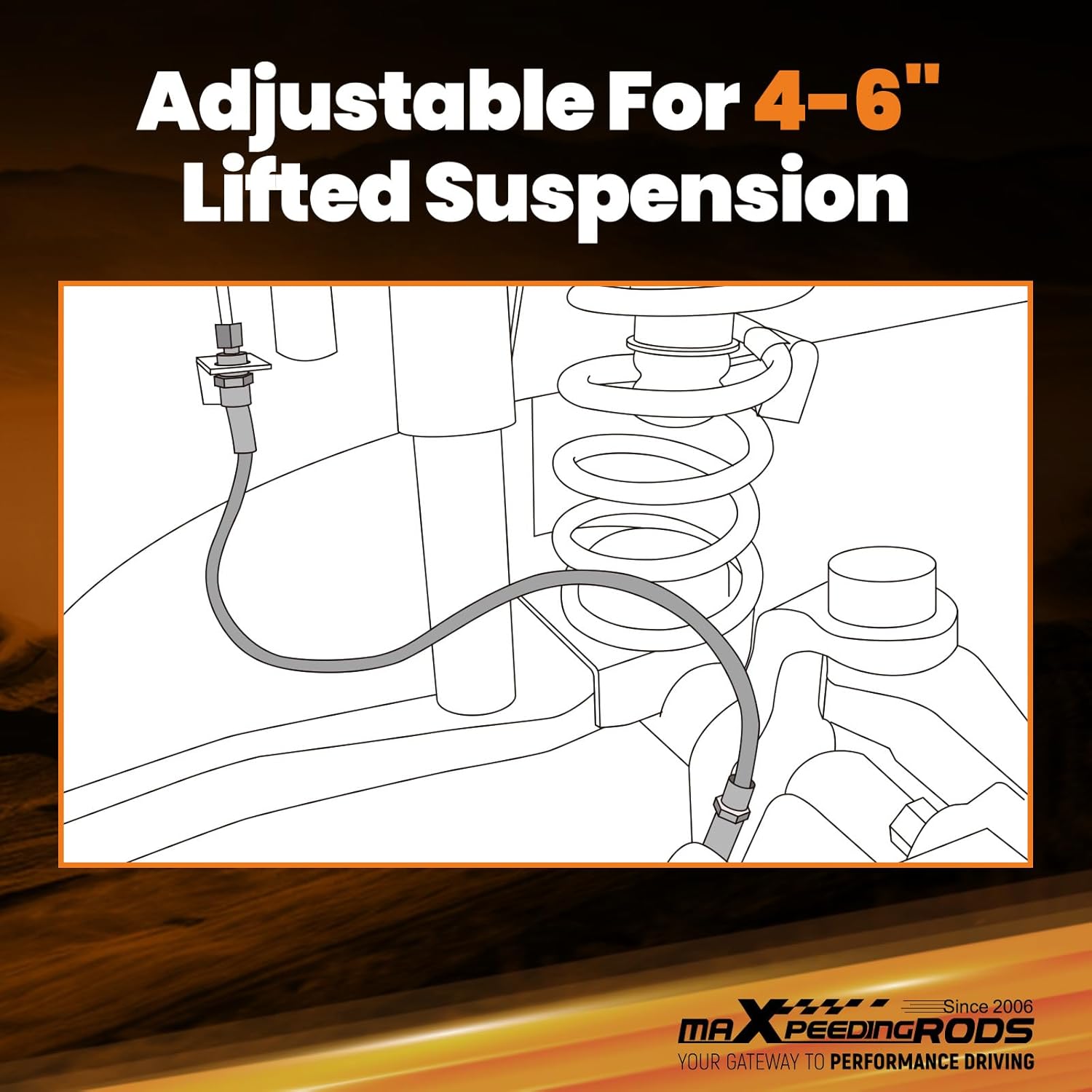
Image: Diagram illustrating how extended brake lines accommodate a lifted suspension.
3. Ihe ngwugwu
Please inspect the package contents upon receipt to ensure all components are present and undamaged.
- 2 x Front Extended Brake Lines
- 2 x Rear Extended Brake Lines
- Necessary Installation Hardware (washers, clips)

Image: Contents of the kit, including four stainless steel braided brake lines and mounting hardware.
4. Ntọala na nwụnye
Ịdọ aka ná ntị: Installation of brake components requires specialized knowledge and tools. Improper installation can lead to brake failure, serious injury, or death. It is highly recommended that installation be performed by a qualified professional mechanic.
4.1 Nchekwa nchekwa
- Na-eyi ihe nchekwa onwe onye kwesịrị ekwesị mgbe niile (PPE), gụnyere ugogbe anya nchekwa na uwe aka.
- Ensure the vehicle is securely supported on jack stands on a level surface. Never work under a vehicle supported only by a jack.
- Kwupu njikọ na-adịghị mma nke batrị ụgbọ ala.
- Brake fluid is corrosive. Avoid contact with skin, eyes, and painted surfaces. Clean up spills immediately.
4.2 Nzọụkwụ Nwụnye Izugbe (Akwadoro Nwụnye Ọkachamara)
- Kwadebe ụgbọ: Lift the vehicle and secure it on jack stands. Remove wheels.
- Drain Brake Fluid: If necessary, drain some brake fluid from the master cylinder reservoir to prevent overflow during line removal.
- Remove Old Brake Lines: Carefully disconnect the existing brake lines from the caliper/wheel cylinder and the frame mounting point. Be prepared for brake fluid leakage.
- Install New Brake Lines: Attach the new extended brake lines, ensuring proper routing to avoid contact with moving suspension components or sharp edges. Use the provided hardware. Ensure all fittings are tightened to manufacturer specifications (consult a service manual for torque values).
- Bleed Brake System: This is a critical step. Air introduced into the brake system during line replacement must be removed. Follow the vehicle manufacturer's recommended brake bleeding procedure, typically starting with the wheel furthest from the master cylinder and working towards the closest. This often requires two people.
- Lelee maka ntapu: After bleeding, visually inspect all connections for any signs of brake fluid leakage.
- Test Brake Pedal: With the engine off, pump the brake pedal several times. The pedal should feel firm and consistent. If it feels spongy, re-bleed the system.
- Wụnye wiil ndị ọzọ: Tinyegharịa wiilị ma wetuo ụgbọ ala ahụ.
5. Operating and Post-Installation Checks
After installation, perform the following checks before driving the vehicle:
- Brake Pedal Feel: The brake pedal should feel firm and consistent. A spongy pedal indicates air in the system, requiring further bleeding.
- Ọkwa mmiri mmiri: Check the brake fluid level in the master cylinder reservoir and top up if necessary with the correct type of brake fluid specified by your vehicle manufacturer.
- Nyocha leak: Visually inspect all brake line connections for any signs of leakage.
- Nnwale okporo ụzọ: Perform a cautious road test in a safe, open area at low speeds. Test the brakes gently at first, then gradually increase pressure. Listen for unusual noises and observe braking performance. Ensure the vehicle stops straight and without excessive pedal travel.
6. Nlekọta
Regular inspection and maintenance are essential for the longevity and safe operation of your brake system.
- Nyocha oge: Regularly inspect the brake lines for any signs of wear, fraying, kinks, or damage. Check for corrosion on fittings.
- Nleba anya ntapu: Periodically check all brake line connections for leaks, especially after off-road driving or heavy use.
- Mmiri breeki: Monitor brake fluid level and condition. Replace brake fluid according to your vehicle manufacturer's recommendations.
- Ntugharị: Ensure brake lines remain properly routed and secured, away from moving parts or heat sources.

Image: Detail of the high-strength stainless steel braided line and fitting.
7. Nchọpụta nsogbu
If you experience any issues after installing the extended brake lines, consider the following common problems and solutions:
- Spongy Brake Pedal: This is typically caused by air trapped in the brake system. Re-bleed the entire brake system thoroughly, ensuring no air bubbles remain.
- Brake Fluid Leaks: Check all connections for proper tightness. Ensure flare nuts are correctly seated and not cross-threaded. Inspect the brake lines themselves for any damage.
- Poor Braking Performance: Could be related to air in the lines, improper installation, or issues with other brake components. If bleeding does not resolve the issue, consult a professional mechanic.
- Brake Line Rubbing/Contact: If brake lines are rubbing against suspension components or the chassis, re-route and secure them using appropriate clips or zip ties to prevent damage.
If troubleshooting steps do not resolve the issue, seek assistance from a certified automotive technician.
8. Nkọwapụta
| Njirimara | Nkọwapụta |
|---|---|
| Nọmba nlereanya | EL55BP |
| Ihe onwunwe | Igwe anaghị agba nchara braided |
| Agba | Ọlaọcha |
| Front Brake Line Length | 24 sentimita (ihe dị ka 610 mm) |
| Rear Brake Line Length | 22.5 sentimita (ihe dị ka 571.5 mm) |
| Ndakọrịta ebuli | 4-6 inch suspension lifts |
| Ibu Ibu | 2.31 pound (ihe dị ka gram 1050) |
| Nha Ngwaahịa (Ngwugwu) | 10.94 x 7.8 x 4.29 sentimita asatọ |
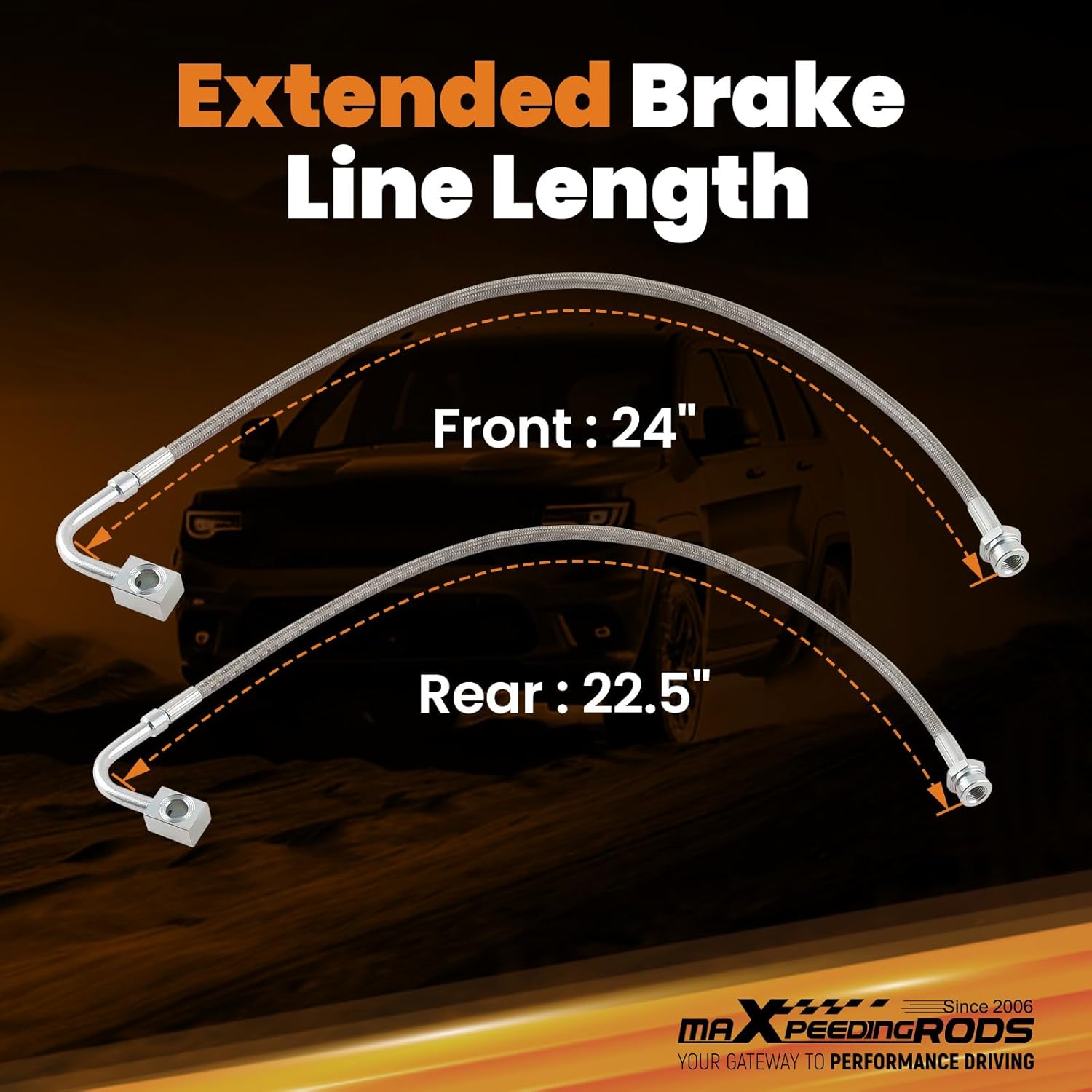
Image: Visual representation of front and rear brake line lengths.
9. Akwụkwọ ikike na nkwado
maXpeedingrods provides the following support for this product:
- Akwụkwọ ikike nwere oke: 1-year limited warranty for quality-related issues from the date of purchase.
- Nkwado ndị teknuzu: Nkwado teknụzụ dị ndụ niile.
For any questions, technical assistance, or warranty claims, please contact maXpeedingrods customer support.


