Ntuziaka nchekwa dị mkpa
Please read these instructions carefully before using your Salter Electric Egg Cooker. Keep this manual for future reference.
- Always ensure the appliance is unplugged from the mains supply before cleaning or when not in use.
- Etinyela isi ihe dị na ngwaọrụ ahụ, eriri ọkụ eletrik, ma ọ bụ tinye mmiri ma ọ bụ mmiri mmiri ọ bụla ọzọ n'ime ya.
- Ebughị ngwa a maka ndị mmadụ (gụnyere ụmụaka) nwere ike anụ ahụ, mmetụta uche, ma ọ bụ nke uche, ma ọ bụ enweghị ahụmịhe na ihe ọmụma, ma ọ bụrụ na enyereghị ha nlekọta ma ọ bụ ntụziaka gbasara iji ngwa ahụ site n'aka onye na-ahụ maka nchekwa ha. .
- Ekwesịrị ilekọta ụmụaka ka ha hụ na ha ejighi ngwa eji egwu egwu egwu.
- Do not operate the appliance if the power cord, plug, or the appliance itself is damaged. Contact customer support for assistance.
- Use the appliance on a stable, heat-resistant surface, away from water and heat sources.
- Do not touch hot surfaces. Use handles or knobs. Steam released during cooking is hot.
- Only use accessories supplied or recommended by the manufacturer.
Ngwa ngwaahịa
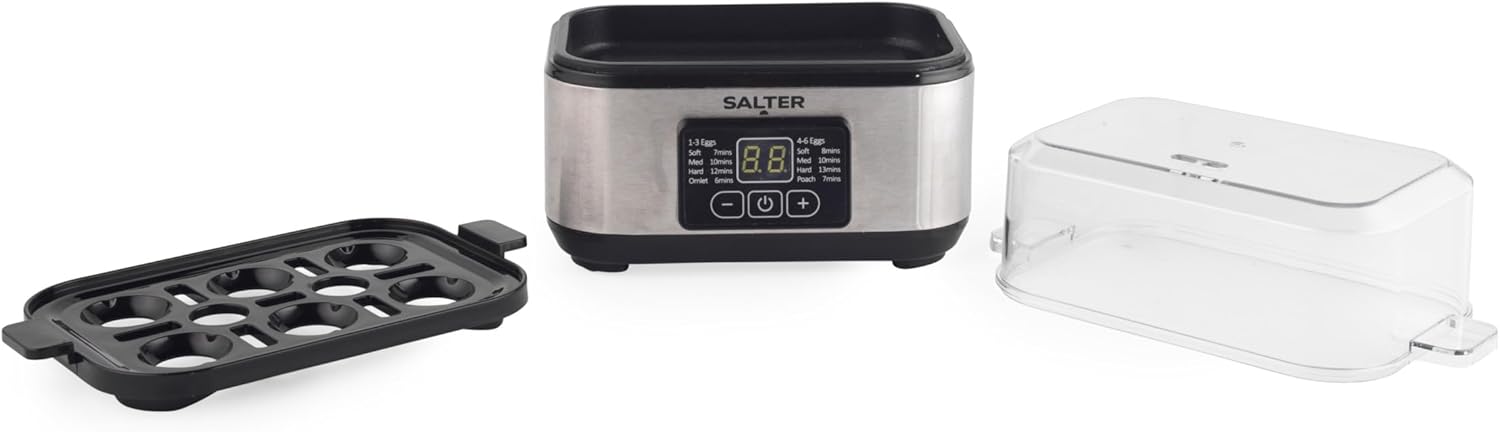
Familiarize yourself with the parts of your Salter Electric Egg Cooker:
- Isi ngalaba: The base containing the heating element and control panel.
- Akpa akwa: Ọ na-ejide ruo àkwá asaa maka esi.
- Poaching Trays (2x): For preparing poached eggs.
- iko: Used to add the correct amount of water. Features a piercing pin at the bottom.
- Mkpuchi transperent: Covers the cooking area during operation.
Melite
- Ịkwapu: Jiri nlezianya wepụ ihe niile dị na nkwakọ ngwaahịa.
- Nhicha izizi: Before first use, wash the egg tray, poaching trays, measuring cup, and lid in warm, soapy water. Rinse thoroughly and dry. Wipe the main unit with a damp akwa . Ejila akụkụ bụ isi n'ime mmiri.
- Nkwanye: Place the main unit on a flat, stable, heat-resistant surface, ensuring adequate ventilation around the appliance.

Ntuziaka ọrụ
General Egg Boiling (Soft, Medium, Hard)
- Using the piercing pin on the bottom of the measuring cup, carefully pierce the large end of each egg. This helps prevent cracking during cooking.
- Fill the measuring cup with cold water according to the desired egg consistency and number of eggs. Refer to the markings on the measuring cup or the guide on the appliance.
- Pour the measured water into the heating plate of the main unit.
- Place the egg tray onto the main unit. Place the pierced eggs into the egg tray.
- Kpuchie ihe mkpuchi ahụ nke ọma.
- Tinye ngwa ahụ n'ime oghere mains dabara adaba.
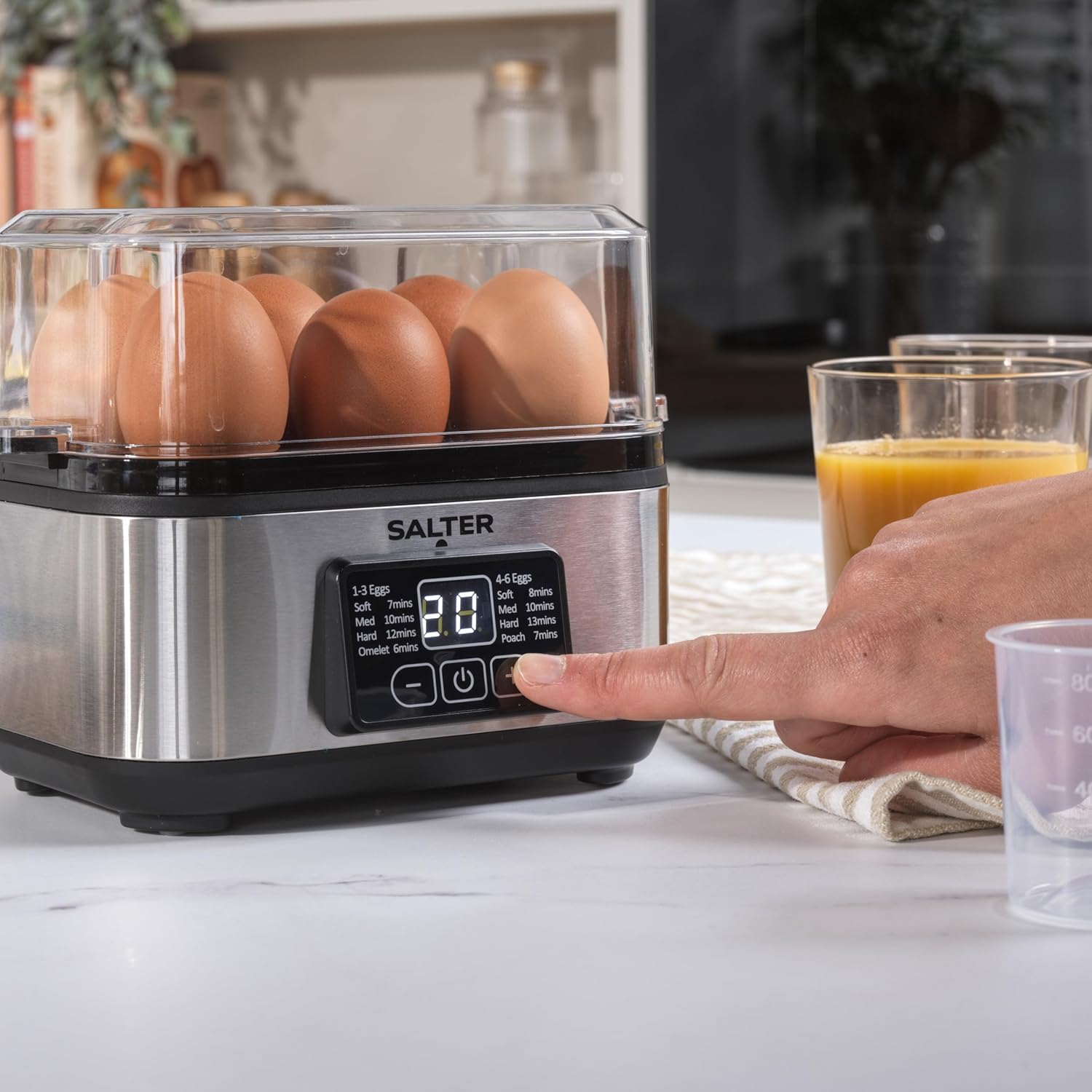
- Pịa bọtịnụ ike (U) to turn on the cooker. Use the '+' and '-' buttons to select the desired cooking time based on the number of eggs and preferred doneness. The display shows recommended times:
- 1-3 Eggs: Soft (approx. 7 mins), Medium (approx. 10 mins), Hard (approx. 12 mins)
- 4-6 Eggs: Soft (approx. 8 mins), Medium (approx. 10 mins), Hard (approx. 13 mins)
- The cooker will automatically start heating. An audible alert will sound when cooking is complete.
- Unplug the appliance. Carefully remove the lid (steam will be hot) and then the egg tray. Immediately rinse the eggs under cold water or place them in an ice bath to stop the cooking process and prevent overcooking.
Àkwá akpara akpa
- Fill the measuring cup with cold water up to the 'Poach' mark. Pour this water onto the heating plate.
- Lightly grease the poaching trays with a small amount of oil or butter.
- Crack one egg into each poaching tray.
- Place the egg tray onto the main unit, then place the filled poaching trays into the egg tray.
- Kpuchie ihe mkpuchi ahụ nke ọma.
- Tinye ngwa ahụ n'ime oghere mains dabara adaba.
- Pịa bọtịnụ ike (U) and select the 'Poach' setting (approx. 7 minutes).
- The cooker will automatically start heating. An audible alert will sound when cooking is complete.
- Unplug the appliance. Carefully remove the lid and then the poaching trays. Use a non-metallic utensil to gently remove the poached eggs.

Omelet
- Fill the measuring cup with cold water up to the 'Omelet' mark. Pour this water onto the heating plate.
- Lightly grease the poaching trays.
- Whisk 1-2 eggs per poaching tray with a pinch of salt and pepper. Pour the mixture into the poaching trays.
- Place the egg tray onto the main unit, then place the filled poaching trays into the egg tray.
- Kpuchie ihe mkpuchi ahụ nke ọma.
- Tinye ngwa ahụ n'ime oghere mains dabara adaba.
- Pịa bọtịnụ ike (U) and select the 'Omelet' setting (approx. 6 minutes).
- The cooker will automatically start heating. An audible alert will sound when cooking is complete.
- Unplug the appliance. Carefully remove the lid and then the poaching trays. Use a non-metallic utensil to gently remove the omelets.
Nhicha na Nlekọta
Regular cleaning ensures optimal performance and extends the life of your egg cooker.
- Kwụpụ mgbe niile the appliance from the mains socket and allow it to cool completely before cleaning.
- Akụkụ enwere ike iwepụ: The egg tray, poaching trays, measuring cup, and lid can be washed in warm, soapy water. Rinse thoroughly and dry completely before storing or next use. These parts are generally dishwasher safe, but hand washing is recommended for longevity.
- Isi ngalaba: Jiri nwayọ hichaa mpụta nke isi ihe, damp akwa . Ejila ihe mkpocha abrasive ma ọ bụ ihe nchacha. Ejila akụkụ isi na mmiri ma ọ bụ mmiri mmiri ọ bụla ọzọ.
- Efere kpo oku: Mineral deposits (limescale) may accumulate on the heating plate after use. To remove, pour a small amount of white vinegar onto the heating plate and let it sit for 5-10 minutes. Gently scrub with a non-abrasive sponge or cloth, then wipe clean with a damp cloth. Rinse the heating plate by wiping with a clean, damp cloth several times. Ensure all vinegar residue is removed.
- Nchekwa: Ensure all parts are clean and dry before storing. Store the egg cooker in a cool, dry place.
Nchọpụta nsogbu
| Nsogbu | Ihe nwere ike ime | Ngwọta |
|---|---|---|
| A naghị esi àkwá otú ọ chọrọ. | Incorrect water level or cooking time selected. | Ensure the correct amount of water is used for the desired doneness and number of eggs. Adjust cooking time slightly for personal preference. |
| Àkwá na-agbawa agbawa mgbe a na-esi nri. | Eggs not pierced, or cold eggs placed directly into hot water. | Always pierce the large end of each egg with the pin on the measuring cup before cooking. Use room temperature eggs if possible, or add a tiny pinch of salt to the water. |
| Ngwa anaghị agbanwuo. | Not plugged in, or power outlet issue. | Ensure the appliance is securely plugged into a working power outlet. Check the circuit breaker. |
| White residue on heating plate. | Limescale buildup from water. | Descale the heating plate using white vinegar as described in the 'Cleaning and Maintenance' section. |
Nkọwapụta
| Njirimara | Nkọwa |
|---|---|
| Nọmba nlereanya | EK6213 (also referred to as EK6153VDE) |
| Ụdị | Nnu |
| Ike | 500W (430W as per some specifications) |
| Ike | Ruo akwa 8 |
| Ihe onwunwe | Aluminum (heating plate), Plastic (body, lid, trays) |
| Agba | Ọlaọcha |
| Akụkụ (L x W x H) | Ihe ruru. 21 cm x 13.1 cm x 15.5 cm |
| Ibu | Approx. 1 kg (900 grams) |
Akwụkwọ ikike na nkwado
This product comes with a manufacturer's warranty. For detailed warranty information, please refer to the warranty card included with your purchase or visit the official Salter website. For technical support, spare parts, or any other inquiries, please contact Salter customer service through their official channels.
Biko dowe akwụkwọ ikike ịzụrụ ihe ọ bụla.


