1. Okwu mmalite
Thank you for choosing the RUJIXU Large Digital Kitchen Scale. This precision instrument is designed for accurate weighing in various settings, from home kitchens to commercial environments. With a maximum capacity of 30kg (66lb) and multiple functions including tare, unit conversion, price computing, and counting, this scale offers versatility and reliability. Please read this manual thoroughly before use to ensure proper operation and longevity of your device.
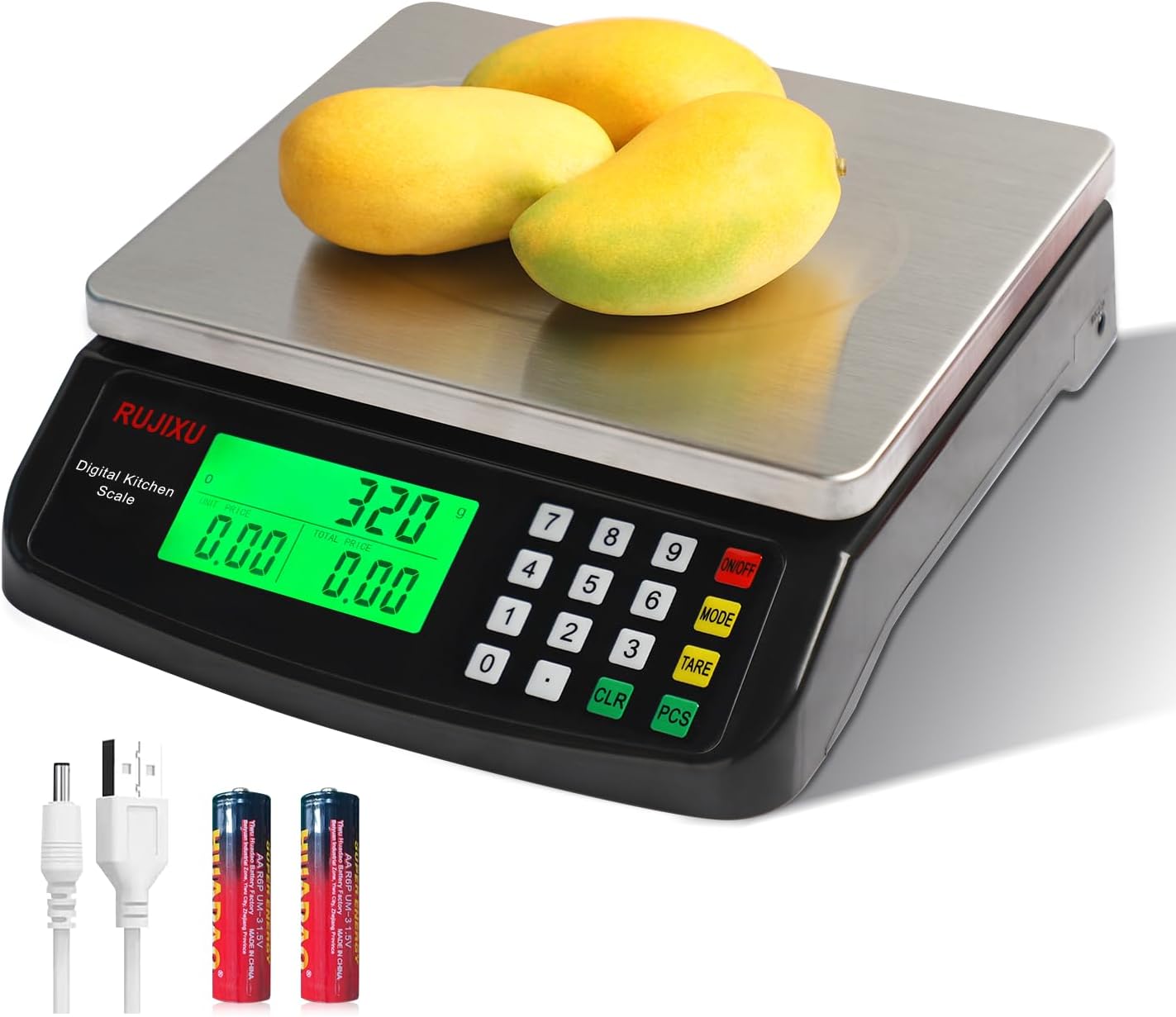
Image 1.1: RUJIXU Large Digital Kitchen Scale (Model DT-580)
2. Ngwa ngwaahịa na atụmatụ
2.1 Atụmatụ
- Ike dị elu: Weighs items from 3g up to 30kg (66lb).
- Otutu nkeji: Supports grams (G), kilograms (KG), pounds (LB), and ounces (OZ).
- Arụ ọrụ: Allows subtraction of container weight for net measurements.
- Counting Function (PCS): Enables counting of small, identical items.
- Price Computing: Calculates price based on weight and unit price input.
- Ngosipụta azụ azụ LCD: Provides clear and easy-to-read measurements, even in varying light conditions.
- Ihe owuwu na-adịgide adịgide: Features a stainless steel platform and ABS plastic frame.
- Nnyenye ike abụọ: Operates with an AC power adapter or 2x 1.5V AA batteries (not included).
- Gbanyụọ onwe: Automatically shuts off after 120 seconds of inactivity to conserve power.
2.2 Akụkụ

Image 2.1: Scale Dimensions
The scale features a stainless steel weighing surface measuring approximately 7 inches by 8.7 inches (18cm by 22cm). The overall product dimensions are 9.8 x 9 x 2.5 inches (24.9 x 22.9 x 6.4 cm).
3. Nhazi
3.1 Nwepu
Carefully remove all components from the packaging. Ensure that the scale, AC power adapter, and user manual are present.
3.2 Ike inye
The scale can be powered by either the included AC power adapter or two 1.5V AA batteries (not included).
- Ike AC: Connect the AC power adapter to the scale's power input port and then plug it into a standard electrical outlet.
- Ike batrị: Open the battery compartment on the underside of the scale and insert two 1.5V AA batteries, observing the correct polarity.
Mara: The two power sources cannot be used simultaneously. If both are connected, the scale will prioritize AC power.

Image 3.1: Power Supply Modes
3.3 Ntinye
Place the scale on a firm, flat, and stable surface to ensure accurate readings. Avoid placing it near strong electromagnetic fields, vibrations, or extreme temperature changes.
4. Ọrụ
4.1 Gbanyụọ / gbanyụọ
- Iji gbanye nha ahụ, pịa bọtịnụ Gbanye/ Gbanyụọ button. The display will light up and show "0.000".
- Iji gbanyụọ nha ahụ, pịa ma jide ya Gbanye/ Gbanyụọ bọtịnụ maka sekọnd ole na ole ruo mgbe ngosipụta ahụ gbanyụrụ.
4.2 Mgbanwe nkeji
The scale supports four units of measurement: grams (G), kilograms (KG), pounds (LB), and ounces (OZ).
- Mgbe ị gbanyechara nha ahụ, pịa bọtịnụ ahụ MODE bọtịnụ iji gafee nkeji ndị dịnụ. A ga-egosi ngwaọrụ ahọpụtara na ihuenyo LCD.

Image 4.1: Unit Switching
4.3 Tare arụ ọrụ
The tare function allows you to subtract the weight of a container, so you only measure the net weight of its contents.
- Place the empty container on the weighing platform. The display will show the container's weight.
- Pịa NA-EGO bọtịnụ. Ngosipụta ahụ ga-amalitegharị ka ọ bụrụ "0.000".
- Add the items you wish to weigh into the container. The display will now show only the weight of the items.

Image 4.2: Tare Function Steps
4.4 Ọrụ Ngụkọta (PCS)
The PCS function is useful for counting small, identical items such as screws, coins, or beads.
- Turn on the scale and ensure it reads "0.000".
- Pịa ma jide PCS button for approximately 5 seconds. The display will show a sample size (e.g., "25").
- Use the number pad to enter the quantity of items you will use as a sample (e.g., "10", "20", "50", "100").
- Debe sample quantity of items on the platform.
- Pịa PCS button again to confirm the sample. The scale is now calibrated for counting.
- Wepu sample and place the bulk quantity of items you wish to count on the platform. The display will show the total count.
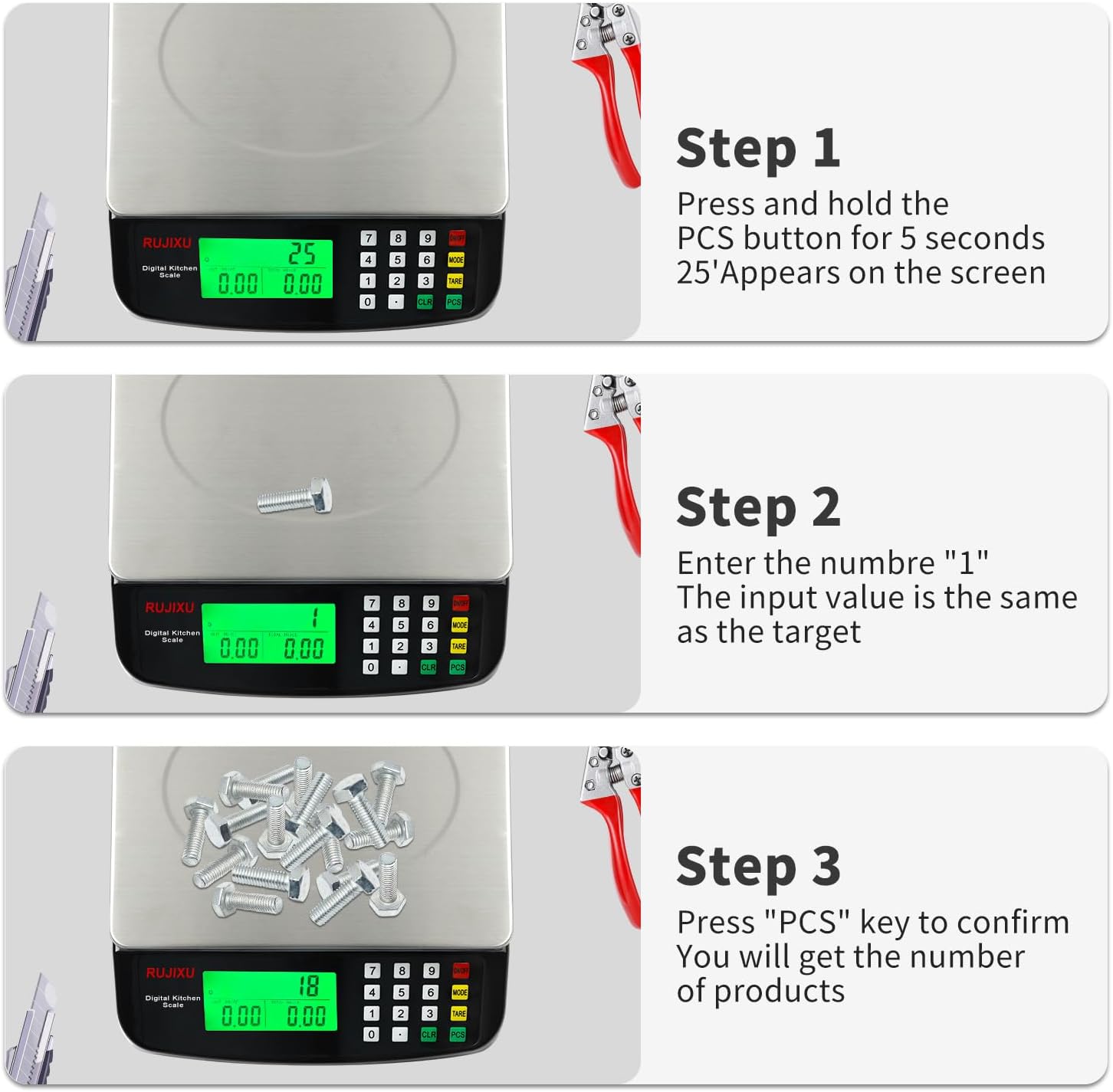
Image 4.3: Counting Function Steps
4.5 Price Computing Function
This function allows you to calculate the total price of items based on their weight and a set unit price.
- Turn on the scale and ensure it reads "0.000".
- Place the item(s) to be weighed on the platform. The scale will display the weight.
- Using the number pad, enter the unit price (e.g., price per KG or LB).
- The scale will automatically calculate and display the total price.

Image 4.4: Price Computing in Use
4.6 Njirimara Gbanyụọ Akpaaka
To conserve battery life, the scale is equipped with an automatic shut-off feature. If no operation is performed for approximately 120 seconds, the scale will power down.
5. Nlekọta
5.1 Nhicha
The stainless steel platform and ABS plastic body are designed for easy cleaning.
- Jiri nwayọ hichaa elu ọnụ ọgụgụ, damp akwa .
- For stubborn stains, a mild detergent can be used.
- Do not immerse the scale in water or use abrasive cleaners, as this can damage the electronic components.
- Gbaa mbọ hụ na ọnụ ọgụgụ ahụ akpọnwụwo kpamkpam tupu nchekwa ma ọ bụ ojiji ọzọ.

Image 5.1: Food-Grade Stainless Steel Platform
5.2 Nchekwa
Store the scale in a cool, dry place away from direct sunlight and extreme temperatures. If storing for an extended period, remove the batteries to prevent leakage.
6. Nchọpụta nsogbu
- Ọkwa anaghị agbanye:
- Check if the AC adapter is securely plugged in.
- If using batteries, ensure they are inserted correctly with the right polarity and are not depleted. Replace if necessary.
- Ọgụgụ na-ezighi ezi:
- Ensure the scale is placed on a flat, stable, and level surface.
- Avoid placing the scale near sources of vibration or drafts.
- Make sure no objects are touching the scale or platform during weighing.
- Recalibrate the scale if possible (refer to specific instructions if available, otherwise, turn off and on).
- Ensure the weight limit (30kg/66lb) is not exceeded.
- Ngosipụta ahụ adịghị mma ma ọ bụ enweghị ike ịgụ ya:
- Check battery level if operating on batteries.
- Ensure the scale is not in direct sunlight or extremely bright conditions that might wash out the display. The LCD is designed for full view, but extreme glare can still affect visibility.
- "EEEE" or "O-Ld" error message:
- This indicates an overload. Remove items from the platform immediately to prevent damage.

Image 6.1: Improved LCD Display Visibility
7. Nkọwapụta
| Njirimara | Nkọwa |
|---|---|
| Ụdị ngwaahịa | DT-580 |
| Nkeji | G, KG, LB, OZ |
| Oke oke ibu | 30kg / 66lb |
| Ibu kacha nta | 2g-3g |
| Ntụle nkenke | 1g |
| Atụmatụ | Tare function, Price Calculator, Accurate Counting |
| Ngosipụta ihuenyo | Juputara view LCD display (7.5x3.8cm) |
| Nchekwa onwe-Gbanyụọ | 120 seconds automatic shut-off when no operation |
| Eji akwadoro | Food baking, market business, cooking meal |
| Food Scale Size | 24 × 21.6 × 6.5 cm (9.8 x 9 x 2.5 inches) |
| Stainless Weighing Surface | 21.6 × 17.5 cm (8.5 x 6.9 inches) |
| Ibu Ibu | 1.16 n'arọ (2.55 lb) |
| Food Scale Material | ABS plastik na igwe anaghị agba nchara |
| Ịnye ọkụ | AC6V Power Adapter, 2x 1.5V AA battery (Batteries not included) |
| Ngwugwu gụnyere | 1x Kitchen Scale, 1x Power Adapter, 1x User Manual |

Image 7.1: Product Specifications Table


