1. Okwu mmalite
This manual provides essential information for the safe and efficient operation of your Tera Smart EV Charger Type 2 Wallbox. Please read these instructions carefully before installation and use, and retain them for future reference.
Ọdịnaya ngwugwu:
- 1 x Tera W01 11 KW 16 A CEE Plug EV Charger with 7m Type 2 Cable
- 1 x Nlebanya elu
- 1 x Nhazi nke skru na-arị elu
- 1 x User Manual (English and German)

2. Ntuziaka nchekwa
Your Tera Wallbox is designed with multiple safety features. Adherence to these guidelines is crucial for safe operation and to prevent electrical hazards.
Integrated Safety Mechanisms:
- Integrated DC6mA Residual Current Protection: Detects and handles various leakage current situations (AC and DC).
- External Type A Overcurrent Breaker: Provides additional protection against overcurrents.
- Mfefetage Nchedo: Nchedo megide oke voltage.
- N'okpurutage Nchedo: Na-echebe megide ezughị oke voltage.
- Nchekwa ibu ibu: Prevents damage from excessive current draw.
- Nchekwa sekit dị mkpụmkpụ: Automatically disconnects power in case of a short circuit.
- Nchekwa oke okpomọkụ: Na-enyocha ma na-egbochi oke okpomọkụ.
- Nchedo ala: Na-eme ka ala dị mma maka nchekwa eletrik.
- Earth Leakage Protection: Detects unintended current paths to earth.
The charging cable is made with over 99.5% copper for excellent conductivity and minimal heat generation. The charger is designed to meet safety requirements, ensuring high safety standards.
Nchekwa gburugburu:
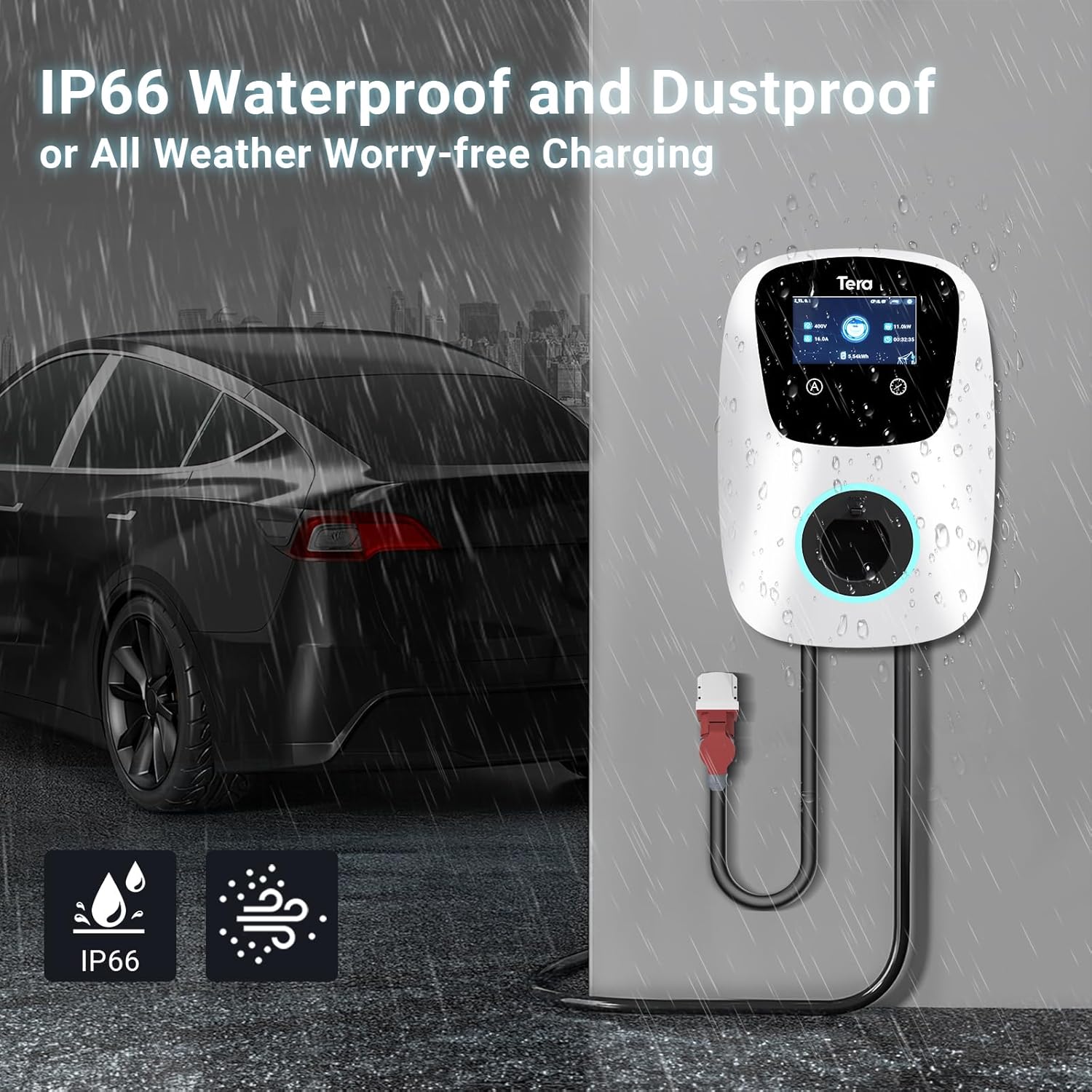
The device features an IP54 waterproof rating, allowing safe outdoor use in various weather conditions. It is designed to withstand temperatures from -30°C to 50°C.

3. Nka na ụzụ nkọwa
| Njirimara | Nkọwapụta |
|---|---|
| Ụdị | Tera |
| Aha Nlereanya | W01-AM-WH-11kW |
| Mmepụta Voltage | 400 volts |
| Ntinye Voltage | 400 volts |
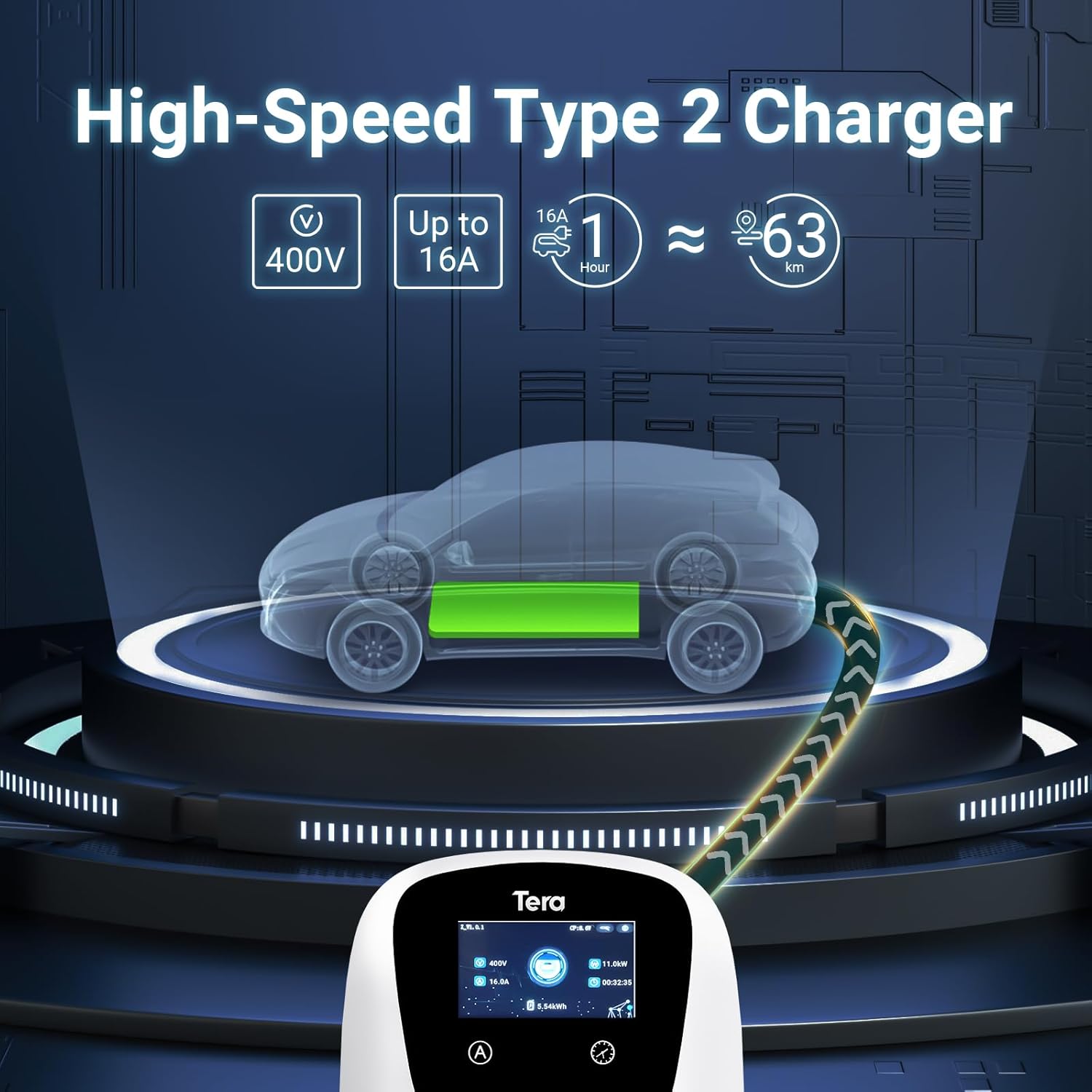
| Enyere aha ugbu a | 16 Amperes |
| Ike kacha | 11 kW |
| Ogologo eriri USB | 7 mita |
| Ụdị njikọ | Type 2, CEE 3-phase plug |
| Asambodo | CE (N8A 104780 0028), TÜV (64105223147901), IEC 62196-2 |
| Ngosi nke enweghị mmiri | IP54 |
| Okpomọkụ na-arụ ọrụ | -30°C ruo 50°C |
| Akụkụ ngwaahịa | 20 x 15 x 20 cm |
| Ibu ngwaahịa | 15 n'arọ |
4. Nwụnye
The Tera EV Charger is designed for straightforward installation. It comes with a mounting template and a screw set to facilitate the process.
Nzọụkwụ nwụnye:
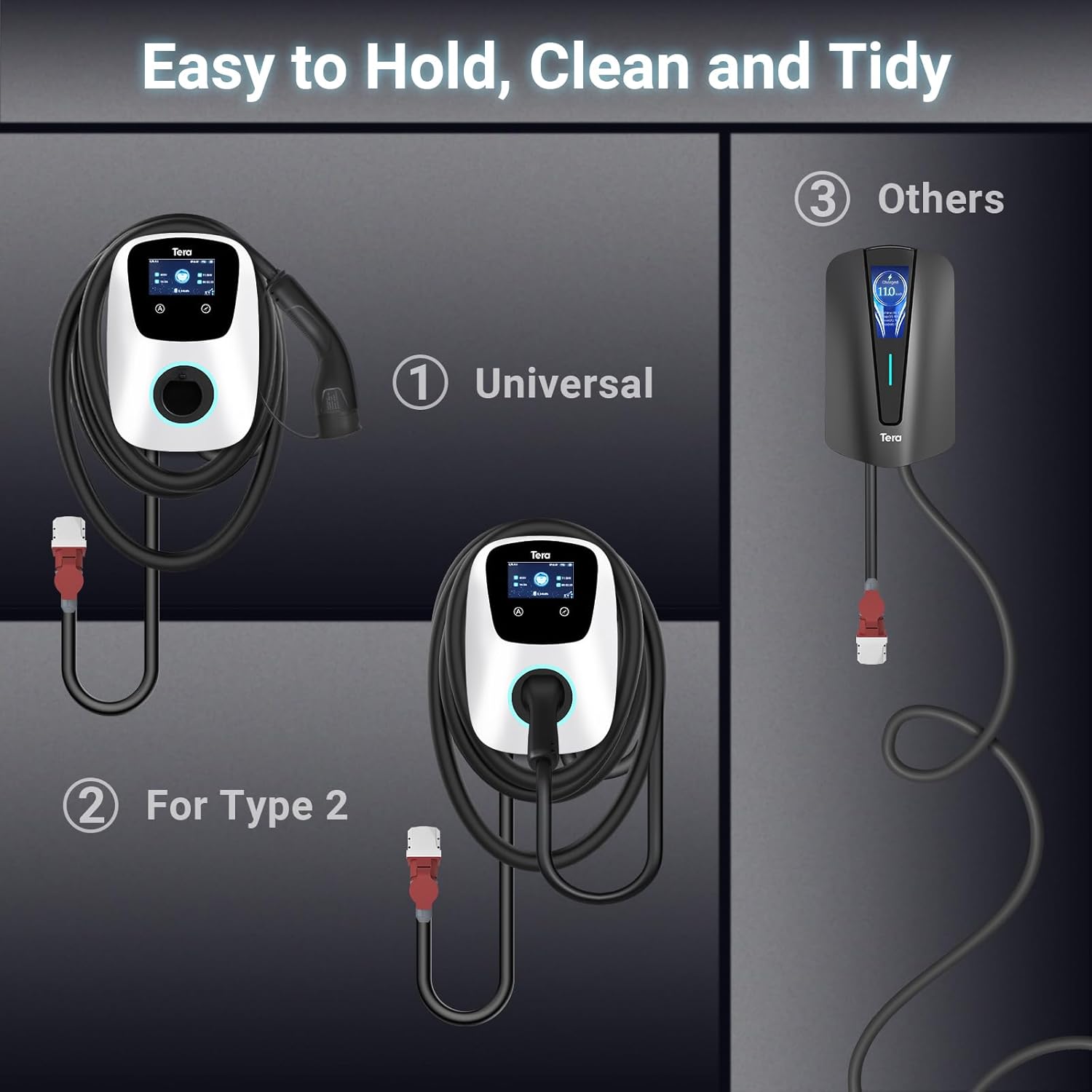
- Ịkwanye: Use the provided mounting template and screw set to securely attach the charger to a suitable wall or surface. Ensure the mounting location is stable and can support the weight of the charger and cable.
- Njikọ ike: Connect the CEE 3-phase plug to a compatible power source. Ensure the electrical installation meets local regulations and safety standards. Professional installation by a qualified electrician is recommended.
- Njikwa USB: Utilize the additional cable holder to store the 7-meter charging cable neatly, saving space and maintaining a tidy charging area.

5. Ọrụ
The Tera EV Charger offers both manual and app-controlled charging options for convenience.
Starting a Charge:
- Ensure the charger is properly installed and connected to the power supply.
- Plug the Type 2 charging cable into your electric vehicle's charging port.
- Charging will commence automatically or can be initiated via the app.
Ụdị chaja:
- Ịchaji akwụkwọ ntuziaka: Directly set charging parameters on the EV charger's interface.
- App-Scheduled Charging: Use the dedicated mobile application (via Wi-Fi and Bluetooth) to schedule charging sessions, adjust charging power, and monitor progress. This provides flexibility to plan charging according to your needs.
The charging power can be adjusted to prevent overcharging and protect your vehicle's battery.
Ihe ngosi LED:
Integrated LED indicators provide clear visual feedback on the charging progress and any potential errors, ensuring you are always aware of the operational status.

6. Nlekọta
Regular maintenance ensures the longevity and optimal performance of your Tera EV Charger.
- Nhicha: Periodically wipe the charger's exterior with a soft, damp akwa . Ejila ihe nchacha abrasive ma ọ bụ ihe mgbaze.
- Nyocha USB: Regularly inspect the charging cable and connectors for any signs of wear, damage, or corrosion. If any damage is found, discontinue use and contact support.
- Nchekwa: When not in use, ensure the charging cable is neatly coiled and stored using the provided cable holder to prevent kinks or damage.
7. Nchọpụta nsogbu
If you encounter issues with your Tera EV Charger, consider the following basic troubleshooting steps:
- Enweghị ike: Check the main power supply and ensure the CEE 3-phase plug is securely connected. Verify that the circuit breaker is not tripped.
- Nchaji anaghị ebido: Ensure the Type 2 plug is fully inserted into your vehicle's charging port. Check the charger's LED indicators for any error codes.
- Okwu Njikọta ngwa: Ensure your Wi-Fi and Bluetooth are enabled on your mobile device and that the charger is within range. Restart the app and, if necessary, the charger.
- Nchaji nwayọ: Verify the current setting on the charger or in the app. Ensure your vehicle is capable of accepting the full 11 kW charge.
For persistent issues or complex problems, please refer to the support section.
8. Akwụkwọ ikike Ozi
Specific warranty details are typically provided with your purchase documentation. Please refer to the warranty card or contact your retailer for information regarding the warranty period and terms of service for your Tera EV Charger.
9. Nkwado ndị ahịa
Should you require further assistance, have questions regarding installation, operation, or troubleshooting, please contact Tera customer support. Contact information can typically be found on the product packaging or the official Tera websaịtị.
Note: The product includes a user manual in German and English.


