Okwu mmalite
This manual provides detailed instructions for setting up, operating, and maintaining your Ajazz AK820MAX 75% Mechanical Keyboard. Please read this manual thoroughly before using the product to ensure optimal performance and longevity.
Njirimara ngwaahịa
- TFT Smart Display & Knob: Features a high-definition TFT color screen displaying time, connectivity modes, battery status, and custom GIF animations. The integrated knob allows for quick adjustments.
- Ọdịdị Gasket & PCB Single Key Slotting: Designed with a gasket structure and 1.2mm thick PCB single key slotting for enhanced resilience, stability, and a softer, more elastic typing feel. Multiple internal fillings reduce noise for a pure and pleasant sound.
- Njikọta ụdị atọ: Supports wireless connectivity via Bluetooth 5.1, 2.4GHz, or a wired Type-C USB cable. Easily switch between modes for efficient multitasking across various devices.
- Batrị na-adịte aka: Equipped with an 8000mAh battery for extended use without frequent recharging.
- RGB Backlighting with Music Rhythm: Offers 20 customizable backlighting effects, including a mode that synchronizes with music playback.
- 75% Hot-Swappable Layout: A compact 75% layout saves desktop space. The 3/5-pin PCB mounting design allows for easy hot-swapping of mechanical switches, enabling customization of typing preferences.
Ihe ngwugwu
Mgbe ị na-emepe igbe ahụ, biko hụ na ihe niile dị na ya:
- Ajazz AK820MAX Mechanical Keyboard
- USB Type-C USB
- Akwụkwọ ntuziaka onye ọrụ

Image: The Ajazz AK820MAX keyboard, USB-C cable, and user manual as they appear when unboxed.
Melite
- Ịchaji ahụigodo: Connect the provided USB Type-C cable to the keyboard's Type-C port and the other end to a USB power source (e.g., computer, wall adapter). The TFT display will indicate charging status.
- Adjusting Keyboard Angle: Flip the keyboard over and extend the adjustable feet on the underside to achieve your preferred typing angle.
- Selecting Connectivity Mode:
- Ọnọdụ Wired: Connect the USB Type-C cable to your computer. The keyboard will automatically switch to wired mode.
- Ọnọdụ ikuku 2.4GHz: Locate the 2.4GHz receiver (usually stored in a slot on the keyboard's underside). Plug the receiver into an available USB port on your computer. Switch the mode selector on the keyboard to 2.4G.
- Ọnọdụ Bluetooth: Switch the mode selector on the keyboard to BT. On your device (PC, laptop, tablet), search for Bluetooth devices and select "AK820MAX" to pair.

Foto: Akụkụ view of the keyboard highlighting the USB-C port and switches for selecting wired, 2.4G, or Bluetooth connectivity modes.

Image: The keyboard displaying battery life information on its TFT screen, indicating approximate usage times for wireless with lights off and wireless streamer light life, along with charging time.
Ntuziaka ọrụ
TFT Smart Display and Knob Functions
The integrated TFT color screen and multi-function knob provide quick access to various settings:
- Mgbanwe mkpịsị aka: Rotate the knob to navigate through menu options or adjust values (e.g., brightness, speed).
- Pịa Knob: Press the knob to confirm a selection or enter a menu.
- Ozi ngosi: The screen shows current time, active connectivity mode (wired, 2.4G, BT), and battery level.
- Custom GIF Animations: The display supports custom colorful GIF animations. Refer to the software for customization options.

Image: A close-up of the keyboard's 0.85-inch TFT color screen, illustrating its capability to display settings such as backlight brightness, speed, color, and effect modes.
Njikwa ọkụ azụ RGB
The keyboard features 20 backlighting effects. Use the knob or dedicated function keys (refer to the keyboard's keycap legends or software) to:
- Change lighting effects.
- Gbanwee ọkwa nchapụta.
- Modify animation speed.
- Select specific colors.
- Activate music rhythm mode, where lighting fluctuates with audio.
Mgbanwe Mgbanwe Na-ekpo Ọkụ
The AK820MAX supports hot-swappable mechanical switches, allowing you to change switches without soldering.
- Carefully remove the keycap using a keycap puller.
- Use a switch puller to gently remove the switch from the PCB.
- Align the pins of the new switch with the holes on the PCB and press firmly until it clicks into place. Ensure pins are not bent.
- Dochie okpu igodo.
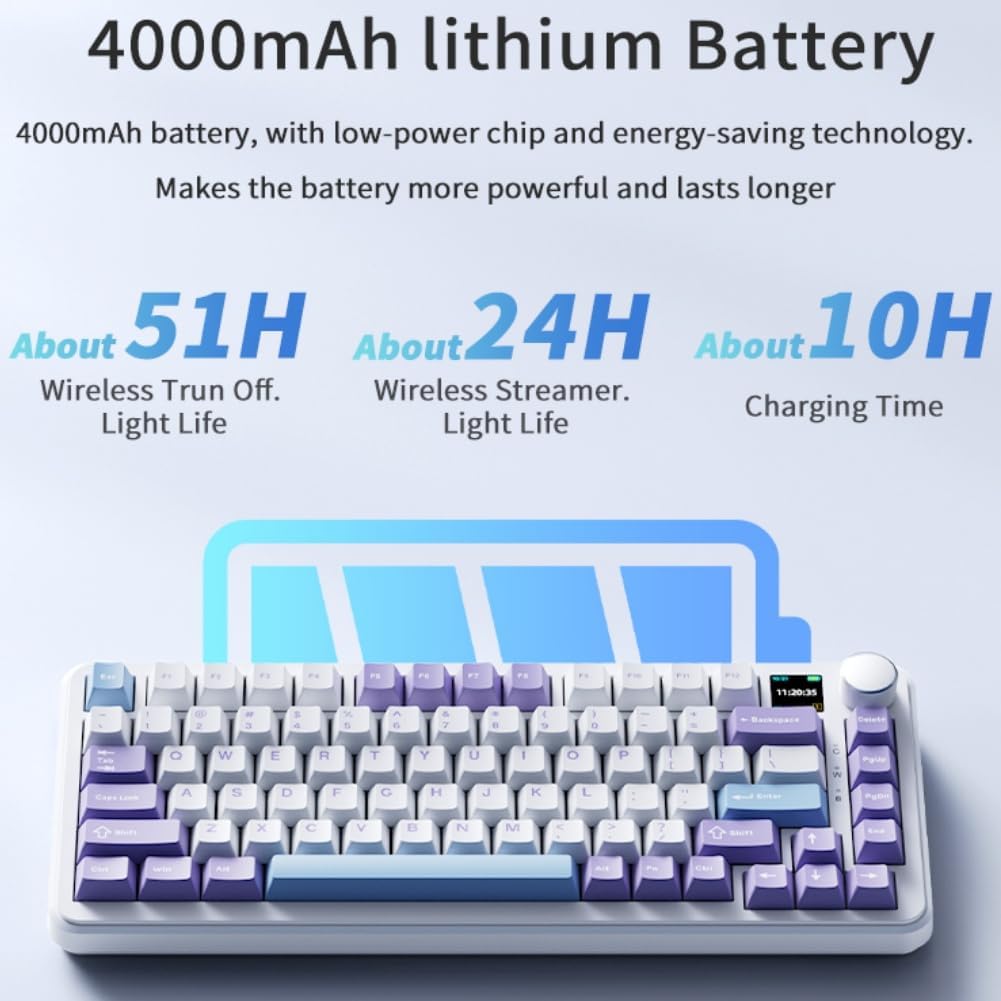
Foto: A nso nso view of the keyboard's hot-swappable key switches, demonstrating the ease with which switches can be changed to customize typing preferences.

Foto: nkọwa zuru ezu view of the keyboard's PCB, showcasing the 1.2mm thick single key slot design for improved switch stability and feel.

Image: A diagram illustrating the internal gasket structure of the keyboard, which contributes to a softer and more elastic typing experience.

Image: A cross-section diagram detailing the five-layer internal filling, including silicone bottom pad, IXPE switch pad, and PET voice actor pad, designed to reduce noise and produce a pure sound.
Nlekọta
- Nhicha: Use a soft, dry cloth to wipe the keyboard surface. For deeper cleaning, remove keycaps and use compressed air to clear debris.
- Ngbanwe Nlekọta: Avoid spilling liquids on the keyboard. If a switch feels inconsistent, it may need to be replaced or lubricated.
- Nchekwa: Chekwaa ahụigodo ahụ n'ebe dị jụụ, kpọrọ nkụ pụọ na ìhè anyanwụ kpọmkwem na oke okpomọkụ.
Nchọpụta nsogbu
- Ahụigodo Anaghị aza:
- Gbaa mbọ hụ na agbagoro ahụigodo.
- Check the connectivity mode switch (wired, 2.4G, BT) matches your connection type.
- For 2.4GHz, ensure the receiver is properly plugged in.
- For Bluetooth, ensure the keyboard is paired and within range. Try re-pairing.
- Try connecting via USB-C cable to rule out wireless issues.
- RGB Lights Not Working/Incorrect:
- Check brightness settings using the knob or software.
- Ensure the keyboard software is up to date.
- Reset lighting effects to default via software or keyboard shortcuts (refer to specific key combinations if available).
- Igodo anaghị edebanye aha:
- If a specific key is not working, try hot-swapping the switch with a known working one to determine if the switch or PCB socket is faulty.
- Hụ na e tinyere ihe mkpuchi igodo ahụ nke ọma.
Nkọwapụta
| Njirimara | Nkọwa |
|---|---|
| Nọmba nlereanya | AK820MAX |
| Nhazi | 75% (Igodo 81) |
| Njikọta | Bluetooth 5.1, 2.4GHz Ikuku, USB Type-C Waya |
| Ngbanwe Ụdị | Hot-swappable Mechanical (Avocado Switch) |
| Ịkụ azụ azụ | RGB (20 effects, music rhythm) |
| Ngosipụta | 0.85-inch TFT Color Smart Display |
| Ike batrị | 8000mAh Lithium Polymer (rechargeable) |
| Ngwa dakọtara | PC, Laptọọpụ, Mbadamba ụrọ |
| Akụkụ | 15.75 x 6.89 x 2.71 sentimita asatọ |
| Ibu Ibu | 2.75 pound |
| Onye nrụpụta | Odpaltoy |
Akwụkwọ ikike na nkwado
For warranty information and technical support, please refer to the warranty card included with your product or contact the manufacturer directly. You can also visit the official Ajazz websaịtị maka FAQ na akụrụngwa ndị ọzọ.
Manufacturer: Odpaltoy
Contact: Please refer to the contact information provided in the product packaging or on the manufacturer's official website for support inquiries.


