1. Okwu mmalite
This manual provides detailed instructions for the installation, operation, and maintenance of the QOLTEC 50900 Three Phase Electronic Energy Consumption Meter. This device is designed for measuring active energy consumption in three-phase, four-wire AC circuits. Please read this manual thoroughly before installation and use to ensure proper function and safety.
2. Ozi nchekwa
Ịdọ aka ná ntị: Installation and maintenance of this device must be performed by qualified personnel only. Failure to follow these instructions can result in electric shock, fire, or serious injury.
- Always disconnect power before installing or servicing the meter.
- Ensure all wiring connections are secure and correct according to the wiring diagram.
- Do not operate the meter in environments exceeding its specified operating conditions.
- Do not open or modify the meter casing. Enweghị akụkụ ndị ọrụ ga-arụ ọrụ n'ime.
- Protect the meter from moisture, dust, and direct sunlight.
3. Ngwaahịa gafereview
The QOLTEC 50900 is a compact, DIN rail mountable electronic energy meter designed for accurate measurement of three-phase energy consumption. It features an LCD display for clear readings and a pulse output for remote monitoring.

Figure 3.1: QOLTEC 50900 Energy Meter showing dimensions (75mm x 92mm x 76mm) and key features like Three Phase Type, 230V Rated Voltage, 1.0 Precision Class, and LCD Display.
Akụkụ ndị bụ isi:
- Three-phase, four-wire measurement
- LCD digital display for energy consumption (kWh)
- DIN rail mounting (4P width)
- High accuracy (Class 1.0)
- Pulse output (400imp/kWh)
- Voltage ọrụtage: 3x230/400V
4. Nkọwapụta
| Oke | Uru |
|---|---|
| Nlereanya | 50900 |
| Ogo Voltage | 3x230/400V AC |
| Enyere aha ugbu a | 3x10(100)A |
| Ugboro ugboro | 50Hz |
| Klas nke ziri ezi | 1.0 |
| Ngosipụta | LCD |
| Mmepụta Pulse | 400imp / kWh |
| Nwụnye | DIN Rail (4P) |
| Akụkụ (W x H x D) | 75 x 92 x 76 mm |
| Ibu | 100 g |
| Ihe onwunwe | Acrylic |
5. Ntọala na nwụnye
The QOLTEC 50900 meter is designed for standard 35mm DIN rail mounting. Ensure the installation location is dry, well-ventilated, and free from excessive vibration or electromagnetic interference.
5.1 Na-arịgo
- Locate a suitable 35mm DIN rail within your electrical panel.
- Align the meter's DIN rail clip with the rail.
- Press the meter firmly onto the rail until it clicks into place.

Figure 5.1: The QOLTEC 50900 meter securely mounted on a DIN rail, showing its compact form factor.
5.2 Njikọ njikọ
Mkpa: All wiring must comply with local electrical codes and regulations. Ensure power is OFF before making any connections.
- Identify the input (IN) and output (OUT) terminals on the meter.
- Connect the incoming three-phase lines (L1, L2, L3) and Neutral (N) to the corresponding IN terminals (typically 5, 6, 7, 8).
- Connect the outgoing three-phase lines (L1, L2, L3) and Neutral (N) to the corresponding OUT terminals (typically 1, 2, 3, 4).
- Hụ na njikọ niile siri ike ma dịkwa nchebe iji gbochie kọntaktị na-adịghị mma ma na-ekpo oke ọkụ.

Foto 5.2: Akụkụ view of the meter showing the wiring diagram for input (IN) and output (OUT) connections for L1, L2, L3, and Neutral.

Foto 5.3: N'ihu view of the meter with its LCD display and a separate view of the terminal block for wiring connections.
6. Ntuziaka ọrụ
Once properly installed and powered, the QOLTEC 50900 meter will automatically begin measuring energy consumption.
Ngosipụta L6.1 XNUMX
The LCD displays the total active energy consumption in kilowatt-hours (kWh). The display is continuous and does not require any button presses for basic reading.
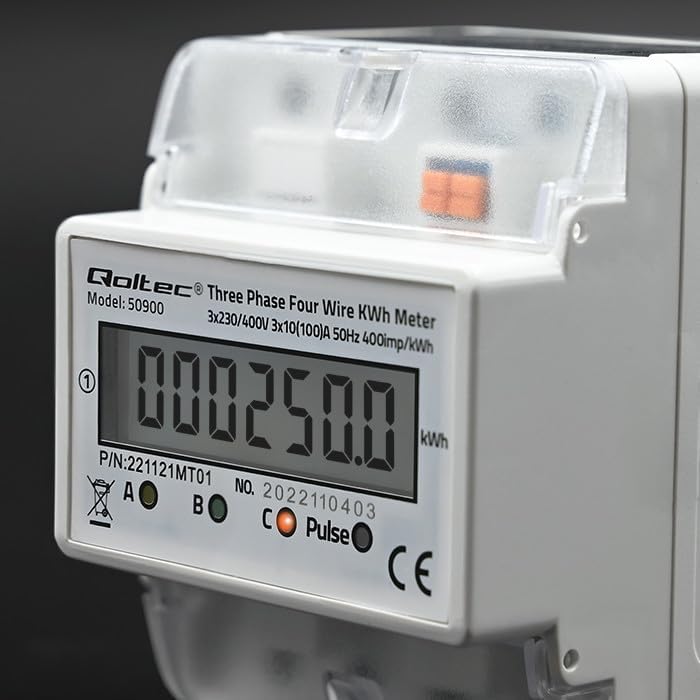
Ọgụgụ 6.1: nso nso view of the LCD display showing an example energy reading in kWh.
6.2 Mpụta Pulse
The meter features a pulse output (400imp/kWh) which can be used to connect to external monitoring systems for remote data collection. Refer to the external system's documentation for connection details.
7. Nlekọta
The QOLTEC 50900 energy meter is designed for maintenance-free operation under normal conditions.
- Nhicha: Use a soft, dry cloth to clean the meter's exterior. Do not use abrasive cleaners, solvents, or liquids that could enter the casing.
- Nyocha: Periodically inspect the wiring connections for any signs of loosening or damage. Ensure the meter is free from dust accumulation.
- Ọnọdụ gburugburu: Ensure the operating environment remains within the specified temperature and humidity ranges to prolong the meter's lifespan.
8. Nchọpụta nsogbu
If you encounter issues with your QOLTEC 50900 meter, refer to the following common problems and solutions:
| Nsogbu | Ihe nwere ike ime | Ngwọta |
|---|---|---|
| No display/Meter not powering on | No power supply; Incorrect wiring; Blown fuse in circuit | Check power supply to the meter. Verify wiring connections. Check circuit breaker/fuse. |
| Incorrect energy reading | Incorrect wiring; Faulty meter | Verify wiring connections against the diagram. If wiring is correct, contact support. |
| Pulse output not working | Incorrect connection to external system; Faulty meter | Check pulse output wiring to the external system. Consult external system's manual. If issue persists, contact support. |
If the problem persists after attempting these solutions, please contact Qoltec customer support.
9. Akwụkwọ ikike na nkwado
Qoltec products are manufactured to high-quality standards. For warranty information and technical support, please refer to the warranty card included with your product or visit the official Qoltec websaịtị. Debe nnata nzụta gị ka ihe akaebe nke ịzụrụ.


