Okwu mmalite
This manual provides instructions for the setup, operation, and maintenance of your Neumann TLM 103-MT Large Diaphragm Cardioid Condenser Microphone bundle. The TLM 103-MT is a professional studio microphone known for its clear sound reproduction, low self-noise, and high sound pressure level (SPL) handling capabilities, making it suitable for a wide range of recording applications including vocals, instruments, and broadcast.
The bundle includes essential accessories to facilitate immediate use and optimal performance, such as a microphone cable, pop filter, and a polishing cloth.
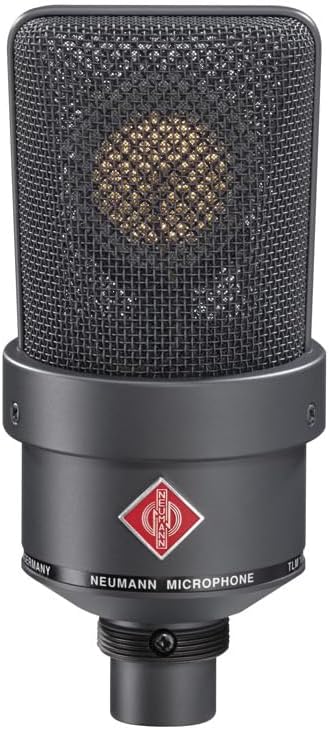
Image: The Neumann TLM 103-MT microphone, a large diaphragm cardioid condenser microphone.
Ihe ngwugwu
Biko chọpụta na ihe niile edepụtara n'okpuru dị na ngwugwu gị:
- Neumann TLM 103-MT Large Diaphragm Cardioid Microphone
- Pig Hog PHM10 8mm Microphone Cable (10ft)
- Microphone Pop Filter with Stand Clip
- Liquid Audio Polishing Cloth

Image: Components of the Neumann TLM 103-MT bundle, including the microphone, pop filter, and cable.
Ntuziaka nhazi
- Ịkwanye igwe okwu: Securely attach the Neumann TLM 103-MT microphone to a suitable microphone stand using its integrated mount. Ensure the microphone is stable and positioned correctly for your recording needs.
- Ijikọ eriri: Connect one end of the Pig Hog PHM10 XLR microphone cable to the XLR output port at the base of the TLM 103-MT microphone. Connect the other end of the XLR cable to an audio interface, mixer, or preamplifier that provides 48V phantom power. The TLM 103-MT requires phantom power to operate.
- Attaching the Pop Filter: Mount the pop filter to the microphone stand. Position the pop filter approximately 2-6 inches (5-15 cm) in front of the microphone capsule. This helps to reduce plosive sounds (P, B, T, K) and protect the microphone from moisture.
- Na-agbanye ike: Once all connections are secure, activate the 48V phantom power on your audio interface, mixer, or preamplifier. The microphone will then be ready for use.
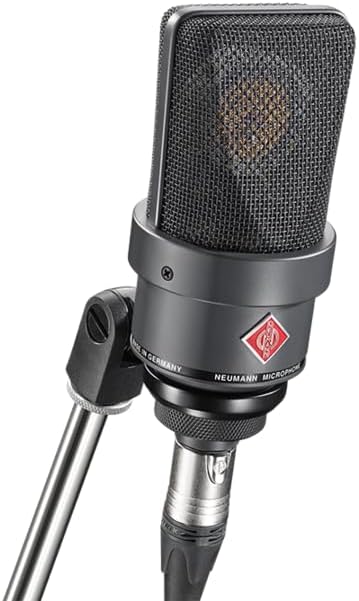
Image: The Neumann TLM 103-MT microphone mounted on a stand and connected via an XLR cable.
Ntuziaka ọrụ
Ntinye igwe okwu
- Olu: For most vocal recordings, position the microphone 6-12 inches (15-30 cm) from the vocalist, aiming at the mouth. Experiment with distance and angle to achieve the desired tone. The pop filter should always be used for vocal recordings.
- Ngwa: For acoustic instruments, placement varies. Start by positioning the microphone 12-24 inches (30-60 cm) from the sound source and adjust based on the instrument and desired sound.
- Ụkpụrụ Cardioid: The TLM 103-MT features a cardioid polar pattern, meaning it is most sensitive to sounds coming from the front and rejects sounds from the sides and rear. Position the microphone with the Neumann logo facing the sound source.
Nweta Staging
Adjust the input gain on your audio interface or preamplifier to achieve a healthy signal level without clipping. Aim for peak levels around -6 dBFS to -10 dBFS in your recording software to allow for headroom during mixing and mastering. The TLM 103-MT has high sensitivity, so you may not need to apply much gain.
Transformerless Design
Ihe nrụpụta na-enweghị ihe ntụgharị stage of the TLM 103-MT ensures a direct, uncolored sound with minimal transmission losses, even at high signal levels. This design contributes to its clear, powerful bass response and overall sonic accuracy.
Nlekọta
- Nhicha igwe okwu: Use the included Liquid Audio polishing cloth or a soft, dry, lint-free cloth to gently wipe the exterior of the microphone. Avoid using liquid cleaners or abrasive materials, as these can damage the finish or internal components. Do not attempt to clean the microphone capsule directly.
- Nlekọta Pop Filter: The pop filter can be cleaned with a mild soap and water solution if it becomes soiled. Ensure it is completely dry before reattaching it to the stand.
- Nchekwa: When not in use, store the microphone in a protective case or a clean, dry environment to prevent dust accumulation and potential damage.
Nchọpụta nsogbu
- Enweghị mpụta ụda:
- Ensure 48V phantom power is activated on your audio interface or mixer.
- Check all XLR cable connections for proper seating.
- Verify that the input gain on your audio device is turned up.
- Test with a different XLR cable if possible.
- Ụda agbagọ:
- Reduce the input gain on your audio interface or preampna -emegharị ihe.
- Mee ka anya dị n'etiti isi iyi ụda na igwe okwu dịkwuo elu.
- Ensure the microphone is not overloaded by excessively loud sound sources. The TLM 103-MT can handle high SPLs, but extreme levels can still cause distortion.
- Mkpọtụ ma ọ bụ mkpọtụ:
- Check for ground loops. Try plugging all audio equipment into the same power strip.
- Hụ na e nwere ihe nchekwa nke ọma na eriri niile ma dịkwa mma.
- Keep the microphone and cables away from power cables, fluorescent lights, and other sources of electromagnetic interference.
Nkọwapụta
| Ụdị igwe okwu | Nnukwu Diaphragm Cardioid Condenser |
| Ụkpụrụ Polar | Cardioid (Unidirectional) |
| Nzaghachi ugboro ugboro | 20 Hz - 20 kHz (typical, with presence boost above 5 kHz) |
| Mkpọtụ onwe onye | 7 dB-A (IEC 651) |
| Mmetụta | 23 mV/pa |
| Ọnụahịa kasị elu nke SPL | 138 dB (for < 0.5% THD) |
| Mmepụta Mmebi | 50 ohms |
| Enyere ibu mgbochi | 1000 ohms |
| Achọrọ ike | 48V Phantom Power (P48) |
| Njikọ | XLR 3F |
| Ibu | Approx. 4.97 pounds (total bundle) |
| Akụkụ (igwe igwe) | Diameter: 60 mm, Length: 132 mm (approx.) |
Mara: Nkọwapụta ga-agbanwe na-enweghị ọkwa.
Akwụkwọ ikike na nkwado
The Neumann TLM 103-MT microphone is covered by the manufacturer's standard warranty. Please refer to the official Neumann website or the documentation included with your microphone for specific warranty terms and conditions.
For technical support, service, or inquiries regarding your product, please contact the authorized dealer or the manufacturer's customer support directly. Contact information can typically be found on the manufacturer's official websaịtị.


