1. Okwu mmalite
This manual provides essential information for the safe and efficient operation of your DieHard Portable Power Station 500-Watt. Please read this manual thoroughly before using the product and keep it for future reference. This portable power station is designed to provide reliable power for various applications, including home backup, weather emergencies, outdoor recreation, and job site use.

Image 1.1: The DieHard Portable Power Station 500-Watt, a compact and powerful unit with a blue handle and multiple output ports.
2. Akụrụngwa Ngwaahịa
The DieHard Portable Power Station offers a range of features designed for versatility and reliability:
- DieHard Legacy: Over 50 years of providing dependable solutions for power needs, built on innovation, durability, and reliability.
- Ike ike: Equipped with a 519.48Wh lithium-ion battery, providing 500 Watts of continuous AC power with up to 1000-Watt peak abilities. Capable of running computer equipment, TVs/monitors, lights, fans, game consoles, kitchen appliances, and more.
- Enwere ike ibugharị: Designed to be compact, lightweight, and travel-friendly. Weighing 15 pounds and measuring 12.3" x 7.5" x 7.5", ideal for easy transport and most outdoor activities.
- Ntinye ike: Supports charging via optional DieHard Portable Solar Panels (120-Watt or 200-Watt), standard AC wall outlet, or DC car charger.
- Mpụta ike: Features a 10-Watt Wireless Charging Pad, 2 AC outlets, 3 USB ports, 1 USB-C port, 2 DC ports, and 1 Car Charger port.
- Mmepụta Waveform: Pure Sine Wave optimized output, resulting in a stable and clean power supply ideal for powering sensitive electronics without interference or damage.
- Nchekwa na ịdịte aka: Weather-Resistant and built to last, incorporates overcharging, temperature, and low battery protection, safeguarding your devices and the power station itself.
- Eco-Enyi na Enyi: Embrace sustainable energy with solar panel's green charging capabilities, reducing reliance on the grid and minimizing your carbon footprint.
3. Ihe mejupụtaraview
Familiarize yourself with the various parts and ports of your DieHard Portable Power Station for optimal use.

Foto 3.1: Zuru ezu view of the DieHard Portable Power Station's smart display and various input/output ports.
- Ngosipụta ihuenyo LCD: Na-egosi ọkwa batrị, wat ntinye/mwepụtatage, na ihe ngosi ọnọdụ.
- Bọtịnụ ịgbanwuo/ gbanyụọ: Na-arụ ọrụ ma ọ bụ gbanyụọ unit ahụ.
- Light ON/OFF Button: Controls the built-in LED light.
- Bọtịnụ mgbanyụ/ Gbanyụọ: Activates or deactivates the AC output ports.
- Ntinye DC: Port for charging the power station via AC adapter or car charger.
- PV Input (10-28V): Port for connecting compatible solar panels for charging.
- Cigarette Lighter Socket Output (12V 10A): Standard 12V DC output.
- DC Output (12V 5A): Two dedicated 12V DC output ports.
- Mmepụta USB-A: Three standard USB ports for charging mobile devices.
- Mbupute USB-C: One USB-C port for faster charging of compatible devices.
- Ụlọ ahịa AC: Two standard AC outlets for powering household appliances.
- Mpempe chaja ikuku: Located on top for compatible devices.
- Anti-collision Strip: Protective strips on the sides for durability.
4. Nhazi
Follow these steps for the initial setup of your DieHard Portable Power Station:
- Ịkwapu: Jiri nlezianya wepụ ebe ọkụ eletrik na ihe niile dị na ngwugwu ahụ.
- Nyochaa: Check the unit for any visible damage. If damaged, do not use and contact customer support.
- Ebube mbụ: Before first use, fully charge the power station using the provided AC adapter. Connect the AC adapter to the DC Input port and plug it into a wall outlet. The LCD screen will indicate charging status.
- Nkwanye: Place the power station on a stable, flat surface in a well-ventilated area, away from direct sunlight, heat sources, and moisture.
5. Ntuziaka ọrụ
Operating your DieHard Portable Power Station is straightforward. Follow these guidelines to power your devices.

Image 5.1: The DieHard Power Station powering multiple devices for a family, demonstrating its versatility.
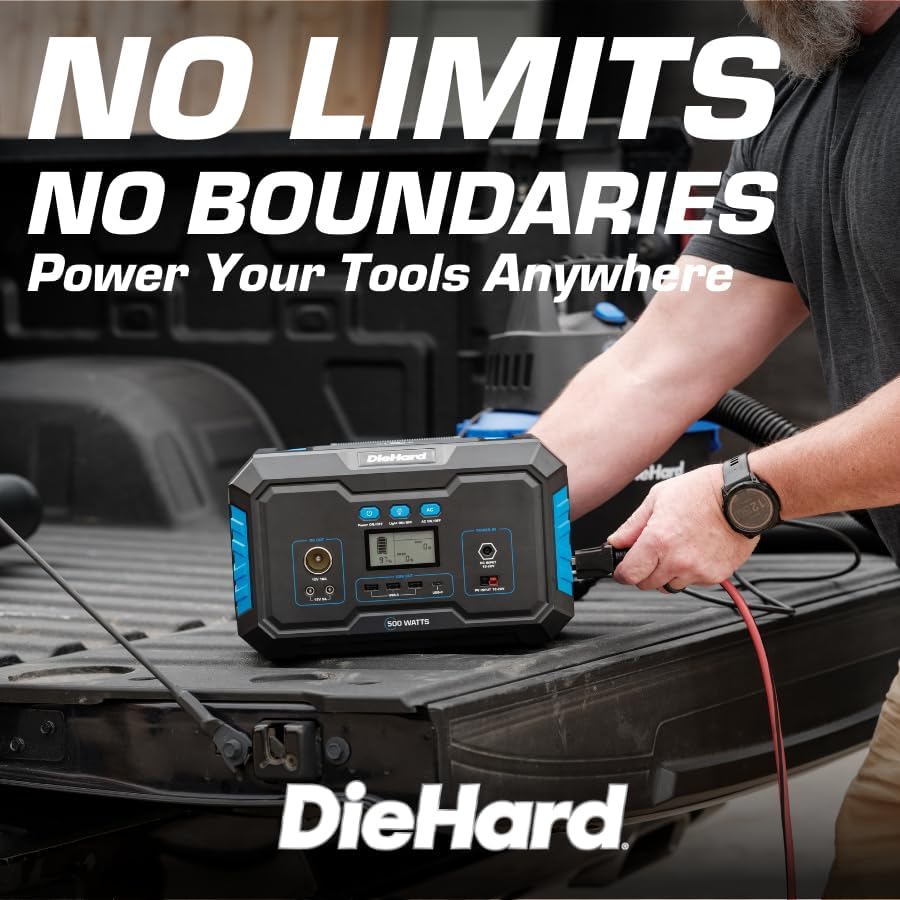
Image 5.2: A DieHard Power Station being used to power tools in a truck bed, highlighting its portability for job sites.

Foto 5.3: Ọpụamples of device runtimes, showing the power station can run a 32" TV for 7 hours or a mini fridge for 5 hours.
- Ike Na: Press and hold the 'Power ON/OFF' button for a few seconds until the LCD screen illuminates.
- Select Output:
- For AC devices, press the 'AC ON/OFF' button. The AC icon will appear on the display.
- For DC devices (including car charger and 12V DC ports), ensure the unit is powered on. The DC output is typically active by default.
- For USB devices, simply plug them into the USB-A or USB-C ports. These are usually active when the unit is on.
- For wireless charging, place your compatible device on the wireless charging pad on top of the unit.
- Jikọọ Ngwaọrụ: Plug your devices into the appropriate output ports. Monitor the LCD screen to see the output wattage and remaining battery life.
- Gbanyụọ: When finished, disconnect all devices. Press and hold the 'Power ON/OFF' button until the LCD screen turns off. If AC output was used, press the 'AC ON/OFF' button to turn it off first.
6. Ozi Nchaji
Your DieHard Portable Power Station can be charged using multiple methods:

Image 6.1: The DieHard Power Station connected to solar panels, demonstrating its solar charging capability.

Image 6.2: Detailed chart showing estimated charging times for the 500W power station using different input methods.
- AC Adapter (Wall Outlet): Connect the provided AC adapter to the DC Input port.
- Panel anyanwụ (Nhọrọ): Connect a compatible DieHard 120-Watt or 200-Watt Portable Solar Panel to the PV Input port. Charging time will vary based on sunlight intensity and panel wattage.
- Car Charger (12V): Use the car charger cable to connect the power station to your vehicle's 12V cigarette lighter socket. This method is most efficient when the car engine is running.
Estimated Charging Times (500-Watt Model):
- From AC Adapter: Approximately 6 - 7 hours
- From Solar Charging 120W: Approximately 6 - 9 hours (depending on solar conditions)
- From Solar Charging 200W: Approximately 5 - 6 hours (depending on solar conditions)
- From Car Charger 12V: Approximately 7 - 8 hours (when car running)
7. Nchekwa na Ịdịgide
Your DieHard Portable Power Station is built with multiple safety features. Please observe the following precautions:
- Etinyela igwe ahụ n'ebe okpomọkụ dị oke elu, anwụ kpọmkwem ruo ogologo oge, ma ọ bụ oke iru mmiri.
- Hụ na ikuku na-ekupụ ikuku nke ọma mgbe ị na-eji ya na mgbe ị na-achaji ya iji gbochie oke okpomọkụ.
- Zere ịda ma ọ bụ itinye ihe ahụ n'ọnọdụ dị oke njọ.
- Do not disassemble, repair, or modify the unit yourself. Contact qualified service personnel for any repairs.
- Debe ebe ụmụaka na anụ ụlọ na-apụghị iru.
- Use only original or certified compatible charging cables and adapters.
- The unit incorporates overcharging, temperature, and low battery protection to safeguard both the power station and connected devices.
8. Nlekọta
Proper maintenance will extend the lifespan and ensure optimal performance of your power station:
- Nhicha: Jiri akwa dị nro dị nro hichaa mpụta nke unit ahụ. Ejila ihe nchacha abrasive ma ọ bụ ihe mgbaze.
- Nchekwa: If storing for an extended period, charge the unit to approximately 50-80% every 3-6 months to maintain battery health. Store in a cool, dry place.
- Nlekọta batrị: Avoid fully discharging the battery frequently. Recharge promptly after use.
- Igwe ikuku: Hụ na oghere ikuku dị n'ebe ahụ enweghị uzuzu na ihe ruru unyi.
9. Nchọpụta nsogbu
If you encounter issues with your power station, refer to the table below for common problems and solutions:
| Nsogbu | Ihe nwere ike ime | Ngwọta |
|---|---|---|
| Unit anaghị agbanye ọkụ. | Apụọla batrị kpamkpam. | Charge the power station using the AC adapter. |
| Mbupu AC anaghị arụ ọrụ. | AC output not activated. | Press the 'AC ON/OFF' button to activate AC output. |
| Device not charging from USB/DC. | Unit not powered on; cable issue. | Ensure unit is on. Try a different cable or port. |
| Overload warning on display. | Connected device exceeds power station's output limit. | Disconnect the device. Check device wattage and ensure it's within the power station's limits. |
| Oke oke okpomọkụ nke nkeji. | Poor ventilation; prolonged high load. | Ensure vents are clear. Reduce load or allow unit to cool down. |
10. Nkọwapụta
Detailed technical specifications for the DieHard Portable Power Station 500-Watt:

Image 10.1: Dimensions of the DieHard 500-Watt Portable Power Station.
| Nkọwapụta | Uru |
|---|---|
| Ụdị | DieHard |
| Nọmba nlereanya | DH-20002-01 |
| Wattage (Na-aga n'ihu) | 500 Watt |
| Wattage (Elu) | 1000 Watt |
| Ike batrị | 519.48Wh |
| Ụdị batrị | Lithium-ion |
| Ibu Ibu | 15.1 pound |
| Akụkụ ngwaahịa (L x W x H) | 12.3" x 7.5" x 7.5" |
| Mmepụta AC Voltage | 110 volts |
| Ugboro mmepụta AC | 60 Hz |
| Mmepụta Waveform | Okpokoro nke Sine |
| Mkpokọta ọdụ ọkụ | 10 (2 AC, 3 USB-A, 1 USB-C, 2 DC, 1 Car Charger, 1 Wireless Charging Pad) |
| Charging Input Options | AC Adapter, Solar Panel (10-28V), Car Charger (12V) |
| Agba | Acha anụnụ anụnụ |
| UPC | 810133980120 |
11. Akwụkwọ ikike na nkwado
For warranty information, product registration, and customer support, please refer to the official DieHard websaịtị ma ọ bụ kpọtụrụ ngalaba ọrụ ndị ahịa ha. Debe nnata nzụta gị dị ka ihe akaebe nke ịzụrụ ihe maka akwụkwọ ikike ọ bụla.
Ndị ọchịchị Websaịtị: www.diehard.com
For further assistance, please reach out to DieHard customer support through the contact information provided on their official websaịtị.


