1. Ngwaahịa gafereview
The MEETION Wireless Keyboard and Mouse Combo provides a full-sized keyboard with a wrist rest and a 3-DPI adjustable mouse, offering a reliable 2.4G wireless connection for various computing needs.
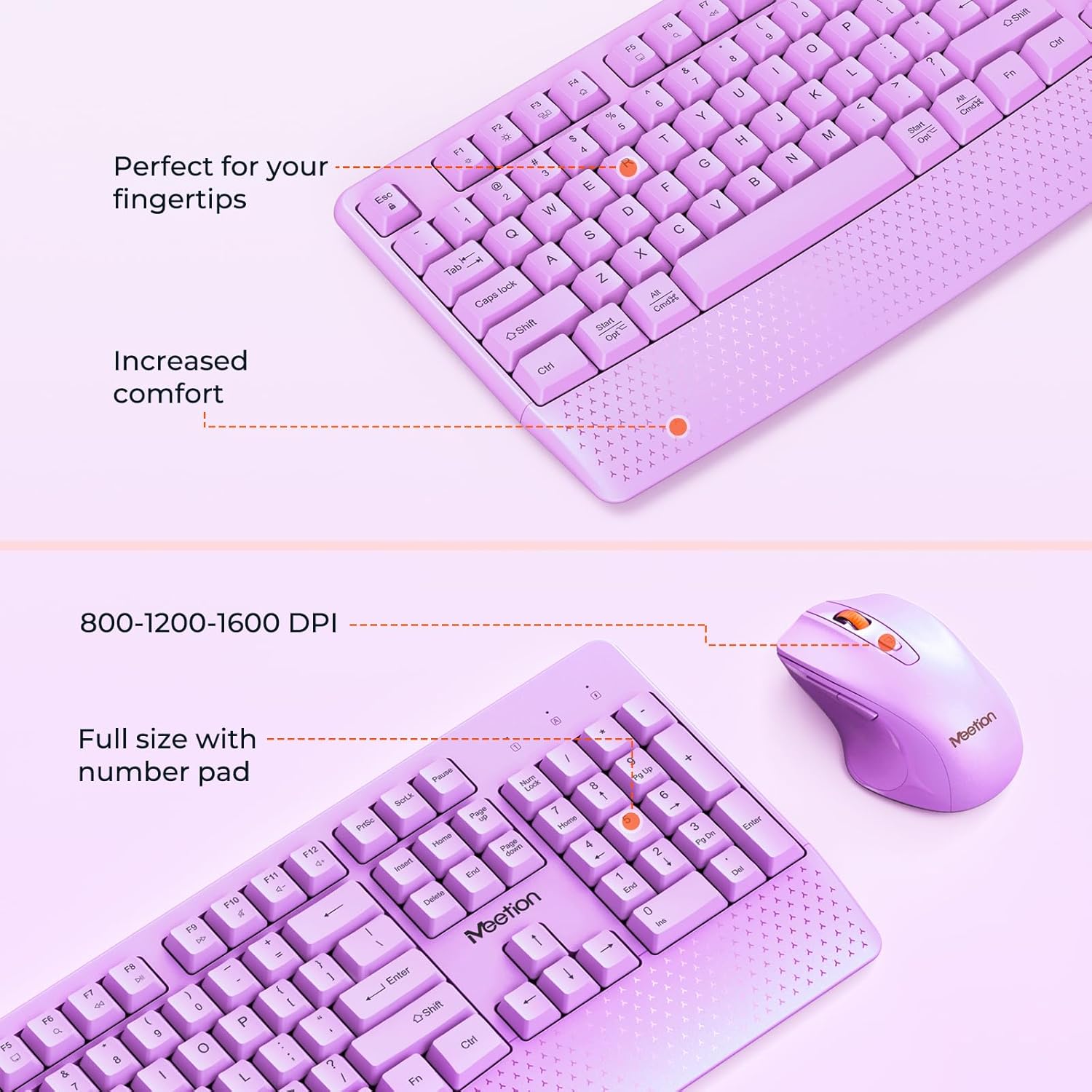
Image: The keyboard features a full-size layout with a number pad and an integrated wrist rest for comfort. The mouse offers adjustable DPI settings.

Foto: Ofeview of the keyboard and mouse, highlighting various function keys on the keyboard and the buttons and features of the mouse.
2. Nhazi ntuziaka
2.1. Ntinye batrị
The keyboard requires two AA batteries, and the mouse requires one AA battery. Batteries are not included.
- Chọta ebe batrị dị n'okpuru ahụigodo na òké.
- Mepee mkpuchi batrị.
- Fanye batrị ahụ, na-ahụ polarity ziri ezi (+/-).
- Mechie mkpuchi batrị nke ọma.

Image: This image illustrates the battery compartments for both the keyboard (requiring 2 AA batteries) and the mouse (requiring 1 AA battery).
2.2. Connecting the Wireless Receiver
The keyboard and mouse share a single 2.4G USB Nano Receiver.
- Locate the USB Nano Receiver, typically stored in the mouse's battery compartment or packaging.
- Plug the USB Nano Receiver into an available USB-A port on your computer.
- If your device only has USB-C ports, use the provided USB-C adapter. First, plug the USB Nano Receiver into the USB-C adapter, then plug the adapter into your device's USB-C port.
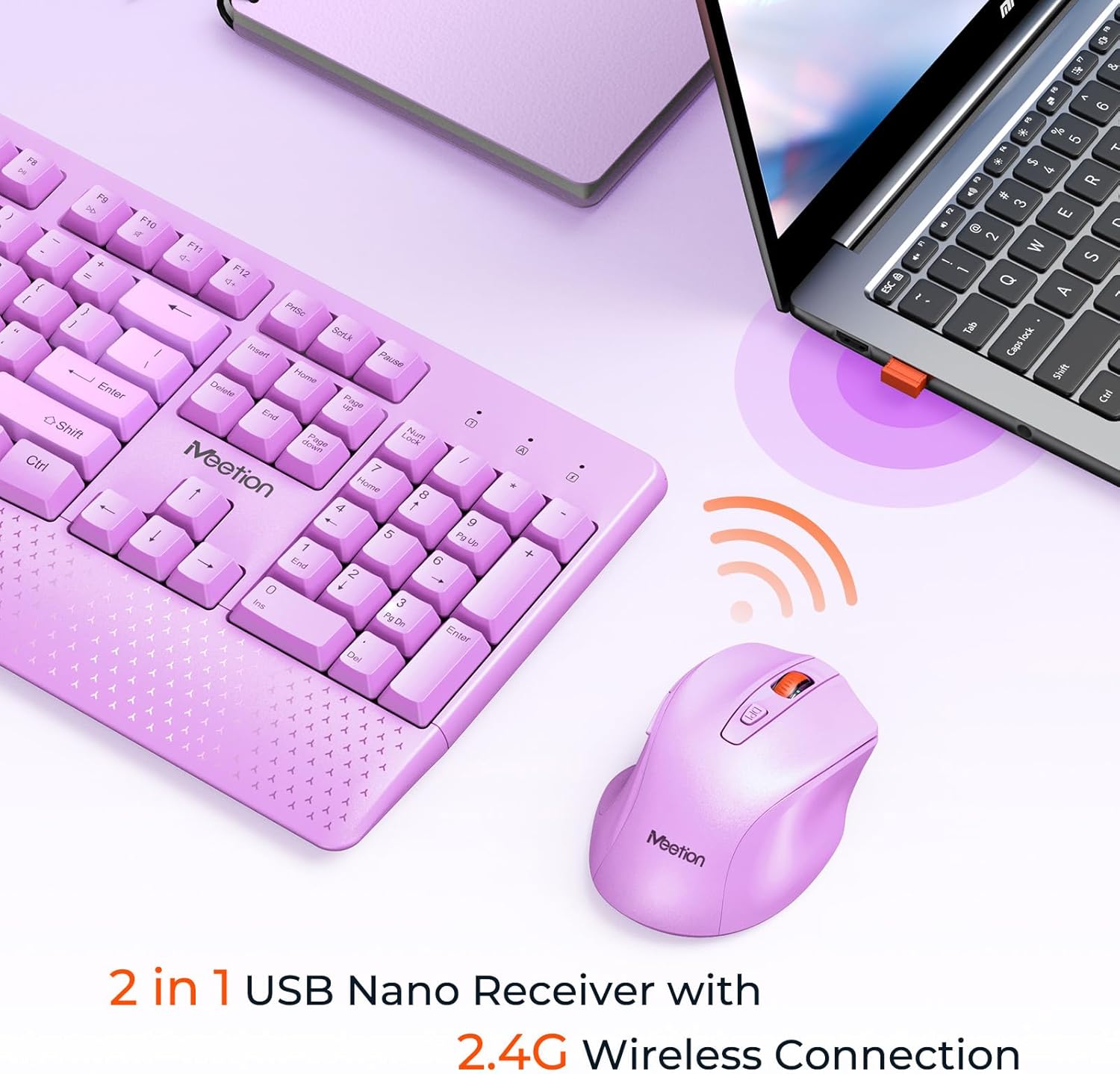
Image: The keyboard and mouse wirelessly connect to a laptop via a 2.4G USB Nano Receiver, shown plugged into a USB port.
Image: A diagram demonstrating how to use the USB-C adapter: the USB receiver plugs into the adapter, which then plugs into a Type-C port on a computer.
2.3. Na-agbanye ike
- For the mouse, slide the ON/OFF switch located on its underside to the 'ON' position.
- The keyboard does not have a separate power switch; it activates automatically upon successful connection and battery insertion.
3. Ntuziaka ọrụ
3.1. Ojiji ahụigodo
- Nhazi Nha zuru oke: The keyboard features a standard full-size layout, including a numeric keypad for efficient data entry.
- Ezumike Aka Ejikọtara: The ergonomic wrist rest is designed to provide comfort and reduce strain during extended typing sessions.
- Tilt nwere ike idozi: Flip out the kickstands on the underside of the keyboard to adjust the typing angle for improved comfort.
- Igodo ọrụ: Utilize the Fn (Function) key in combination with F1-F12 keys for multimedia controls and other shortcuts. Refer to the keyboard layout for specific functions.
Image: A close-up of the keyboard's side profile, illustrating the adjustable 8-degree tilt angle provided by the kickstands for ergonomic typing.
3.2. Ojiji òké
- Nhazi Ergonomic: The mouse is shaped to fit comfortably in your hand, promoting natural wrist and arm posture.
- DPI nwere ike imeghari: Cycle through DPI settings (800, 1200, 1600) by pressing the DPI button located behind the scroll wheel. This allows you to adjust cursor sensitivity to your preference.
- Pịa nkịtị: The mouse features silent click buttons for a quiet working environment.
- Bọtịnụ akụkụ: Use the side buttons for forward and backward navigation in web ihe nchọgharị na ngwa ndị ọzọ.

Image: A detailed diagram of the mouse, labeling its components including the Left Button, Right Button, Scroll Wheel, DPI Button, Forward/Backward buttons, ON/OFF switch, Optical sensor, Battery Cover, Anti-Slip Pads, and USB Nano Receiver storage slot.
Image: An illustration demonstrating the adjustable DPI settings of the mouse, showing options for 800, 1200, and 1600 DPI.
4. Nlekọta
4.1. Nhicha
- To clean the keyboard and mouse, power them off and remove batteries if possible.
- Jiri nwayọọ, damp cloth to wipe surfaces. Avoid harsh chemicals or abrasive materials.
- For keyboard keys, use compressed air to remove dust and debris.
4.2. Ngbanwe batrị
Replace batteries when performance degrades or the low battery indicator (if present) illuminates. Follow the battery installation steps in Section 2.1.
5. Nchọpụta nsogbu
- Enweghị njikọ: Ensure batteries are correctly installed and charged. Verify the USB Nano Receiver is securely plugged into a working USB port. If using a USB-C adapter, ensure it is properly connected.
- Òké anaghị aza: Check the mouse's ON/OFF switch. If the mouse enters sleep mode after inactivity, click any button to wake it up.
- Njikọ Lag ma ọ bụ Nkwụsị: Move the keyboard and mouse closer to the USB Nano Receiver. Avoid placing the receiver near other wireless devices or large metal objects that may cause interference.
- Ndozi DPI anaghị arụ ọrụ: Press the DPI button on the mouse to cycle through the available sensitivity settings (800/1200/1600 DPI).
6. Nkọwapụta
| Njirimara | Nkọwa |
|---|---|
| Ụdị | Nzukọ |
| Model (Keyboard) | MT-CA330 |
| Model (Mouse) | MT-CA130 |
| Teknụzụ Njikọta | 2.4G Wireless, USB |
| Njirimara Pụrụ Iche nke ahụigodo | Ezumike nkwojiaka |
| Ntọala DPI òké | 800-1200-1600 |
| Batrị ahụigodo | Batrị 2 AA (anaghị etinye ya) |
| Batrị òké | Batrị 1 AA (anaghị etinye ya) |
| Ngwa dakọtara | PC, Computer, Laptop, Windows, Mac, Gaming Console |
| Akụkụ ngwugwu | 17.56 x 10.75 x 1.89 sentimita asatọ |
| Ibu Ibu | 1.98 pound |
7. Akwụkwọ ikike na nkwado
For warranty information and technical support, please refer to the documentation included with your product packaging or visit the official MEETION websaịtị. Debe akwụkwọ nnata ịzụrụ maka akwụkwọ ikike.