1. Okwu mmalite
The OTOFIX D1 Max is a new generation, high-end diagnostic scan tool designed for comprehensive vehicle diagnostics and maintenance. It combines powerful hardware with advanced software capabilities to provide efficient and accurate solutions for automotive professionals and enthusiasts. This manual provides detailed instructions on setting up, operating, maintaining, and troubleshooting your OTOFIX D1 Max scanner.

Image 1.1: OTOFIX D1 Max Scanner highlighting key features like 40+ HOT Services, 3X Faster AutoScan 2.0, All System Diagnostics, Guided Functions, Blu. Wireless VCI, Wide Coverage, CAN-FD & DoIP, 2015+ Renault SGW, and 2 Years Update.
2. Ngwaahịa gafereview
The OTOFIX D1 Max is engineered for superior performance and user experience. It features a robust design and advanced functionalities to meet the demands of modern vehicle diagnostics.
2.1 Atụmatụ
- ECU Coding & Offline ECU Programming: Advanced capabilities for vehicle personalization and module replacement.
- Ọrụ Ọrụ 40+: Comprehensive maintenance solutions including Oil Reset, TPMS Reset, Injector Coding, Suspension, and Throttle Matching.
- Nnwale Na-arụ Ọrụ (Njikwa Nduzi Abụọ): Perform component tests by sending commands to vehicle modules.
- OE-level Full-System Diagnostics: Access all available vehicle systems for reading/clearing codes, live data, and ECU information.
- Mkpuchi ụgbọ ala sara mbara: Supports over 80 brands and 10,000+ vehicle models (1996-2025).
- Advanced Protocols: Supports DoIP & CAN FD for faster data transfer and diagnostics.
- Secure Gateway Access: Compatible with FCA (2018+) and Renault (2015+) SGW-equipped vehicles.
- Auto VIN 2.0: Faster and more accurate automatic vehicle identification.
- Wi-Fi Printing: Wirelessly print diagnostic reports.
- 2-Years Free Software Updates: Ensures continuous functionality and compatibility.
2.2 Nkọwa ngwaike
| Akụkụ | Nkọwapụta |
|---|---|
| Sistemụ nrụọrụ | Android 11.0 |
| Nhazi | Qualcomm CPU (4-Core, 1.8GHz) |
| Ebe nchekwa | 4GB Ram + 128GB nchekwa |
| Nha ihuenyo | 10.4 sentimita asatọ |
| Mkpebi ihuenyo | 2000*1200 |
| Ike batrị | 7250mAh lithium ion |
| Igwefoto | Front: 5MP; Rear: 8MP |
| Lower Computer (VCI) | V1 |
| Akụkụ | 10.8 x 7.1 x 0.7 sentimita asatọ |
| Ibu Ibu | 9.79 pound |

Image 2.1: Visual representation of OTOFIX D1 Max hardware specifications including Android 11.0, 4-Core CPU, 10.4" screen, 4+128G memory, 7250mAh battery, and 5MP/8MP cameras.
3. Nhazi
3.1 Unboxing na nlele mbụ
Upon receiving your OTOFIX D1 Max, carefully open the packaging and inspect all components for any signs of damage. Ensure all items listed in the package contents are present.
Ihe ngwugwu 3.2
The OTOFIX D1 Max package typically includes the following items:
- 1x OTOFIX D1 MAX Diagnostic Tool (Tablet)
- 1x OTOFIX V1 (Vehicle Communication Interface)
- 1 x eriri USB-C
- 1x AC/DC Power Adapter (12V)
- 1x Akpa na-ebu
- 1x Packing List
- 1x Ntuziaka ntụaka ngwa ngwa
- 1x Soft Cloth
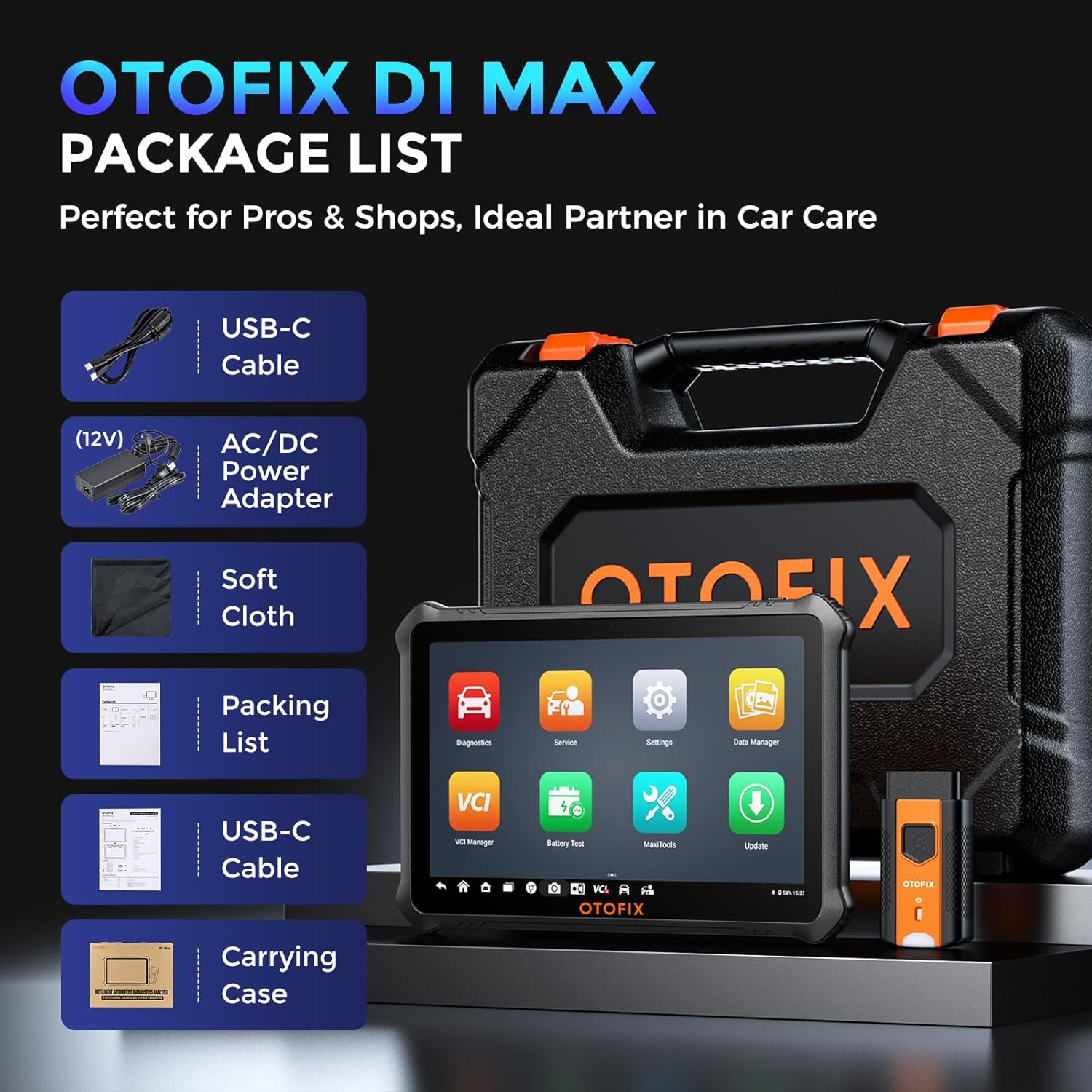
Image 3.1: Contents of the OTOFIX D1 Max package, including the tablet, VCI, cables, power adapter, carrying case, and documentation.
3.3 Ịgbanye na nhazi mbido
- Connect the AC/DC Power Adapter to the OTOFIX D1 Max tablet and a power outlet to ensure the device is charged.
- Press and hold the Power button until the OTOFIX logo appears on the screen.
- Follow the on-screen prompts to complete the initial setup, including language selection, Wi-Fi connection, and time zone settings.
- Register your device and activate the software updates as prompted. A stable internet connection is required for this step.
4. Ọrụ
4.1 Ijikọ na Ụgbọala
- Locate the vehicle's OBDII port, typically under the dashboard on the driver's side.
- Plug the OTOFIX V1 (VCI) into the vehicle's OBDII port. The VCI's indicator light should illuminate.
- On the OTOFIX D1 Max tablet, ensure Bluetooth is enabled and the VCI is paired. The VCI Manager application can be used to manage the connection.
- Tụgharịa ọkụ ụgbọala ahụ ka ọ dị n'ọnọdụ ON (gbanyụrụ injin ahụ).
4.2 OE-Level All Sistemụ Nchọpụta nchọpụta
The OTOFIX D1 Max can access all available vehicle systems to perform comprehensive diagnostics.
- Gụọ Koodu: Retrieve Diagnostic Trouble Codes (DTCs) from all control modules.
- Kpochapụ Koodu: Hichapụ DTCs mgbe emechara ndozi.
- Data dị ndụ: View real-time data streams from various sensors and components.
- Data Frame kwụsịrị: Capture a snapshot of vehicle conditions when a DTC was set.
- Ozi ECU: Retrieve detailed information about the Electronic Control Unit.

Image 4.1: Illustration of OE-level all system diagnostics, showing the scanner connected to a car and accessing various systems like Engine, ABS, EPB, and BMS.
4.3 ECU Coding & Advanced Functions
This function allows for advanced vehicle customization and module adaptation.
- Ndokwa n'ịntanetị: Automatically retrieves coding values from the server for quick and precise operations. Compatible with brands like Volkswagen, Audi, Skoda, Peugeot, Citroen, DS, Porsche, BMW, Mini, Nissan, Infiniti, Nissan GT-R, Renault.
- Koodu na-anọghị n'ịntanetị: Allows manual input of coding values, suitable for experts and a wider range of car builds. Compatible with Ford, Ford AU, Ford EU, Subaru, Land Rover, Jaguar, Peugeot, Citroen, DS, Volkswagen, Volkswagen Brazil, Audi, Skoda, Volkswagen CV.
- Offline ECU Programming: Replace or update ECU software, program new blank ECUs, and fix software-controlled issues. Compatible with Ford, Ford AU, Ford EU, Land Rover, Jaguar, Opel, Vauxhall.
- Nhazi onwe: Customize vehicle settings such as disabling auto start-stop, activating daytime running lights, and other comfort functions.
- Ọrụ Nduzi VAG: Provides step-by-step procedures for complex diagnostics on Volkswagen, Audi, Skoda, and VW vehicles, skipping channel numbers and security codes.

Foto 4.2: Zuru ezu view of ECU Programming & Coding capabilities, including open/close functions, module matching, personalization, parameter reset, and fixing complex issues.
5. Ọrụ Ọrụ
The OTOFIX D1 Max offers over 40 maintenance and service functions to address common vehicle issues.
- Ntọghari mmanụ: Tọgharịa usoro ndụ mmanụ ahụ mgbe agbanwechara mmanụ ahụ.
- Tọgharia TPMS: Tọgharịa sistemụ nlekota nrụgide taya.
- Tọgharịa SAS: Hazie ihe mmetụta nkuku nhazi.
- Tọgharia EPB: Reset the electronic parking brake pads after replacement.
- Ndakọrịta Throttle: Relearn the throttle body position.
- Ntọghari BMS: Register the new battery after replacement.
- ABS ọbara: Perform ABS brake bleeding to get a firm brake pad.
- Nkwusioru: Adjust the vehicle height sensor for suspension calibration.
- Clutch Learning: Perform clutch adaptation.

Foto 5.1: Ofeview of 40+ service functions, including Oil Reset, SAS Reset, EPB Reset, Injector Coding, Throttle, BMS Reset, and Clutch Learning.
6. Njikwa Nduzi Abụọ (Nnwale Na-arụ Ọrụ)
The bi-directional control feature allows the scanner to send commands to vehicle modules to perform specific tests, narrowing down diagnostic scope and quickly pinpointing problems.
- Activate components like windows, headlights, wipers, sunroof, radiator fans, fuel pump, A/C clutch, etc.
- Test the functionality of various actuators without disassembling the vehicle.
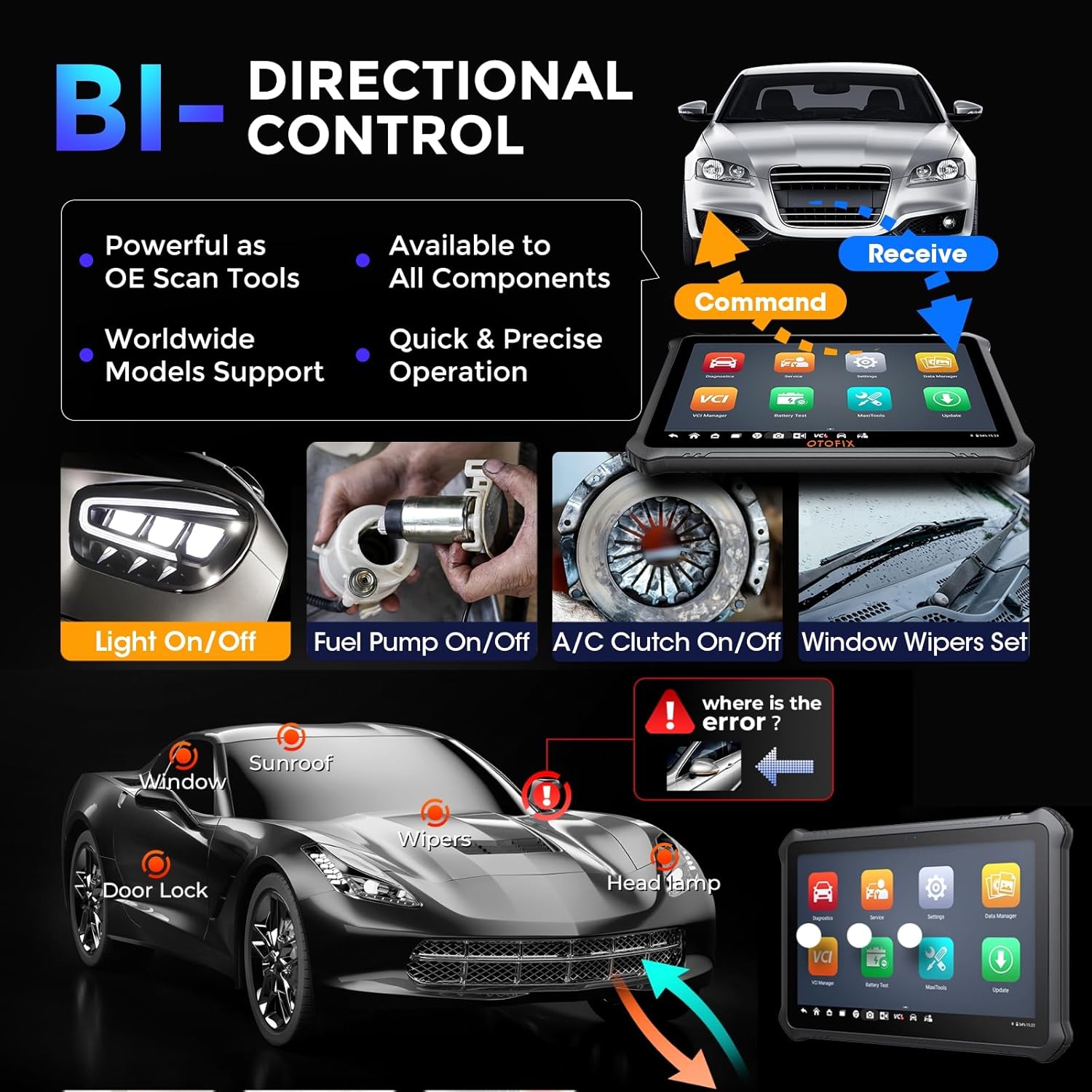
Image 6.1: Demonstration of bi-directional control, showing the scanner sending commands to vehicle components like lights, fuel pump, A/C clutch, and window wipers.
7. Nlekọta
Proper maintenance ensures the longevity and optimal performance of your OTOFIX D1 Max scanner.
- Mmelite ngwanrọ: Regularly update the software to ensure compatibility with new vehicle models and access to the latest features. The device includes 2 years of free updates.
- Nhicha: Jiri nwayọọ, damp ákwà iji hichaa ihuenyo mbadamba na ahụ. Zere ihe nhicha ma ọ bụ ihe mgbaze.
- Nchekwa: Store the device in its carrying case in a cool, dry place when not in use. Avoid extreme temperatures.
- Nlekọta batrị: Charge the battery regularly, even if the device is not in frequent use, to maintain battery health.
- Nlekọta VCI: Keep the VCI clean and free from debris. Ensure the OBDII connector pins are not bent or damaged.

Image 7.1: Information regarding the included 2 years of free software updates, emphasizing cost savings.
8. Nchọpụta nsogbu
This section provides solutions to common issues you might encounter with your OTOFIX D1 Max scanner.
8.1 Okwu nkịtị na Ngwọta
- Ngwaọrụ anaghị agbanye: Hụ na batrị ahụ chajị. Jikọọ ihe nkwụnye ike wee nwaa ọzọ. Ọ bụrụ na nsogbu ahụ anọgide, kpọtụrụ onye na-ahụ maka ya.
- VCI not connecting: Check if the VCI is securely plugged into the vehicle's OBDII port. Ensure Bluetooth is enabled on the tablet and the VCI is paired. Restart both the tablet and the VCI.
- Unable to communicate with vehicle: Verify the vehicle's ignition is ON. Check the OBDII port for power. Ensure the vehicle model and year are correctly selected in the software. Try a different vehicle to rule out vehicle-specific issues.
- Software freezing/slow performance: Close unnecessary applications. Clear cache if available in settings. Ensure sufficient storage space. Perform a software update if available.
- Diagnostic function not working: Ensure the vehicle supports the specific function. Some advanced functions may require specific vehicle conditions or procedures. Refer to the on-screen guided functions or vehicle service manual.
8.2 Nkwado kọntaktị
If you encounter issues that cannot be resolved using the troubleshooting steps above, please contact OTOFIX customer support. Provide detailed information about the problem, including any error messages, vehicle details, and steps taken to troubleshoot.
Email: otofixaftersales-amz@outlook.com
Support is available Monday-Friday 9:00 AM - 6:00 PM EST, with 24/7 support available via email.
9. Nkọwapụta
Detailed technical specifications for the OTOFIX D1 Max scanner.
| Njirimara | Uru |
|---|---|
| Ụdị | OTOFIX |
| Nlereanya | OTOFIX D1 MAX Scanner |
| Sistemụ nrụọrụ | Android 11.0 |
| Nhazi | 4-Core, 1.8GHz |
| Ebe nchekwa | 4GB Ram, nchekwa 128GB |
| Nha ihuenyo | 10.4 sentimita asatọ |
| Mkpebi ihuenyo | 2000 x1200 |
| Batrị | 7250mAh Lithium Ion (gụnyere) |
| Igwefoto | Front: 5MP; Rear: 8MP |
| Njikọta | Wi-Fi, Bluetooth |
| Protocol akwadoro | DoIP, CAN FD, J2534 (with VCI) |
| Akụkụ (L x W x H) | 10.8 x 7.1 x 0.7 sentimita asatọ |
| Ibu Ibu | 9.79 pound |
| Nọmba nke onye nrụpụta | OTOFIX D1 MAX Scanner |
| UPC | 850051166305 |
10. Akwụkwọ ikike na nkwado
OTOFIX provides comprehensive support and warranty for the D1 Max scanner.
- Akwụkwọ ikike: 1-year quality undertaking.
- Mmelite ngwanrọ: 2 years of free software updates included.
- Enyemaka nka nka: Lifetime technical assistance is available.
- Iwu nloghachi: Hassle-free return policy within 30 days.
- Ndị ọrụ nlekọta ndị ahịa: 24/7 support via email.
For any inquiries or support needs, please contact OTOFIX at otofixaftersales-amz@outlook.com.


