1. Okwu Mmalite na Nchekwa
This manual provides essential instructions for the safe installation, operation, and maintenance of your Bebesit Aries Baby Car Seat. Please read this manual thoroughly before using the car seat and keep it in a safe place for future reference. Failure to follow these instructions could result in serious injury or death.
1.1 ịdọ aka ná ntị nchekwa dị mkpa
- Always secure the car seat properly in the vehicle, even when unoccupied.
- Ensure the child is correctly harnessed and the harness is snug.
- Ahapụla nwatakịrị n'oche ụgbọala n'enweghị onye na-elekọta ya.
- Ejila oche ụgbọala ahụ ma ọ bụrụ na ọ daa n'ihe mberede, ọbụlagodi na ọ dịghị ihe a na-ahụ anya mebiri. Gbanwee ya ozugbo.
- This car seat is certified under ECE R44/04 standards, ensuring maximum safety.
- The car seat is designed for children from birth up to 25 kg (Group 0+/1/2).

Foto 1.1: N'ihu view of the Bebesit Aries Baby Car Seat, showcasing its design and padding.
2. Ngwa na atụmatụ
Familiarize yourself with the various parts of your Bebesit Aries car seat to ensure correct usage and adjustments.
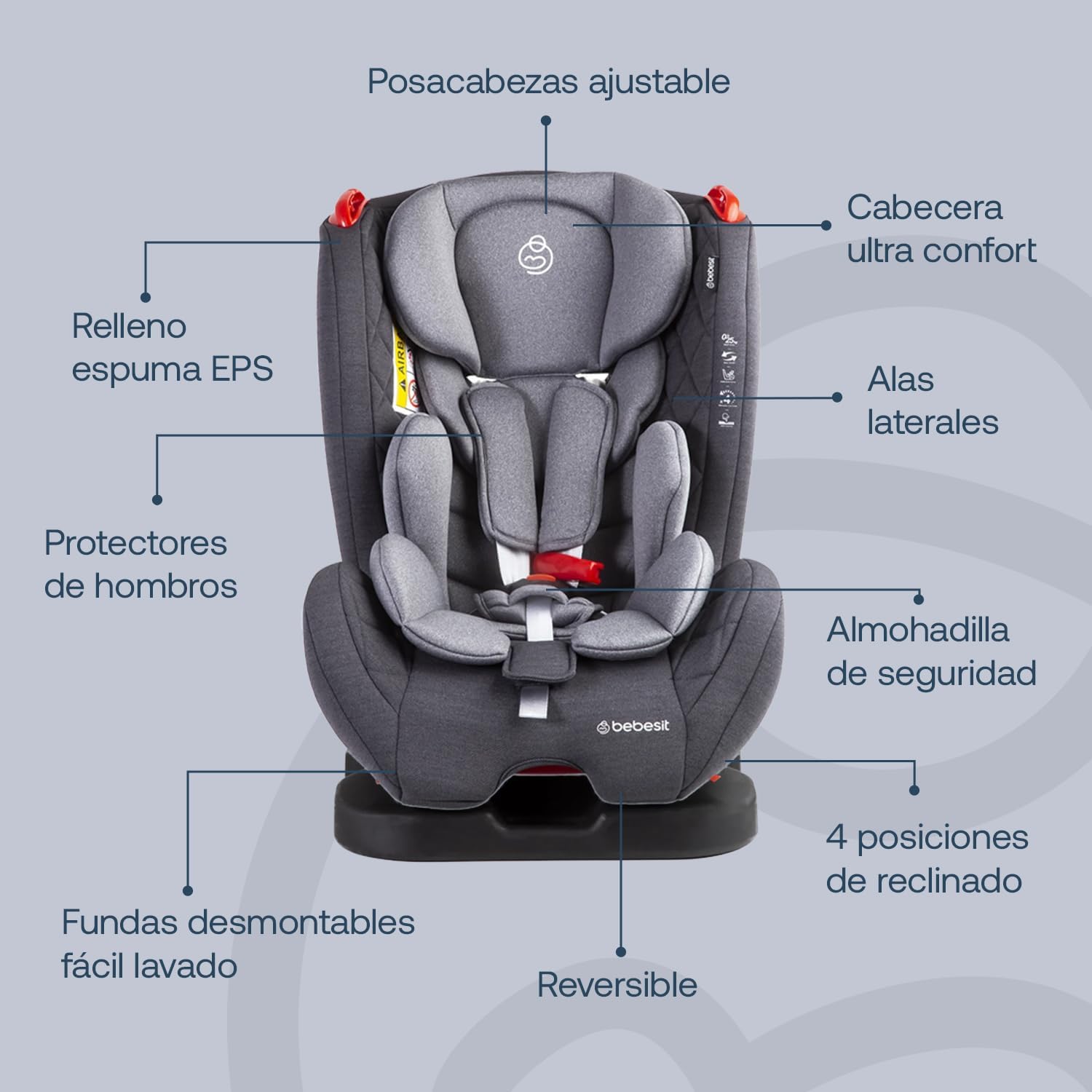
Figure 2.1: Key components of the Bebesit Aries car seat, including adjustable headrest, EPS foam padding, shoulder protectors, and safety cushion.
- Isi oche enwere ike idozi: Provides head and neck support, adjustable to accommodate your child's growth.
- EPS Foam Padding: Enhanced side impact protection and comfort.
- Shoulder Protectors: Padded for comfort and to prevent harness irritation.
- Safety Cushion: Additional padding for smaller infants.
- Njikọ Isi 4: Securely holds the child in place.
- 4 Recline Positions: Allows for comfortable positioning for different age groups and during travel.
- Mkpuchi enwere ike iwepụ: Maka nhicha na mmezi dị mfe.
- Ntughari atụgharị: Supports both rear-facing and forward-facing installations.
3. Ntọala na nwụnye
The Bebesit Aries car seat is designed for versatility, supporting both rear-facing and forward-facing orientations based on your child's weight and age.
3.1 Orientation Guidelines

Figure 3.1: The car seat supports rear-facing installation for children 0-13 kg and forward-facing for children 0-25 kg.
- Rear-Facing (0-13 kg): For infants from birth up to approximately 13 kg. This position offers the best protection for infants.
- Forward-Facing (0-25 kg): For toddlers and older children from 9 kg up to 25 kg. Ensure your child meets the minimum weight and height requirements before switching to forward-facing.
3.2 Ụzọ ntinye
The car seat is installed using the vehicle's 3-point seat belt system (Latch system).

Figure 3.2: The car seat secures using the vehicle's 3-point seat belt system.
- Ndokwa: Place the car seat on the vehicle seat. For rear-facing, ensure the car seat is reclined to the appropriate position for an infant.
- Routing the Seat Belt: Follow the color-coded belt paths on the car seat for either rear-facing (blue) or forward-facing (red) installation. Thread the vehicle's 3-point seat belt through the designated slots.
- Securing the Belt: Buckle the vehicle's seat belt and pull the shoulder portion of the belt to remove all slack. Press down firmly on the car seat while tightening the belt to ensure a secure fit. The car seat should not move more than 1 inch (2.5 cm) side-to-side or front-to-back at the belt path.
- Lelee maka kwụsie ike: Verify that the car seat is firmly installed and does not wobble.

Figure 3.3: The car seat features a Latch installation system for secure attachment and can rotate for easier access (if applicable to this model, refer to specific instructions for rotation mechanism).
Note: While the image shows a 360-degree rotation feature, the product specifications do not explicitly mention this for the Aries model. Always refer to the specific instructions provided with your product for exact features and installation steps. The primary installation method for this model is the vehicle's 3-point seat belt (Latch).
4. Ọrụ na mmezi
Proper adjustment of the car seat is crucial for your child's safety and comfort.
4.1 Ịchekwa Nwa Gị
- Debe nwatakịrị n'oche: Position your child in the car seat.
- Nkwanye akwa: Bring the shoulder straps over your child's shoulders and buckle the harness. Ensure the chest clip is at armpit level.
- Mee ka ihe mgbochi sie ike: Pull the harness adjustment strap until the harness is snug against your child's body. You should not be able to pinch any slack in the harness straps at the shoulder.

Figure 4.1: Demonstrating how to properly adjust and secure the harness straps for your child's safety.
4.2 Ọnọdụ Nọdụ ala
The Bebesit Aries car seat offers 4 recline positions for optimal comfort and safety, especially for infants in the rear-facing position. Consult the indicators on the side of the car seat to ensure the correct recline angle for your child's weight group.
4.3 mmezi isi oche
The headrest is adjustable to grow with your child. To adjust, locate the adjustment lever (usually at the top or back of the headrest) and raise or lower the headrest until the shoulder straps are at or just below your child's shoulders for rear-facing, and at or just above for forward-facing.
5. Nlekọta na nlekọta
Regular cleaning and maintenance will prolong the life of your car seat and ensure its continued safety.
- Mkpuchi ihicha: The car seat features removable covers for easy cleaning. Refer to the care label on the fabric for specific washing instructions. Typically, machine wash cold on a gentle cycle and air dry. Do not bleach or iron.
- Cleaning Harness: Jiri mgbasa ozi hichaa eriri njideamp cloth and mild soap. Do not immerse harness straps in water or use harsh cleaners, as this can weaken the webbing.
- Plastic and Metal Parts: Jiri mgbasa ozi hichaa akụkụ plastik na ígwèamp akwa na ncha dị nro. Ejila ihe nchacha abrasive ma ọ bụ ihe mgbaze.
- Nchekwa: Debe oche ụgbọala ahụ n'ebe dị jụụ ma kpọọ nkụ, ebe anwụ na-anaghị apụta kpọmkwem mgbe a naghị eji ya.
6. Nchọpụta nsogbu
| Nsogbu | Ihe nwere ike ime | Ngwọta |
|---|---|---|
| Oche ụgbọala na-adị ka nke rụrụ arụ mgbe etinyere ya. | Seat belt not tightened sufficiently; incorrect belt path. | Re-read installation instructions. Press down firmly on the car seat while tightening the vehicle's seat belt. Ensure the belt is routed correctly through the designated path. |
| Harness straps are difficult to tighten or loosen. | Harness may be twisted; adjustment mechanism obstructed. | Untwist any twisted harness straps. Check for obstructions around the harness adjustment strap. |
| Child's head slumps forward in rear-facing position. | Incorrect recline angle for infant. | Adjust the car seat to a more reclined position. Ensure the recline indicator shows an appropriate angle for infants. |
7. Nkọwapụta
Detailed specifications for the Bebesit Aries Baby Car Seat.

Figure 7.1: Dimensions and weight of the Bebesit Aries car seat.
- Aha nlereanya: Aries
- Nọmba nlereanya: Gris
- Nkwanye ịdị arọ kachasị: 36 kilogram
- Ihe mejupụtara: EPS Foam Upholstery
- Akụkụ ngwaahịa: 44 cm (obosara) x 41 cm (omimi) x 63 cm (elu)
- Arọ ngwaahịa: 6 n'arọ
- Usoro: Rear-facing (0-13 kg), Forward-facing (0-25 kg)
- Ụdị nwụnye: Latch (using vehicle's 3-point seat belt)
- Asambodo nchekwa: ECE R44/04
- Ogologo afọ akwadoro: Child (Group 0+/1/2)
8. Akwụkwọ ikike na nkwado
For specific warranty information, please refer to the documentation included with your purchase or contact Bebesit customer service directly. Warranty terms may vary by region and retailer.
For product support, technical assistance, or to inquire about replacement parts, please visit the official Bebesit website or contact their customer support channels. Keep your purchase receipt as proof of purchase.
Bebesit is committed to quality and safety, adhering to international safety standards for infant products.
Ị nwere ike ịga na Bebesit Store on Amazon maka ozi ndị ọzọ.


