Okwu mmalite
This instruction manual provides essential information for the safe and effective use of your TOTAL Carpenter's Hammer, 220g (Model THTS7308). Designed for precision and versatility in woodworking and general carpentry tasks, this hammer features a forged carbon steel head and a comfortable bi-material fiber handle. Please read this manual thoroughly before using the tool and keep it for future reference.

Image: The TOTAL Carpenter's Hammer 220g, showcasing its overall design with the forged carbon steel head and bi-material handle.
Akụkụ ndị bụ isi:
- Forged Carbon Steel Head: Ensures durability and strength for demanding carpentry projects.
- Curved Claw Nail Puller: Integrated into the head for efficient nail removal without damaging surrounding wood.
- Bi-material Fiber Handle: Provides a comfortable and secure grip, absorbing vibrations and reducing user fatigue during prolonged use.
- Optimal Weight (220g head): Suitable for detailed and precise work, offering a good balance for continuous use.
Ntuziaka nchekwa
Always follow these safety guidelines to prevent injury and ensure safe operation of your hammer:
- Yiri ugegbe nchekwa: Always protect your eyes from flying debris when striking or pulling nails.
- Lelee tupu eji: Check the hammer head and handle for any signs of damage, cracks, or looseness. Do not use a damaged hammer.
- Jide nke ọma: Jide hama ahụ nke ọma n'akụkụ njedebe nke aka ahụ maka ike na njikwa kachasị elu.
- Strike Squarely: Always strike the nail head squarely with the hammer face. Angled strikes can cause the nail to bend or fly off.
- Kpochapụ mpaghara ọrụ: Ensure your work area is free of obstructions and bystanders, especially when striking.
- Avoid Overstriking: Do not strike hardened steel objects, as this can chip the hammer face or the object, creating dangerous projectiles.
- Jiri maka ebumnuche ebumnuche: This hammer is designed for driving and pulling common nails in wood. Do not use it as a pry bar, chisel, or for other unintended purposes.
- Debe ka ụmụaka na-enwetaghị: Store the hammer securely when not in use.
Ngwa ngwaahịa
Your TOTAL Carpenter's Hammer consists of the following main parts:
- Striking Face: The flat, circular part of the hammer head used for driving nails.
- Claw (Curved Nail Puller): The V-shaped, curved end opposite the striking face, used for extracting nails.
- Isi: The entire metal part, including the striking face and claw, made of forged carbon steel.
- Jikwaa: The grip portion, made of bi-material fiber for comfort and vibration absorption.
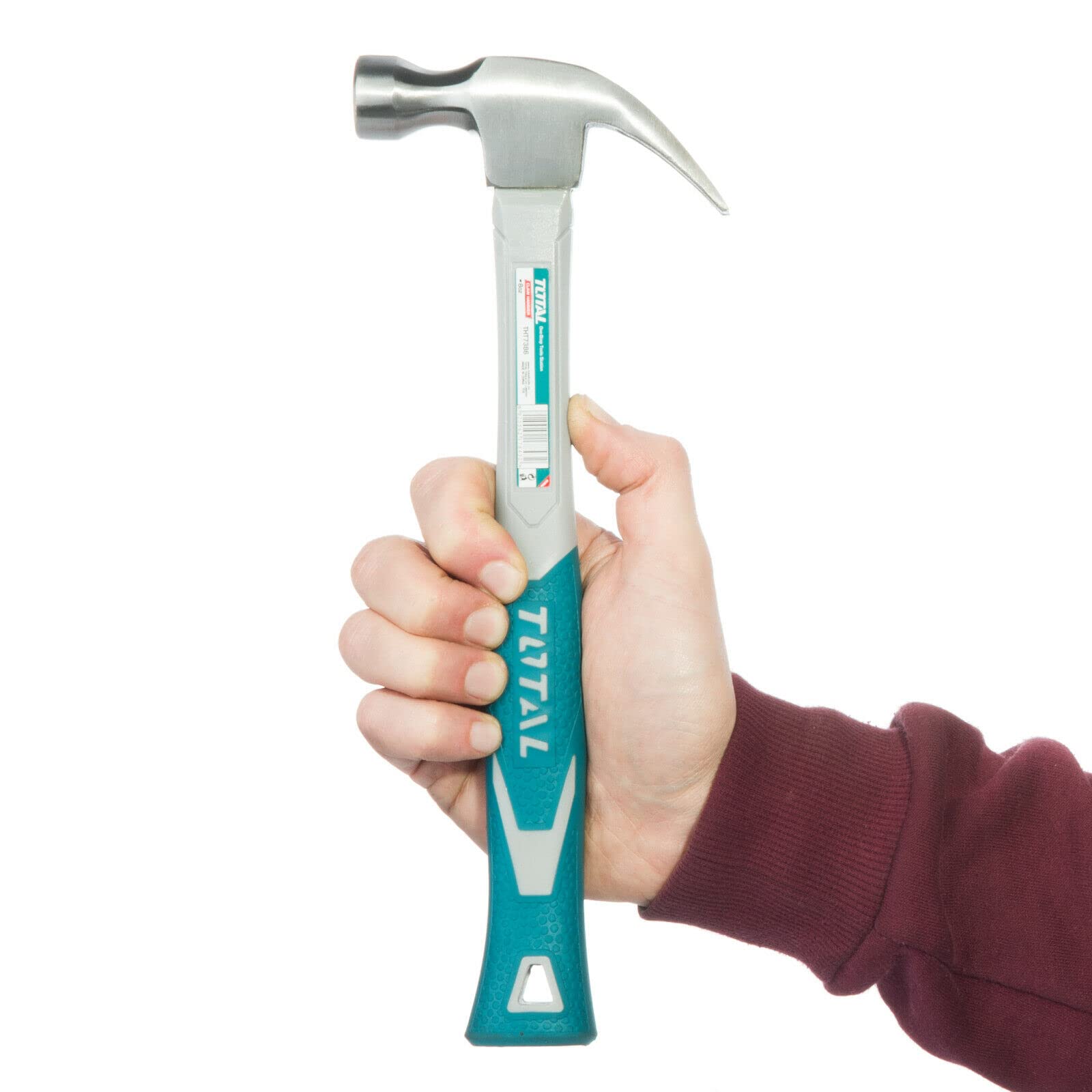
Foto: A nso nso view of the hammer head, highlighting the striking face and the curved claw nail puller.
Melite
The TOTAL Carpenter's Hammer is ready for use directly out of the packaging. No assembly is required. Before each use, perform a quick visual inspection:
- Ensure the head is securely attached to the handle.
- Check the handle for any cracks, splinters, or damage.
- Verify the striking face and claw are free from significant wear or deformities.
If any damage is found, do not use the hammer and consider replacing it.
Ntuziaka ọrụ
1. Driving Nails:
- Position the Nail: Hold the nail between your thumb and forefinger, placing its point on the desired spot on the workpiece.
- Initial Taps: With a light grip on the hammer handle, tap the nail head gently a few times to start it into the wood, ensuring it stands upright on its own. Remove your fingers once the nail is stable.
- Full Swings: Shift your grip to the end of the handle for maximum power and control. Swing the hammer in an arc, striking the nail head squarely with the hammer's striking face. Use your elbow and shoulder for power, not just your wrist.
- Mechaa: Continue striking until the nail head is flush with or slightly below the wood surface.
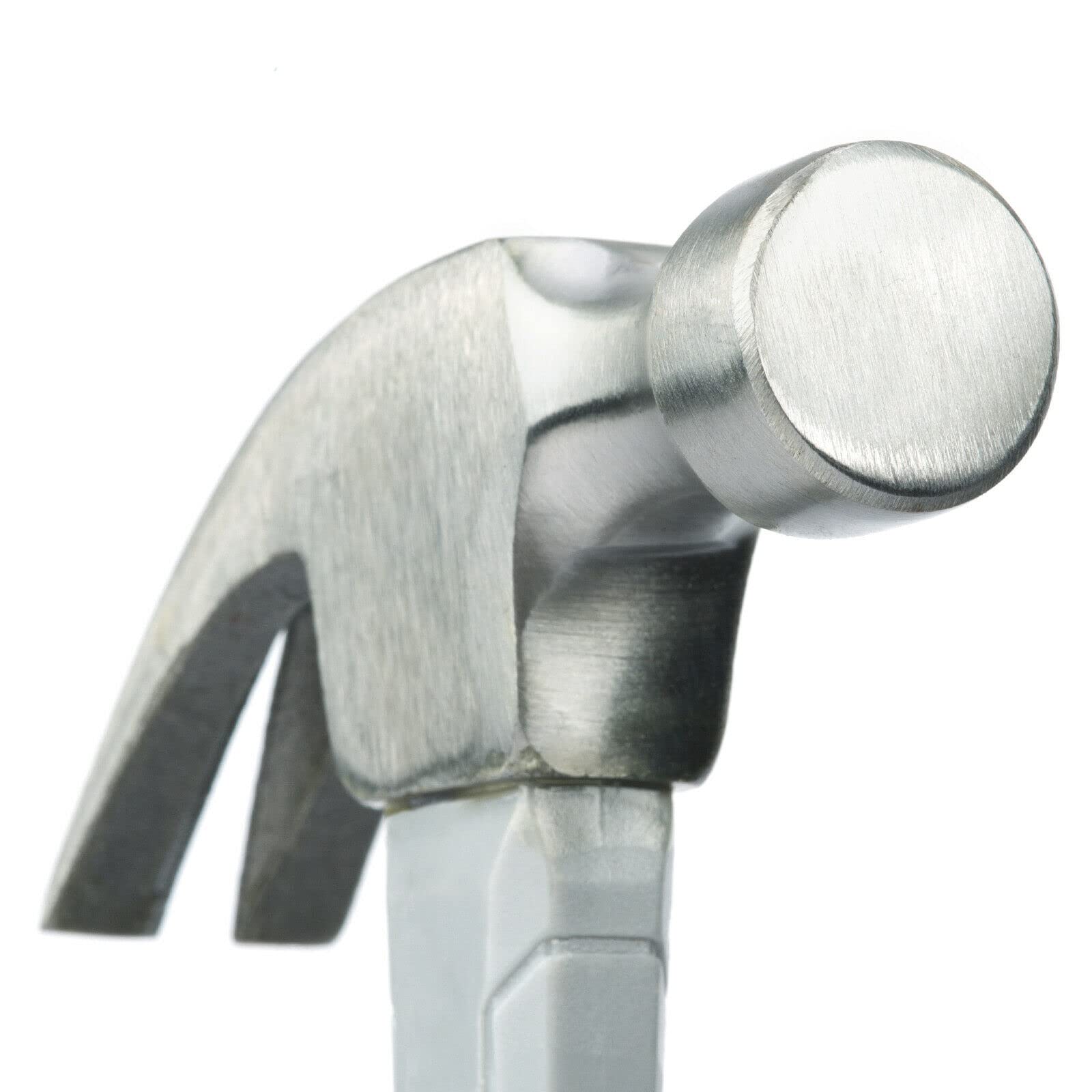
Foto: Akụkụ view of the hammer, illustrating the balance and design suitable for driving nails.
2. Pulling Nails:
- Position the Claw: Slide the curved claw of the hammer under the head of the nail. Ensure the nail head is seated deeply within the V-notch of the claw.
- Nkwalite: Use the curved part of the hammer head as a fulcrum. Apply steady, upward pressure on the handle, leveraging the hammer against the wood surface.
- Protect Surface (Optional): For delicate surfaces, place a small block of wood or a scrap piece under the hammer head to protect the workpiece from dents or scratches while pulling.
- Extract Nail: Continue to pull the handle upwards, rocking the hammer to extract the nail. If the nail is long, you may need to reposition the hammer or use a fulcrum block to gain more leverage.
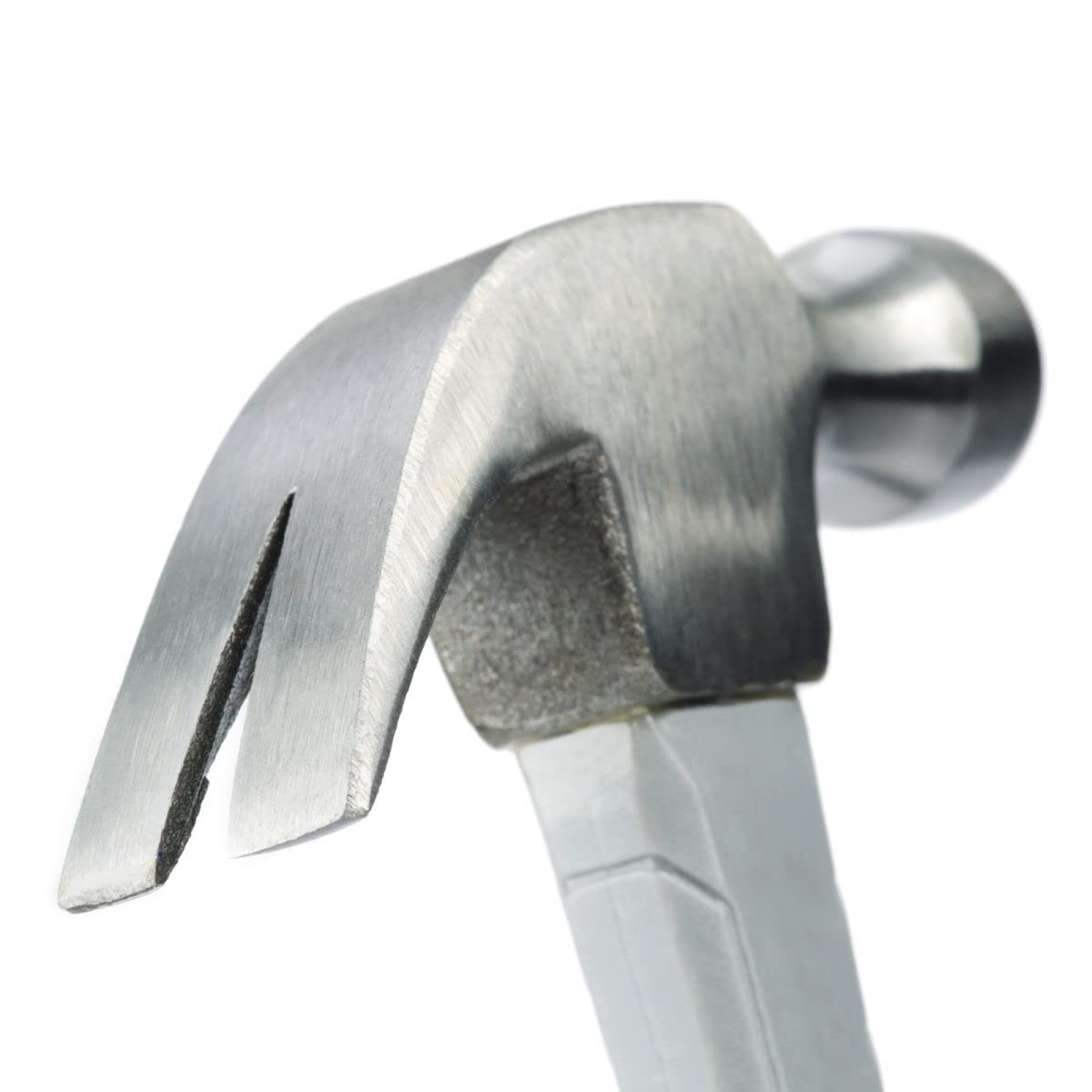
Foto: Zuru ezu view of the hammer's curved claw, designed for effective nail extraction.
Nlekọta
Proper maintenance ensures the longevity and safe operation of your hammer:
- Nhicha: After each use, wipe the hammer head and handle clean with a dry cloth to remove dust, dirt, and moisture.
- Nchara mgbochi: If the hammer head comes into contact with moisture, dry it thoroughly. For long-term storage in humid environments, a light coat of oil on the metal parts can prevent rust.
- Nchekwa: Store the hammer in a dry place, away from direct sunlight and extreme temperatures. Hang it on a tool rack or place it in a toolbox where it won't be damaged or cause damage to other items.
- Nlekọta Nlekọta: The bi-material handle is designed for durability. Avoid exposing it to harsh chemicals or solvents that could degrade the material.
Nchọpụta nsogbu
Nke a bụ ngwọta maka nsogbu nkịtị ị nwere ike ihu:
- Issue: Nail bends when struck.
- Ngwọta: Ensure you are striking the nail head squarely. Use a firm, controlled swing. For smaller nails, start with lighter taps.
- Issue: Hammer slips from grip.
- Ngwọta: Ensure your hands are clean and dry. The bi-material handle is designed for a secure grip, but excessive moisture or grease can reduce friction.
- Issue: Difficulty pulling a stubborn nail.
- Ngwọta: Ensure the nail head is fully seated in the claw. Use a small block of wood under the hammer head to increase leverage and protect the workpiece. Apply steady, increasing nrụgide.
- Issue: Hammer head feels loose.
- Ngwọta: Discontinue use immediately. A loose hammer head is dangerous. The hammer should be replaced.
Nkọwapụta
| Akara: | Mkpokọta |
| Nọmba nlereanya: | THTS7308 |
| Ibu Isi: | 220 g |
| Mkpokọta arọ ngwaahịa: | 345 g |
| Isi ihe: | Forged Carbon Steel |
| Ihe ejikwa: | Bi-material Fiber |
| Ogologo mkpokọta: | 28 cm |
| Ụdị isi: | Flat striking face, Curved claw |
| Agba: | Silver head, Teal/Grey handle |
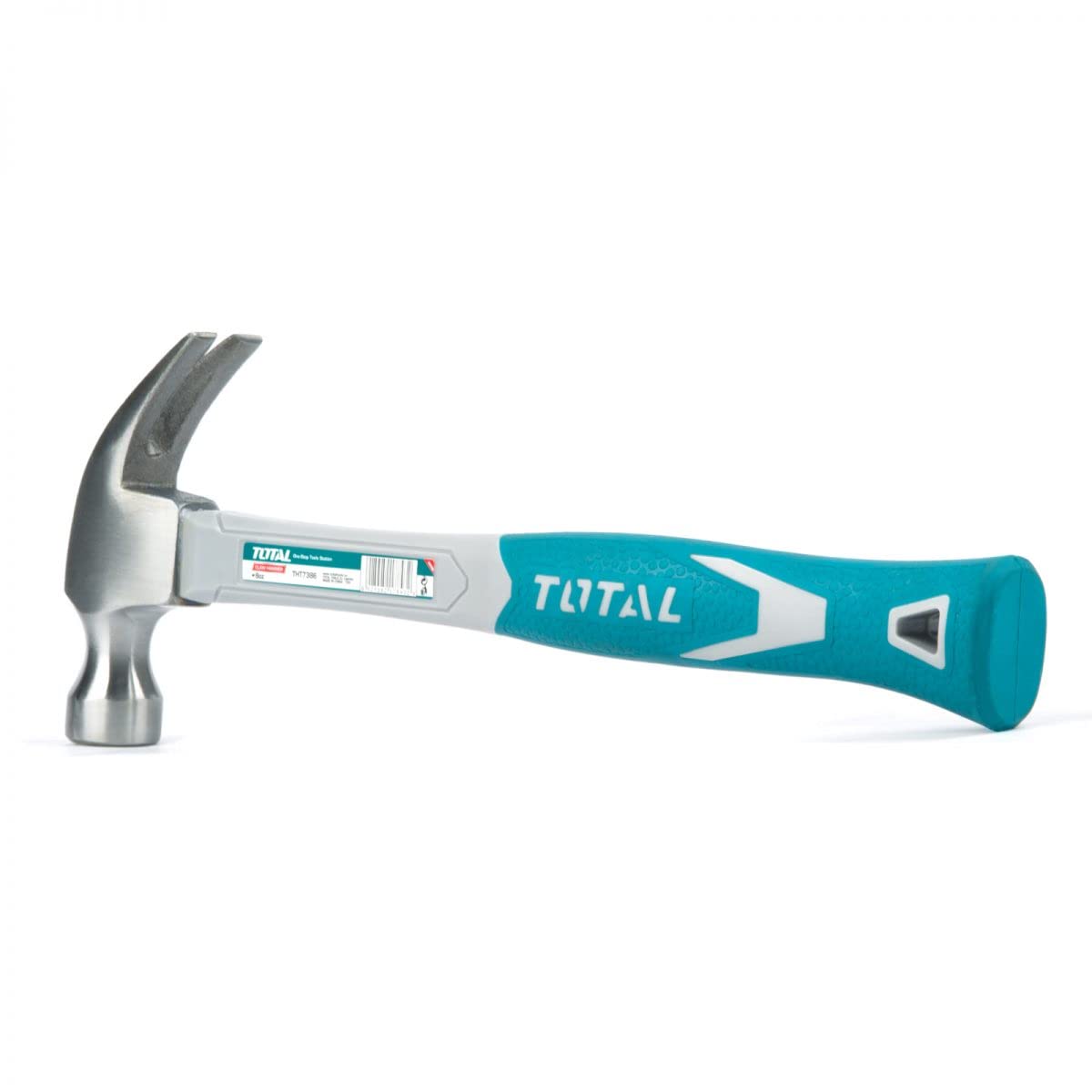
Image: The hammer displayed, indicating its compact size and professional style.
Akwụkwọ ikike na nkwado
Akwụkwọ ikike: This product is typically covered by a standard manufacturer's warranty against defects in materials and workmanship. Please refer to your purchase documentation for specific warranty terms and duration. In many cases, a 30-day free return policy may apply from the date of purchase.
Nkwado ndị ahịa: For any questions regarding the product's measurements, weight, operation, or other concerns, please contact TOTAL customer support. You can typically reach support through the messaging service of the platform where the product was purchased or via the official TOTAL Tools websaịtị.