1. Okwu mmalite
The AIYIMA DAC A6 is a high-fidelity Digital-to-Analog Converter (DAC) designed to enhance your audio experience. It features advanced decoding capabilities, multiple input options, and Bluetooth 5.0 for wireless audio streaming. This manual provides detailed instructions for setting up and operating your DAC A6.
2. Atụmatụ igodo
- DSD512 32bit/768kHz USB Decoding: Supports high-resolution audio formats up to DSD512 and PCM 32bit/768kHz.
- ESS SABRE ES9038Q2M HiFi Decoding: Utilizes a high-performance ESS SABRE DAC chip for exceptional sound quality and low total harmonic distortion (THD).
- XMOS XU208 USB Interface: Features the XMOS second-generation XU208 chip with a custom driver for Windows 7 and higher, ensuring optimal high-resolution audio support, including DSD Native.
- Bluetooth 5.0 with HD Transmission: Equipped with a CSR8675 Bluetooth chip, supporting LDAC, AAC, SBC, aptX, aptX-LL, and aptX-HD audio codecs for high-quality wireless streaming.
- Multiple Digital Audio Inputs: Offers versatile connectivity with Bluetooth, PC-USB, Coaxial, and Optical inputs.
3. Ihe ngwugwu
Biko lelee igbe maka ihe ndị a:
- AIYIMA DAC A6 Unit
- Ime Remote x 1
- Ihe nkwụnye ọkụ (DC 12V)
- eriri USB
- Antenna Bluetooth
- Akwụkwọ ntuziaka (akwụkwọ a)
4. Ngwaahịa gafereview
4.1 Ogwe ihu

Image: Front panel of the AIYIMA DAC A6, showing the OLED display, volume knob, power/mode button, and IR receiver.
- Ike / Ọnọdụ bọtịnụ: Press to power on/off, short press to switch input modes.
- Ngosipụta OLED: Shows current input, sampling rate, and volume level.
- Mpịakọta Mpịakọta: Tụgharịa ka ịhazie olu.
- Onye nnata IR: Maka akara njikwa dị anya.
4.2 Ogwe azụ

Image: Rear panel of the AIYIMA DAC A6, showing DC 12V power input, RCA L/R outputs, Coaxial input, Optical input, PC-USB input, and RF antenna connector.
- Ntinye DC 12V: Jikọọ ihe nkwụnye ọkụ enyere.
- RCA L/R Output: Jikọọ na otu amplifier ma ọ bụ ndị na-ekwu okwu na-arụ ọrụ.
- Ntinye Coaxial: Ntinye ọdịyo dijitalụ.
- Ntinye anya: Ntinye ọdịyo dijitalụ.
- Ntinye PC-USB: Connect to a computer for USB audio.
- Antenna RF: Connect the Bluetooth antenna for wireless reception.
4.3 Ime Remote
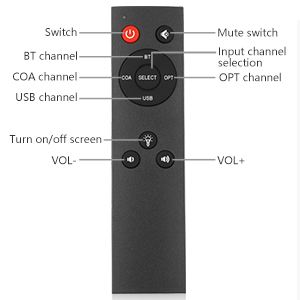
Image: Layout of the AIYIMA DAC A6 remote control, showing buttons for power, mute, input selection (BT, COA, OPT, USB), screen on/off, and volume up/down.
- Gbanwee: Gbanyụọ/ gbanyụọ ike.
- Mechie: Mechie/mechie ụda.
- Nhọrọ ọwa ntinye: Buttons for BT, COA, OPT, USB.
- Turn on/off screen: Toggles the OLED display.
- VOL +/-: Na-edozi olu.
5. Nhazi ntuziaka
- Connect Bluetooth Antenna: Screw the provided Bluetooth antenna into the RF connector on the rear panel.
- Jikọọ mmepụta ọdịyo:
- For active speakers: Connect the RCA L/R OUTPUT of the DAC A6 directly to your active speakers using RCA cables.
- For passive speakers with an amplifier: Connect the RCA L/R OUTPUT of the DAC A6 to the input of your amplifier. Then, connect your passive speakers to the ampmmepụta lifier.

Image: Diagram illustrating connection options for the DAC A6 to active speakers or an amplifier with passive speakers.
- Connect Audio Input: Họrọ otu n'ime ụzọ ntinye ndị a:
- PC-USB: Connect a USB cable from your computer to the PC-USB input on the DAC A6.
- Coaxial: Connect a coaxial cable from your audio source to the COAX input.
- Ngwa anya: Connect an optical cable from your audio source to the OPT input.
- Bluetooth: Ensure the Bluetooth antenna is connected.
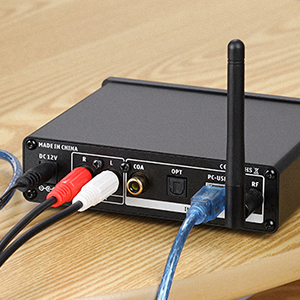
Image: Close-up of the PC-USB input on the DAC A6, showing a USB cable connected.
- Njikọ Ike: Connect the DC 12V power adapter to the DAC A6 and then plug it into a power outlet.
5.1 PC-USB Driver Installation (Windows)
For Windows 7 or higher, a custom driver is required for optimal performance, especially for DSD Native playback. Please visit the AIYIMA official website to download the latest driver for the DAC A6.
6. Ntuziaka ọrụ
- Gbanyụọ/ Gbanyụọ: Press the Power/Mode button on the front panel or the "Switch" button on the remote control.
- Họrọ Ọnọdụ Ntinye:
- Short press the Power/Mode button on the front panel to cycle through inputs (Bluetooth, PC-USB, Coaxial, Optical).
- Alternatively, use the dedicated input buttons (BT, COA, OPT, USB) on the remote control.
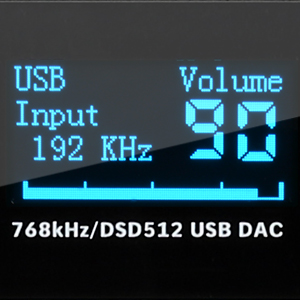
Image: Close-up of the power/mode button on the DAC A6.
- Gbanwee olu: Rotate the volume knob on the front panel or use the VOL+/- buttons on the remote control. The OLED display will show the current volume level.

Image: Close-up of the OLED display showing "USB Input 192 KHz Volume 90".
- Njikọ Bluetooth:
- Select Bluetooth input mode on the DAC A6. The OLED display will indicate "BT Input".
- On your mobile device, search for Bluetooth devices and select "BT HIFI AUDIO" to pair.
- Once connected, you can stream audio wirelessly to the DAC A6.

Image: A smartphone displaying Bluetooth settings, showing "BT HIFI AUDIO" as a discoverable device, next to the DAC A6.
- OLED Display Control: Use the "Turn on/off screen" button on the remote to toggle the OLED display.
6.1 Setting TV Optical/Coaxial Output
If there is no audio output when connecting your TV via optical or coaxial, you may need to adjust your TV's audio settings.
- Navigate to your TV's "System Settings" or press the remote control's [Settings] key.
- Find "Sound" or "Audio Output" settings and select "Optical Fiber" or "Coaxial Output".
- After setting, if there is still sound from the TV's internal speakers, adjust the TV volume to 0 using the TV remote control.
- Note: Some TVs may automatically disable internal speakers when external speakers are detected, resulting in no sound from the TV itself.
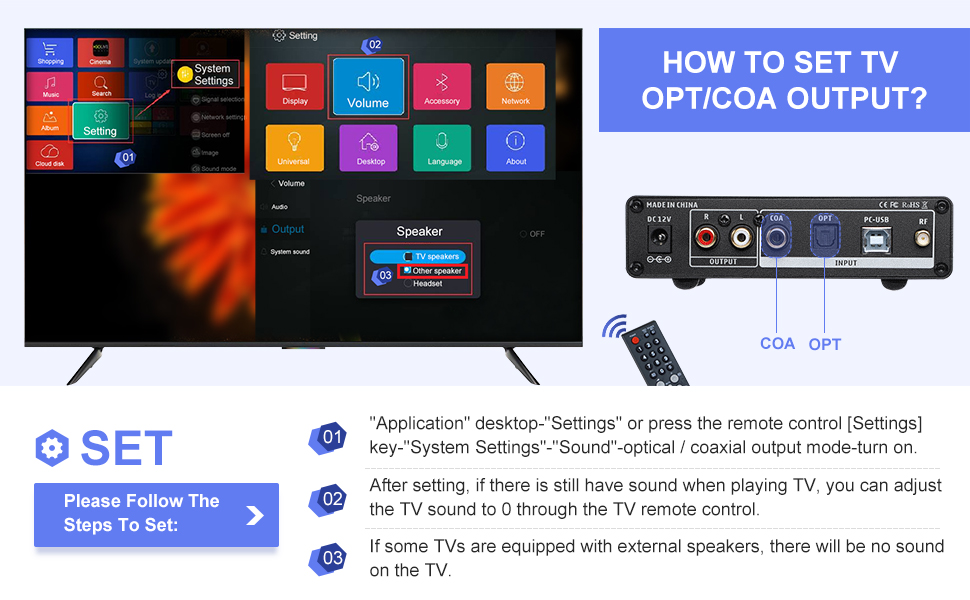
Image: A visual guide showing TV menu navigation to adjust sound output settings for optical/coaxial connections.
6.2 Ihe ngosi vidiyo
Video: An official product video demonstrating the AIYIMA DAC A6 Decoder Receiver in use, showcasing its connectivity and audio playback.
7. Nkọwapụta
| Njirimara | Nkọwapụta |
|---|---|
| Ụdị | AIYIMA |
| Nọmba nlereanya | DAC-A6 |
| Oke ọkọnọ Voltage | 12 volts |
| Ụdị interface | Coaxial, USB, Optical, Bluetooth |
| Ọnụọgụ nke ọwa | 2 |
| Akụkụ ngwaahịa | 5.24"L x 4.92"W |
| Ibu Ibu | 1.54 pound |
| PC-USB SampỌnụ ego | 32bit/768kHz, DSD512 |
| Nkwado Bluetooth | APT-X HD, APT-X LL, LDAC, AAC, SBC |
| Nzaghachi ugboro ugboro | 10Hz-40kHz (±3db) |
| Ntughari | ≤0.0006% |
Foto: N'azụ view of the DAC A6 with dimensions and a table of key specifications including input types, output, Bluetooth support, frequency response, distortion, net weight, PC-USB sampling rate, and working voltage.
8. Nchọpụta nsogbu
- Enweghị mpụta ụda:
- Gbaa mbọ hụ na ejikọrọ eriri niile na nchekwa.
- Verify the correct input mode is selected on the DAC A6.
- Check the volume levels on both the DAC A6 and your connected ampndị na-ekwu okwu.
- If using TV optical/coaxial, ensure the TV's audio output settings are correctly configured (see "Setting TV Optical/Coaxial Output" section).
- For PC-USB, confirm the driver is installed and the DAC A6 is selected as the audio output device in your computer's sound settings.
- Intermittent Audio or Noise (PC-USB):
- Ensure the PC-USB driver is correctly installed and up to date, especially for Windows 11.
- Try a different USB port or USB cable.
- Minimize other USB devices connected to the computer.
- Okwu njikọ Bluetooth:
- Ensure the Bluetooth antenna is securely attached.
- Verify the DAC A6 is in Bluetooth input mode.
- Delete "BT HIFI AUDIO" from your device's paired list and try pairing again.
- Ensure your device is within range of the DAC A6.
- Mkpọtụ Ụda ma ọ bụ Ụda Ụda:
- This can sometimes be caused by electromagnetic interference. Try repositioning the DAC A6 unit, its power cable, and audio cables away from other electronic devices or power sources.
- Consider using shielded audio cables.
- If using a linear power supply, ensure it is properly grounded and positioned.
9. Akwụkwọ ikike na nkwado
AIYIMA products are designed for reliability and performance. For warranty information, technical support, or service inquiries, please refer to the official AIYIMA websaịtị ma ọ bụ kpọtụrụ onye na-ere ahịa mpaghara gị. Debe nnata nzụta gị ka ihe akaebe nke ịzụrụ.
For further assistance, you may visit the AIYIMA store on Amazon: AIYIMA Store.


