1. Okwu mmalite
The Saker Chamfer Plane is a versatile woodworking tool designed for precise edge trimming and chamfering of various wood types. Its compact design and adjustable features make it suitable for both professional woodworkers and DIY enthusiasts. This manual provides essential information for the safe and effective use, setup, operation, and maintenance of your chamfer plane.
2. Ozi nchekwa
Always prioritize safety when operating any woodworking tool. Failure to follow these safety guidelines may result in injury or damage to the tool or workpiece.
- Nchekwa Anya: Always wear safety glasses or goggles to protect your eyes from wood chips and debris.
- Debe aka ọcha: Ensure your hands are always clear of the cutting blade during operation.
- Ihe eji arụ ọrụ echedoro: Always secure the workpiece firmly to prevent movement during planing. Use clamps or a vise if necessary.
- Ngwa nyocha: Before each use, inspect the chamfer plane for any damage, loose parts, or dull blades. Do not use a damaged tool.
- Akara Nkọ: Handle blades with extreme care. They are very sharp and can cause severe cuts.
- Nchekwa nke ọma: Store the tool in a dry, safe place, out of reach of children and unauthorized users.
3. Ihe ngwugwu
Chọpụta na ihe niile dị na ngwugwu gị:
- 1x Saker Chamfer Plane
- 1x Cutter Head (Round)
- 1x Auxiliary Locator
- 1x Hex Key (for adjustments)

4. Ngwaahịa gafereview
The Saker Chamfer Plane features a durable body, an adjustable cutting blade, and integrated leveling bubbles for accuracy.
- Isi Isi: Constructed from alloy steel and aluminum for durability.
- Isi Cutter: Interchangeable carbon steel blade for various profiles.
- Igwe ngbanwe: Allows for precise control over cutting depth.
- Auxiliary Locator: Provides additional stability and guidance during use.
- Leveling Bubbles: Integrated horizontal and vertical bubbles assist in maintaining proper alignment for accurate cuts.

5. Nhazi
5.1 Ntinye na Nhazi Agụba
- Using the provided hex key, loosen the screws securing the blade cover.
- Carefully insert the desired cutter head into its slot. Ensure it is seated correctly.
- Tighten the screws to secure the blade. Do not overtighten.
5.2 Na-edozi Omimi ịkpụ
The cutting depth can be adjusted to suit your specific woodworking requirements.
- Locate the depth adjustment knob on the side of the plane.
- Turn the knob clockwise to decrease the cutting depth or counter-clockwise to increase it.
- Make small adjustments and test on a scrap piece of wood until the desired depth is achieved.


6. Ntuziaka ọrụ
Follow these steps for effective and safe operation of your Saker Chamfer Plane.
6.1 General Planing Technique
- Gbaa mbọ hụ na workpiece gị dị nchebe clamped ma ọ bụ jide.
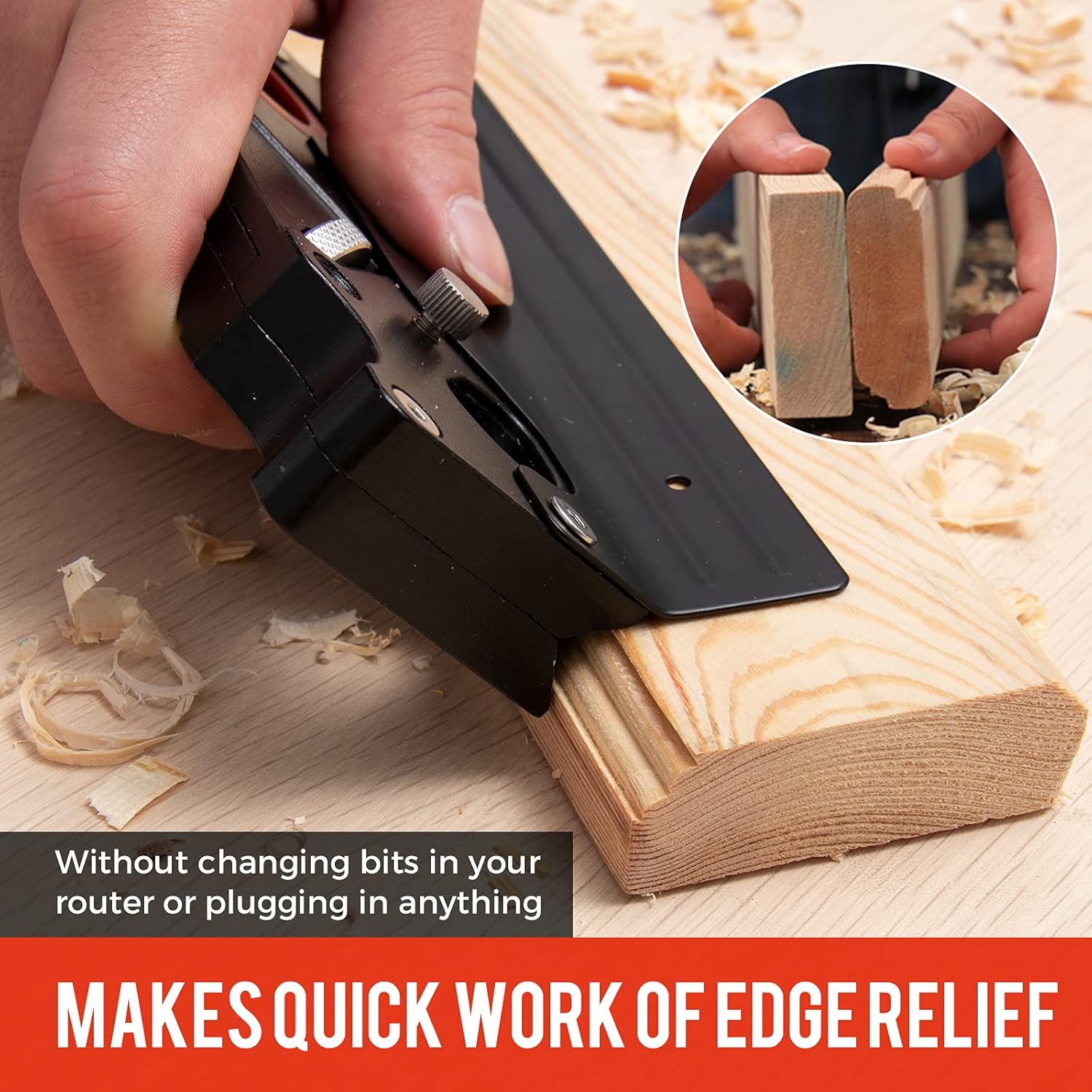
- Position the chamfer plane on the edge of the wood, ensuring the base is flat against the surface.
- Apply even pressure and push the plane smoothly along the edge in the direction of the wood grain.
- Repeat passes, adjusting the depth as needed, until the desired chamfer or edge profile na-enweta.

6.2 Vidiyo nkuzi
Video 6.1: This video demonstrates the chamfering capabilities of the Saker Chamfer Plane, showing how to achieve smooth, angled edges on wood.
Video 6.2: This video illustrates how the Saker Chamfer Plane can enhance efficiency in woodworking tasks, showcasing ojiji ya bara uru.
Video 6.3: A demonstration of the Saker Chamfer Plane's suitability for quick edge trimming of various wooden materials.
7. Nlekọta
Regular maintenance ensures the longevity and optimal performance of your chamfer plane.
- Nhicha: After each use, clear all wood chips and dust from the plane body and blade area. A brush or compressed air can be used.
- Nlekọta agụba: The carbon steel blades are designed for durability. If the blade becomes dull or damaged, it can be sharpened or replaced. Refer to Section 5.1 for blade replacement.
- mmanu mmanu: Periodically apply a light coat of machine oil to moving parts and metal surfaces to prevent rust and ensure smooth operation.
- Nchekwa: Store the chamfer plane in a dry environment to prevent corrosion. Consider using a blade guard or storing it in its original packaging to protect the blade.
8. Nchọpụta nsogbu
If you encounter issues with your Saker Chamfer Plane, refer to the following common problems and solutions:
| Nsogbu | Ihe nwere ike ime | Ngwọta |
|---|---|---|
| Blade not cutting cleanly or leaving rough edges. | Dull or damaged blade; incorrect cutting depth. | Sharpen or replace the blade. Adjust the cutting depth to a shallower setting. |
| Uneven cuts or gouging. | Inconsistent pressure; workpiece not secure; blade misalignment. | Apply even pressure. Secure the workpiece firmly. Re-check blade installation and alignment. |
| Blade loosens during use. | A naghị ejikọta skru ndị ahụ nke ọma. | Ensure all blade retaining screws are tightened securely with the hex key. |
9. Nkọwapụta
- Akara: Saker
- Nọmba nlereanya: GJ16478
- Ihe: Alloy Steel, Aluminom
- Agba: Nwa
- Akụkụ ngwaahịa: 6.08"L x 1.97"W x 0.79"H
- Isi mmalite ike: Akwụkwọ ntuziaka
- Ihe ndabere: Aluminom Alloy
- Ibu ihe: 14.1 ounces
10. Akwụkwọ ikike na nkwado
For warranty information, product support, or to inquire about replacement parts, please contact Saker customer service directly. Refer to the product packaging or the official Saker websaịtị maka nkọwa kọntaktị.


