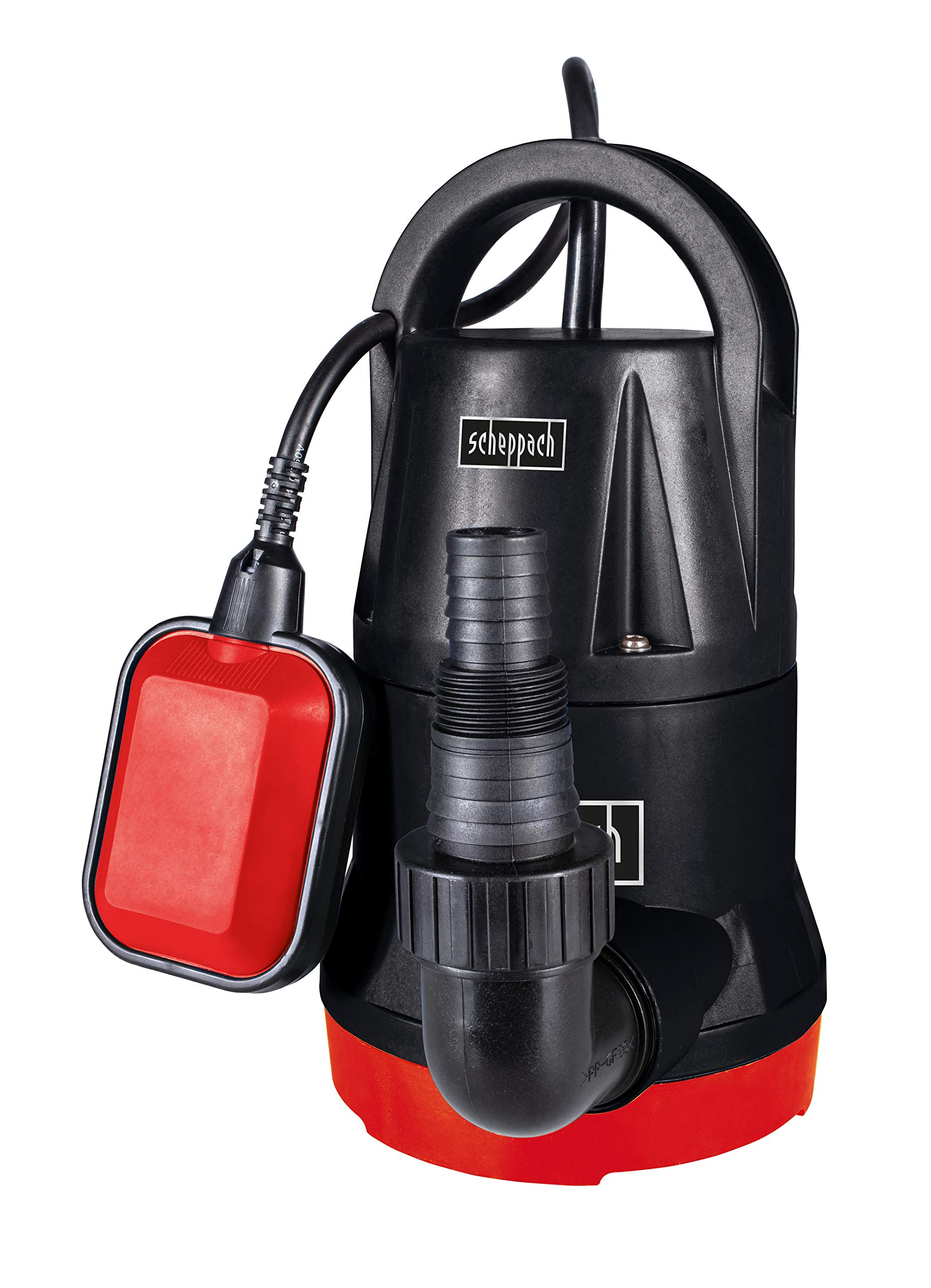
Thank you for choosing the Scheppach SBP250 Submersible Pump. This manual provides essential instructions for the safe and efficient operation, setup, and maintenance of your pump. Designed for clean water transfer from rain barrels or cisterns, it features a powerful 250W motor, a capacity of 6500 liters per hour, and an automatic float switch for convenient use. Please read these instructions carefully before operating the device and keep them for future reference.
Ntuziaka nchekwa
Na-edebe nchekwa nchekwa ndị a mgbe niile iji gbochie mmerụ ahụ ma ọ bụ mmebi:
Ensure the power supply matches the specifications on the pump's rating plate.
Never operate the pump with a damaged power cord or plug.
Do not lift or carry the pump by its power cord.
Debe ụmụaka na ndị na-enyeghị ikike ka ha ghara ịnọ ebe a na-arụ ọrụ.
Kwụpụ pampụ ahụ mgbe niile na ọkụ eletrik tupu ị rụọ ọrụ mmezi ma ọ bụ ihicha ya.
The pump is designed for clean water only. Do not use it for flammable, corrosive, or explosive liquids.
Ensure the pump is fully submerged during operation to prevent overheating.
Avoid running the pump dry.
Ngwaahịa gafereview
The Scheppach SBP250 submersible pump is designed for efficient water transfer. Familiarize yourself with its main components:
Foto 1: Scheppach SBP250 Submersible Pump. This image shows the pump unit, including the integrated handle, power cable, float switch, and the discharge connection point.
Ahụ mgbapụta: Durable plastic housing protecting the motor and internal components.
moto: Powerful 250W motor for efficient water pumping.
Mgbanwe n'elu mmiri: Automatically turns the pump on and off based on water level.
Njikọ Mwepu: Standard 1¼" connection for hoses.
Ike Ike: 10-meter cable for extended reach, designed to be plugged outside the wet area.
Jikwaa: Integrated handle for easy transport and lowering/raising the pump.
Melite
Follow these steps to set up your submersible pump:
Iwepu: Carefully remove the pump from its packaging. Check for any signs of damage.
Njikọ Hose: Attach a suitable discharge hose (not included) to the 1¼" discharge connection. Ensure a tight and secure fit to prevent leaks.
Ịtinye Mgbapụ ahụ:Foto 2: Pump positioned in water with the float switch freely moving. The pump is ready for operation.Place the pump on a stable, level surface in the water source (e.g., rain barrel, cistern). Ensure the pump is fully submerged and not resting on mud or debris that could block the intake. The float switch must be able to move freely to ensure automatic operation.
Njikọ ike: Ensure your hands are dry. Plug the 10-meter power cable into a grounded electrical outlet. The outlet should be located outside the wet area.
Na-arụ ọrụ
The SBP250 pump operates automatically via its float switch:
Ọrụ akpaaka: Once plugged in and submerged, the pump will automatically start when the water level rises and lifts the float switch. It will stop when the water level drops and the float switch lowers.
Mwepụ aka (ọ bụrụ na ọdabara): Some models allow the float switch to be fixed in an 'up' position for continuous operation. Refer to the specific instructions for your model if this feature is desired. For the SBP250, ensure the float switch can move freely for standard automatic operation.
Nleba anya: Periodically check the pump's operation and the water level. Ensure the discharge hose is clear and directing water as intended.
Foto 3: The SBP250 pump actively pumping water from a pond, demonstrating its intended use for water transfer.
Nlekọta
Nlekọta oge niile na-eme ka ogologo ndụ na ịrụ ọrụ kacha mma nke mgbapụta gị:
Nhicha: After each use, especially if pumping slightly dirty water, rinse the pump thoroughly with clean water. Remove any debris that may have accumulated around the intake screen.
Nyocha: Regularly inspect the power cable and plug for any damage. Check the discharge connection for wear or leaks.
Nchekwa oyi: If storing the pump in freezing temperatures, ensure all water is drained from the pump and hose to prevent damage from ice expansion. Store in a dry, frost-free location.
Enweghị akụkụ ndị ọrụ-ọrụ: The motor and internal components are not user-serviceable. Do not attempt to open the pump housing.
Nchọpụta nsogbu
Nke a bụ ụfọdụ okwu nkịtị na azịza ha:
Nsogbu
Ihe nwere ike ime
Ngwọta
Mgbapụta anaghị ebido.
Enweghị ọkụ. Float switch not activated. Akpọchiela impeller.
Lelee njikọ ọkụ na ihe nkwụsị sekit. Ensure water level is high enough to lift the float switch. Disconnect power, then check and clear any blockages in the intake area.
Pump runs but no water is discharged.
Mkpọchi ikuku. Discharge hose blocked or kinked. Ọkwa mmiri dị oke ala.
Slightly tilt the pump to release trapped air. Check and clear the discharge hose. Hụ na mmiri gbanyere n'ime mmiri nke ọma.
Wait for water level to rise or manually adjust float switch position (if applicable). Disconnect power, let the pump cool down, then check for blockages or dry running.
Nkọwapụta
Njirimara
Uru
Ụdị
Ntughari
Nọmba nlereanya
SBP250 (Reference: 5909506901)
Ike
250 W
Voltage
230 volts
Oke. Ọnụego mgbaba
6500 lita kwa elekere
Max. Discharge Height
7 mita
Njikọ mwepụ
1¼"
Ogologo eriri USB
10 mita
Ihe onwunwe
Plastic
Ibu
4 kilogram
Akụkụ (L x W x H)
1 x 1 x 1 cm (Note: These dimensions appear to be generic; actual product dimensions may vary.)
Akwụkwọ ikike na nkwado
Scheppach products are manufactured to high-quality standards. For warranty information or technical support, please refer to the warranty card included with your purchase or visit the official Scheppach website. Please have your model number (SBP250) and purchase details ready when contacting support.
For further assistance, you may contact Scheppach customer service directly. Contact details can typically be found on the manufacturer's websaịtị ma ọ bụ na nkwakọ ngwaahịa.
Akwụkwọ ndị emetụtara - SBP250
scheppach TW1100 IX-WW1100 Werkstattwagen Bedienungsanleitung Entdecken Sie den scheppach TW1100 IX-WW1100 Werkstattwagen. Diese Bedienungsanleitung bietet nkọwa zuru ezu nke ozi maka sicheren Handhabung, Montagna Wartung Ihres Werkstattwagens.
Schepach HSC130 Steintrenner Bedienungsanleitung Die Bedienungsanleitung für den Scheppach HSC130 Steintrenner bietet nkọwa nke Anweisungen zur sicheren Montage, Inbetriebnahme, Wartung und Fehlerbehebung dieses leistungsstarken Geräts für Haus und Garten.
scheppach TW1000 Werkstattwagen Bedienungsanleitung Umfassende Anleitung für den scheppach TW1000 Werkstattwagen, die Montage, Bedienung, Sicherheitshinweise, Wartung na Entsorgung abdeckt. Erfahren Sie, wie Sie Ihren Werkstattwagen sicher und effizient nutzen.
scheppach HL760L Holzspalter Bedienungsanleitung Umfassende Bedienungsanleitung für den scheppach HL760L Holzspalter. Erfahren Sie alles über sichere Handhabung, Montage, Betrieb, Wartung und Fehlerbehebung dieses leistungsstarken Holzbearbeitungsgeräts von Scheppach GmbH.
scheppach HL1100GE Hydraulischer Holzspalter Bedienungsanleitung Diese Bedienungsanleitung für den scheppach HL1100GE Hydraulischen Holzspalter bietet detaillierte Informationen zur sicheren Montage, Bedienung, Wartung und Fehlerbehebung. Erfahren Sie, wie Sie Ihren Holzspalter effizient und sicher nutzen.
Schepach HL815 Holzspalter Bedienungsanleitung Umfassende Bedienungsanleitung für den Schepach HL815 Holzspalter. Ụlọ ọrụ Sicherheitshinweise, Montageanleitungen, technische Daten und Wartungsempfehlungen für einen sicheren und effizienten Betrieb. Akwụkwọ edemede Sprachen.