1. Okwu mmalite
This manual provides essential information for the safe and effective use of AREBOS flexible cutting discs. These discs are designed for cutting various metal materials, including iron, sheet metal, general metal, steel, and inox stainless steel. Please read these instructions carefully before use to ensure proper operation, maximize product lifespan, and prevent injury.
2. Ntuziaka nchekwa
Always prioritize safety when working with cutting discs and angle grinders. Failure to follow these safety guidelines can result in serious injury.
- Ngwa nchekwa nkeonwe (PPE): Always wear appropriate PPE, including safety glasses or a face shield, hearing protection, heavy-duty gloves, and suitable work clothing.
- Ngwa ndakọrịta: Ensure the cutting disc is compatible with your angle grinder's specifications (e.g., disc diameter, bore size, maximum RPM). The maximum rotational speed for these discs is 6600 RPM.
- Nyocha: Before each use, inspect the cutting disc for any damage, cracks, or deformities. Never use a damaged disc.
- Nkwalite nke ọma: Mount the disc securely onto the angle grinder according to the grinder manufacturer's instructions. Ensure the disc is seated correctly and the clamping nuts are tightened.
- Nchebe nke arụ ọrụ: Chekwaa workpiece ike ka igbochi mmegharị n'oge ịcha.
- Igwe ikuku: Work in a well-ventilated area to avoid inhaling dust and fumes.
- Avoid Side Pressure: Do not apply excessive side pressure to the disc, as this can cause it to break or shatter. Cut only with the edge of the disc.
- Spark Management: Be aware of sparks and hot debris. Keep flammable materials away from the work area.
- Nchekwa: Store cutting discs in a dry, cool place, protected from impact and moisture.

Image: AREBOS certified cutting disc with safety symbols and EN12413 compliance. This disc is rated for 6600 RPM and features a robust design for safe operation.
3. Product Features and Applications
The AREBOS flexible cutting discs are designed for high-performance cutting tasks on various metal types. Each disc has a diameter of 230 mm and a thickness of 2.0 mm, with a bore size of 22.23 mm, making them suitable for standard angle grinders.
- Ndakọrịta ihe: Ideal for cutting iron, sheet metal, general metal, steel, and especially inox stainless steel.
- Arụmọrụ dị elu: Engineered for efficient and clean cuts.
- Ogologo oge: Made from robust abrasive materials for extended lifespan.
- Ụkpụrụ nchekwa: Complies with EN12413 safety standards.

Image: AREBOS cutting disc illustrating its broad application range, including iron, steel, sheet metal, general metal, and stainless steel.

Image: A pack of AREBOS cutting discs, indicating the product comes in multiple quantities, such as 100 pieces.
4. Nhazi
Nhazi nke ọma dị oke mkpa maka ịrụ ọrụ dị mma ma dị irè.
- Ịkwụsị ike: Always ensure your angle grinder is unplugged from the power source before attempting to change or install a cutting disc.
- Nhọrọ diski: Select the correct AREBOS cutting disc (Ø230 x 2.0 mm) for your application and ensure it matches the specifications of your angle grinder.
- Ịkwanye: Place the cutting disc onto the spindle of the angle grinder, ensuring it sits flush against the inner flange. The disc's label should face outwards.
- Nkwado echekwabara: Attach the outer flange and tighten the locking nut firmly using the appropriate wrench. Do not overtighten.
- Guard Adjustment: Adjust the safety guard to cover as much of the disc as possible, exposing only the necessary cutting area.
- Nwale ọsọ: After mounting, plug in the grinder and allow it to run for approximately 30 seconds in a safe area before cutting. This ensures the disc is properly seated and stable.
5. Ntuziaka ọrụ
Soro ntuziaka ndị a maka arụmọrụ na nchekwa kachasị mma maka ịkpụ.
- Jide: Hold the angle grinder firmly with both hands.
- Ịmalite Ịbepụ: Allow the disc to reach full speed before making contact with the workpiece.
- Usoro ịkpụ: Apply steady, moderate pressure. Let the disc do the work. Avoid forcing the cut, which can lead to overheating, premature wear, or disc breakage.
- Akụkụ: Maintain a consistent cutting angle, typically perpendicular to the workpiece for straight cuts.
- Ụzọ ntụgharị: The disc can be used in both forward and reverse directions, but always ensure sparks are directed away from your body and flammable materials.
- Na-ajụ oyi: For prolonged cuts, allow the disc to cool periodically to prevent overheating. These discs are designed for dry cutting.
- Emecha: Once the cut is complete, allow the disc to stop rotating completely before setting the grinder down.

Image: An angle grinder actively cutting metal, producing a shower of bright sparks. This illustrates the typical operation of the cutting disc.

Foto: A nso nso view of an angle grinder cutting a metal piece, with sparks emanating from the point of contact. This highlights the cutting action and the need for safety precautions.
6. Nlekọta
Proper maintenance ensures the longevity and performance of your cutting discs.
- Nhicha: After use, gently clean any debris from the disc. Do not use harsh chemicals.
- Nchekwa: Store unused discs in their original packaging or a suitable container in a dry, cool environment, away from direct sunlight and moisture. This prevents degradation of the abrasive material.
- Nyocha: Regularly inspect discs for signs of wear, cracks, or damage. Discard any compromised discs immediately.
- Ijikwa: Handle discs carefully to avoid dropping or impacting them, which can cause invisible damage leading to breakage during use.
7. Nchọpụta nsogbu
Akụkụ a na-ekwu maka nsogbu ndị ị nwere ike izute.
| Nsogbu | Ihe nwere ike ime | Ngwọta |
|---|---|---|
| Disc wears too quickly | Excessive pressure, incorrect disc for material, disc overheating. | Reduce cutting pressure, ensure disc is suitable for the material, allow disc to cool during prolonged cuts. |
| Poor cut quality / Slow cutting | Worn disc, insufficient RPM, incorrect cutting angle. | Replace disc if worn, ensure angle grinder is operating at correct RPM, adjust cutting angle. |
| Oke ịma jijiji | Improperly mounted disc, damaged disc, loose flanges. | Check disc mounting and tighten flanges, inspect disc for damage and replace if necessary. |
| Disc breakage | Side pressure, damaged disc, exceeding maximum RPM, workpiece movement. | Avoid side pressure, inspect disc before use, ensure grinder RPM does not exceed disc rating, secure workpiece firmly. |
8. Nkọwapụta
Detailed technical specifications for the AREBOS cutting discs.
| Ụdị | Arebos |
| Ntuziaka onye nrụpụta | 4260199752296 |
| ASIN | B08QJHHSQH |
| Dayameta diski | 230 mm |
| Ọkpụrụkpụ ihe | 2.0 mm |
| Bore Size (Inner Diameter) | 22.23 mm |
| Ihe Na-afụcha Afụcha | Bonded abrasive (e.g., Aluminum Oxide) |
| Ndakọrịta ihe | Iron, Sheet Metal, Metal, Steel, Inox Stainless Steel |
| Ọsọ ntụgharị kacha | 6600 RPM |
| Ụdị ịkpụ | Akọrọ |
| Ụkpụrụ nchekwa | EN 12413 |
| Ọnụọgụ | iberibe 100 |

Image: AREBOS cutting disc highlighting its dimensions: 230mm diameter and 1.9mm thickness. The bore size is 22.23mm. Note: Product specifications state 2.0mm thickness.
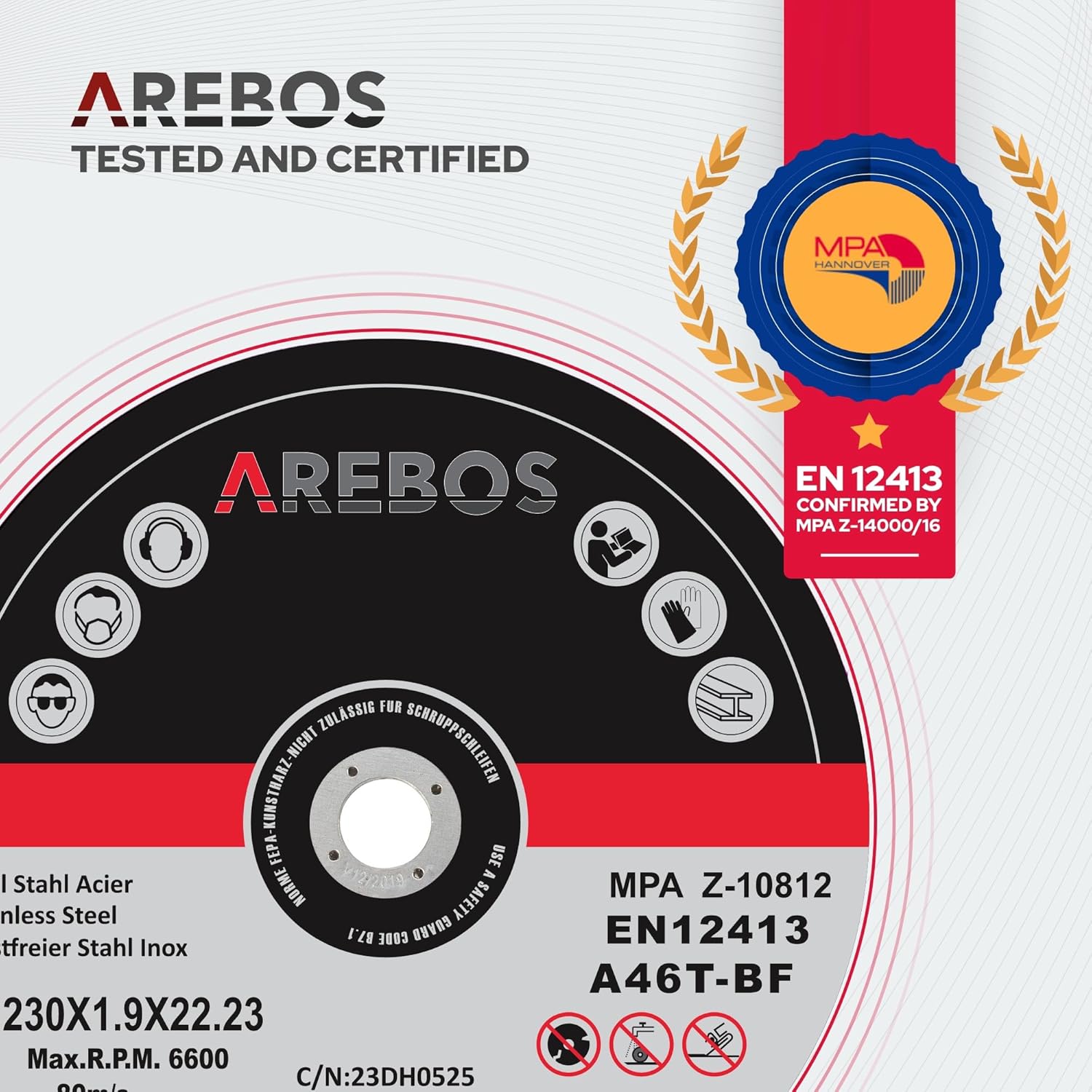
Image: AREBOS cutting disc displaying useful information such as direction of rotation (forward and reverse), type of cut (dry), and maximum revolutions per minute (6600 RPM).
9. Mkpofu
Used cutting discs should be disposed of according to local regulations for abrasive materials. Do not dispose of them with general household waste.


