1. Okwu mmalite
The Watts BT-D03 RF is a wireless digital room thermostat designed for precise temperature control in various heating and cooling installations. It features a backlit LCD screen and operates via 868 MHz radio frequency communication. This manual provides comprehensive instructions for the proper installation, operation, and maintenance of your thermostat.

Foto 1: N'ihu view of the Watts BT-D03 RF Thermostat, showing the display and control buttons.
2. Ozi nchekwa
- Gụọ ntuziaka niile nke ọma tupu echichi na arụ ọrụ.
- Installation should only be performed by a qualified electrician or heating engineer.
- Hụ na ewepụla ọkụ eletrik tupu ị rụọ ọrụ waya maọbụ ndozi ọ bụla.
- Ewepụla ngwaọrụ ahụ na oke okpomọkụ, iru mmiri, ma ọ bụ ìhè anyanwụ kpọmkwem.
- Debe ngwaọrụ ahụ n'ebe ụmụaka nọ.
3. Ihe ngwugwu
Chọpụta na akụrụngwa niile dị na ngwugwu:
- Watts BT-D03 RF Wireless Digital Room Thermostat
- okpokoro okpokoro
- Ịkwado skru na mgbidi
- Akwụkwọ ntuziaka onye ọrụ
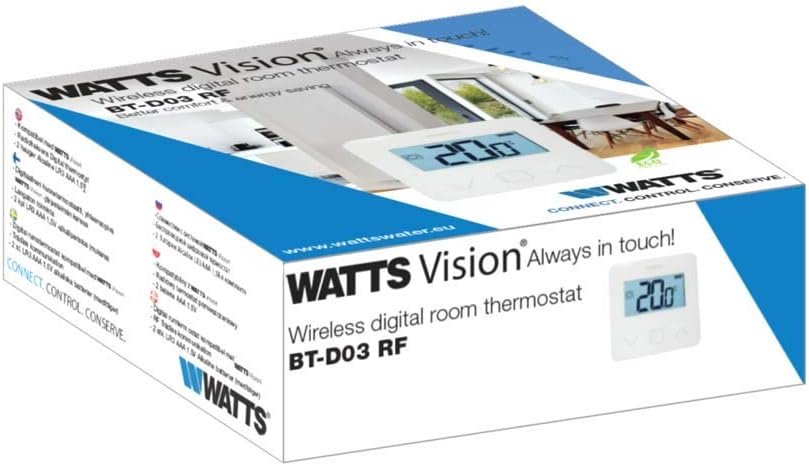
Figure 2: Product packaging of the Watts BT-D03 RF Thermostat.
4. Ngwaahịa gafereview
4.1 Akụkụ
- Ngosipụta LCD: Backlit screen showing temperature, battery level, and operating status.
- bọtịnụ njikwa: Up, Down, and OK/Menu buttons for navigation and setting adjustments.
- Ihe mmetụta nke ime: For detecting ambient room temperature.
- External Sensor Port: For optional NTC 10 kOhm external sensor (not included).
- Ihe ngosi LED: Shows active heating/cooling signal.
- Internal Reset Button: For quick RF pairing or system reset.
- Utu: Provides audible feedback for certain operations.

Foto 3: N'ihu zuru ezu view of the thermostat display.

Ọgụgụ 4: Azụ view of the thermostat, showing battery compartment and mounting points.
4.2 Akụkụ
The physical dimensions of the thermostat are provided below for installation planning.
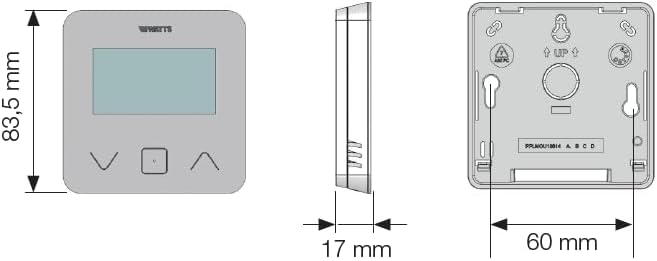
Figure 5: Dimensional drawing of the Watts BT-D03 RF Thermostat.
5. Nhazi
5.1 Ntinye batrị
- Remove the back cover of the thermostat.
- Fanye batrị AAA abụọ, na-ahụ polarity ziri ezi.
- Dochie mkpuchi azụ.
5.2 Nhọrọ nrịgo
The thermostat can be installed in two ways:
- Ịkwanye mgbidi: Use the provided screws and wall plugs to secure the thermostat to a wall at an appropriate height (typically 1.5 meters from the floor).
- Ndokwa tebụl: Attach the included stand to the back of the thermostat for placement on a flat surface.

Figure 6: Thermostat with tabletop stand attached.
5.3 RF Pairing
To establish wireless communication with the receiver unit (sold separately), follow the pairing instructions provided with your receiver. The thermostat features an internal reset button for quick RF pairing, typically requiring a short press during the receiver's pairing mode.
6. Ntuziaka ọrụ
6.1 Gbanyụọ/ gbanyụọ
The thermostat powers on automatically upon battery insertion. There is no dedicated on/off button for the thermostat unit itself; it remains active as long as batteries are present.
6.2 Mgbanwe okpomọkụ
Use the Up and Down buttons to adjust the desired setpoint temperature. The LCD will display the current setpoint during adjustment.
Ụdị ngosi 6.3
You can choose to display either the detected ambient temperature or the currently set temperature on the LCD. Refer to the full installation parameters mode for configuration details.
6.4 Keypad Lock (PIN Code)
To prevent unauthorized changes, the keypad can be locked using a PIN code. This feature is particularly useful for installations in public areas. Consult the advanced settings menu for PIN code setup and activation.
6.5 Mepee nchọpụta windo
The thermostat includes an open window detection feature. When a sudden drop in temperature is detected, the thermostat can temporarily suspend heating/cooling to conserve energy. This function can be configured in the settings.
6.6 Proportional Band Setting (PWM)
The thermostat supports proportional band setting (PWM) or configurable institutions (0.2÷3) for precise control of heating/cooling systems. This advanced setting allows for fine-tuning the system's response to temperature changes.
7. Nlekọta
7.1 nnọchi batrị
When the battery charge level indicator on the LCD shows low power, replace the two AAA batteries promptly to ensure continuous operation. Follow the battery installation steps in Section 5.1.
7.2 Nhicha
Clean the thermostat's exterior with a soft, dry cloth. Do not use abrasive cleaners, solvents, or spray directly onto the device.
8. Nchọpụta nsogbu
- Enweghị Ngosipụta: Check battery installation and charge level. Replace batteries if necessary.
- Enweghị Nkwurịta Okwu na Onye Nnata: Ensure the thermostat and receiver are within range. Re-perform the RF pairing procedure (Section 5.3).
- Ọgụgụ Okpomọkụ Na-ezighi Ezi: Hụ na thermostat ahụ anaghị ekpughere ya kpọmkwem n'anwụ, draft, ma ọ bụ ebe okpomọkụ.
- Igwe igodo anaghị aza: Check if the keypad lock (PIN Code) is active. Unlock the keypad as per instructions.
8.1 Tọgharia ọrụ
If the thermostat is not functioning as expected, an internal reset button can be used. Consult the full installation parameters mode for specific reset procedures, as this may clear custom settings.
9. Nka na ụzụ nkọwa
| Ụdị | Watts |
| Nọmba nlereanya | BT-D03-RF-GT |
| Akụkụ ngwaahịa (L x W x H) | 6.2 x 1.7 x 8.35 cm |
| Ibu Ibu | 0.18 g |
| Voltage | 230 Volts (for connected system, thermostat is battery powered) |
| Isi Iyi Ike | Batrị kwadoro |
| Ụdị njikwa | Njikwa akwụkwọ ntuziaka |
| Ụdị ngosi | LCD |
| Ìhè azụ | Ee |
| Okpomọkụ na-arụ ọrụ | 0 ruo 40 Celsius C |
10. Ozi nnabata
The Watts BT-D03 RF Wireless Digital Room Thermostat complies with the following directives:
- 2014/35/EU
- 2014/30/EU
- 2014/53/EU
- 2011/65/EU
- 2012/19/EU
- 2015/1188/EU


