Ngwaahịa gafereview
The electriQ Freestanding Mini Table Top Portable Dishwasher (Model EQDWTTGF) is designed for compact spaces, offering efficient dish cleaning without requiring permanent plumbing. It features a 2-place setting capacity, accommodating up to 22 items, making it ideal for small households, apartments, or caravans. This appliance can be used on a countertop and operates with a built-in water tank, providing flexibility in installation.
Key features include multiple wash programs, a quick wash cycle for lightly soiled items, and specialized programs for baby care and fruit washing. A delay timer allows for convenient scheduling of wash cycles.

Foto 1: N'ihu view of the Electriq Mini Table Top Portable Dishwasher, showing dishes loaded inside.
Ntọala na nwụnye
This dishwasher is designed for ease of setup, requiring no permanent plumbing. It is suitable for countertop placement.
Unboxing na ntinye mbụ
- Carefully remove the dishwasher and all accessories from its packaging.
- Place the dishwasher on a stable, level countertop surface. Ensure there is adequate space around the unit for ventilation and operation.
- The dimensions of the unit are approximately 43.5 cm (D) x 42 cm (W) x 43.5 cm (H).
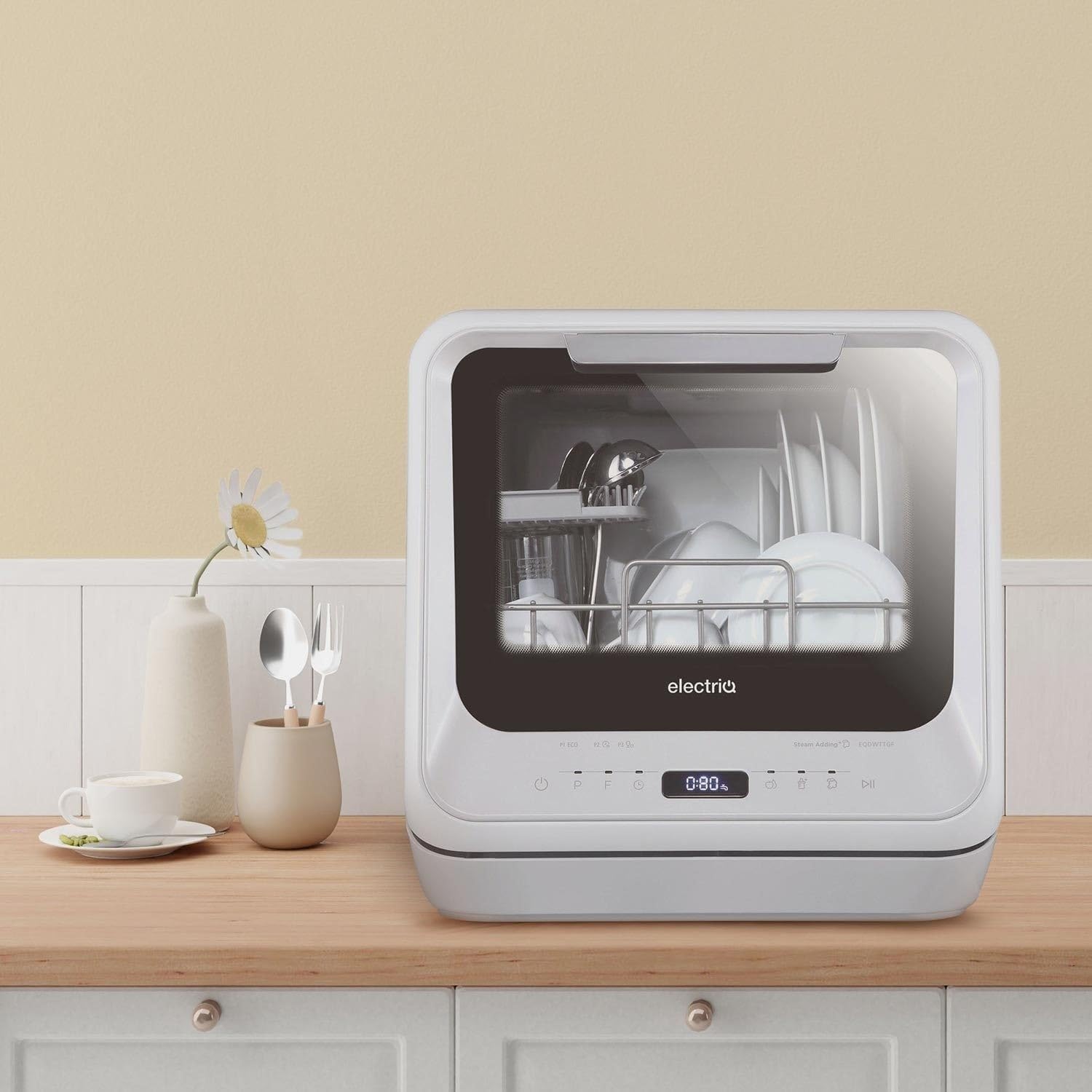
Figure 2: The dishwasher positioned on a kitchen countertop, demonstrating its compact size.
Nkwanye mmiri
The dishwasher features a built-in water tank, eliminating the need for a direct water line connection. Water is manually added to the top of the unit.
- Open the water inlet cover on the top of the dishwasher.
- Using the provided jug, slowly pour clean water into the inlet. The dishwasher will emit a beep sound when the tank is full (approximately 5-6 litres).
- Mechie mkpuchi mbata mmiri nke ọma.
Njikọ drainage
The dishwasher includes a drainage pipe for automatic water discharge.
- Connect the drainage pipe to the waste outlet at the back of the dishwasher.
- Position the other end of the drainage pipe into a sink or suitable drain to allow for wastewater disposal. Ensure the pipe is securely placed to prevent spills.

Ọgụgụ 3: N'azụ view of the dishwasher, highlighting the drainage pipe connection point.
Nnu efere efere
For optimal performance and to prevent limescale buildup, it is recommended to use dishwasher salt.
- Locate the salt container inside the dishwasher.
- Kpupu okpu nke akpa nnu.
- Pour approximately 1 litre of water into the container, followed by 130g of dishwasher salt.
- Securely screw the cap back on. This process may need to be repeated every 5-6 washes, depending on water hardness.
Ntuziaka ọrụ
Na-ebu efere
Proper loading ensures effective cleaning. The dishwasher has a 2-place setting capacity.
- Scrape off any large food particles from dishes before loading. Rinsing is recommended for heavily soiled items.
- Place plates, bowls, and cups in the designated racks. Ensure items do not block the spray arms.
- The maximum plate size that can be accommodated is approximately 9.5 inches (24 cm).
- Place cutlery in the cutlery basket, ensuring handles are facing down for better cleaning.
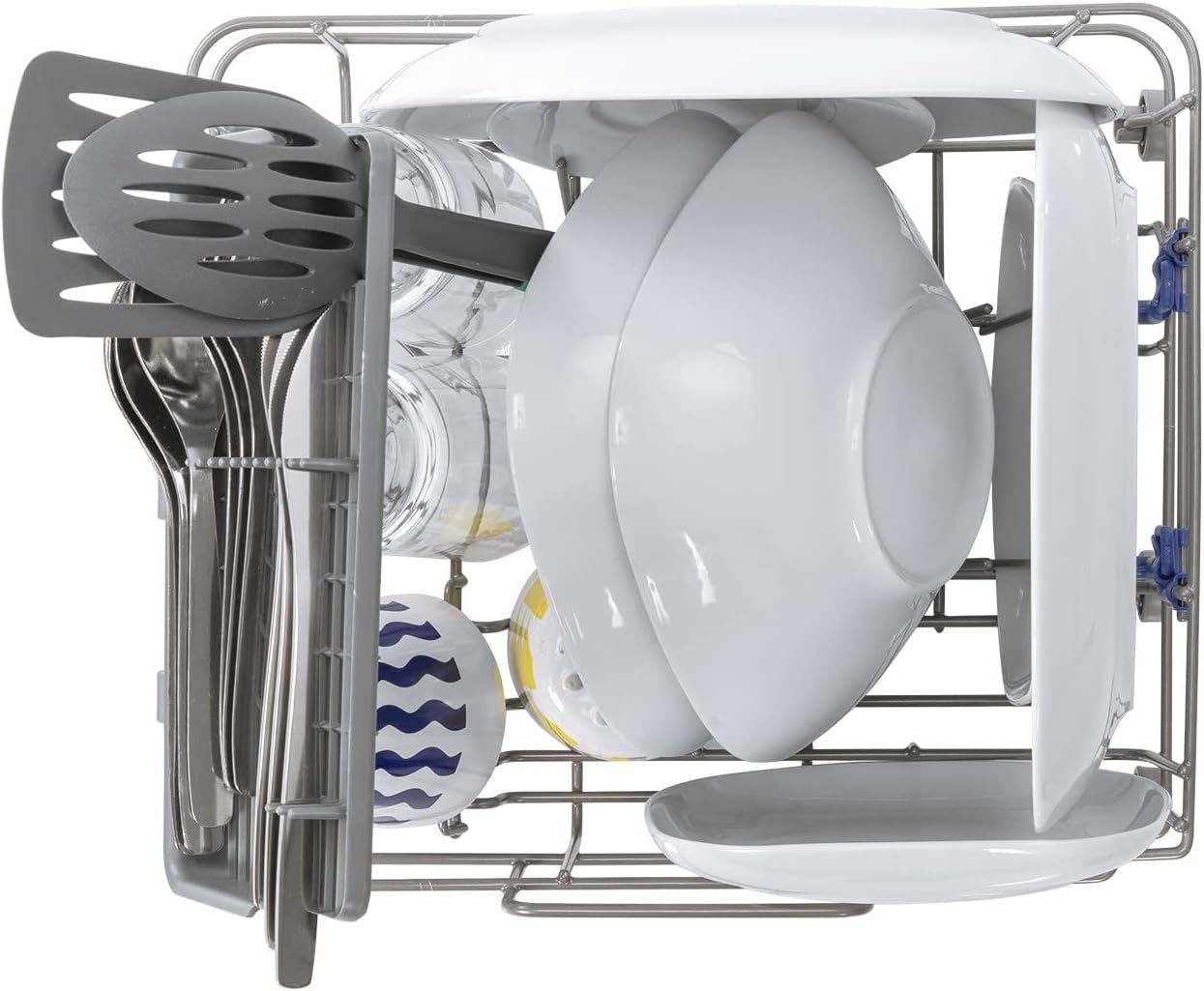
Ọgụgụ 4: Example of how to load dishes and cutlery into the dishwasher for optimal cleaning.
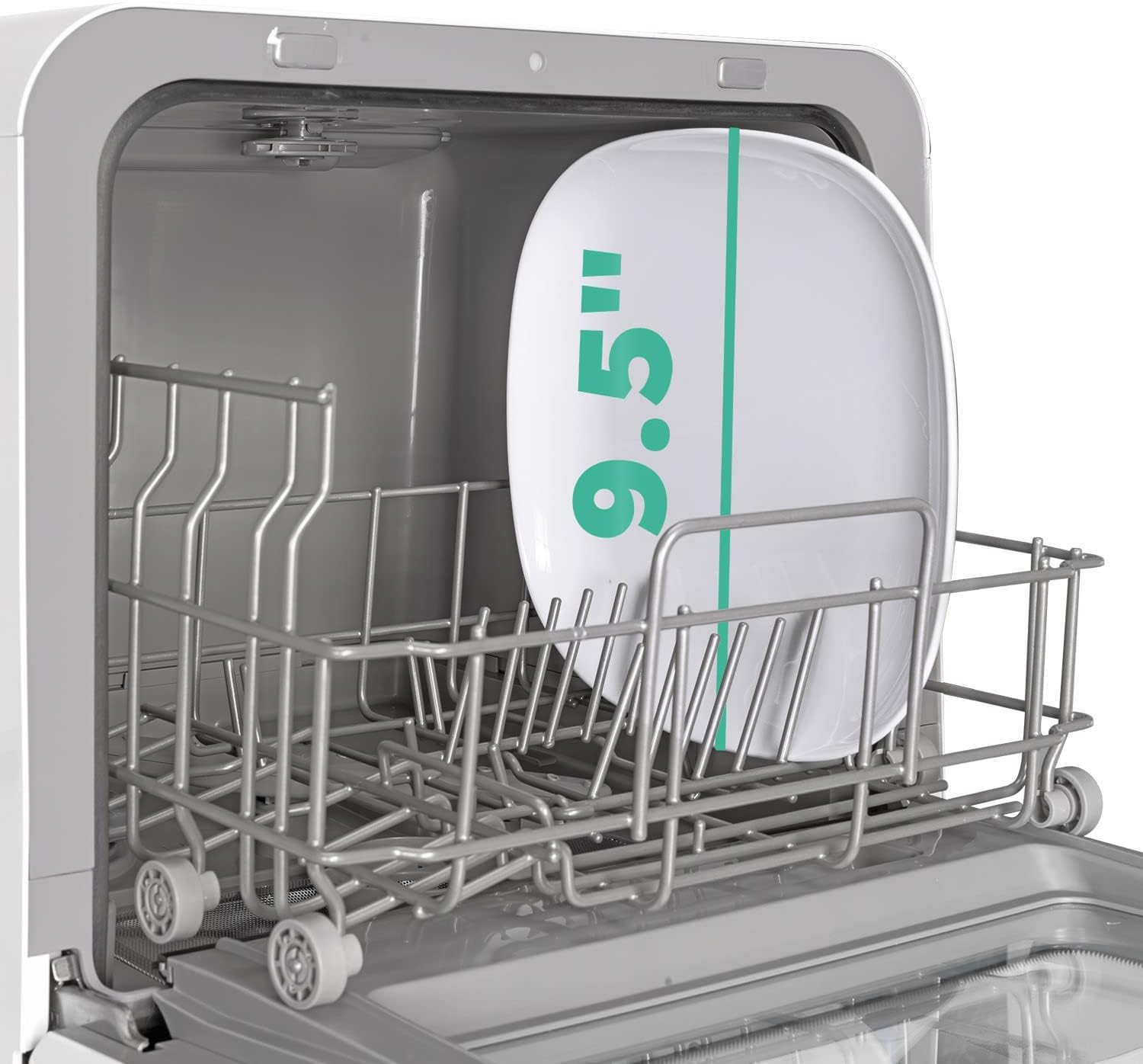
Figure 5: Illustration of the maximum plate size (9.5 inches) that fits inside the dishwasher.
Na-agbakwunye nchacha
Use standard dishwasher tablets or powder detergent.
- Place one dishwasher tablet or the recommended amount of powder detergent into the detergent dispenser.
- Mechie mkpuchi ihe nkesa.
Nhọrọ mmemme
The dishwasher offers various wash programs to suit different needs.

Figure 6: The control panel displaying various program options and the digital timer.
| Mmemme | Nkọwa | Ogologo oge a na-ahụkarị |
|---|---|---|
| Ịsacha ngwa ngwa | For lightly soiled dishes, quick cleaning. | Nkeji 29-30 |
| Usoro elekere 1 | Standard wash, rinse, and dry cycle. | 1 elekere |
| Nlekọta nwa | Thorough cleaning for baby bottles and accessories, includes steaming/sterilizing. | Ihe ruru. awa 2 |
| Fruit Wash | Gentle wash for fruits, can be hot or cold. Includes a fruit basket. | Na-agbanwe agbanwe |
| Mmemme ndị ọzọ | Refer to the control panel for additional programs (e.g., P1 ECO, P2, P3). | Na-agbanwe agbanwe |
Igbu oge
The delay timer allows you to postpone the start of a wash cycle.
- Press the delay button to set the desired delay time, typically from 1 to 24 hours.
- Once set, the dishwasher will automatically start the selected program after the delay period.
Ịmalite okirikiri
- Ensure the water tank is filled and detergent is added.
- Select your desired wash program.
- Pịa bọtịnụ mmalite ka ịmalite okirikiri.
Nlekọta
Nlekọta anya mgbe niile na-achọpụta ogologo ndụ yana ịrụ ọrụ kacha mma nke igwe efere gị.
Ihe nzacha nhicha
- Periodically check and clean the filters located at the bottom of the dishwasher tub.
- Remove any food debris or residue from the filters under running water.
- Reinstall the filters securely after cleaning.
Refilling Dishwasher Salt
- Monitor the salt level indicator (if available) or refill approximately every 5-6 washes as described in the Setup section.
Nchacha izugbe
- Wipe down the exterior of the dishwasher with a soft, damp akwa .
- Clean the interior periodically to remove any buildup or odors.
Nchọpụta nsogbu
If you encounter issues with your dishwasher, refer to the following common problems and solutions.
| Nsogbu | Ihe nwere ike ime | Ngwọta |
|---|---|---|
| Efere adịghị ọcha | Improper loading, clogged spray arms, insufficient detergent, dirty filters, heavily soiled items. | Ensure dishes are loaded correctly, clear spray arms, use appropriate detergent, clean filters, pre-rinse heavily soiled items. |
| Mmiri adịghị agbapụta | Clogged drain pipe, kinked drain hose, blocked sink drain. | Check and clear the drain pipe, ensure the hose is not kinked, verify sink drain is clear. |
| Igwe efere anaghị amalite | Okwu inye ọkụ, anaghị emechi ụzọ nke ọma, ahọpụtaghị mmemme. | Check power connection, ensure door is fully latched, select a wash program. |
| Oke mkpọtụ | Dishes interfering with spray arms, foreign object inside. | Rearrange dishes, check for and remove any foreign objects. |
| Baby bottles greasy after wash | Specific residue, improper loading for bottle type. | Ensure bottles are thoroughly rinsed before loading. Experiment with loading positions to ensure water reaches all surfaces. Consider manual pre-cleaning for stubborn residue. |
Nkọwapụta
| Njirimara | Nkọwa |
|---|---|
| Ụdị | Eletriki |
| Nlereanya | EQDWTTGF (WQP4 -2605) |
| Ụdị Ihe | Freestanding, Table Top |
| Ike | 2 Place Settings (approx. 22 items) |
| Akụkụ (D x W x H) | 43.5 cm x 42 cm x 43.5 cm |
| Voltage | 240 volts |
| Ugboro arụ ọrụ | 50 Hz |
| Ọkwa mkpọtụ | 58 dB |
| Atụmatụ pụrụ iche | Portable, Touch Panel, Built-In Water Tank |
| Ụdị njikwa | Metụ aka |
| Ihe onwunwe | Glass (door), other materials |
| Ngwa gụnyere | Dishwasher, fruit basket (for fruit wash program) |
Akwụkwọ ikike na nkwado
For warranty information, technical support, or service inquiries, please refer to the documentation provided with your purchase or contact Electriq customer service. Electriq is committed to providing top-notch customer service for its products.
Biko dowe akwụkwọ ikike ịzụrụ ihe ọ bụla.


