1. Ngwaahịa gafereview
The Linkind StarRay Solar Spot Lights are designed to provide efficient and versatile outdoor illumination. Featuring a durable, waterproof design and advanced solar technology, these lights offer customizable brightness modes and flexible installation options for various landscape lighting needs.
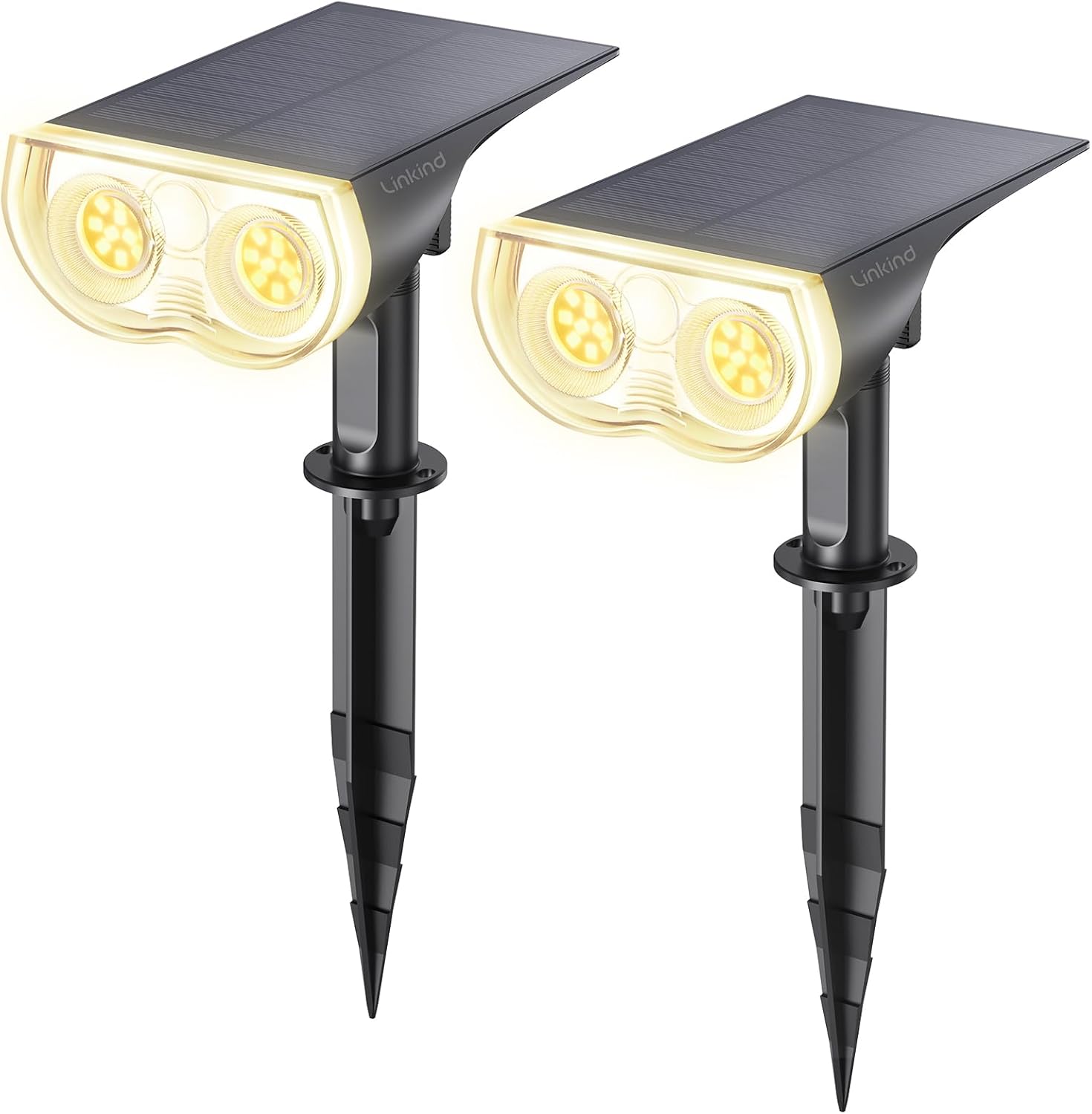
Image: Two Linkind StarRay solar spot lights, showcasing their design and warm white light output.
2. Akụrụngwa Ngwaahịa
- Three Brightness Modes & Dusk-to-Dawn Sensor: Offers High (6 hours), Medium (12 hours), and Low (24 hours) brightness settings. The built-in sensor automatically activates the lights at dusk and deactivates them at dawn.
- Enhanced Solar Panels with 360° Adjustability: Larger solar panels provide a 30% higher photoelectric conversion rate for faster charging. Panels can be adjusted 180° vertically and 360° horizontally to optimize sunlight exposure.
- Powerful 650 Lumen Warm White Light: Equipped with 22 high-quality LEDs, delivering up to 650 lumens of 3000K warm white light with a focused 90° beam angle.
- All-Weather Durability with IP67 Waterproofing: Constructed from durable anti-UV ABS material with an IP67 waterproof rating, ensuring reliable performance in various weather conditions including rain, snow, and heat.
- 2-in-1 Installation for Versatile Use: Can be easily installed by staking into the ground or mounting on a wall using the included hardware.

Image: Illustration of the solar panel's 360-degree horizontal and 180-degree vertical adjustability, highlighting enhanced photoelectric conversion.

Image: Depiction of the light's IP67 waterproof rating and resistance to extreme temperatures, showing it functioning in rainy conditions.
3. Ihe ngwugwu
Biko hụ na ihe niile dị na ngwugwu gị:
- Solar Spotlight x 2
- Plastic Rod x 2 (for ground installation)
- Plastic Anchor x 2 (for wall mounting)
- Turn Knob x 2
- Akwụkwọ ntuziaka x1
4. Nka na ụzụ nkọwa
| Nkọwapụta | Nkọwa |
|---|---|
| Ụdị | Linkind |
| Aha Nlereanya | Ihe atụ |
| Nọmba nlereanya | LL18009-WW-SP001A-US-2-A |
| Agba | Ọcha na-ekpo ọkụ |
| Ihe onwunwe | Acrylonitrile Butadiene Styrene (ABS) |
| Ụdị isi iyi ọkụ | Ikanam |
| Ọnụọgụ nke LED | 22 |
| Icha ọkụ | 650 Lumen |
| Okpomọkụ agba | 3000K (Ọcha na-ekpo ọkụ) |
| Angle Beam | 90° |
| Voltage | 3 volts (DC) |
| Isi Iyi Ike | Ike anyanwụ |
| Ọkwa Nguzogide mmiri | Ihe mgbochi mmiri IP67 |
| Akụkụ ngwaahịa | 1.97"L x 3.15"W x 5.91"H |
| Ibu Ibu | 1.3 pound |
| Ụdị batrị | Lithium ion (gụnyere) |
| Ụdị nwụnye | In-ground, Wall-mounted |

Image: Visual representation of the light's specifications including LED count, lumen output, and color temperature, shown in a garden setting.
5. Ntuziaka nwụnye
The Linkind Solar Spot Lights offer two primary installation methods: ground insertion and wall mounting.

Foto: Ofeview of the two installation methods: ground stake and wall mount.
5.1 Nwụnye ala
- Họrọ Ụdị: Before assembly, choose your desired brightness mode (High, Medium, or Low) by pressing the power button on the back of the light head.
- Kpọkọta ihe njide: Attach the light head to the top of the plastic rod using the turn knob. Ensure it is securely fastened.
- Connect Spikes: Connect the pointed spike end of the plastic rod to the main body.
- Fanye n'ime Ala: Firmly insert the assembled light into soft ground in a location that receives ample direct sunlight throughout the day.

Image: Step-by-step guide for ground installation of the solar light.
5.2 Mgbidi Mgbidi
- Họrọ Ụdị: Before assembly, choose your desired brightness mode (High, Medium, or Low) by pressing the power button on the back of the light head.
- Fix the Holder: Use the included plastic anchors and screws to securely mount the wall bracket to your desired wall surface.
- Connect the Two Parts: Attach the light head to the wall bracket using the turn knob.
- Hazie akụkụ: Adjust the light head and solar panel to the desired angle for optimal illumination and sunlight exposure.

Image: Step-by-step guide for wall mounting the solar light.
6. Ntuziaka ọrụ
The Linkind Solar Spot Lights are equipped with a single button for mode selection and an automatic dusk-to-dawn sensor.
- Ebube mbụ: For optimal performance, allow the solar lights to charge for at least 8-10 hours in direct sunlight before first use.
- Power On/Mode Selection: Locate the power button on the back of the light head.
- Press once (x1) for Ụdị ọkụ dị elu (approx. 6 hours illumination).
- Press twice (x2) for Ụdị ọkụ Ọkara (approx. 12 hours illumination).
- Press three times (x3) for Ọnọdụ ọkụ dị ala (approx. 24 hours illumination).
- Press four times (x4) to Gbanyụọ ìhè.
- Ọrụ akpaaka: Once a mode is selected, the light will automatically turn on at dusk and turn off at dawn, based on the ambient light conditions.

Image: Illustration of the three brightness modes and their respective illumination durations.
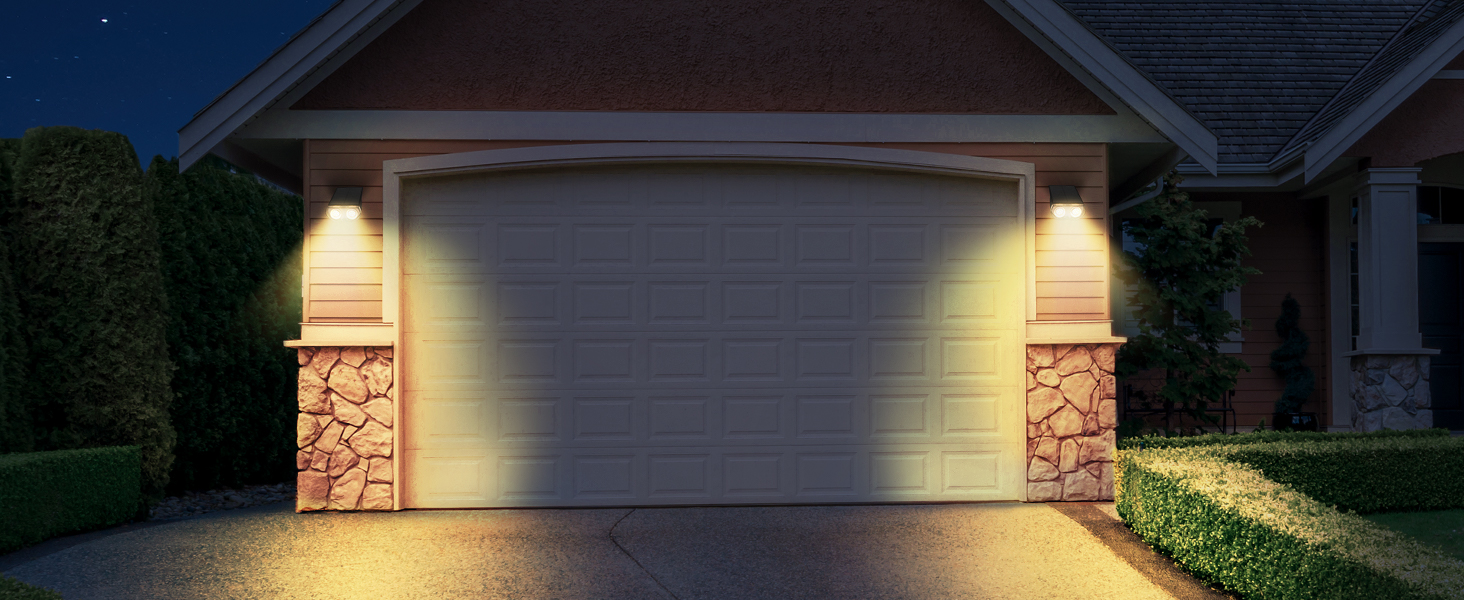
Image: Visual comparison of the light output for High, Medium, and Low brightness settings, and the off state.
7. Nlekọta na nlekọta
To ensure the longevity and optimal performance of your Linkind Solar Spot Lights, follow these maintenance guidelines:
- Ogwe anyanwụ dị ọcha: Jiri nwayọ na-ehichapụ akụkụ anyanwụ mgbe niile, damp akwa iji wepụ uzuzu, unyi, akwụkwọ, ma ọ bụ snow. Ogwe dị ọcha na-eme ka ìhè anyanwụ na-enweta na ịrụ ọrụ nke ọma.
- Kpochapụ ihe mgbochi: Ensure that no trees, bushes, or structures are blocking direct sunlight from reaching the solar panel, especially during peak charging hours.
- Nlekọta batrị: While the battery is included and designed for long life, extreme temperatures can affect its performance. If storing the lights for an extended period, ensure they are fully charged and stored in a cool, dry place.
- Nyochaa njikọ: Periodically check all connections and ensure the light head is securely attached to the stake or wall mount.
- Nlekọta oge oyi: In areas with heavy snowfall, clear snow from the solar panel to allow for charging.
8. Nchọpụta nsogbu
If your Linkind Solar Spot Light is not functioning as expected, please refer to the following common issues and solutions:
| Nsogbu | Ihe nwere ike ime | Ngwọta |
|---|---|---|
| Ìhè anaghị agba n'abalị. | Insufficient sunlight exposure for charging. | Relocate the light to an area that receives 8-10 hours of direct sunlight daily. Ensure the solar panel is clean. |
| Ogologo oge ọkụ dị mkpụmkpụ karịa ka a tụrụ anya ya. | Partial charging due to cloudy weather or obstructions. | Ensure the solar panel is clean and free from debris. Verify the light is in a location with maximum sun exposure. Consider a lower brightness mode for longer illumination. |
| Ìhè na-egbuke egbuke ma ọ bụ na-acha uhie uhie. | Ike batrị dị ala ma ọ bụ panel anyanwụ ruru unyi. | Allow the light to charge for a full day in direct sunlight. Clean the solar panel. |
| Ìhè na-agbanye n'ehihie. | Ihe mmetụta nke mgbede ruo ụtụtụ nwere nsogbu ma ọ bụ ihe na-adịghị mma. | Ensure no external light sources (e.g., streetlights, porch lights) are directly shining on the solar panel, which can trick the sensor into thinking it's daytime. |
9. Akwụkwọ ikike Ozi
Linkind provides a 1-afọ akwụkwọ ikike for this product. This warranty covers defects in materials and workmanship under normal use. Please retain your proof of purchase for warranty claims.
For warranty service or technical support, please contact Linkind customer service through their official channels. Refer to the product packaging or the Linkind brand store on Amazon for contact details.


