1. Ngwaahịa gafereview
The Cordivari Lisa 22 is a hydronic towel warmer designed to provide warmth and dry towels efficiently. Characterized by its fresh design and innovative heating elements, this radiator is suitable for use with US standard pipes and central heating systems. It is finished with ecological epoxy powders for durability and a clean aesthetic.

Foto 1.1: N'ihu view of the Cordivari Lisa 22 Hydronic Towel Warmer, showcasing its white, straight design with multiple horizontal bars.
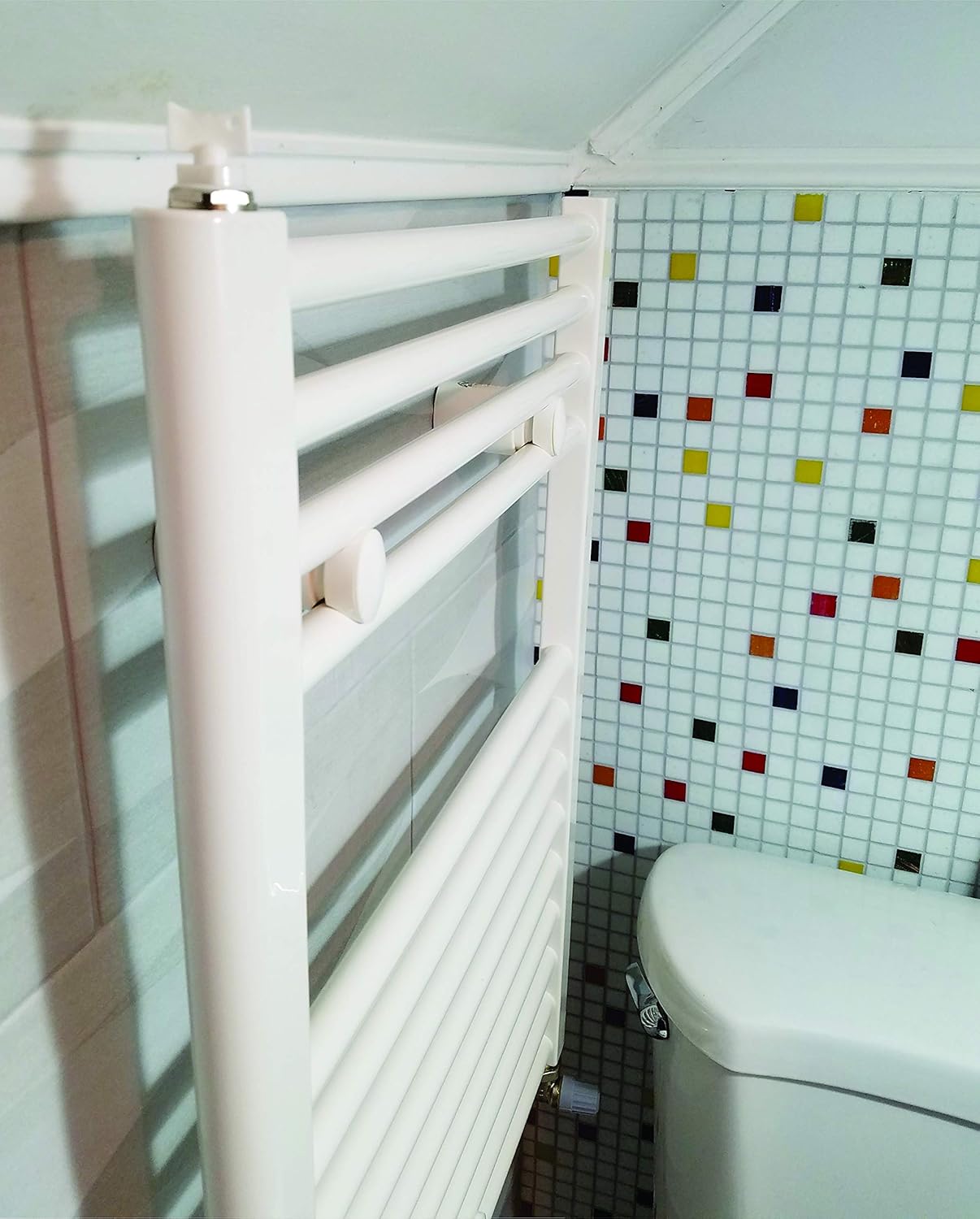
Image 1.2: The Cordivari Lisa 22 Towel Warmer installed in a bathroom, demonstrating its integration into a typical bathroom setting next to a toilet and tiled wall.
2. Ozi nchekwa dị mkpa
Please read and understand all safety instructions before installing or operating the towel warmer. Failure to follow these instructions may result in property damage, injury, or death.
- Ebe na-ekpo ọkụ: The surface of the towel warmer will become hot during operation. Avoid direct contact with the hot surfaces to prevent burns. Keep children and pets away from the unit.
- Ntupu mmiri: Ensure all connections are properly sealed to prevent water leaks. Regularly inspect the unit for any signs of leakage.
- Nwụnye: Installation must be performed by a qualified professional in accordance with local building and plumbing codes.
- Nchekwa Eletriki: If the unit includes any electrical components (e.g., for a dual energy system), ensure all electrical connections are made by a licensed electrician and comply with local electrical codes. This model is hydronic and does not require electrical connection for heating.
- Pressure and Temperature: Do not exceed the maximum operating temperature of 230 °F (110 °C) or maximum pressure of 130 PSI (9 Bar).
- Igwe ikuku: Gbaa mbọ hụ na ikuku ikuku zuru oke na mpaghara ntinye.
3. Ihe ngwugwu
Carefully unpack the box and ensure all items are present and undamaged. If any items are missing or damaged, contact your supplier immediately.
- Cordivari Lisa 22 Hydronic Towel Warmer
- Thermostatic Valve Kit
- Ihe nkwado nkwado
- Ikuku Vent
- Ngwá Ọrụ Hexagon
- Plugs and Screws for mounting (suitable for either compact or hollow brick walls)
- Akwụkwọ ntuziaka nwụnye
Image 3.1: Components of the thermostatic valve kit, including the valve body, control knob, and connection fittings.

Image 3.2: Mounting brackets and various screws and plugs provided for secure installation of the towel warmer.
4. Ntuziaka nwụnye
The Cordivari Lisa 22 towel warmer is designed for easy connection to US standard pipes and central heating systems. Professional installation is recommended.
4.1 Nyochaa nwụnye tupu etinye ya
- Verify that the wall where the radiator will be installed is structurally sound and can support the weight of the unit when filled with water.
- Ensure that the pipe centers match the radiator's specifications (20 inches / 500 mm).
- Confirm that all necessary tools and safety equipment are available.
4.2 Mounting the Radiator
- Ịka akara: Using the provided template or measurements, mark the drilling points on the wall for the mounting brackets. Ensure the marks are level and correctly spaced.
- Ịkụ ala: Drill holes at the marked points using an appropriate drill bit for your wall type. Insert the wall plugs.
- Attaching Brackets: Chekwaa ihe nkwado na-arị elu na mgbidi site na iji skru ndị enyere. Gbaa mbọ hụ na ejikọtara ha nke ọma.
- Positioning Radiator: Carefully lift the towel warmer and position it onto the mounted brackets. Ensure it is securely seated.
4.3 Njikọ Plumbing
- Connect Valves: Attach the thermostatic valve and return valve to the radiator's connections (n° 2 x 1/2” gas). Use appropriate sealant or PTFE tape to ensure watertight connections.
- Jikọọ na Sistemu: Connect the radiator's valves to your central heating system's supply and return pipes.
- Ikuku ikuku: Install the air vent (n° 1 x 1/2” gas) at the top of the radiator. This allows for bleeding air from the system.
- Ule ntapu: Once all connections are made, slowly fill the heating system and check for any leaks at all connection points. Tighten as necessary.

Image 4.1: Technical drawing illustrating the dimensions and connection points of the Cordivari Lisa 22 radiator, crucial for accurate installation.
5. Ntuziaka ọrụ
The Cordivari Lisa 22 Hydronic Towel Warmer operates as part of your central heating system. The thermostatic valve allows for control over the heat output.
- Thermostatic Valve: The thermostatic valve automatically regulates the flow of hot water through the radiator to maintain a desired room temperature. Turn the knob to adjust the setting. Higher numbers typically indicate higher heat output.
- Drying Towels: Hang towels evenly over the bars of the warmer. Do not overload the unit, as this can impede heat distribution and drying efficiency.
- Bleeding Air: If the radiator is not heating evenly (cold spots), it may have air trapped inside. Use the air vent key to slowly open the air vent until water begins to escape, then close it. Perform this operation when the heating system is cold.
6. Nlekọta
Regular maintenance will ensure the longevity and efficient operation of your Cordivari Lisa 22 towel warmer.
- Nhicha: Clean the surface of the radiator regularly with a soft, damp cloth. Avoid abrasive cleaners, solvents, or harsh chemicals, as these can damage the ecological epoxy powder finish.
- Nyocha: Periodically check all pipe connections for any signs of leaks or corrosion. Address any issues promptly.
- Nrụgide Sistemu: Ensure your central heating system maintains the correct operating pressure as recommended by your heating system manufacturer.
- Ọbara: Bleed the radiator annually, or whenever cold spots are noticed, to remove trapped air and ensure optimal heating performance.
7. Nchọpụta nsogbu
This section provides solutions to common issues you might encounter with your towel warmer.
- Radiator Not Heating:
- Check if the central heating system is operational.
- Ensure the thermostatic valve is open and set to a desired temperature.
- Bleed the radiator to remove any trapped air.
- Verify that the isolation valves (if present) on the pipes leading to the radiator are fully open.
- Cold Spots on Radiator:
- This usually indicates trapped air. Bleed the radiator as described in the Operating Instructions.
- Ntupu mmiri:
- Immediately turn off the water supply to the radiator if possible.
- Identify the source of the leak (e.g., pipe connection, valve).
- Tighten connections or replace faulty components. If unsure, contact a qualified plumber.
- Mmepụta ọkụ dị ala:
- Ensure the thermostatic valve is set to a higher temperature.
- Check the overall pressure of your central heating system.
- Bleed the radiator for air.
8. Nka na ụzụ nkọwa
| Njirimara | Nkọwapụta |
|---|---|
| Nlereanya | Lisa 22 |
| Akụkụ (W x H) | 24'' x 48'' (600 mm x 1200 mm) |
| Pipe Centers | 20'' (500 mm) |
| Ibu | 20 lbs (8.2 n'arọ) |
| Mmepụta okpomọkụ | 1925 BTU (700 Watt) |
| Oke okpomọkụ | 230 °F (110 Celsius) |
| Oke nrụgide | 130 PSI (Ogwe iri) |
| Njikọ | 2 x 1/2” gas (inlet/outlet), 1 x 1/2” gas (air vent) |
| Mechaa | Standard White RAL9010, Ecological Epoxy Powders |
| Ihe onwunwe | Painted Mild Steel |
| Ndakọrịta | US Pipes and US Central Heating Systems |

Image 8.1: Detailed technical specifications table for various Lisa 22 radiator configurations, including dimensions, water content, and thermal output.
9. Akwụkwọ ikike na nkwado
Cordivari products are manufactured to high standards and are backed by a manufacturer's warranty. Specific warranty terms and conditions may vary by region and purchase date. Please refer to the warranty card included with your product or visit the official Cordivari websaịtị maka ozi zuru ezu.
9.1 Nkwado ndị ahịa
For technical assistance, troubleshooting beyond this manual, or warranty claims, please contact Cordivari customer support or your authorized dealer. Have your product model number and purchase date ready when contacting support.
Ị nwere ike ịchọta ozi kọntaktị na onye ọrụ mmepụta ihe websaịtị: www.cordivari.it


