Okwu mmalite
This user manual provides detailed instructions for the proper use and maintenance of your AUTOPHIX OM123 OBD2 Scanner. The OM123 is a universal automotive diagnostic scan tool designed to read and clear engine fault codes, view live data, and retrieve vehicle information for OBDII/EOBD+CAN compliant vehicles. Please read this manual thoroughly before operating the device.
Ngwaahịa gafereview
The AUTOPHIX OM123 OBD2 Scanner is a compact and user-friendly diagnostic tool. It features a large LCD display with backlight for clear readability and intuitive navigation buttons.
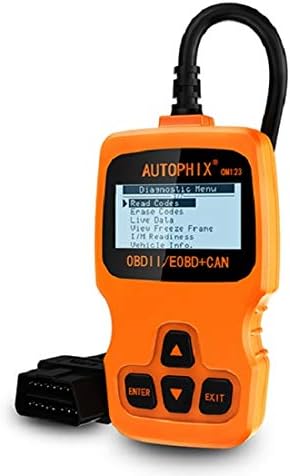
Foto 1: N'ihu view of the AUTOPHIX OM123 OBD2 Scanner, showing the display and control buttons.
Akụkụ ndị bụ isi:
- Ọrụ nyocha: Reads and clears Diagnostic Trouble Codes (DTCs), turns off the Malfunction Indicator Lamp (MIL), views live data streams, and displays freeze frame data.
- Njikere M/M: Checks the status of emission-related monitors to ensure vehicle readiness for emissions testing.
- Iweghachite ozi ụgbọ ala: Accesses Vehicle Identification Number (VIN), Calibration ID (CIN), and Calibration Verification Number (CVN).
- Ndakọrịta sara mbara: Supports all OBDII protocols, including CAN, J1850 PWM, J1850 VPW, ISO9141, and KWP2000. Compatible with most vehicles manufactured from 1996 onwards.
- Ngwa ngwa-Enyi na Enyi: Features a large 128 x 64 pixel LCD display with white backlight and contrast adjustment. Built-in OBD2 fault code definitions eliminate the need for external lookup.
- Enweghị batrị achọrọ: Powered directly via the detachable OBDII cable from the vehicle's OBDII port.
- Nkwado ọtụtụ asụsụ: Available in English, French, German, Spanish, Dutch, Finnish, Portuguese, and Russian.

Foto 2: The OM123 scanner's display showing the main diagnostic menu options: Read Codes, Erase Codes, Live Data, View Freeze Frame, I/M Readiness, and Vehicle Info.
Akụkụ ngwaọrụ:

Foto 3: Dimensions of the AUTOPHIX OM123 scanner: approximately 125mm (height), 70mm (width), and 22mm (thickness).
Melite
- Chọta Ọdụ Ụgbọ Mmiri OBDII: The OBDII port is typically located under the dashboard on the driver's side of the vehicle. Refer to your vehicle's owner's manual for the exact location.
- Jikọọ ihe nyocha ahụ: With the vehicle's ignition off, firmly plug the OM123 scanner's OBDII connector into the vehicle's OBDII port.
- Ike Na: Turn the vehicle's ignition to the "ON" position (do not start the engine). The scanner will automatically power on and display the main menu.
- Language Selection (if needed): If the device is not in your preferred language, navigate to the "Settings" or "System Setup" menu (if available) to select the desired language.
Ntuziaka ọrụ
Once the scanner is connected and powered on, use the UP na N'ala arrow buttons to navigate through the menu options, the Banye button to confirm a selection, and the ỤZỌ ỌPỤPỤ bọtịnụ ịlaghachi na ihuenyo gara aga.
1. Gụọ Koodu
This function retrieves Diagnostic Trouble Codes (DTCs) from the vehicle's computer. These codes indicate specific issues detected by the vehicle's onboard diagnostic system.
- Site na isi menu, họrọ "Read Codes" na pịa Banye.
- The scanner will communicate with the vehicle and display any stored DTCs.
- Jiri ihe UP na N'ala buttons to scroll through multiple codes if present. The built-in DTC library provides definitions for common codes.
2. Hichapụ Koodu
This function clears all Diagnostic Trouble Codes (DTCs) from the vehicle's computer and turns off the Malfunction Indicator Lamp (MIL), also known as the "Check Engine" light. Ensure any underlying issues are resolved before clearing codes, as they may reappear if the problem persists.
- Site na isi menu, họrọ "Erase Codes" na pịa Banye.
- Kwalite nhọrọ gị mgbe kpaliri.
- The scanner will clear the codes and the MIL should turn off.
3. Ndụ data
This function displays real-time operational parameters from the vehicle's sensors and modules. This data can be useful for diagnosing intermittent problems or verifying repairs.
- Site na isi menu, họrọ "Live Data" na pịa Banye.
- The scanner will display a list of available data parameters.
- Jiri ihe UP na N'ala buttons to scroll through the data.
4. View Frame friji
When an emission-related fault occurs, the vehicle's computer stores a "freeze frame" of data, capturing the engine conditions at the moment the fault was detected. This snapshot can help in diagnosing the cause of the problem.
- Site na isi menu, họrọ "View Freeze Frame" na pịa Banye.
- The scanner will display the stored freeze frame data.
5. I/M Njikere
I/M Readiness (Inspection/Maintenance Readiness) indicates whether the various emission-related systems on the vehicle are functioning correctly and have completed their self-tests. This is crucial for emissions testing.
- Site na isi menu, họrọ "I/M Readiness" na pịa Banye.
- The scanner will display the status of various monitors (e.g., Catalyst Monitor, O2 Sensor Monitor). "OK" or "Complete" indicates the test has passed; "INC" or "Not Complete" indicates the test has not yet run or failed.
6. Ozi ụgbọ ala
This function allows you to retrieve important vehicle identification information.
- Site na isi menu, họrọ "Vehicle Info." na pịa Banye.
- The scanner will display information such as VIN (Vehicle Identification Number), CIN (Calibration Identification Number), and CVN (Calibration Verification Number).
Nlekọta
- Nhicha: Use a soft, dry cloth to clean the scanner's casing and screen. Avoid using abrasive cleaners or solvents.
- Nchekwa: Store the device in a clean, dry environment, away from extreme temperatures and direct sunlight.
- Nlekọta USB: Ensure the OBDII cable is not kinked or damaged. Always grasp the connector when plugging or unplugging, not the cable itself.
- Mmelite ngwanrọ: Lelee onye nrụpụta website periodically for any available software updates to ensure optimal performance and compatibility.
Nchọpụta nsogbu
| Nsogbu | Ihe nwere ike ime | Ngwọta |
|---|---|---|
| Scanner does not power on or screen is blank. |
|
|
| Njehie nkwukọrịta na ụgbọala. |
|
|
| Codes cannot be cleared. |
|
|
Nkọwapụta
| Njirimara | Nkọwa |
|---|---|
| Nọmba nlereanya | OM123 |
| Ngosipụta | 128 x 64 pixel LCD with white backlight and contrast adjustment |
| Nrụ ọrụ Voltage | 9-16V (via OBDII port) |
| Protocol akwadoro | CAN, J1850 PWM, J1850 VPW, ISO9141, KWP2000 |
| Okpomọkụ na-arụ ọrụ | 0°C ruo 60°C (32°F ruo 140°F) |
| Okpomọkụ nchekwa | -20°C ruo 70°C (-4°F ruo 158°F) |
| Akụkụ | Ihe ruru. 125mm x 70mm x 22mm |
| Ibu | Ihe ruru. 10.4 ounces (295 grams) |
| Asambodo | FCC, CE, RoHS |
Akwụkwọ ikike na nkwado
The AUTOPHIX OM123 OBD2 Scanner comes with a one-year warranty from the date of purchase, covering manufacturing defects. For technical support, warranty claims, or further assistance, please contact AUTOPHIX customer service through their official websaịtị ma ọ bụ onye na-ere ahịa ebe a zụrụ ngwaahịa ahụ.
Maka ozi ndị ọzọ, gaa na onye ọrụ gọọmentị AUTOPHIX Store.


