1. Okwu mmalite
This user manual provides essential information for the safe and effective installation, operation, and maintenance of the Noark SHT22N Circuit Breaker Accessory. Please read this manual thoroughly before using the product.
The SHT22N is designed as an accessory for circuit breakers, providing specific functionality within an electrical system. It operates within a voltage range of AC 480-500V at 50/60Hz and has a power consumption of 10VA.
2. Ozi nchekwa
Ịdọ aka ná ntị: Electrical shock hazard. Installation and maintenance should only be performed by qualified personnel. Disconnect power before installation or servicing.
- Always follow local and national electrical codes.
- Ensure the power supply is completely disconnected and locked out before working on the circuit.
- Verify the accessory's voltage and current ratings match your application.
- Ejila ngwaọrụ ahụ rụọ ọrụ ma ọ bụrụ na o yie ka ọ mebiri emebi.
- Jiri akụrụngwa nchedo onwe onye dabara adaba (PPE).
3. Ngwaahịa gafereview na Atụmatụ
The Noark SHT22N is a compact and robust circuit breaker accessory. Its primary features include:
- Ụdị: SHT22N
- Voltage Rating: AC 480-500V
- Ugboro: 50Hz/60Hz
- Oriri ike: 10VA
- Ogo dị ugbu a: 10 Amps
- Ụdị nkwụnye: Nkwụnye-N'Ugwu
- Ọnụọgụ mkpanaka: 1
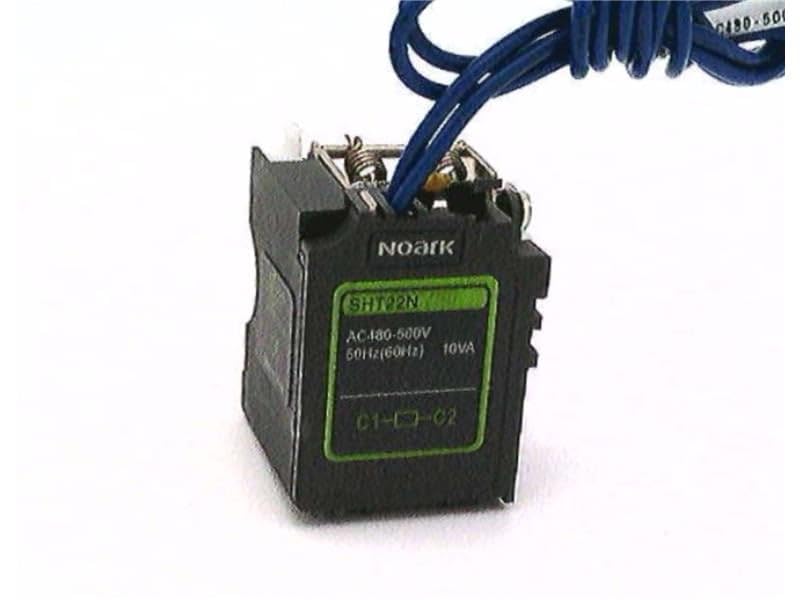
Figure 3.1: The Noark SHT22N Circuit Breaker Accessory. This image shows the compact black unit with green labeling indicating "Noark", "SHT22N", "AC 480-500V", "50Hz(60Hz)", and "10VA". Blue wires are connected to the top terminals of the accessory.
4. Ntọala na nwụnye
The SHT22N is designed for plug-in mounting, typically into a compatible circuit breaker or distribution board. Follow these general steps for installation:
- Ịkwụsị ike: Ensure all power to the circuit where the accessory will be installed is completely disconnected and verified using a voltage tester. Implement lockout/tagwepụ usoro.
- Chọpụta ebe mgbago: Locate the designated slot or connection points on the compatible circuit breaker or panel for the SHT22N accessory.
- Ntinye nkwụnye: Carefully align the accessory with the mounting interface and firmly push it into place until it is securely seated.
- Njikọ waya: Connect the necessary control or signal wires to the terminals of the SHT22N. The image shows blue wires connected to the top. Refer to the specific wiring diagram of your main circuit breaker or system for correct terminal assignments (e.g., C1, C2 as indicated on the unit).
- Nyochaa njikọ: Lelee njikọ niile ugboro abụọ maka njikọta siri ike na polarity ziri ezi.
- Weghachi ike: Once installation is complete and verified, safely restore power to the circuit.
Mara: Specific wiring diagrams and installation procedures may vary depending on the main circuit breaker model and system configuration. Always consult the documentation for the primary circuit breaker.
5. Ntuziaka ọrụ
The Noark SHT22N functions as an accessory to a main circuit breaker. Its operation is typically integrated with the circuit breaker's functionality, such as shunt tripping or auxiliary contact signaling. The accessory itself does not have user-operable controls.
- Ensure the accessory is correctly installed and wired according to the system's requirements.
- Monitor the overall system for proper operation.
- The accessory's function (e.g., remote tripping) will be activated by external signals or conditions as designed within the electrical system.
6. Nlekọta
The SHT22N circuit breaker accessory is designed for minimal maintenance. However, periodic checks are recommended to ensure continued reliable operation:
- Nlele anya: Periodically inspect the accessory for any signs of physical damage, discoloration, or loose connections.
- Iguzosi ike n'ezi ihe njikọ: Ensure all wiring connections remain tight and secure. Loose connections can lead to overheating or intermittent operation.
- Nhicha: If necessary, gently clean the exterior of the accessory with a dry, lint-free cloth. Do not use solvents or abrasive cleaners.
- Ọnọdụ gburugburu: Gbaa mbọ hụ na gburugburu ebe ọrụ ka dị n'ime oke okpomọkụ na iru mmiri akọwapụtara iji gbochie ọdịda akaghi aka.
Mara: Any internal servicing or repair should only be performed by the manufacturer or authorized service personnel.
7. Nchọpụta nsogbu
If you experience issues with the SHT22N accessory, consider the following common troubleshooting steps:
| Nsogbu | Ihe nwere ike ime | Ngwọta |
|---|---|---|
| Accessory not functioning | Wiwi na-ezighi ezi Enweghị ọkụ Ngalaba mebiri emebi | Verify all wiring connections against the system diagram. Check power supply to the circuit. Inspect for physical damage. If damaged, replace the unit. |
| Ọrụ na-adịte aka | Njikọ rụrụ arụ Voltagna mgbanwe | Tighten all terminal connections. Ensure stable power supply within specified voltage oke. |
| ekpo oke ọkụ | Ibu ibu Igwe ikuku na-adịghị mma Njikọ rụrụ arụ | Ensure current does not exceed 10 Amps. Verify adequate airflow around the unit. Lelee ma mesie njikọ niile. |
If the problem persists after attempting these steps, contact qualified service personnel or Noark customer support.
8. Nkọwapụta
| Njirimara | Nkọwa |
|---|---|
| Nlereanya | SHT22N |
| Ụdị | Noark |
| Voltage Ntụle | AC 480-500V |
| Ugboro ugboro | 50Hz/60Hz |
| Oriri ike | 10VA |
| Ogo dị ugbu a | 10 Amps |
| Ụdị ihe mgbawa sekit | Ọkọlọtọ |
| Ụdị nkwụnye | Nkwụnye-N'Ugwu |
| Ọnụọgụ nke okporo osisi | 1 |
| Akụkụ ngwugwu | 1 x 1 x 1 sentimita asatọ |
| Ibu | 1.44 pound |
| Onye nrụpụta | NOARK |
| Ụbọchị mbụ dị | Jenụwarị 1, 2016 |
9. Akwụkwọ ikike Ozi
Noark products are manufactured to high-quality standards. For specific warranty terms and conditions, please refer to the official Noark warranty statement available on their website or contact their customer support. Typically, warranties cover defects in materials and workmanship under normal use.
10. Nkwado ndị ahịa
For technical assistance, product inquiries, or service requests, please contact Noark customer support. Have your product model (SHT22N) and any relevant purchase information ready when contacting support.
You can typically find contact information (phone, email, website) on the official Noark webngwugwu saịtị ma ọ bụ ngwaahịa.