Okwu mmalite
The GoXtreme GX1 Dual Gimbal is a versatile 3-axis stabilizer designed to capture smooth, professional-quality video footage using either a smartphone or an action camera. This manual provides essential information for setting up, operating, and maintaining your GX1 Dual Gimbal to ensure optimal performance and longevity.
Ngwaahịa gafereview
Atụmatụ igodo
- 3-Axis Stabilization: Provides smooth, shake-free video recording.
- Ndakọrịta abụọ: Supports both smartphones and action cameras with an included adapter.
- Nhazi Ergonomic: Njide dị mma maka iji ogologo oge.
- Njikwa agbakwunyere: Easy access to gimbal modes and zoom functions.
Ngwa
Familiarize yourself with the main components of your GoXtreme GX1 Dual Gimbal:
- Gimbal Handle with Control Panel
- Smartphone Clamp
- Action Camera Adapter Plate
- Batrị Lithium-ion enwere ike ịgbanye
- USB Charging Cable (not explicitly listed but implied)

Foto 1: The GoXtreme GX1 Dual Gimbal with a smartphone securely mounted, ready for use. The image shows the overall design and the smartphone clamp.

Foto 2: A zuru ezu view of the gimbal's control panel, showing the joystick, mode buttons (M, L, H), and zoom controls (W-T). A smartphone is mounted in the clamp.
Melite
1. Ịchaji batrị
- Ensure the gimbal is powered off.
- Connect the USB charging cable to the gimbal's charging port.
- Jikọọ nsọtụ nke ọzọ nke eriri ahụ na isi iyi ike USB (dịka ọmụmaatụ, nkwụnye mgbidi, ọdụ ụgbọ USB kọmputa).
- The charging indicator light will illuminate. Once fully charged, the light will change or turn off (refer to specific indicator behavior in the quick start guide if available).
Mara: For first-time use, fully charge the battery before operation.
2. Mounting a Smartphone
- Gently extend the smartphone clamp.
- Jiri nlezianya tinye ekwentị gị n'ime klamp, ensuring it is centered and securely held.
- Gbanwee clamp to balance the smartphone as evenly as possible. Proper balancing is crucial for optimal gimbal performance and battery life.

Foto 3: The GoXtreme GX1 Dual Gimbal's universal mounting clamp, designed to securely hold smartphones. The image shows the clamp n'ebe oghe.
3. Mounting an Action Camera
- Attach your action camera to the provided action camera adapter plate. Ensure it is securely fastened.
- Insert the action camera adapter plate (with the camera attached) into the gimbal's smartphone clamp.
- Adjust the position of the adapter plate within the clamp to achieve optimal balance for your action camera.

Foto 4: The dedicated adapter plate for mounting an action camera onto the gimbal's smartphone clamp.

Foto 5: An action camera securely attached to the adapter plate, demonstrating how it prepares for gimbal mounting.
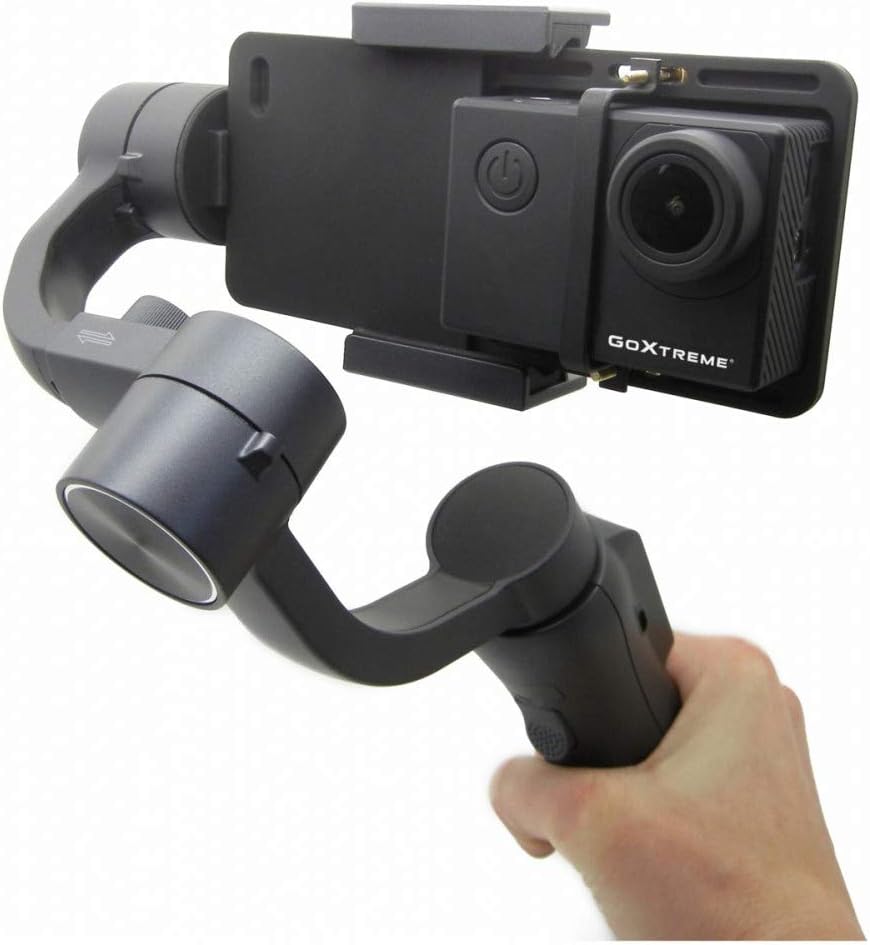
Foto 6: The GoXtreme GX1 Dual Gimbal in use with an action camera, held by a hand, illustrating its compact and portable nature.
Ntuziaka ọrụ
1. Gbanyụọ / gbanyụọ
- Ike Na: Press and hold the power button (usually located on the handle) for a few seconds until the indicator lights illuminate and the gimbal initializes.
- Gbanyụọ: Pịa ma jide bọtịnụ ike ahụ ọzọ ruo mgbe ọkụ ngosi ahụ gbanyụrụ.
2. Ụdị Gimbal
The GX1 Dual Gimbal typically offers various stabilization modes, accessible via the mode buttons (M, L, H) on the control panel:
- Pan Follow Mode (M): The camera pans left and right following your hand movements, while the tilt and roll axes remain locked.
- Ụdị mkpọchi (L): All three axes (pan, tilt, roll) are locked, keeping the camera pointed in a fixed direction regardless of your hand movements.
- Full Follow Mode (H): The camera follows both your pan and tilt movements, while the roll axis remains locked.
Mara: Specific mode names and functionalities may vary slightly. Refer to the quick start guide for precise details.
3. Ọrụ Panel Control
- Joysticks: Used to manually control the pan and tilt direction of the camera.
- Mode Buttons (M, L, H): Cycle through different gimbal stabilization modes.
- Zoom Slider (W-T): Controls the digital zoom function of your connected smartphone or action camera (if supported).
- Bọtịnụ ndekọ: Initiates and stops video recording on the connected device (requires Bluetooth pairing for smartphones).
Nlekọta
- Nhicha: Jiri ákwà dị nro ma kpọọ nkụ hichaa ihe e ji ehicha ihe ahụ. Zere iji kemịkalụ siri ike ma ọ bụ ihe ndị na-eme ka ihe dị nro.
- Nchekwa: Store the gimbal in a cool, dry place, away from direct sunlight and extreme temperatures.
- Nlekọta batrị: For long-term storage, charge the battery to approximately 50-60% every three months to maintain battery health.
- Zere Mmetụta: Chebe gimbal ahụ site na mbelata ma ọ bụ mmetụta, n'ihi na nke a nwere ike imebi moto na akụkụ dị n'ime.
Nchọpụta nsogbu
Okwu na ngwọta nkịtị
- Gimbal anaghị agba ọkụ: Gbaa mbọ hụ na batrị chajuru.
- Gimbal vibrating or unstable: Check if the smartphone or action camera is properly balanced in the clamp. Recalibrate the gimbal if necessary (refer to the quick start guide for calibration steps).
- Njikwa anaghị aza: Ensure the gimbal is powered on and properly connected (if using Bluetooth for smartphone control).
- Poor stabilization: Verify that the device is securely mounted and balanced. Avoid overloading the gimbal with excessively heavy devices.
Ọ bụrụ na nsogbu dịgidere, kpọtụrụ nkwado ndị ahịa maka enyemaka ọzọ.
Nkọwapụta
| Njirimara | Nkọwapụta |
|---|---|
| Ụdị | Easypix |
| Nlereanya | 55238 (GX1) |
| Agba | Nwa |
| Ngwa dakọtara | Mobile Phone, Action Camera |
| Akụkụ ngwaahịa (L x W x H) | 10.8 x 7 x 29 cm |
| Ibu Ibu | 1.1 n'arọ |
| Ụdị batrị | 1 Lithium-ion (gụnyere) |
| Afọ Nlereanya | 2019 |
Akwụkwọ ikike na nkwado
For warranty information, technical support, or service inquiries, please refer to the documentation included with your purchase or visit the official Easypix websaịtị. Debe ihe akaebe nke ịzụrụ maka akwụkwọ ikike.


