1. Okwu mmalite
The FAAC 785506 Decoder SL is a high-quality electronic component designed for integration into FAAC automation systems. This device facilitates secure and reliable communication within your system, ensuring optimal performance and control. This manual provides essential information for the correct installation, operation, and maintenance of your Decoder SL.
Please read this manual carefully before proceeding with installation or operation to ensure safety and proper functionality.
2. Ozi nchekwa
Ntuziaka nchekwa dị mkpa:
- Naanị ndị ọrụ ruru eru ga-arụrịrị nrụnye na nrụzi.
- Disconnect power to the main system before performing any installation or maintenance procedures.
- Ensure all electrical connections comply with local regulations and standards.
- Do not expose the device to moisture, extreme temperatures, or corrosive substances.
- Debe ihe nkwakọ ngwaahịa n'ebe ụmụaka nọ.
3. Ihe ngwugwu
Verify that all components are present and undamaged upon opening the package. The standard package for the FAAC 785506 Decoder SL typically includes:
- FAAC 785506 Decoder SL unit
- Akwụkwọ ntuziaka (akwụkwọ a)
- Ngwa mgbakwasa (ọ bụrụ na ọdabara)
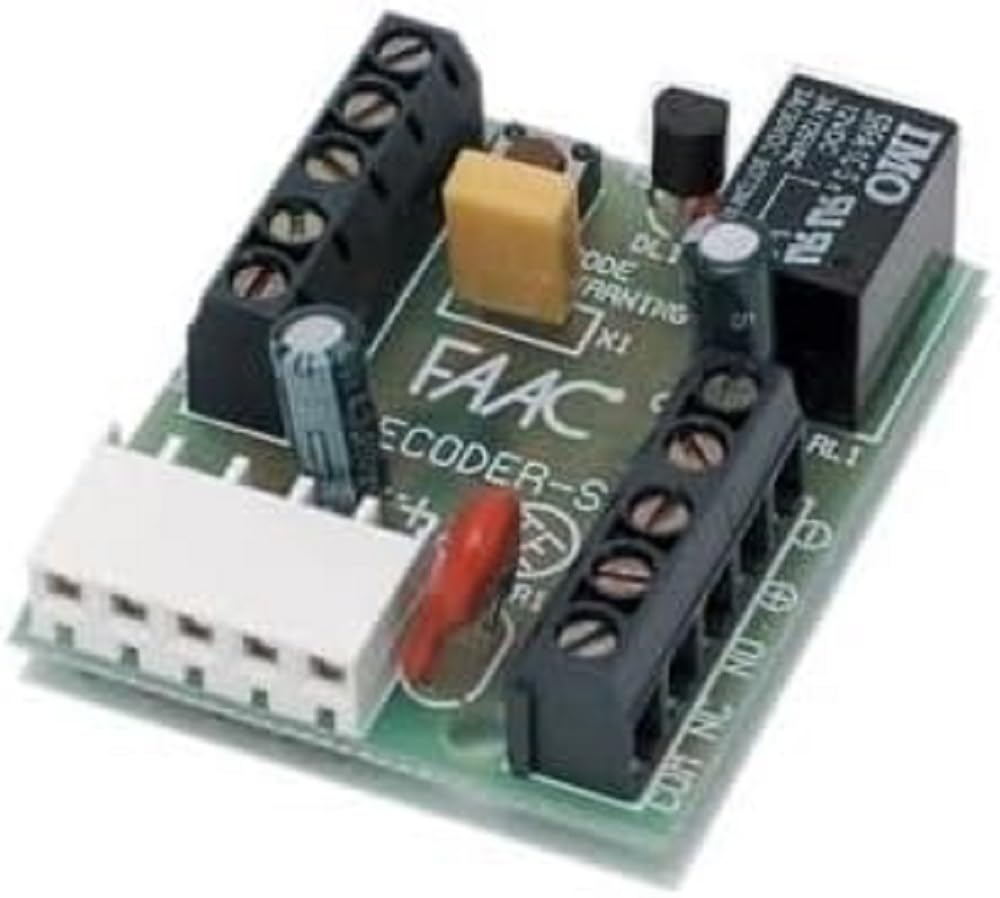
Foto 1: The FAAC 785506 Decoder SL unit. This image displays the compact design of the decoder, typically featuring connection terminals and indicator lights.
4. Ntọala na nwụnye
The FAAC 785506 Decoder SL is designed for easy integration into existing FAAC control units. Follow these general steps for installation:
- Ịkwụsị ike: Ensure the main power supply to the automation system is completely disconnected before beginning installation.
- Ịkwanye: Securely mount the Decoder SL in a suitable, protected location within the control unit enclosure, away from direct moisture or excessive heat. Use the provided mounting hardware.
- Wiring: Connect the Decoder SL to the control unit according to the wiring diagram provided with your specific FAAC control panel. Pay close attention to polarity and terminal designations. Typical connections include power supply, data lines, and output signals.
- Nyocha: Double-check all connections to ensure they are secure and correct.
- Njikọta ike: Once all connections are verified, restore power to the main system.
Refer to the specific wiring diagrams of your FAAC control unit for detailed connection instructions.
5. Ntuziaka ọrụ
Once installed and powered, the FAAC 785506 Decoder SL operates automatically as part of your FAAC automation system. Its primary function is to decode signals from connected devices, such as remote controls or keypads, and transmit them to the main control unit.
- Ọkụ egosi: Observe any indicator lights on the decoder. These typically provide status information, such as power on, signal reception, or error states. Consult your control unit's manual for specific indicator light meanings.
- Ngwakọta sistemu: The decoder works in conjunction with your FAAC control board. Any programming or configuration of remote controls or access devices will be performed through the main control unit, not directly on the decoder.
For specific operational details related to your overall FAAC system, refer to the instruction manual of your main control unit.
6. Nlekọta
The FAAC 785506 Decoder SL is designed for minimal maintenance. However, periodic checks can help ensure its longevity and reliable operation:
- Nhicha: Keep the device free from dust and debris. Use a soft, dry cloth for cleaning. Do not use liquid cleaners or solvents.
- Lelee njikọ: Periodically inspect all wiring connections to ensure they remain secure and free from corrosion.
- Ọnọdụ gburugburu: Ensure the operating environment remains within the recommended temperature and humidity ranges.
No user-serviceable parts are inside the decoder. Do not attempt to open or repair the unit yourself.
7. Nchọpụta nsogbu
If you experience issues with your FAAC 785506 Decoder SL, consider the following common troubleshooting steps:
- Enweghị ike:
- Check the main power supply to the control unit.
- Verify all power connections to the decoder are correct and secure.
- Enweghị nnabata ngosi:
- Ensure the transmitting device (e.g., remote control) is functioning correctly and has fresh batteries.
- Check the wiring between the decoder and the control unit for any loose or incorrect connections.
- Verify that the transmitting device is within the operational range and not obstructed.
- Sistemu adịghị arụ ọrụ:
- If the entire automation system is not responding, consult the troubleshooting section of your main FAAC control unit manual.
- Ensure the decoder is correctly recognized by the main control unit (if applicable, check programming steps in the control unit manual).
If problems persist after attempting these steps, contact FAAC technical support or a qualified service technician.
8. Nkọwapụta
| Njirimara | Nkọwa |
|---|---|
| Ụdị | FAAC |
| Nọmba nlereanya | 785506 |
| ASIN | B07HYVG1WS |
| Onye nrụpụta | Faac Spa |
| Mba onye si | Ịtali |
| Nnweta akụkụ mapụtara | Ozi adịghị |
| Ekwadoro mmelite ngwanrọ ruo | Ozi adịghị |
9. Akwụkwọ ikike na nkwado
FAAC products are manufactured to high-quality standards. For information regarding warranty coverage, terms, and conditions, please refer to the warranty documentation provided with your complete FAAC automation system or visit the official FAAC websaịtị.
For technical support, service, or inquiries about spare parts, please contact your authorized FAAC dealer or FAAC customer service. When contacting support, please have your product model number (785506) and any relevant system information ready.
Akụrụngwa dị n'ịntanetị: For additional information, product updates, and detailed technical documentation, please visit the official FAAC websaịtị: www.faac.com


