Okwu mmalite
This manual provides essential information for the safe and efficient operation of your Nedis UPSD2000VBK Uninterruptible Power Supply. Please read these instructions carefully before installation and use, and retain them for future reference. This UPS is designed to provide backup power and protect your electronic devices from power outages, surges, and fluctuations.
Ntuziaka nchekwa
- Eji ime ụlọ naanị: This UPS is designed for indoor use in a controlled environment. Do not expose it to rain, snow, or direct sunlight.
- Igwe ikuku: Ensure adequate ventilation around the UPS. Do not block ventilation openings. Maintain at least 20 cm of clearance from walls or other obstructions.
- Isi mmalite ike: Connect the UPS to a properly grounded AC power outlet. Do not remove the grounding prong.
- Ibu ibu: Do not overload the UPS. The total power consumption of connected equipment must not exceed the UPS's rated capacity (1200 W).
- Nchekwa batrị: The UPS contains internal batteries. Do not attempt to open the UPS casing or service the batteries yourself. Refer all servicing to qualified personnel.
- Liquid Contact: Avoid placing liquids on or near the UPS. In case of accidental spillage, immediately disconnect the UPS from the power source and contact support.
- Kpupu njikọ mberede: Ensure the AC power outlet for the UPS is easily accessible for quick disconnection in an emergency.
Ngwaahịa gafereview
The Nedis UPSD2000VBK is a compact and efficient uninterruptible power supply. Familiarize yourself with its components before proceeding with installation.

Foto 1: N'ihu na akụkụ view of the Nedis UPSD2000VBK. This image displays the main power button and the vertical strip of LED indicators on the front panel, along with ventilation grilles on the side.
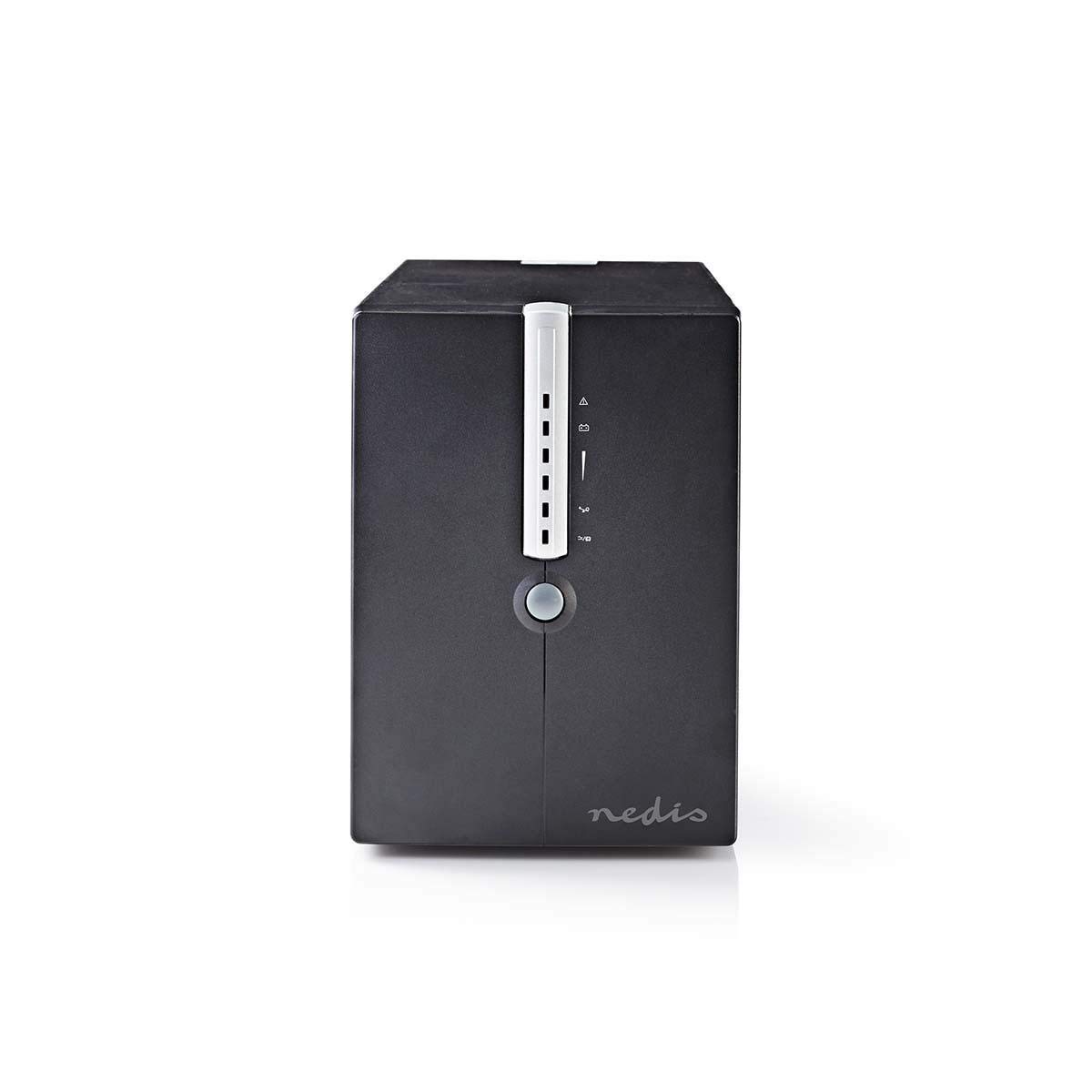
Foto 2: N'azụ view of the Nedis UPSD2000VBK. This image highlights the four power outlets, the USB communication port, and the RJ45 network protection ports (IN/OUT), along with the main power input and cooling fan.
Isi ihe:
- Ogwe ihu: Power button, LED status indicators (AC mode, battery mode, fault, battery level).
- Ngbanwe azụ: AC input, 4 x Schuko output sockets, USB communication port, RJ45 network protection ports (IN/OUT).
- N'ime: Sealed lead-acid batteries, inverter, charger, control circuitry.
Melite
1. Iwepu ngwongwo
- Jiri nlezianya wepụ UPS ahụ na ngwugwu ya.
- Lelee ngwaọrụ ahụ maka mmebi ọ bụla e mere na mbupu. Ọ bụrụ na achọpụta mmebi, arụla ngwaọrụ ahụ ma kpọtụrụ onye na-ere ahịa gị.
2. Ntinye
- Place the UPS on a flat, stable surface in a well-ventilated area.
- Avoid locations with excessive dust, humidity, or extreme temperatures.
- Ensure the ambient temperature is between 0°C and 40°C (32°F and 104°F).
3. Ijikọ Ngwaọrụ
- Jikọọ eriri ike UPS na oghere mgbidi ala.
- Plug your computer, monitor, and other critical devices into the output sockets on the rear of the UPS. Ensure the total load does not exceed 1200 W.
- Nhọrọ: Connect a USB cable from the UPS to your computer for monitoring software functionality (software not included, typically available from manufacturer's websaịtị).
- Nhọrọ: Connect network cables through the RJ45 IN/OUT ports to protect your network devices from surges.
4. Nchaji mbụ
For optimal performance, charge the UPS for at least 8 hours before initial use. Leave the UPS connected to the AC power outlet with no load connected during this period.
Na-arụ ọrụ
1. Agbanye / Gbanyụọ
- Ka ịgbanwuo: Press and hold the power button on the front panel for approximately 3 seconds until you hear a beep and the indicators light up.
- Ịgbanyụ: Press and hold the power button for approximately 3 seconds until you hear a beep and the indicators turn off.
2. Ịghọta Ihe Ngosi na Mkpu
The front panel features LED indicators and an audible alarm to communicate the UPS status:
- AC Mode (Green LED): Solid green indicates the UPS is operating on utility power and charging the battery.
- Battery Mode (Yellow LED): Flashing yellow indicates the UPS is operating on battery power. An audible alarm will sound periodically.
- Fault (Red LED): Solid red indicates a fault condition. Refer to the troubleshooting section. An audible alarm may sound continuously.
- Ihe ngosi ọkwa batrị: A series of LEDs typically indicates the remaining battery capacity.
3. Battery Mode Operation
When utility power fails, the UPS automatically switches to battery mode, providing power to connected devices. The duration of battery backup depends on the load connected. During battery mode, save your work and shut down your equipment properly to prevent data loss.
Nlekọta
1. Nlekọta batrị
- To maximize battery life, keep the UPS connected to an AC outlet at all times.
- Perform a full discharge/recharge cycle every 3-6 months if the UPS is rarely used on battery power.
- Batteries are consumable items and will eventually require replacement. Contact qualified service personnel for battery replacement.
2. Nhicha
- Disconnect the UPS from the AC power outlet and all connected devices before cleaning.
- Use a soft, dry cloth to wipe the exterior surfaces. Do not use liquid or aerosol cleaners.
- Gbaa mbọ hụ na oghere ikuku adịghị na uzuzu na irighiri ihe.
3. Nchekwa
- If storing the UPS for an extended period, turn it off and disconnect it from all power sources.
- Chekwaa n'ebe dị jụụ, kpọrọ nkụ.
- Recharge the UPS battery every 3 months to prevent battery degradation.
Nchọpụta nsogbu
Review the following common issues and solutions before contacting technical support.
| Nsogbu | Ihe nwere ike ime | Ngwọta |
|---|---|---|
| UPS anaghị agba ọkụ. | No AC input power. Battery deeply discharged. | Check AC power cord connection. Ensure wall outlet has power. Allow UPS to charge for 8 hours. |
| UPS beeps continuously in AC mode. | Overload condition. Internal fault. | Reduce connected load. Disconnect non-essential devices. If problem persists, contact support. |
| UPS na-agbanwe gaa na ọnọdụ batrị ugboro ugboro. | Unstable utility power. Low battery capacity. | Check utility power quality. Allow battery to fully charge. Consider battery replacement if old. |
| Connected devices lose power during outage. | UPS overloaded. Battery depleted. | Ensure total load is within capacity. Allow UPS to recharge. |
Nkọwapụta
| Njirimara | Nkọwapụta |
|---|---|
| Nlereanya | UPSD2000VBK |
| Ụdị | Nedis |
| Ike | 2000 VA / 1200 W |
| Ntinye Voltage | Volt 120 (AC) |
| Sockets mmepụta | 4 (Schuko type) |
| Akụkụ (L x W x H) | 14.5 x 40 x 20.5 cm |
| Ibu | 30 n'arọ |
| Ụdị batrị | Sealed Lead-Acid (internal, non-user replaceable) |
| Oge Nchaji | 8 hours to 90% capacity (typical) |
| Okpomọkụ na-arụ ọrụ | 0°C ruo 40°C |
| iru mmiri | 0-90% RH (na-abụghị condensing) |
| Port Communication | USB |
| Nchekwa netwọkụ | RJ45 (IN/OUT) |
Akwụkwọ ikike na nkwado
For warranty information, technical support, or service inquiries, please refer to the warranty card included with your product or visit the official Nedis website. Do not attempt to repair the unit yourself, as this may void your warranty and pose safety risks. Always contact qualified service personnel for assistance.


