Okwu mmalite
Thank you for choosing the Tescoma Ultima Duo Pressure Cooker. This manual provides essential information for the safe and efficient use of your new pressure cooker. Please read all instructions carefully before first use and retain this manual for future reference.

Figure 1: The Tescoma Ultima Duo Pressure Cooker set, including both 4.0L and 6.0L pots, the universal pressure lid, a glass lid, and a steamer basket.
Ntuziaka nchekwa dị mkpa
Mgbe ị na-eji igwe nri nrụgide, a ga-agbaso usoro nchekwa nchekwa bụ isi mgbe niile:
- Gụọ ntuziaka niile nke ọma tupu ị rụọ ngwa ahụ.
- Emetụla ebe dị ọkụ aka. Jiri aka ma ọ bụ mkpọ.
- Nlebanya dị nso dị mkpa mgbe ejiri igwe na-esi nri n'akụkụ ụmụaka.
- Etinyekwala ihe nrụnye nrụgide na oven ọkụ.
- Ekwesịrị iji nlezianya dị oke mkpa mgbe ị na-ebugharị ihe na-esi nri nrụgide nwere mmiri ọkụ.
- Do not use the pressure cooker for purposes other than intended.
- This appliance cooks under pressure. Improper use may result in scalding injury. Make certain unit is properly closed before operating. See "Closing the Lid" section.
- Never force open a pressure cooker. Make certain the internal pressure has completely dropped before opening. See "Opening the Lid" section.
- Do not fill the unit over 2/3 full. When cooking foods that expand during cooking, such as rice or dehydrated vegetables, do not fill the unit over 1/2 full. Overfilling may cause a risk of clogging the vent pipe and developing excess pressure.
- Be aware that certain foods, such as applesauce, cranberries, pearl barley, oatmeal or other cereals, split peas, noodles, macaroni, rhubarb, or spaghetti can foam, froth, and sputter, and clog the pressure release device. These foods should not be cooked in a pressure cooker.
- Na -elele ngwaọrụ mwepụta nrụgide maka mkpọchi tupu ejiri ya.
- Use only Tescoma replacement parts for gaskets, valves, and other components.
Ngwa ngwaahịa
The Tescoma Ultima Duo Pressure Cooker system includes the following main components:
- 6.0L Pressure Pot: The larger stainless steel pot designed for pressure cooking.
- 4.0L Pressure Pot: The smaller stainless steel pot, also suitable for pressure cooking.
- Universal Pressure Lid: Features the pressure regulating valve, safety valve, and locking mechanism.
- Ihe mkpuchi iko: For conventional cooking with the 4.0L or 6.0L pots.
- Steamer Basket with Stand: For steaming vegetables and other foods.
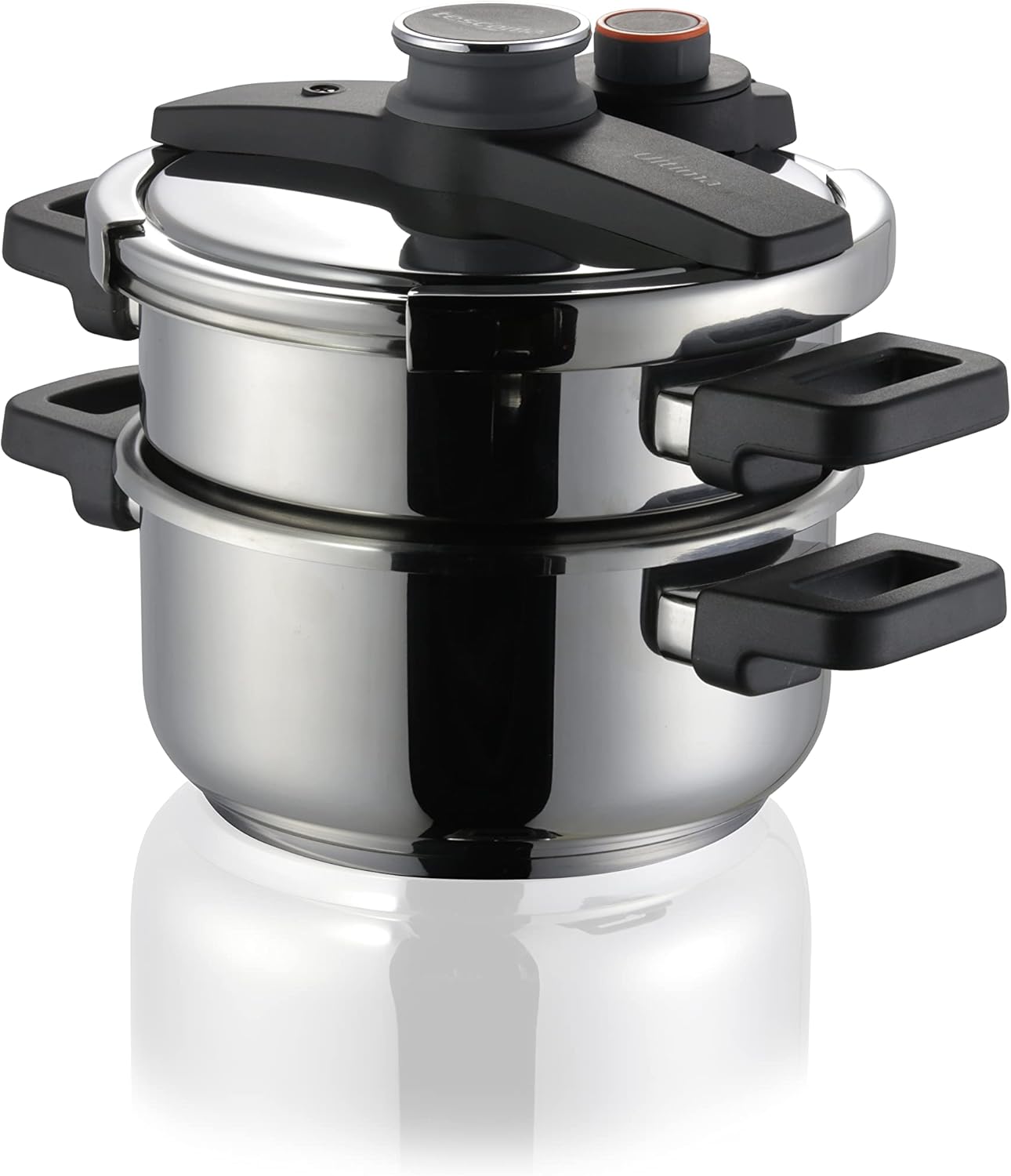
Figure 2: The 6.0L and 4.0L pots of the Ultima Duo set, demonstrating their stackable design for storage.

Figure 3: The included stainless steel steamer basket with its integrated stand, used for steaming food inside the pressure cooker.
Melite
Before using your pressure cooker for the first time:
- Ịkwapu: Jiri nlezianya wepụ ihe niile dị na nkwakọ ngwaahịa.
- Nhicha izizi: Wash all parts (pots, lids, gasket, valves, steamer basket) with warm soapy water. Rinse thoroughly and dry completely. Ensure no packaging materials remain.
- Ntinye gasket: Ensure the silicone gasket is correctly seated inside the rim of the pressure lid. It should fit snugly and evenly.
- Lelee Valve: Verify that the pressure regulating valve and safety valve are clear of any obstructions and move freely.
Ntuziaka ọrụ
Follow these steps for safe and effective pressure cooking:
1. Na-ejuputa ite
- Add food and liquid to the pressure pot. Always add at least 250ml (1 cup) of liquid to generate steam.
- Maximum Fill Line: Never fill the pot more than 2/3 full. For foods that expand (e.g., rice, beans, grains), do not fill more than 1/2 full.
2. Imechi mkpuchi
- Place the pressure lid onto the pot, aligning the lid with the pot handles.
- Rotate the central knob on the lid to engage the locking mechanism. Ensure the lid is securely closed and the handles are aligned. The safety pin should be in the down position.

Figure 4: A hand demonstrating the rotation of the central knob on the pressure lid to securely close or open the cooker.
3. Pressure Regulation
- The Ultima Duo features a pressure regulating valve with multiple settings. Rotate the orange-ringed knob to select the desired pressure level based on your recipe.
- Common settings include:
Nrụgide dị ala: For delicate foods like fish, vegetables.
Nrụgide dị elu: For meats, stews, and foods requiring longer cooking times.

Ọgụgụ 5: A zuru ezu view of the pressure regulating dial on the Ultima Duo lid, showing various pressure settings.
4. Nri n'okpuru nrụgide
- Place the pressure cooker on a suitable heat source (gas, electric, ceramic, induction). Use a burner size appropriate for the pot's base.
- Heat on high until the pressure indicator rises and steam begins to escape steadily from the valve.
- Once full pressure is reached (indicated by the pressure indicator and steady steam release), reduce the heat to maintain a gentle, steady steam flow. Start timing your recipe.
5. Releasing nrụgide
There are generally two methods for releasing mgbali:
- Ntọhapụ eke: Remove the cooker from the heat source and allow it to cool down naturally. The pressure will gradually decrease, and the safety pin will drop. This method is ideal for foods that benefit from continued cooking, such as stews and roasts.
- Ngwa ngwa Hapụ: For foods that require precise cooking times (e.g., vegetables), you can carefully turn the pressure regulating valve to the steam release position. Be cautious of the hot steam escaping. Once the safety pin drops, all pressure has been released.
6. Imeghe mkpuchi
- Only open the lid when the safety pin has fully dropped, indicating no internal pressure.
- Rotate the central knob on the lid to unlock the mechanism, then lift the lid away from you to avoid steam burns.

Figure 6: The pressure cooker pot containing a cooked meal, ready for serving.
Nlekọta na nhicha
Nlezi anya nke ọma na-achọpụta ogologo ndụ yana ọrụ nchekwa nke osi nri nrụgide gị.
- Mgbe ojiji ọ bụla: Disassemble the pressure lid components (gasket, valves) and wash all parts with warm soapy water. Rinse thoroughly.
- Pressure Lid: The pressure lid, including its mechanical parts, is ọ bụghị ihe nchekwa igwe efere. Hand wash only to prevent damage to the intricate mechanisms.
- Pots and Glass Lid: The stainless steel pots and the glass lid are generally dishwasher safe. Refer to the product packaging or manufacturer's website for specific dishwasher compatibility.
- Nlekọta Gasket: Regularly inspect the silicone gasket for cracks, tears, or hardening. Replace if any damage is observed, as a faulty gasket can prevent pressure from building or cause steam leaks.
- Nchacha Valve: Ensure the pressure regulating valve and safety valve are free from food particles or blockages. Use a small brush if necessary to clear any residue.
- Nchekwa: Chekwaa igwe na-esi nri nrụgide na mkpuchi tụgharịa ma ọ bụ dị ntakịrị ka o kwe ka mgbasa ikuku wee gbochie isi.
Nchọpụta nsogbu
Ọ bụrụ na ị hụ nsogbu na ihe na-esi nri nrụgide gị, lee nsogbu na ngwọta ndị a na-ahụkarị:
- Nrụgide Na-adịghị Arụ:
- Ensure the lid is properly closed and sealed.
- Check the gasket for proper placement or damage.
- Verify that the pressure regulating valve is set correctly and not clogged.
- Ensure there is sufficient liquid in the pot.
- Steam Leaking from Lid:
- Check the gasket for proper seating, damage, or wear.
- Ensure the lid is securely locked.
- Clean the rim of the pot and the lid to remove any food debris.
- Food Burning at the Bottom:
- Ensure adequate liquid is used for the cooking time.
- Reduce heat once pressure is reached to maintain a gentle simmer, not a high boil.
- Consider using a flame diffuser if cooking on a gas stove with high heat.
- Lid Cannot Be Opened After Cooking:
- Do not force the lid.
- Ensure all internal pressure has been released. The safety pin must be fully dropped. If not, allow more time for natural release or use the quick release method carefully.
Nkọwapụta
| Ụdị | Tescoma |
| Nlereanya | Ultima Duo |
| Ike | 4.0 Liters + 6.0 Liters |
| Ihe onwunwe | Igwe anaghị agba nchara |
| Agba | Ọlaọcha |
| Ibu Ibu | 6 Kilograms (approximate total package weight) |
| Ndakọrịta nke igwe efere | Pots and glass lid: Yes (confirm with specific product details). Pressure lid: No (hand wash only). |
| Njirimara Pụrụ Iche | Programmable (refers to pressure settings) |

Ọgụgụ 7: Akụkụ n'ofeview of the 4.0L and 6.0L Tescoma Ultima Duo pots, indicating heights and overall width.
Akwụkwọ ikike na nkwado
For warranty information, product support, or to purchase replacement parts, please refer to the official Tescoma website or contact Tescoma customer service directly. Keep your proof of purchase for warranty claims.


