1. Ngwaahịa gafereview
The Teltonika RUT240 is an industrial 4G LTE Wi-Fi router designed for reliable cellular communication in various environments. This manual provides essential information for its proper installation, configuration, and use.
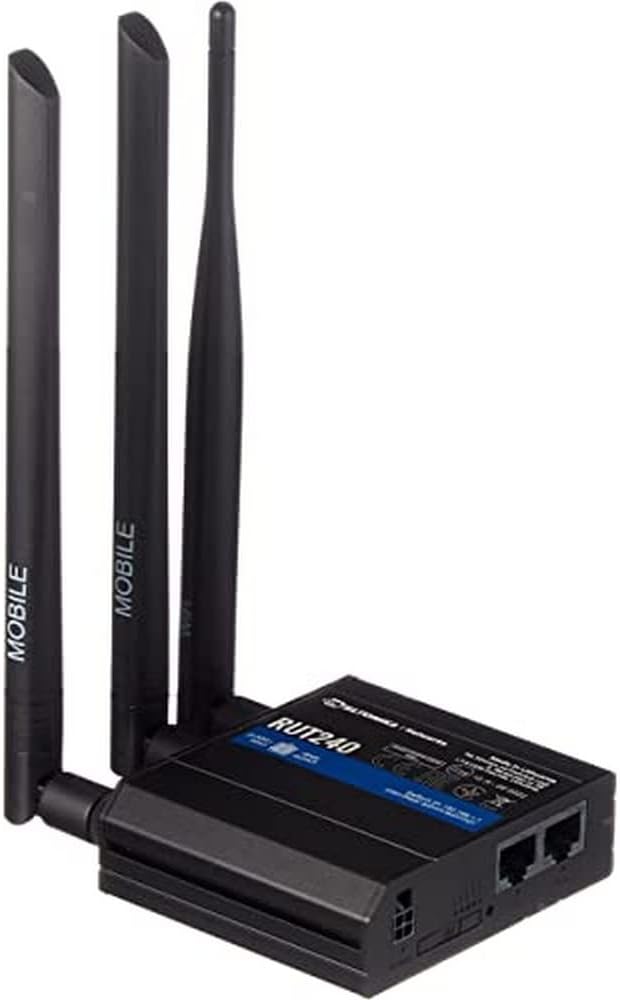
Foto 1: N'ihu view of the Teltonika RUT240 LTE Router with its three attached antennas, illustrating its compact design.
2. Ihe ngwugwu
Tupu ịga n'ihu na ntinye, chọpụta na ihe niile dị na ngwugwu:
- Teltonika RUT240 LTE rawụta
- Ihe nkwụnye ọkụ
- eriri Ethernet
- Two LTE Antennas (magnetic mount, SMA male)
- One Wi-Fi Antenna (magnetic mount, RP-SMA male)
- Ntuziaka mmalite ngwa ngwa

Foto 2: The Teltonika RUT240 router displayed with its standard accessories, including the power adapter and an Ethernet cable.
3. Nhazi
3.1 Ntinye ngwaike
- Fanye SIM kaadị: Locate the SIM card slot on the side of the router. Insert your activated Mini-SIM card into the slot until it clicks into place. Ensure the SIM card is correctly oriented as indicated on the device.
- Tinye eriri: Screw the two LTE antennas onto the SMA connectors labeled "MOBILE" and the Wi-Fi antenna onto the RP-SMA connector labeled "WLAN" on the router. Ensure they are securely tightened.
- Njikọ Ike: Connect the power adapter to the power socket on the router and then plug the adapter into a power outlet. The router will begin to power on.
- Optional: Ethernet Connection: For initial configuration or wired network access, connect one end of the Ethernet cable to the LAN port on the router and the other end to your computer's Ethernet port.

Foto 3: Akụkụ view of the Teltonika RUT240, highlighting the SIM card slot and the antenna connection points for mobile and Wi-Fi signals.

Foto 4: N'azụ view of the Teltonika RUT240, showing the power input, SIM card slot, and the LAN/WAN Ethernet ports.
3.2 Nhazi izizi
- Nweta Web Ihuenyo: Mepee a web ihe nchọgharị na kọmputa ejikọtara gị wee gaa na http://192.168.1.1.
- Banye: Enter the default username "admin" and the password found on the device label or packaging. You will be prompted to change the password for security.
- Ọkachamara Ntọlite Ngwa Ngwa: Follow the on-screen Quick Setup Wizard to configure basic settings such as mobile data connection (APN settings), Wi-Fi network name (SSID), and password.
4. Ntuziaka ọrụ
4.1 LED egosi
The RUT240 features several LED indicators to provide status information:
- Igwe ọkụ ọkụ: Na-egosi ọnọdụ ike. Akwụkwọ ndụ akwụkwọ ndụ siri ike mgbe ejiri ya.
- Mobile Signal Strength LEDs: Multiple LEDs indicate the strength of the cellular signal. More illuminated LEDs mean stronger signal.
- Network Type LEDs: Indicate the active cellular network type (e.g., 2G, 3G, 4G/LTE).
- Ikanam Wi-Fi: Indicates Wi-Fi module status.
- LAN/WAN LEDs: Indicate activity on the respective Ethernet ports.
4.2 Jikọọ na Wi-Fi
- On your device (smartphone, laptop), search for available Wi-Fi networks.
- Select the network name (SSID) configured during the initial setup.
- Enter the Wi-Fi password (WPA2 key) when prompted.
- Once connected, your device should have internet access via the RUT240.
4.3 Nhazi dị elu
The rawụta web interface (RutOS) offers extensive configuration options for advanced users, including VPN, firewall rules, SMS utilities, and more. Refer to the official Teltonika documentation for detailed guides on advanced features.
5. Nlekọta
- Mmelite femụwe: Regularly check for and install firmware updates from the official Teltonika website to ensure optimal performance, security, and access to new features. This can typically be done via the router's web interface.
- Nhicha: Keep the router clean and free from dust. Use a soft, dry cloth. Do not use liquid cleaners.
- Ọnọdụ gburugburu: Ensure the router is operated within its specified temperature and humidity ranges to prevent damage. Avoid direct sunlight and excessive heat.
- Okwuntughe echekwara Periodically change your router's login password and Wi-Fi password to maintain network security.
6. Nchọpụta nsogbu
| Nsogbu | Ihe nwere ike ime | Ngwọta |
|---|---|---|
| Enweghị ohere ịntanetị |
|
|
| Enweghị ike ịnweta Web Interface |
|
|
| Wi-Fi anaghị ahụ anya ma ọ bụ jikọọ |
|
|
6.1 nrụpụta nrụpụta
If you encounter persistent issues, a factory reset may resolve them. To perform a factory reset:
- Gbaa mbọ hụ na agbanyere router.
- Locate the reset button (often recessed) on the router.
- Use a thin object (e.g., a paperclip) to press and hold the reset button for approximately 10 seconds.
- Release the button when the LEDs indicate a reset (e.g., all LEDs flash). The router will reboot with factory default settings.
7. Nkọwapụta
| Njirimara | Nkọwa |
|---|---|
| Aha Nlereanya | Teltonika RUT240 |
| Nọmba Nlereanya ihe | RUT24006B000 |
| Akụkụ ngwaahịa | 2.91 x 3.27 x 0.98 sentimita asatọ |
| Ibu Ibu | 4 milligrams |
| Sistemụ nrụọrụ | RutOS |
| Teknụzụ Njikọta | LAN, Wi-Fi |
| Ikuku Communication Standard | 802.11n |
| Klaasị ugboro ugboro | Quad-Band |
| Njirimara Pụrụ Iche | WPS |
| Ngwa dakọtara | Kọmputa nkeonwe |
| Eji akwadoro | nlekota oru |
| Onye nrụpụta | JSC Teltonika |
8. Akwụkwọ ikike na nkwado
For detailed warranty information, please refer to the official Teltonika website or the warranty card included with your product. Technical support is available through Teltonika's official support channels, including their website and dedicated support portal.
Akụrụngwa dị n'ịntanetị:
- Teltonika RUT240 Wiki (for comprehensive documentation and guides)
- Teltonika Networks Support


