1. Ngwaahịa gafereview
The EBARA AGA 0.75 M is a robust single-phase self-priming electric pump constructed from cast iron, designed for efficient clean water transfer. Its applications include domestic water pressure boosting, small-scale garden irrigation, vehicle washing, and general water movement tasks.
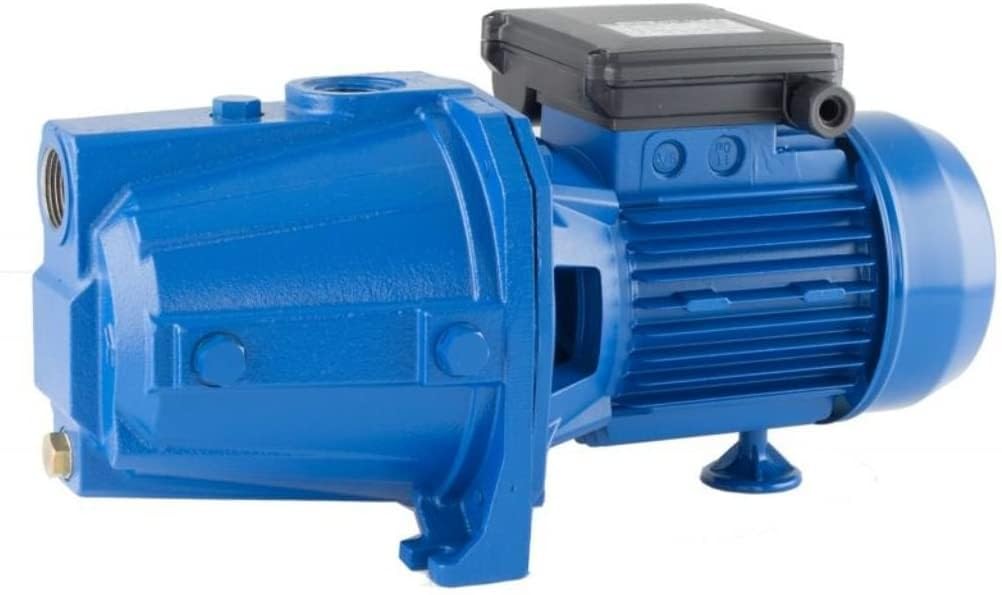
This image shows the EBARA AGA 0.75 M self-priming pump, featuring a blue cast iron body and an integrated electric motor with a black terminal box on top. The pump has visible inlet and outlet connections.
2. Ntọala na nwụnye
Proper installation is crucial for the pump's performance and longevity. Follow these general guidelines:
- Nkwanye: Install the pump in a dry, well-ventilated area, protected from frost and direct sunlight. Ensure a stable, level surface to minimize vibration.
- Njikọ ọkpọkọ: Connect the suction pipe to the pump's G1 suction port and the delivery pipe to the G1 delivery port. Ensure all connections are airtight to prevent air ingress, which can affect priming. Use appropriate sealants and fittings.
- Njikọ eletrik: The pump operates on 230 V ± 10% 50 Hz single-phase power. Connect the pump to a suitable electrical supply according to local regulations. Ensure the circuit is protected by a permanent capacitor and an automatic reset thermal-amperometric protection device.
- Ndozi: As a self-priming pump, it can draw water from a certain depth (up to 8m). Before initial startup, fill the pump body completely with clean water through the priming port until it overflows. This ensures the pump can establish suction.
3. Ntuziaka ọrụ
Once installed and primed, the pump is ready for operation:
- Mmalite mbụ: After priming, switch on the power supply. The pump should start drawing water and build pressure.
- Nleba anya: Observe the pump during operation. Listen for unusual noises and check for leaks. Ensure consistent water flow and pressure.
- Ọrụ na-aga n'ihu: The pump is designed for continuous duty within its specified operating limits. Avoid running the pump dry, as this can cause damage to the mechanical seal.
- Mechie: To stop the pump, simply switch off the power supply.
4. Nlekọta
Regular maintenance helps ensure the longevity and efficient operation of your pump:
- Nyocha oge niile: Periodically check all connections for leaks and ensure the pump is securely mounted. Inspect the power cable for any damage.
- Nhicha: Keep the pump exterior clean and free from debris. Ensure the motor's ventilation fins are not obstructed to prevent overheating.
- Oge oyi (ọ bụrụ na ọdabara): In areas prone to freezing temperatures, drain the pump completely to prevent damage from ice expansion. Disconnect pipes and open drain plugs. Store the pump in a frost-free environment if possible.
- Akara igwe: The mechanical seal is a wear part. If persistent leaks occur from the shaft area, the seal may need replacement by a qualified technician.
5. Nchọpụta nsogbu
Akụkụ a na-eleba anya n'okwu ndị a na-ahụkarị ị nwere ike izute:
| Nsogbu | Ihe nwere ike ime | Ngwọta |
|---|---|---|
| Mgbapụta anaghị ebido | No power supply; Motor overload protection tripped; Seized impeller | Check power connection and circuit breaker; Allow motor to cool and reset protection; Contact qualified technician. |
| Pump runs but no water flow | Pump not primed; Air leak in suction line; Suction lift too high; Clogged suction filter | Re-prime the pump; Check all suction connections for leaks; Ensure suction depth is within 8m limit; Clean suction filter. |
| Low pressure or reduced flow | Partial air leak; Partially clogged impeller/pipes; Worn impeller or mechanical seal | Check suction line for small leaks; Inspect and clean impeller/pipes; Contact qualified technician for inspection. |
| Oke mkpọtụ ma ọ bụ ịma jijiji | Cavitation (air in water); Loose mounting; Bearing wear | Ensure proper priming and no air leaks; Securely fasten pump; Contact qualified technician. |
6. Nkọwapụta
| Njirimara | Nkọwa |
|---|---|
| Onye nrụpụta | Ebara |
| Nọmba nlereanya | 1100090000 |
| Ihe onwunwe | Nkedo Ígwè |
| Isi Iyi Ike | Igwe ọkụ eletrik |
| Voltage | 230 volts (AC) |
| Nrụgide arụ ọrụ kacha | 6 mmanya |
| Okpomọkụ Liquid kacha | 45 Celsius C |
| Omimi imi kacha | 8 m |
| Njikọ mmiri | G1 |
| Delivery Connection | G1 |
| Ịrụ ọrụ moto | IE2 and IE3 (from 0.75 kW) |
| Klas mkpuchi | F |
| Degree Nchekwa | IP44 |
| Akụkụ ngwugwu | 40.5 x 18.5 x 18 cm |
| Ibu Ibu | 12.5 kilogram |
| Batrị gụnyere | Mba |
| Batrị achọrọ | Mba |
| Nnweta akụkụ mapụtara | Ozi adịghị |
7. Akwụkwọ ikike na nkwado
For warranty information and technical support, please refer to the documentation provided with your purchase or contact your authorized Ebara dealer. Information regarding spare parts availability is currently not provided in the product specifications.