1. Ngwaahịa gafereview
The Topaz TOP632I Set Screw EMT Connector is designed for securely joining EMT (Electrical Metallic Tubing) conduit. This connector features a set screw mechanism for reliable attachment and is engineered to be concrete-tight when properly taped and assembled with a die-cast locknut. It is suitable for various electrical installations, ensuring a robust and compliant connection.
This product meets several industry standards and certifications, including UL 514B, UL File Number E18472, US Federal Specification Number A-A-50553, CSA Certified, NEMA/ANSI FB-1, and Military Specifications W-F-406D, W-F-406E, W-F-408D, W-S-610D.
2. Ozi nchekwa
WARNING: Risk of electric shock or fire. Installation requires knowledge of electrical systems. If not qualified, do not attempt installation. Contact a qualified electrician.
- Always disconnect power at the circuit breaker or fuse box before installing or servicing electrical components.
- Hụ na e soro iwu eletriki mpaghara na nke mba niile n'oge nrụnye.
- Jiri ngwa nchekwa onwe onye kwesịrị ekwesị (PPE) dịka ugogbe anya nchekwa na uwe aka mkpuchi.
- Verify that the connector size matches the EMT conduit size (3/4 inch for this model).
- Do not use damaged connectors. Inspect before installation.
3. Ihe ngwugwu
- 1 x Topaz 3/4" EMT Set Screw Connector (Model 632S)
Note: Additional components like locknuts or tape may be required for a complete installation and are typically sold separately.
4. Ntuziaka nwụnye
Follow these steps for proper installation of the Topaz Set Screw EMT Connector:
- Prepare Conduit: Ensure the ends of the EMT conduit are clean, free of burrs, and cut squarely.
- Insert Conduit: Slide the EMT conduit into one end of the connector until it bottoms out.
- Tighten Set Screw: Using an appropriate screwdriver, firmly tighten the set screw on the connector. Ensure the screw makes solid contact with the conduit and holds it securely in place. Do not overtighten, as this can damage the conduit or connector.
- Attach Locknut (if applicable): If connecting to an electrical box or enclosure, thread a die-cast locknut onto the connector's threaded end and tighten it securely against the box.
- Repeat for Second Conduit: If connecting two pieces of conduit, repeat steps 2 and 3 for the second piece of EMT conduit on the other end of the connector.
- Ensure Concrete-Tight Seal: For concrete-tight applications, ensure the connection is properly taped as per local electrical codes and manufacturer recommendations. The connector is designed to be concrete-tight when taped and assembled with a die-cast locknut.
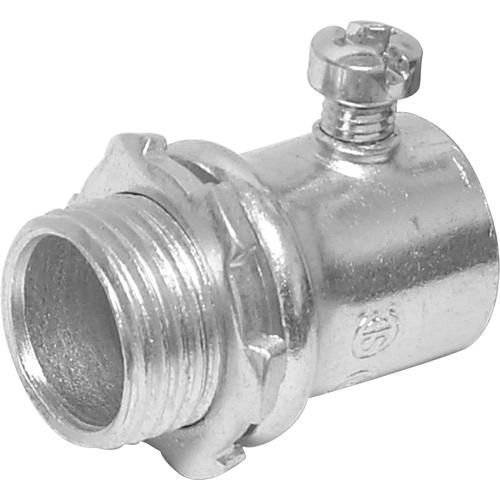
Image 1: Topaz 3/4 inch Set Screw EMT Connector. This image shows the metallic connector with a visible set screw and threaded end for attachment.
5. Ntuziaka ọrụ
This product is a passive electrical conduit fitting. Its "operation" involves maintaining a secure and continuous electrical pathway for wiring within the EMT conduit system. Once installed correctly, it functions by providing a rigid, protective connection between conduit sections or between conduit and an electrical box.
Ensure all connections remain tight and free from corrosion to maintain optimal performance and safety.
6. Nlekọta
The Topaz Set Screw EMT Connector requires minimal maintenance once installed correctly. Periodically inspect the following:
- Iguzosi ike n'ezi ihe njikọ: Ensure all set screws and locknuts remain tight. Vibrations or environmental factors can sometimes loosen connections over time.
- Corrosion: Na damp or corrosive environments, check for signs of rust or corrosion on the connector. Replace if significant corrosion is present.
- Mmebi anụ ahụ: Inspect for any physical damage, such as cracks or bends, that could compromise the integrity of the conduit system.
Always disconnect power before performing any inspection or maintenance on electrical systems.
7. Nchọpụta nsogbu
Most issues related to EMT connectors stem from improper installation. Consider the following if problems arise:
- Njikọ rụrụ arụ: If conduit feels loose or can be pulled out, the set screw may not be sufficiently tightened. Disconnect power and re-tighten the set screw.
- Conduit Not Fitting: Ensure the conduit size matches the connector size (3/4 inch). Burrs on the conduit end can also prevent proper insertion; deburr the conduit if necessary.
- Water Ingress (for concrete-tight applications): If water is entering the conduit system in a concrete-tight application, verify that the connection was properly taped and the locknut was securely tightened. Re-tape and re-tighten as needed.
- Damaged Connector: If the connector itself is damaged (e.g., stripped screw threads, cracked body), it must be replaced.
If you are unsure about any electrical work, consult a qualified electrician.
8. Nkọwapụta
| Ụdị | Topaz |
| Nọmba nlereanya | 632S |
| Nọmba akụkụ | 632S |
| Ibu Ibu | 1.76 ounces |
| Akụkụ ngwaahịa | 6 x 6 x 6 sentimita asatọ |
| Ihe onwunwe | Ọla |
| Ọnụ ngwungwu ihe | 1 |
| Ngwa gụnyere | 3/4" EMT SS CONN INS 25/250 |
| Asambodo | UL 514B, UL File Number E18472, US Federal Specification Number A-A-50553, CSA Certified, NEMA/ANSI FB-1, Military Specification: W-F-406D, W-F-406E, W-F-408D, W-S-610D |
| Atụmatụ | Concrete Tight When Taped Assembled with A Die Cast Locknut |
9. Akwụkwọ ikike na nkwado
Specific warranty information for the Topaz TOP632I Set Screw EMT Connector (Model 632S) is not provided in this manual. For details regarding warranty coverage, terms, and conditions, please refer to the official Topaz product documentation or contact Topaz customer support directly.
For technical assistance or further inquiries, please reach out to the manufacturer or your authorized distributor.


