1. Okwu mmalite
Akwụkwọ ntuziaka a na-enye ntuziaka zuru ezu maka nrụnye, ọrụ, na mmezi nke ebe a na-adọba ụgbọala FAAC 455D 790917 Control Unit. This unit is designed to manage 230V swing gate automation systems. Please read this manual carefully before installation and operation to ensure proper function and safety.
2. Ntuziaka nchekwa
- Installation must be performed by qualified personnel in compliance with local electrical safety regulations.
- Always disconnect the main power supply before performing any installation, maintenance, or troubleshooting.
- Hụ na njikọ eletriki niile dị n'udo ma nwee mkpuchi kwesịrị ekwesị.
- Keep hands, clothing, and other objects clear of moving gate parts during operation.
- Do not allow children to play near the gate or with the control devices.
- Install appropriate safety devices such as photocells and safety edges to prevent injury or damage.
3. Ihe ngwugwu
Chọpụta na ngwungwu gị nwere ihe ndị a:
- FAAC 455D 790917 Control Unit (1 unit)
- Akwụkwọ ntuziaka (akwụkwọ a)
4. Nhazi
4.1. Mounting the Control Unit
Select a suitable, weather-protected enclosure for the control unit. Ensure adequate ventilation and protection from moisture. Mount the unit securely using appropriate fasteners. The enclosure should be easily accessible for maintenance but secure from unauthorized access.
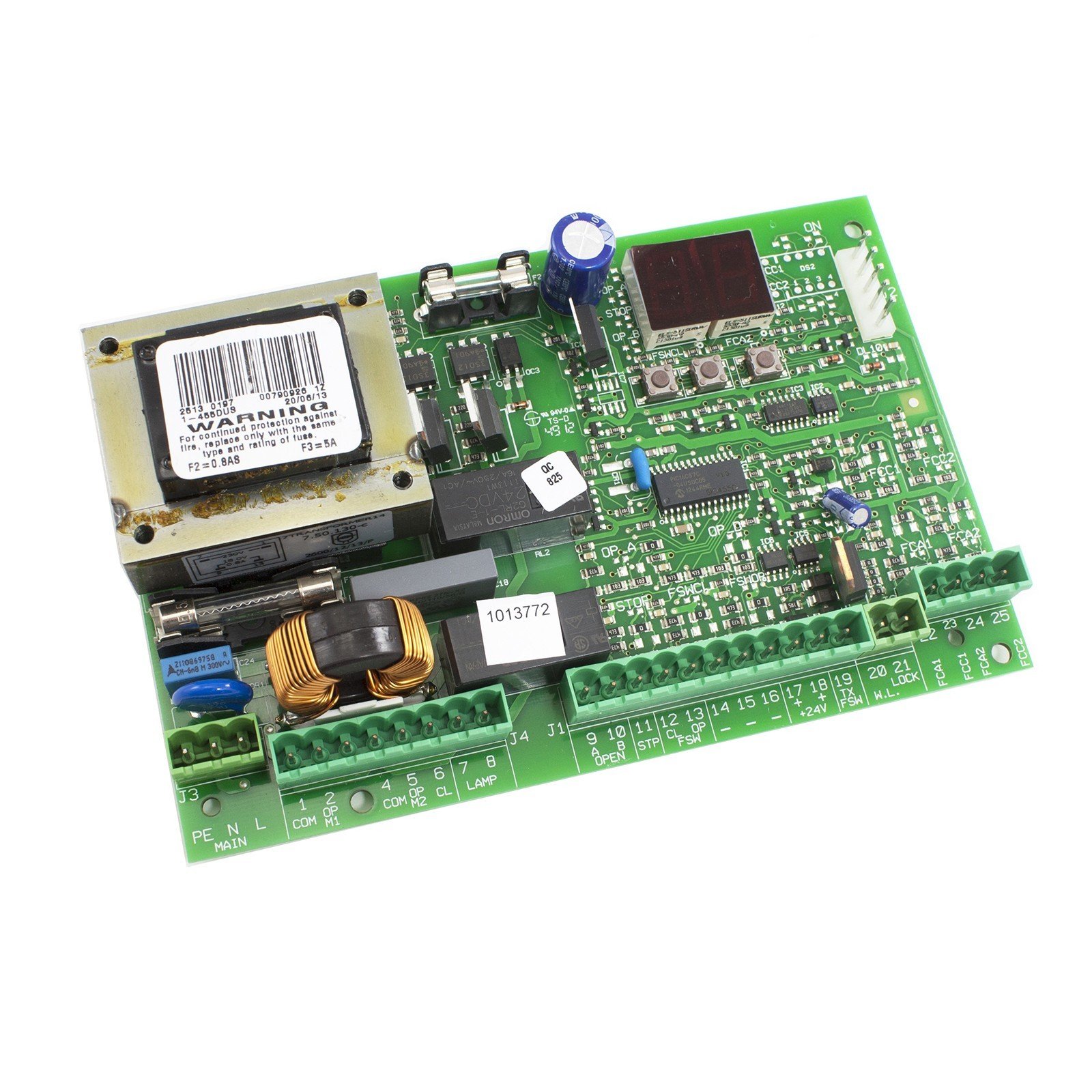
This image displays the FAAC 455D 790917 control unit, a compact electronic board designed for managing 230V swing gate motors. It features various terminals for power input, motor connections, safety devices, and accessories.
4.2. Njikọ eletrik
A ga-emerịrị njikọ eletriki niile na isi ike na-akwụsị.
- Ịnye ọkụ: Connect the 230V AC mains power supply to the designated terminals. Ensure the power supply is protected by an appropriate circuit breaker and residual current device (RCD).
- Njikọ moto: Connect the 230V swing gate motor(s) to the motor output terminals as per the wiring diagram provided with the unit. Ensure correct phasing for motor direction.
- Ngwa nchekwa: Connect photocells, safety edges, and emergency stop buttons to their respective terminals. These devices are crucial for safe operation.
- Ngwa: Connect remote control receivers, keypads, intercom systems, and other control devices to the appropriate input terminals.
4.3. Initial Programming
Refer to the detailed wiring diagrams and programming instructions provided with the unit for initial setup, motor calibration, and remote control pairing. This process typically involves setting motor parameters, operating logic, and learning remote controls.
5. Operating the Gate
5.1. Basic Ọrụ
Once installed and programmed, the gate can be operated via remote control, keypad, or other connected access control devices. A single command typically initiates an open/close cycle. Subsequent commands may pause or reverse the gate movement depending on the programmed logic.
5.2. Nkwụsị Mberede
In case of emergency, activate the emergency stop button (if installed) to immediately halt gate movement. This button should be clearly visible and easily accessible.
5.3. Manual Release
In case of power failure or malfunction, use the gate's manual release mechanism to operate it manually. Refer to your specific gate motor's manual for the correct procedure to disengage the motor and move the gate by hand.
6. Nlekọta
6.1. Nyochaa mgbe niile
Periodically inspect all electrical connections for signs of wear, corrosion, or loose terminals. Check the physical condition of the control unit and its enclosure for any damage or ingress of moisture.
6.2. Nhicha
Keep the control unit and its enclosure clean and free from dust, insects, and debris. Do not use abrasive cleaners, solvents, or high-pressure water, as these can damage the electronic components.
6.3. Nyocha ọkachamara
It is recommended to have the entire gate automation system, including the control unit, inspected by a qualified technician at least once a year to ensure optimal performance and safety.
7. Nchọpụta nsogbu
- Ọnụ Ụzọ Anaghị aza: Check the main power supply, ensure the remote control battery is functional, and verify all safety device connections (e.g., photocells are not obstructed).
- Ọnụ Ụzọ Ámá Nkwụsị Okirikiri etiti: This often indicates activation of a safety device. Check photocells for obstructions, inspect safety edges, and ensure no mechanical obstructions are impeding gate movement.
- Irregular Operation: If the gate operates erratically or not as expected, consult the detailed programming section of the manual to verify settings, motor calibration, and limit switch adjustments.
- No Power to Control Unit: Check the circuit breaker and RCD for the gate's power supply. Ensure all power connections to the control unit are secure.
If problems persist after performing these checks, contact a qualified technician for assistance.
8. Nkọwapụta
| Onye nrụpụta | FAAC |
| Nlereanya | 455D 790917 |
| Ụdị ngwaahịa | Control Unit for 230V Swing Gate Motors |
| Akụkụ ngwugwu | 20 x 13 x 7 cm |
| Ibu | 700 grams |
| Ọnụọgụ | 1 ihe |
| Agụnyere batrị / achọrọ | Mba |
| ASIN | B01JGCAAAC |
| Ụbọchị mbụ dị | Eprel 27, 2022 |
9. Akwụkwọ ikike na nkwado
For warranty information and technical support, please contact your authorized FAAC dealer or the point of purchase. Keep your purchase receipt as proof of purchase. Do not attempt to repair the control unit yourself, as this may void the warranty and pose safety risks.


