1. Okwu mmalite
This manual provides detailed instructions for the Plugable USB-C to DisplayPort Bi-Directional Cable (Model USBC-DP). This cable is designed to connect USB-C enabled devices to DisplayPort monitors or DisplayPort enabled devices to USB-C displays, supporting high-resolution video and audio transmission.

Image: The Plugable USB-C to DisplayPort Bi-Directional Cable, showcasing both the USB-C and DisplayPort connectors.
2. Atụmatụ igodo
- Bi-Directional Connectivity: Supports both USB-C to DisplayPort and DisplayPort to USB-C video output, offering flexible connection options.
- Nkwado mkpebi dị elu: Enables resolutions up to 4K at 60Hz (3840x2160).
- Nkwụnye na-egwu: No drivers or software installation required for operation.
- Nhazi na-adịgide adịgide: Features an aluminum shell on both connectors and a nylon braided cable for enhanced durability.
- Ndakọrịta sara mbara: Compatible with systems supporting DisplayPort Alt Mode over USB-C, USB4, or Thunderbolt 3/4, including various MacBooks, iPads, HP, Dell, Lenovo, Microsoft Surface, and LG Gram models.
3. Nhazi ntuziaka
Follow these steps to connect your device using the Plugable USB-C to DisplayPort Bi-Directional Cable:
- Chọpụta ọdụ ụgbọ mmiri: Ensure your source device (e.g., laptop, tablet) has a USB-C port that supports DisplayPort Alt Mode, USB4, or Thunderbolt 3/4. Ensure your display device (e.g., monitor, TV) has a DisplayPort input.
- Jikọọ njedebe USB-C: Insert the USB-C connector of the cable into the compatible USB-C port on your source device.
- Jikọọ njedebe DisplayPort: Insert the DisplayPort connector of the cable into the DisplayPort input on your display device.
- Ike Na Ngwaọrụ: Gbaa mbọ hụ na agbanyere ngwaọrụ isi iyi gị yana ngwaọrụ ngosi.
- Hazie ntọala ngosi: Your display should automatically detect the connection. If not, you may need to manually select the DisplayPort input on your monitor or adjust display settings on your source device (e.g., extend, mirror, or primary display mode).

Foto: nso nso view of the USB-C and DisplayPort connectors, illustrating the connection process.
4. Ntuziaka ọrụ
Once connected, the cable facilitates video and audio transmission between your devices. Here are common operating modes:
- Ụdị enyo: Duplicates your source device's screen onto the external display. This is useful for presentations or sharing content.
- Gbatịkwuo ọnọdụ: Extends your desktop across multiple screens, allowing for increased workspace and multitasking.
- Primary Display Mode: Uses the external display as the sole output, with the source device's screen turned off.
To switch between these modes, access your operating system's display settings:
- Windows: Right-click on the desktop, select "Display settings," and choose your preferred display option.
- MacOS: Go to "System Settings" (or "System Preferences"), then "Displays," and adjust the arrangement or mirroring options.

Image: A laptop connected to an external monitor, demonstrating both extend and mirror display modes for enhanced productivity.
5. Ndakọrịta
The Plugable USB-C to DisplayPort Bi-Directional Cable is compatible with a wide range of devices and operating systems:
Ngwaọrụ akwadoro:
- M1–M4 MacBooks (base and Pro/Max models)
- Intel Thunderbolt Macs (late 2016 and newer)
- iPhone 15/16 and Pro models
- iPad Pro/Air/mini
- HP ProBook/EliteBook/Spectre x360
- Dell XPS/Latitude/Inspiron
- Lenovo ThinkPad/IdeaPad/Yoga
- Microsoft Surface Pro/Go/Book/Laptop
- LG gram
- Thousands of other standards-compliant USB-C laptops.
Sistemu eji arụ ọrụ akwadoro:
- Windows 10/11
- MacOS 11+
- ChromeOS 100+
- Linux
Mara:
- Requires a system with DisplayPort Alt Mode over USB-C, USB4, or Thunderbolt 3/4.
- Fully compatible with DisplayPort source devices and full-featured USB-C displays.
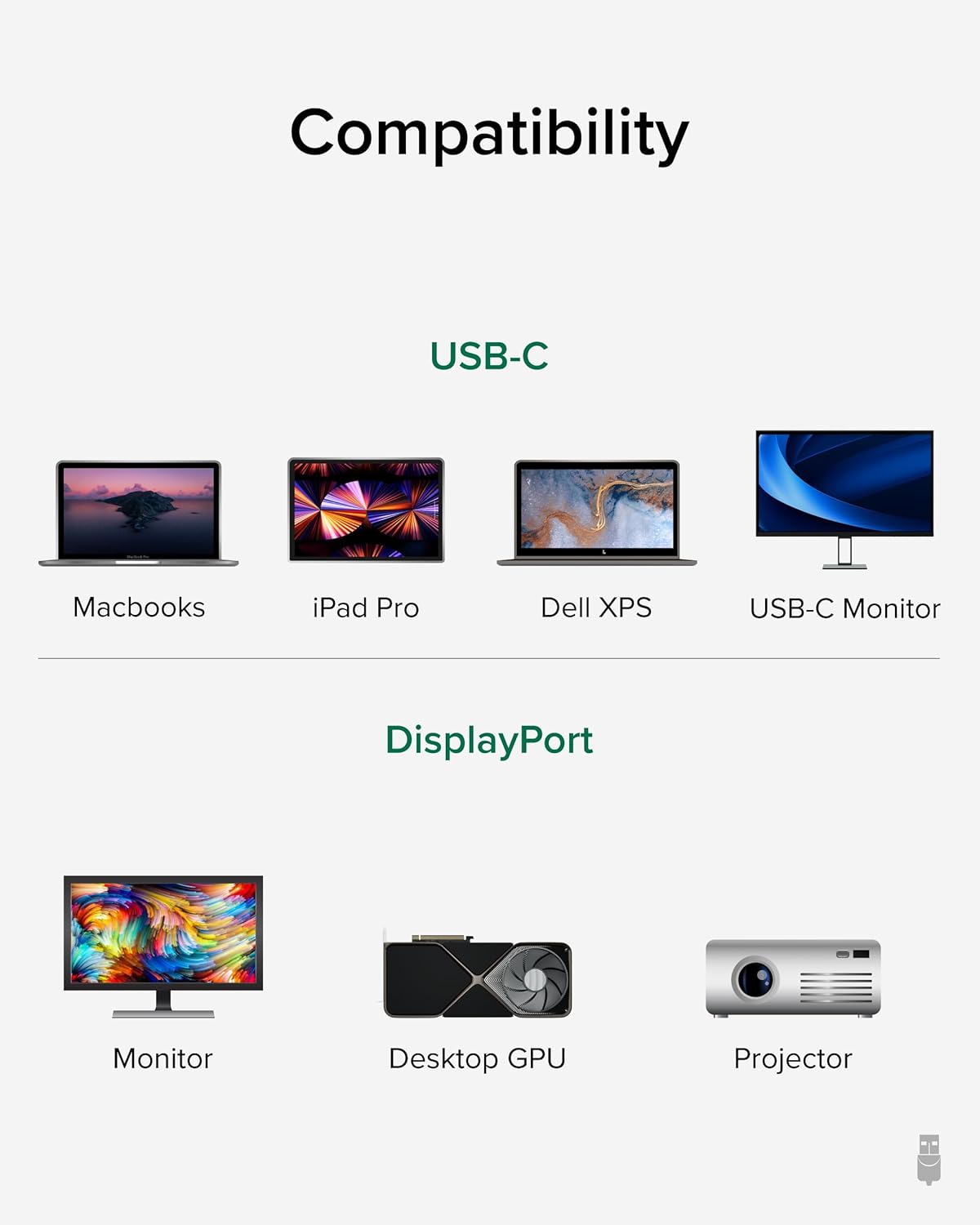
Image: A visual guide illustrating compatibility with various USB-C devices (MacBooks, iPad Pro, Dell XPS, USB-C Monitor) and DisplayPort devices (Monitor, Desktop GPU, Projector).
6. Nlekọta
To ensure the longevity and optimal performance of your Plugable USB-C to DisplayPort Bi-Directional Cable, follow these maintenance guidelines:
- Jiri Nlekọta Aka: Zenarị ịgbagọ, ịgbagọ, ma ọ bụ ịdọrọ na eriri, ọkachasị n'akụkụ njikọ.
- Na-echekwa nke ọma: When not in use, coil the cable loosely and secure it with the included cable tie or a similar fastener. Avoid tight coiling that can stress the internal wires.
- Debe Ọcha: Periodically wipe the cable and connectors with a soft, dry cloth to remove dust and debris. Avoid using harsh chemicals or abrasive materials.
- Chebe Njikọ: Ensure connectors are not exposed to liquids or extreme temperatures.
7. Nchọpụta nsogbu
If you encounter issues with your Plugable USB-C to DisplayPort Bi-Directional Cable, consider the following troubleshooting steps:
- Enweghị Ngosipụta/Akara ngosi:
- Ensure both devices are powered on and the cable is securely connected at both ends.
- Verify that your source device's USB-C port supports DisplayPort Alt Mode, USB4, or Thunderbolt 3/4. Not all USB-C ports support video output.
- Check your display's input source settings and ensure the correct DisplayPort input is selected.
- Test with another compatible cable or device to isolate the issue.
- Flickering or Intermittent Display:
- Hụ na eriri ahụ emebighị ma ọ bụ gbagọrọ agbagọ.
- Reduce the display resolution or refresh rate in your device's display settings to see if stability improves.
- Update your graphics drivers on your source device.
- Enweghị ọdịyo:
- Check your computer's sound settings and ensure the DisplayPort output is selected as the audio device.
- Ensure your monitor has built-in speakers or is connected to external audio.
- Resolution/Refresh Rate Not as Expected:
- Verify that both your source device and display support the desired resolution and refresh rate.
- Ensure your device's display settings are configured for the desired output.
8. Nkọwapụta
| Njirimara | Nkọwa |
|---|---|
| Ụdị | Plugable |
| Nọmba nlereanya | USBC-DP |
| Ogologo eriri USB | 6 ụkwụ (1.8m) |
| Mkpebi Max | 4K (3840x2160) at 60Hz |
| Njikọ 1 | USB-C Nwoke |
| Njikọ 2 | Nwoke DisplayPort |
| Ndakọrịta | DisplayPort Alt Mode over USB-C, USB4, Thunderbolt 3/4 |
| Ihe onwunwe | Aluminum connector shells, Nylon braided cable |
| Ibu Ibu | 1.6 ounces |
| Akụkụ ngwaahịa | 0.39 x 6 x 6.5 sentimita asatọ |
9. Official Product Video
Video: Product Summary: Plugable USB-C to DisplayPort Adapter Cable. This video provides a comprehensive overview of the cable's features, functionality, and benefits.
10. Akwụkwọ ikike na nkwado
Plugable products are designed for reliability and ease of use. This device includes lifetime support from our North American team of connectivity experts.
For further assistance, please visit the Plugable support websaịtị ma ọ bụ kpọtụrụ ndị ahịa ha ọrụ.


