1. Ntuziaka nchekwa dị mkpa
Please read all instructions carefully before using the Mesko MS 4403 Espresso Machine. Retain this manual for future reference.
- Gbaa mbọ hụ na voltage gosiri na ngwa ngwa kwekọrọ na mains mpaghara voltage before connecting the machine.
- Ejila ngwa, eriri ọkụ, ma ọ bụ nkwụnye na mmiri ma ọ bụ mmiri mmiri ọ bụla ọzọ.
- Ezubere ngwa a maka iji ndị mmadụ (gụnyere ụmụaka) nwere ike anụ ahụ, mmetụta uche ma ọ bụ nke uche, ma ọ bụ enweghị ahụmịhe na ihe ọmụma, ma ọ bụrụ na enyereghị ha nlekọta ma ọ bụ ntụziaka gbasara iji ngwa ahụ site n'aka onye na-ahụ maka nchekwa ha.
- Ekwesịrị ilekọta ụmụaka ka ha hụ na ha ejighi ngwa eji egwu egwu egwu.
- Unplug the machine from the outlet when not in use and before cleaning. Allow it to cool before putting on or taking off parts, and before cleaning the appliance.
- Ejila ngwa ọ bụla nwere eriri ma ọ bụ plọg mebiri emebi rụọ ọrụ, ma ọ bụ mgbe ngwa ahụ dara ma ọ bụ mebie n'ụzọ ọ bụla.
- Etinyela ngwa ahụ na ma ọ bụ nso gas na-ekpo ọkụ ma ọ bụ ọkụ eletrik, ma ọ bụ na oven ọkụ.
- Use only cold water in the water tank.
- Always ensure the water tank is filled to at least the minimum level before operating the machine.
- Zere ka ọ ghara imetụ ihe ndị dị ọkụ n'elu, ọkachasị ihe e ji esi nri na ihe e ji esi nri na portafilter mgbe a na-arụ ọrụ.
2. Ngwaahịa gafereview
The Mesko MS 4403 is a semi-automatic espresso machine designed for home use, capable of brewing espresso and frothing milk for various coffee beverages. Familiarize yourself with its components:

Foto nke 2.1: N'ozuzu view of the Mesko MS 4403 Espresso Machine. This image displays the machine from a front-right perspective, showing the main body, control panel, portafilter handle, steam wand, and the transparent water tank on the side.
- Ogwe njikwa: Bọtịnụ maka ike, otu espresso, espresso abụọ, na ọrụ uzuoku.
- Ịkpọ oku: Adjusts steam intensity or hot water flow.
- Portafilter: Na-ejide kọfị ala maka ime ime.
- Ụdị Steam: A na-eji mmiri ara ehi na-esi ísì.
- tank mmiri: Tankị a na-ewepụ ewepụ maka inye mmiri.
- Ntapu atịpị: Collects excess liquid and removable for cleaning.

Foto nke 2.2: Close-up of the control dial. This image focuses on the rotary dial, which is used to control the steam output for frothing milk and the hot water dispenser. Markings for 'OFF', steam, and water are visible.

Foto nke 2.3: Akụkụ view of the machine showing the water tank. This image provides a clear view of the transparent water tank attached to the side of the espresso machine, with visible 'MAX' and 'MIN' fill level indicators.
3. Nhazi
3.1 Mwepu na mkpochapụ mbụ
- Remove all packaging materials and stickers from the machine.
- Wash the water tank, portafilter, filter basket, and drip tray with warm, soapy water. Rinse thoroughly and dry.
- Jiri mgbasa ozi hichaa mpụta igweamp akwa .
3.2 Na-ejuputa tank mmiri
- Wepu tank mmiri ahụ n'azụ igwe.
- Fill the tank with fresh, cold water up to the 'MAX' line. Do not exceed this line.
- Tinyeghachi tank mmiri ahụ n'ọnọdụ ya, hụ na ọ nọ ọdụ nke ọma.
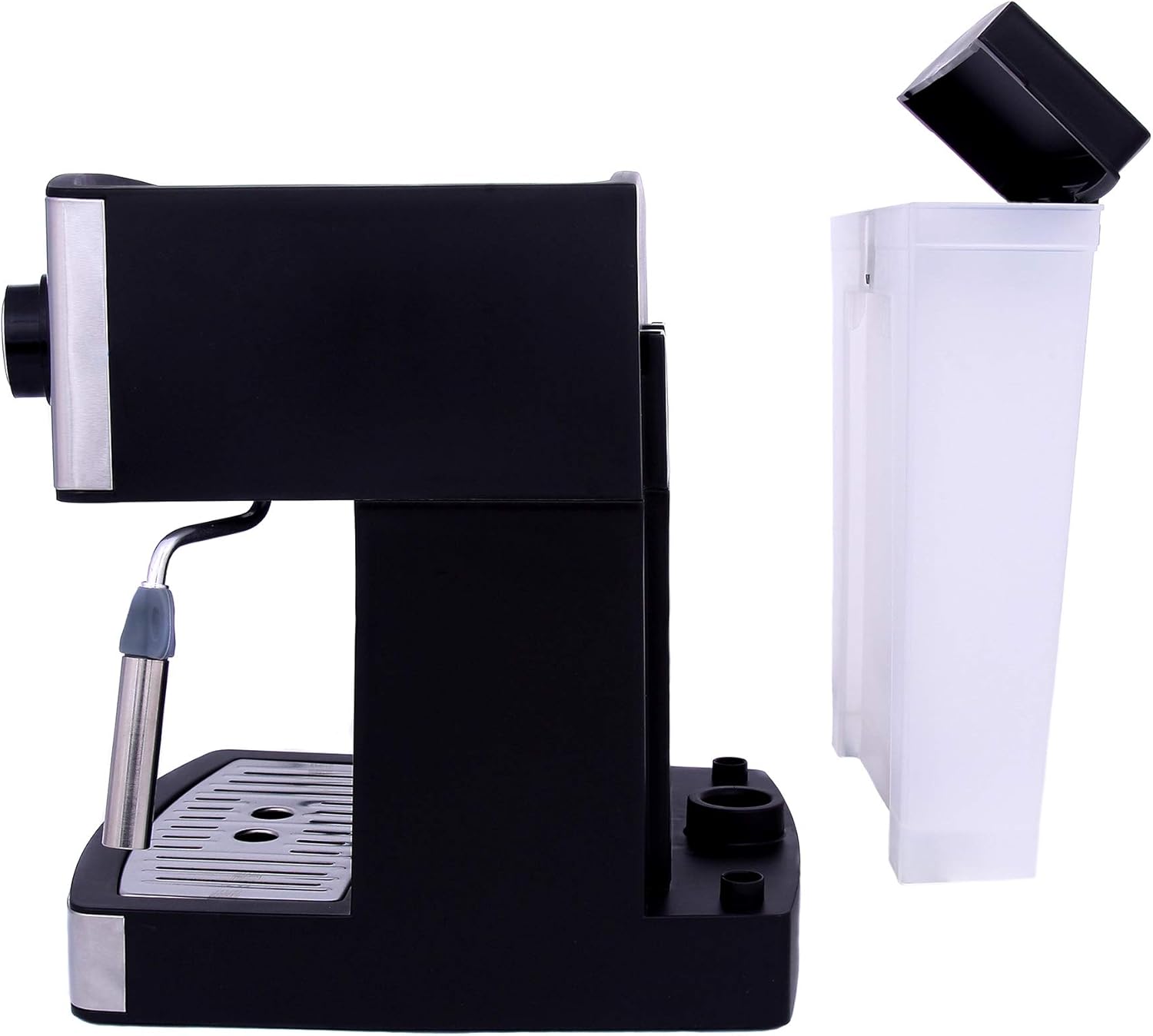
Foto nke 3.1: Water tank removed from the machine. This image shows the side of the espresso machine with the water tank detached, illustrating how the tank can be easily removed for filling or cleaning.
3.3 Priming the Pump (First Use)
- Gbaa mbọ hụ na ejula tank mmiri.
- Tinye igwe n'ime oghere ọkụ.
- Tinye otu iko n'okpuru uzuoku wand.
- Turn the control dial to the hot water position (faucet icon) and press the power button. Allow water to flow through the steam wand for about 30 seconds to prime the pump.
- Turn the control dial back to 'OFF' and press the power button to stop. The machine is now ready for use.
4. Ntuziaka ọrụ
4.1 Ime Espresso
- Kpochapu: Turn on the machine and allow it to preheat for approximately 2-3 minutes until the indicator light signals readiness.
- Kwadebe Portafilter: Tinye nkata nzacha achọrọ (otu ma ọ bụ nke abụọ) n'ime ihe nzacha portafilter.
- Tinye kọfị: Grind fresh coffee beans to a fine consistency suitable for espresso. Use the provided scoop to add ground coffee to the filter basket. For a single shot, use one scoop (approx. 7g); for a double shot, use two scoops (approx. 14g).

Foto nke 4.1: Portafilter and coffee scoop. This image shows the detached portafilter, which holds the ground coffee, alongside a black plastic coffee measuring scoop, essential tools for preparing espresso.
- Tamp Kọfị: Jiri tamper (often found on the back of the scoop) to press the ground coffee firmly and evenly into the filter basket. Ensure the surface is level.
- Tinye Portafilter: Align the portafilter with the group head on the machine. Insert it and twist firmly to the right until it is securely locked in place.
- Brew Espresso: Place your espresso cup(s) on the drip tray under the portafilter spouts. Press the single or double espresso button. The machine will brew the coffee and stop automatically.
- Wepu Portafilter: Once brewing is complete, carefully twist the portafilter to the left to remove it. Dispose of the used coffee grounds.
4.2 Mmiri ara ehi
- Kwadebe mmiri ara ehi: Jupụta ite mmiri ara ehi oyi (nke mmiri ara ehi ma ọ bụ nke na-abụghị nke mmiri ara ehi) n'okpuru ite mmiri anaghị agba nchara.
- Mee ka Steam rụọ ọrụ: Press the steam button on the control panel. Wait for the indicator light to signal that the machine has reached steaming temperature.
- Wepu Steam Wand: Briefly turn the control dial to the steam position to release any condensed water from the wand into an empty cup. Turn it back to 'OFF'.
- Mmiri ara ehi: Immerse the tip of the steam wand just below the surface of the milk. Turn the control dial to the steam position. Angle the pitcher slightly to create a swirling motion.
- Leba anya na okpomọkụ: Continue frothing until the milk reaches the desired temperature and texture (typically around 60-70°C or when the pitcher is too hot to touch comfortably).
- Kwụsị steaming: Turn the control dial back to 'OFF' and remove the pitcher.
- Steam Wand dị ọcha: Jiri mgbasa ozi hichaa akpa uzuoku ozugboamp ákwà iji wepụ ihe fọdụrụ n'ime mmiri ara ehi. Jiri obere oge hichaa mkpanaka ahụ ka mmiri ara ehi dị n'ime ya dị ọcha.
5. Nlekọta na nhicha
Ịsacha mgbe niile na-eme ka igwe espresso gị rụọ ọrụ nke ọma ma na-adịte aka.
5.1 Nhicha kwa ụbọchị
- Ntapu atịpị: Empty and rinse the drip tray after each use or when the indicator floats up.
- Portafilter na nzacha nzacha: Remove used coffee grounds and rinse the portafilter and filter basket under running water.
- Ụdị Steam: Wipe the steam wand immediately after each use with a damp cloth and purge briefly.
5.2 Nhicha kwa izu
- tank mmiri: Remove and wash the water tank with warm, soapy water. Rinse thoroughly.
- Onye isi otu: Wipe the group head (where the portafilter attaches) with a damp ákwà iji wepụ ihe fọdụrụ na kọfị.
5.3 calhapụ ịda
Descaling is essential to remove mineral buildup and should be performed every 2-3 months, or more frequently in areas with hard water.
- Kwadebe ihe ngwọta maka iwepụ ihe dịka ntuziaka nke onye nrụpụta ihe na-ewepụ ihe si dị.
- Jupụta tank mmiri na ngwọta nkwụsị.
- Place a large container under the group head and steam wand.
- Run half of the solution through the group head by pressing the espresso button.
- Run the remaining half of the solution through the steam wand by activating the steam function.
- Ghichaa tank mmiri ahụ nke ọma ma jupụta na mmiri dị ọhụrụ.
- Repeat the process with fresh water to rinse the internal components, ensuring no descaling solution remains.
6. Nchọpụta nsogbu
Rụtụ aka na tebụl dị n'okpuru maka okwu nkịtị na azịza ha.
| Nsogbu | Ihe nwere ike ime | Ngwọta |
|---|---|---|
| Enweghị kọfị na-enye | Water tank empty or not properly seated. Pump not primed. Coffee too finely ground or tamped oke ike. | Fill water tank and ensure it's seated. Prime the pump. Use coarser grind or lighter tamp. |
| Kọfị na-agba nwayọ nwayọ ma ọ bụ na-adapụ mmiri | Kọfị a gwepịara nke ọma ma ọ bụ tamped too hard. Filter basket clogged. | Jiri ihe egweri egweri ma ọ bụ nke dị mfe tamp. Clean filter basket. |
| Coffee brews too quickly or is weak | Coffee too coarsely ground or not enough coffee. | Jiri kọfị dị nro ma ọ bụ karịa. |
| Enweghị uzuoku sitere na wand | Steam function not activated or not at temperature. Steam wand clogged. | Ensure steam button is pressed and indicator light is on. Clean steam wand. |
| Igwe na-agbapụta mmiri | Water tank not properly seated. Drip tray full. Seal issues. | Ensure water tank is correctly placed. Empty drip tray. Contact support if seals are damaged. |
7. Nkọwapụta
| Njirimara | Nkọwapụta |
|---|---|
| Ụdị | Mesko |
| Nọmba nlereanya | MS4403 |
| Agba | Nwa |
| Akụkụ (L x W x H) | 21 x 26 x 30.5 cm |
| Ibu | 800 grams |
| Ike | 1.6 lita (ụgbọ mmiri) |
| Ike | 850 Watt |
| Voltage | 240 volts |
| Ihe onwunwe | Igwe anaghị agba nchara |
| Atụmatụ | Mmiri mmiri ara ehi |
8. Akwụkwọ ikike Ozi
The Mesko MS 4403 Espresso Machine comes with a standard manufacturer's warranty. Please refer to the warranty card included with your purchase for specific terms, conditions, and duration. Keep your proof of purchase for any warranty claims.
9. Nkwado ndị ahịa
If you encounter any issues not covered in this manual or require further assistance, please contact Mesko customer support. Contact details can typically be found on the product packaging, the official Mesko website, or your retailer's support page.
When contacting support, please have your product model number (MS 4403) and proof of purchase readily available.


