1. Okwu mmalite
This manual provides essential information for the proper setup, operation, maintenance, and troubleshooting of your new IVY ISJ-100 BK Strat Electric Guitar. Please read this manual thoroughly before using your instrument to ensure optimal performance and longevity.
The IVY ISJ-100 BK is a versatile electric guitar designed for various musical styles, featuring a durable construction and precise manufacturing processes.
2. Nhazi
2.1 Mwepu na nyocha izizi
Carefully remove the guitar from its packaging. Inspect the instrument for any signs of damage that may have occurred during shipping. Check the neck, body, headstock, and hardware. If you find any damage, contact your retailer immediately.

Foto 1: N'ihu view of the IVY ISJ-100 BK Strat Electric Guitar, showcasing its black finish, pickups, and bridge.
Ọgụgụ 2: N'ihu akụkụ view of the IVY ISJ-100 BK Strat Electric Guitar, highlighting the body contours and control knobs.
2.2 Ijikọ na Ampna -emegharị ihe
- Gbaa mbọ hụ na gị ampA gbanyụrụ lifier ma tinye olu ya ka ọ dị obere.
- Connect one end of a standard 1/4-inch instrument cable to the output jack located on the lower bout of your guitar.
- Connect the other end of the cable to the input jack of your ampna -emegharị ihe.
- Gbanwuo gị amplifier and slowly increase the volume to a desired level.
2.3 Ịhazi Gita ahụ
Before playing, ensure your guitar is in tune. You can use an electronic tuner, a tuning fork, or a reference pitch. The standard tuning for a 6-string guitar from lowest to highest string is E-A-D-G-B-E.

Ọgụgụ 3: nso nso view of the headstock and tuning pegs, essential for accurate tuning.
3. .rụ ọrụ
3.1 Na-achịkwaview
The IVY ISJ-100 BK features standard electric guitar controls for shaping your sound:
- Mpịakọta Mpịakọta: Controls the overall output level of the guitar. Turn clockwise to increase volume, counter-clockwise to decrease.
- Tone Knob(s): Adjusts the treble frequencies. Turning clockwise typically brightens the sound, while counter-clockwise makes it warmer or darker.
- Ngbanwe Nhọrọ Pickup: Allows you to select different pickups or combinations of pickups. Each position offers a unique tonal characteristic.
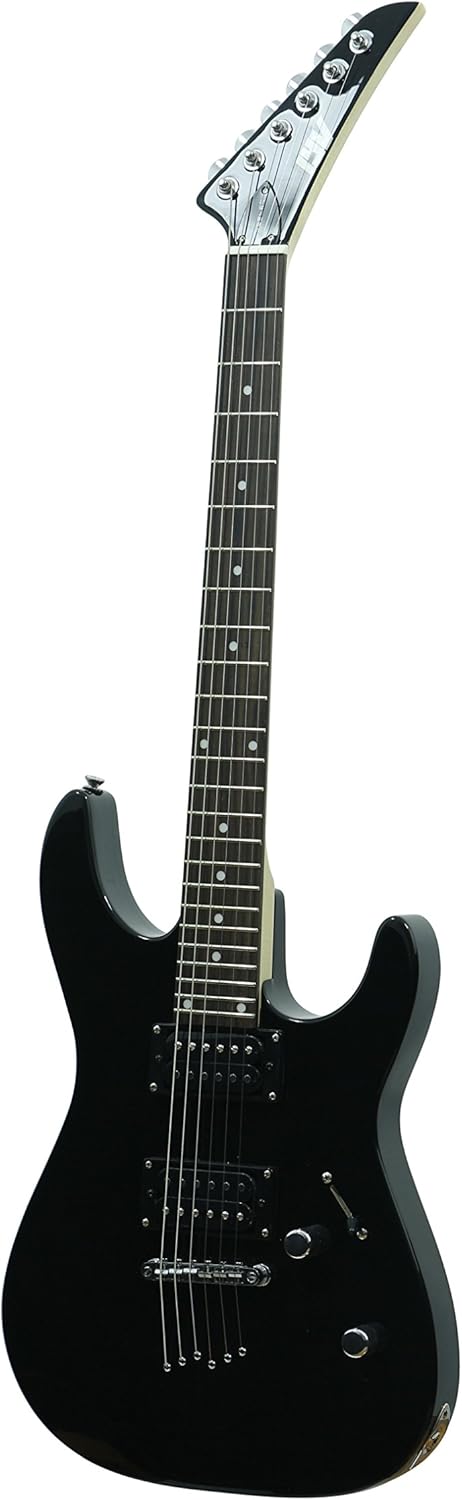
Ọgụgụ 4: Zuru ezu view of the guitar's body, highlighting the humbucker pickups, control knobs, and pickup selector switch.
3.2 Usoro Egwuregwu
While this manual does not cover guitar playing techniques, understanding the basic controls will allow you to experiment with different sounds. Practice adjusting the volume, tone, and pickup selector to find the sounds that best suit your playing style.
4. Nlekọta
Regular maintenance will help preserve your guitar's playability and appearance.
4.1 Nhicha
- After each use, wipe down the strings and body with a clean, soft cloth to remove sweat and oils.
- For the body, use a guitar-specific polish or cleaner sparingly. Avoid abrasive cleaners.
- For the fretboard, especially if it's unfinished (like jatoba), use a specialized fretboard conditioner periodically to prevent drying and cracking.

Foto 5: View of the fretboard and strings, emphasizing areas that require regular cleaning and maintenance.
4.2 Ndochi eriri
Strings should be replaced regularly, depending on how often you play and your personal preference. Worn or corroded strings can negatively affect tone and playability. Replace strings one at a time to maintain neck tension.
4.3 Nchekwa
Store your guitar in a stable environment, away from extreme temperature changes, humidity fluctuations, and direct sunlight. A guitar case or gig bag provides the best protection.

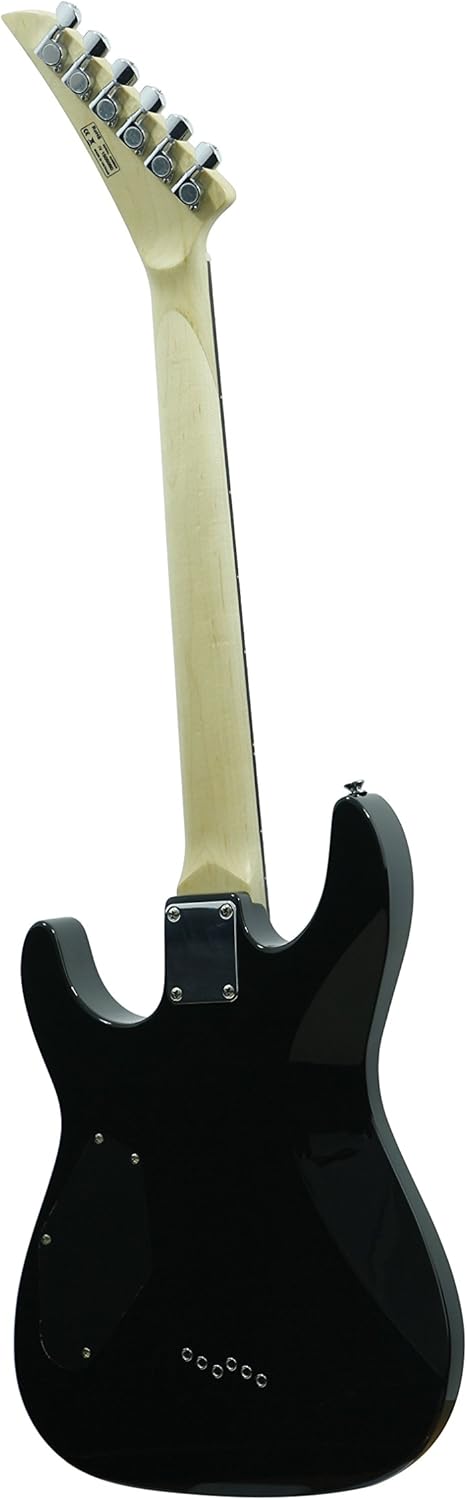
Ọgụgụ 6: N'azụ view of the guitar, showing the neck joint and the backplate covering the tremolo springs, important for structural integrity and maintenance access.

Foto nke 7: Azụ nwere akụkụ anọ view of the guitar, providing a comprehensive look at the back of the body and the maple neck.
5. Nchọpụta nsogbu
Nke a bụ ụfọdụ okwu nkịtị na ngwọta ha nwere ike ime:
| Nsogbu | Ihe nwere ike ime | Ngwọta |
|---|---|---|
| Enweghị ụda | Ejikọghị eriri, amplifier off, volume low, faulty cable/amp. | Check all connections, turn on amplifier, increase volume, try a different cable or ampna -emegharị ihe. |
| Buzzing/Humming | Poor grounding, faulty cable, single-coil hum, external interference. | Ensure proper grounding, try a different cable, move away from electronic devices, check pickup selector. |
| Poor Intonation | Strings old, bridge saddles incorrectly set. | Replace strings, adjust bridge saddles (professional setup recommended if unsure). |
6. Nkọwapụta
| Njirimara | Nkọwa |
|---|---|
| Nọmba nlereanya | ISJ-100 BK |
| Agba | Nwa |
| Akụrụngwa ahụ | Poplar |
| Ihe olu olu | Maple |
| Ihe eji eme Fretboard | Jatoba Wood |
| Ogologo Ogologo | 25.5 sentimita asatọ |
| Ọnụọgụ nke eriri | 6 |
| Nhazi mbuli | H (Humbucker) |
| Ihe eriri eriri | Nickel |
| Sistemụ Àkwà Mmiri | Tremolo |
| Akụkụ ngwaahịa | 105.99 x 42.01 x 8 cm (ihe dị ka 41.73 x 16.54 x 3.15 sentimita) |
| Ibu ngwaahịa | 4.15 Kilogram (ihe dịka 9.15 lbs) |
7. Akwụkwọ ikike na nkwado
IVY products are manufactured with high standards of quality. For information regarding warranty coverage, please refer to the warranty card included with your purchase or visit the official IVY websaịtị. Debe ihe akaebe nke ịzụrụ maka akwụkwọ ikike.
For technical support or service inquiries, please contact your authorized IVY dealer or the customer support department. Contact details can typically be found on the product packaging or the brand's official websaịtị.
Mara: Nkọwapụta nwere ike ịgbanwe na-enweghị ọkwa maka mmelite ngwaahịa.


