Okwu mmalite
This manual provides essential instructions for the proper use, care, and maintenance of your 3M 07183 Half Facepiece Respirator. Read all instructions carefully before use to ensure maximum protection and product longevity. Failure to follow these instructions may result in serious injury or illness.
The 3M 07183 Half Facepiece Respirator is designed to help provide respiratory protection against certain airborne particulates when used with approved 3M filters or cartridges. It is crucial to select the correct filters/cartridges for the specific hazards present in your work environment.
Ozi nchekwa
Ịdọ aka ná ntị: This respirator does not supply oxygen. Use only in adequately ventilated areas containing sufficient oxygen. Do not use in atmospheres containing less than 19.5% oxygen.
kpachara anya: Do not use this respirator for protection against unknown concentrations of contaminants or in atmospheres that are immediately dangerous to life or health (IDLH).
Always consult local regulations and occupational safety guidelines for proper respirator selection and use. A complete respiratory protection program, including training, fit testing, and medical evaluation, is required by OSHA 29 CFR 1910.134 and other applicable standards.
Ihe karịrịview
The 3M 07183 Half Facepiece Respirator consists of the following main components:
- Facepiece body (silicone or thermoplastic elastomer)
- Head harness (adjustable straps)
- valvụ exhalation
- Inhalation valves
- Filter/cartridge attachment points (bayonet connection)

Foto: N'ihu view of the 3M 07183 Half Facepiece Respirator with two pink P100 particulate filters attached. The 3M logo is visible on the central exhalation valve cover.
Ntọala na Mgbakọ
- Nyochaa akụrụngwa: Before each use, inspect the facepiece, head harness, valves, and any attached filters/cartridges for signs of damage, cracks, tears, or missing parts. Do not use if damaged.
- Tinye nzacha/katrij: Align the bayonet fitting of the filter or cartridge with the receptacle on the facepiece. Push together and twist clockwise until it clicks into place. Ensure both filters/cartridges are securely attached.
- Adjust Head Harness: Loosen the head harness straps.
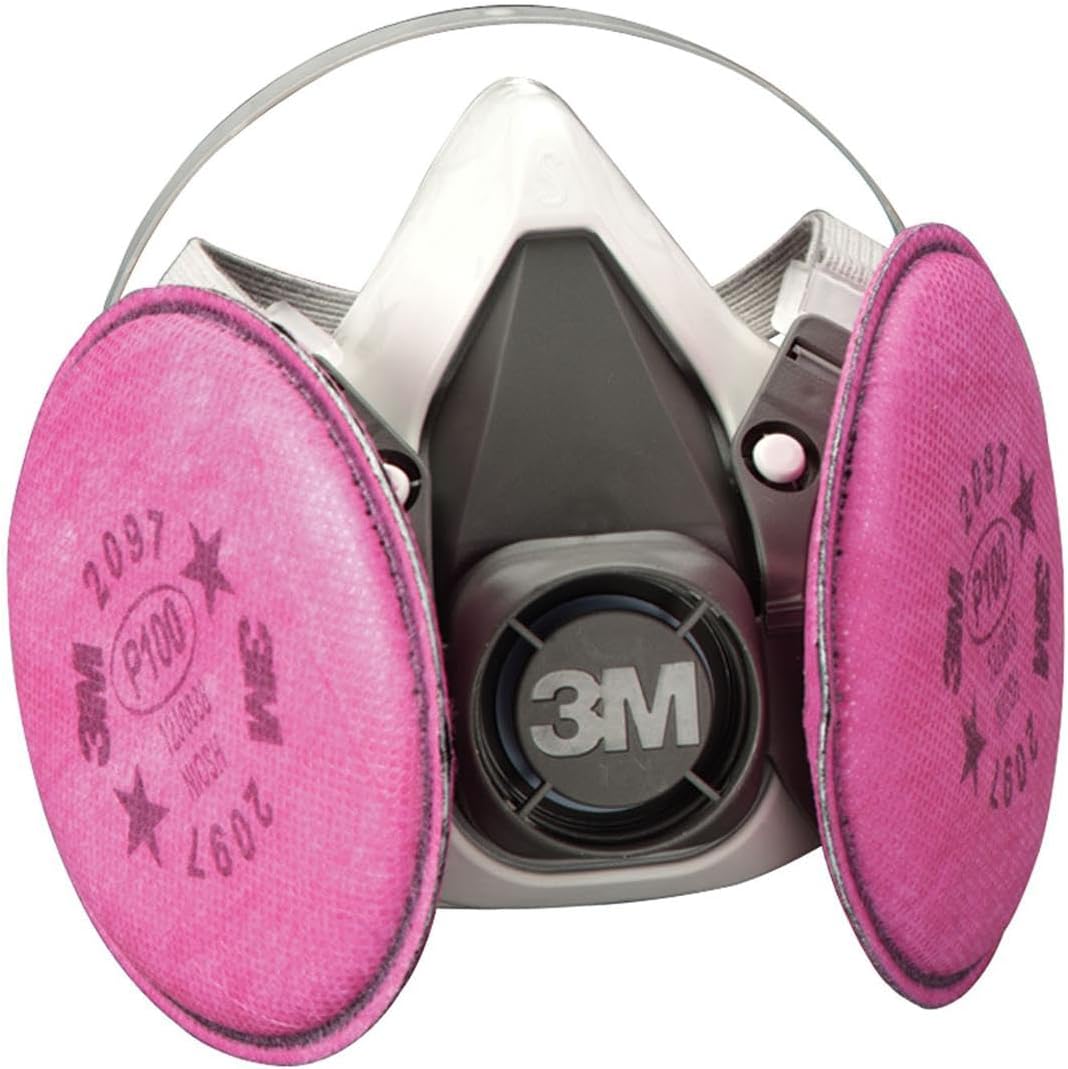
Foto: Akụkụ view of the 3M 07183 Half Facepiece Respirator, showing the profile of the facepiece and the attached P100 filters. The head harness straps are visible.
Ntuziaka ọrụ
- Ịtinye ihe na-eku ume:
- Place the respirator over your mouth and nose.
- Pull the head harness over your head.
- Position the top strap high on the crown of your head.
- Fasten the neck straps and adjust all straps evenly until the respirator is snug but comfortable. Do not overtighten.
- Performing a User Seal Check:
- Positive Pressure Check: Close off the exhalation valve by placing the palm of your hand over the valve cover. Exhale gently. If the facepiece bulges slightly and no air leaks around the face seal, a positive pressure seal has been achieved.
- Negative Pressure Check: Close off the inlets of the filters/cartridges by placing the palms of your hands over them. Inhale gently. If the facepiece collapses slightly and no air leaks around the face seal, a negative pressure seal has been achieved.
If you detect any air leakage during either check, readjust the respirator and repeat the seal check. If you cannot achieve a proper seal, do not enter the contaminated area.
- N'oge eji: If you smell or taste contaminants, or experience dizziness, irritation, or other distress, immediately leave the contaminated area and replace the filters/cartridges or respirator.
Nlekọta na Nchekwa
- Nhicha: After each use, remove filters/cartridges. Wash the facepiece in warm water with a mild detergent. Do not use solvents. Rinse thoroughly with clean water.
- Ngwọta: Immerse the facepiece in a solution of quaternary ammonium disinfectant or a solution of sodium hypochlorite (chlorine bleach) as per manufacturer's instructions. Rinse thoroughly.
- ihicha: Air dry the facepiece in a clean, non-contaminated area. Do not dry in direct sunlight or with heat.
- Nchekwa: Store the clean, dry respirator and filters/cartridges in a sealed bag or container away from contaminated areas, extreme temperatures, and direct sunlight.
- Filter/Cartridge Replacement: Replace filters/cartridges according to your company's change-out schedule or immediately if breathing becomes difficult, or if you detect taste, smell, or irritation from contaminants.
Nchọpụta nsogbu
| Nsogbu | Ihe nwere ike ime | Ngwọta |
|---|---|---|
| Air leakage around face seal | Improper fit, damaged facepiece, incorrect size | Readjust straps, perform user seal check. If problem persists, inspect for damage or consider a different size/model. |
| O siri ike iku ume | Clogged filters/cartridges | Replace filters/cartridges. |
| Smell or taste of contaminant | Filters/cartridges saturated or incorrect type | Immediately leave contaminated area. Replace filters/cartridges. Ensure correct type for hazard. |
Nkọwapụta
- Nọmba nlereanya: 07183
- Ụdị: Ọkara Ihu Igwe Ntugharị Respirator
- Ihe: Silicone or Thermoplastic Elastomer (facepiece)
- Ụdị njikọ: Baynet
- Arọ: Approximately 3.2 ounces (without filters/cartridges)
- Akụkụ: 7.1 x 6.4 x 5 inches (approximate product dimensions)
- ndakọrịta: Compatible with a wide range of 3M filters and cartridges (e.g., 2000, 2200, 6000, 7093 series)
Akwụkwọ ikike na nkwado
For warranty information and technical support, please refer to the official 3M webma ọ bụ kpọtụrụ ndị ọrụ nlekọta ndị ahịa 3M ozugbo. Debe risit ịzụrụ ihe gị dị ka ihe akaebe nke ịzụrụ ihe.
3M Official Websaịtị: www.3m.com
Ndị ọrụ nlekọta ndị ahịa: Refer to the 3M websaịtị maka ozi kọntaktị mpaghara.
Nkwuputa
This instruction manual is intended to provide general guidance. It is not a substitute for professional training, fit testing, or medical evaluation required by regulatory standards. The user is responsible for ensuring proper selection, use, and maintenance of the respirator in accordance with all applicable laws and regulations.