1. Okwu mmalite
The Juniper Networks WLA532 Wireless Access Point is designed to provide a high level of integration for security, performance, and manageability, ensuring an optimal WLAN user experience with enhanced reliability. This device features an energy-efficient power design, robust security protocols, dual radios, 3x3 MIMO technology, 3 spatial streams, and a 1 Gigabit Ethernet uplink port. Its compact footprint allows for efficient deployment. The WLA532 helps reduce Capital Expenditure (CAPEX) by requiring fewer access points per floor and lowers Operational Costs (OPEX) through reduced IT staffing demands, thanks to improved reliability with concurrent spectrum analysis and deployments optimized for known interference sources.
2. Ihe ngwugwu
Please verify that all items are present in your package. If any items are missing or damaged, contact your vendor or Juniper Networks support immediately.
- Juniper WLA532 Wireless Access Point
- Mounting Bracket (for ceiling or wall mount)
- Akụrụngwa mgbago (skru, arịlịka)
- Nduzi Mmalite Ngwa Ngwa/Akwụkwọ
- (Optional, depending on SKU) Power Adapter or PoE Injector
3. Ozi nchekwa
Read all safety warnings and instructions before installing or operating this device. Keep this manual for future reference.
- Isi mmalite ike: Use only the power adapter or Power over Ethernet (PoE) source specified for this device. Incorrect voltage may cause damage or fire.
- Igwe ikuku: Ensure proper ventilation. Do not block any ventilation openings. Overheating can cause damage.
- gburugburu: Do not expose the device to water, moisture, or extreme temperatures. Avoid placing it near heat sources or in direct sunlight.
- Ije ozi: Anwala imeghe ma ọ bụ rụkwaa ngwaọrụ n'onwe gị. Kpọtụrụ ndị ọrụ ruru eru ọrụ niile.
- Ịkwanye: Ensure the device is securely mounted to a stable surface to prevent it from falling.
4. Ntọala na nwụnye
This section guides you through the physical installation and initial power-up of your Juniper WLA532 Access Point.
4.1. Ihe karịrị anụ ahụview
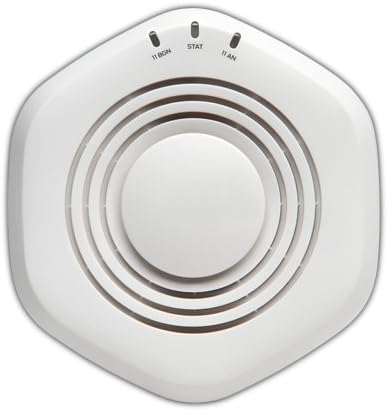
Foto 1: Top view of the Juniper WLA532 Wireless Access Point. Note the indicator lights for 11 BGN, STAT, and 11 AN.
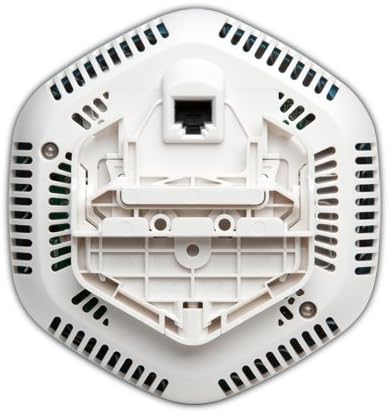
Onyonyo 2: N'okpuru view of the Juniper WLA532 Wireless Access Point, illustrating the integrated mounting bracket and the Gigabit Ethernet port for network connectivity and Power over Ethernet (PoE).
4.2. Ịkwanye ebe nnweta
The WLA532 can be mounted on a ceiling or wall. Choose a central location free from obstructions for optimal wireless coverage.
- Kwadebe elu ugwu: Use the mounting bracket as a template to mark the drill holes on the ceiling or wall.
- Wụnye arịlịka: Drill pilot holes and insert appropriate wall anchors if mounting on drywall or plaster.
- Chekwaa Bracket: Attach the mounting bracket to the surface using the provided screws.
- Attach the Access Point: Align the access point with the mounting bracket and twist it clockwise until it clicks securely into place.
4.3. Connecting to the Network and Power
The WLA532 supports Power over Ethernet (PoE) for simplified installation.
- Njikọ Ethernet: Connect a standard Ethernet cable from your network switch (preferably a PoE-enabled switch) to the Gigabit Ethernet port on the bottom of the WLA532.
- Power (PoE): If using a PoE-enabled switch, the device will power on automatically once the Ethernet cable is connected.
- Power (Optional AC Adapter): If PoE is not available, connect a compatible Juniper Networks AC power adapter (sold separately) to the power input port on the device and then to a power outlet.
- Nyochaa ike: Once powered, the indicator lights on the top of the device (Figure 1) should illuminate, indicating power and network activity. Refer to the "Indicator Lights" section for details.
4.4. Nhazi mmalite
Initial configuration typically involves accessing the device's web-based management interface or using Juniper's network management software. Refer to the separate Juniper Networks WLA532 Software Configuration Guide for detailed instructions on setting up SSIDs, security, and other network parameters.
5. Na-arụ ọrụ Ebe Nnweta
Once installed and configured, the Juniper WLA532 operates as a wireless access point, broadcasting Wi-Fi signals for client devices to connect to your network.
5.1. Ihe ngosi ọkụ
| Ìhè | Ọnọdụ | Nkọwa |
|---|---|---|
| 11 BGN | Green siri ike | 802.11b/g/n (2.4 GHz) radio is operational. |
| Green na-egbuke egbuke | Activity on the 2.4 GHz radio. | |
| STAT | Green siri ike | Ngwaọrụ a na-agba ọkụ ma na-arụ ọrụ nke ọma. |
| Green na-egbuke egbuke | Firmware upgrade in progress or other system activity. | |
| 11 AN | Green siri ike | 802.11a/n (5 GHz) radio is operational. |
| Green na-egbuke egbuke | Activity on the 5 GHz radio. |
5.2. Connecting Client Devices
Client devices (laptops, smartphones, tablets) can connect to the WLA532 using the configured Wi-Fi network (SSID) and password. Ensure your devices support 802.11n for optimal performance.
6. Nlekọta
Regular maintenance helps ensure the longevity and optimal performance of your access point.
- Nhicha: Gently wipe the exterior of the device with a soft, dry cloth. Do not use liquid cleaners or aerosols. Ensure ventilation openings are free from dust accumulation.
- Mmelite femụwe: Lelee nkwado Juniper Networks mgbe niile website for the latest firmware updates. Keeping the firmware updated ensures the best performance, security, and access to new features. Follow the instructions provided with the firmware update package carefully.
- Ọnọdụ gburugburu: Ensure the operating environment remains within the recommended temperature and humidity ranges to prevent damage.
7. Nchọpụta nsogbu
This section provides solutions to common issues you might encounter with your Juniper WLA532 Access Point.
7.1. No Power / Lights Off
- Lelee isi iyi ike: Ensure the Ethernet cable is securely connected to a PoE-enabled switch or a compatible AC power adapter is properly connected to a working power outlet.
- Nyochaa PoE: If using PoE, confirm that the switch port is configured for PoE and is supplying power. Try a different PoE port or switch.
7.2. No Wireless Connectivity
- Lelee ọkụ egosi: Ensure the "11 BGN" and "11 AN" lights are solid green, indicating the radios are operational. If not, check network connectivity.
- eriri netwọk: Verify the Ethernet cable connecting the access point to your network is securely plugged in and functional.
- Router/Switch Status: Ensure your upstream router or switch is working correctly and providing internet access.
- Mgbasa ozi SSID: Confirm that the SSID (Wi-Fi network name) is being broadcast and is visible to client devices. Check your access point's configuration.
- Ntọala nchekwa: Double-check the Wi-Fi password and security settings (e.g., WPA2-PSK).
- Magharịa: Power cycle the access point by disconnecting and reconnecting its power source.
7.3. Slow Wireless Speed
- Ntinye aka: Wireless performance can be affected by interference from other Wi-Fi networks, cordless phones, microwaves, or other electronic devices. Consider changing the Wi-Fi channel in the access point's settings.
- Ike mgbaama: Ensure client devices are within optimal range of the access point. Obstacles like thick walls can degrade signal.
- Client Device Capability: Ensure your client devices support 802.11n and are using the appropriate wireless adapter drivers.
- Mgbochi netwọkụ: Too many devices on the network or high bandwidth usage can slow down speeds.
7.4. Cannot Access Management Interface
- Adreesị IP: Ensure your computer is on the same network segment as the access point and you are using the correct IP address for the management interface.
- Firewall: Temporarily disable any firewalls on your computer to rule out blocking issues.
- Tọgharịa na ndabara ụlọ ọrụ: As a last resort, if you cannot access the device, you may need to perform a factory reset. Refer to the Juniper Networks WLA532 Software Configuration Guide for instructions on how to perform a factory reset. Ịdọ aka ná ntị: Nke a ga-ehichapụ nhazi omenala niile.
8. Nka na ụzụ nkọwa
| Njirimara | Nkọwa |
|---|---|
| Nọmba nlereanya | WLA532-WW |
| Ụdị ikuku | 802.11n |
| Klaasị ugboro ugboro | Dual-band (2.4 GHz na 5 GHz) |
| Ikuku Communication Standard | 802.11n |
| Teknụzụ Njikọta | Ethernet, Wi-Fi |
| Usoro nchekwa | WPS (Mbido Wi-Fi echekwara) |
| Sistemụ nrụọrụ | Junos OS |
| Ibu Ibu | 13.9 ounce (gram 393) |
| Akụkụ ngwaahịa (LxWxH) | 5.71 x 5.37 x 1.77 sentimita asatọ |
| Voltage | 48 volts (DC) |
| Ọnụọgụ nke Nhazi | 1 |
| Eji akwadoro | Azụmahịa |
| Onye nrụpụta | Juniper Networks, Inc |
| Ụbọchị mbụ dị | Septemba 6, 2012 |
9. Akwụkwọ ikike na nkwado
For detailed warranty information, please refer to the warranty card included with your product or visit the official Juniper Networks website. Warranty terms may vary by region and purchase agreement.
For technical support, product documentation, software downloads, and additional resources, please visit the Juniper Networks support portal:
When contacting support, please have your product model number (WLA532-WW) and serial number ready.


