1. Ngwaahịa gafereview
This manual provides essential information for the safe and effective use of the GYS Model 044128 All-Steel Welding Chipping Hammer. This robust tool is designed for the removal of slag and spatter from welding seams, ensuring a clean and professional finish.
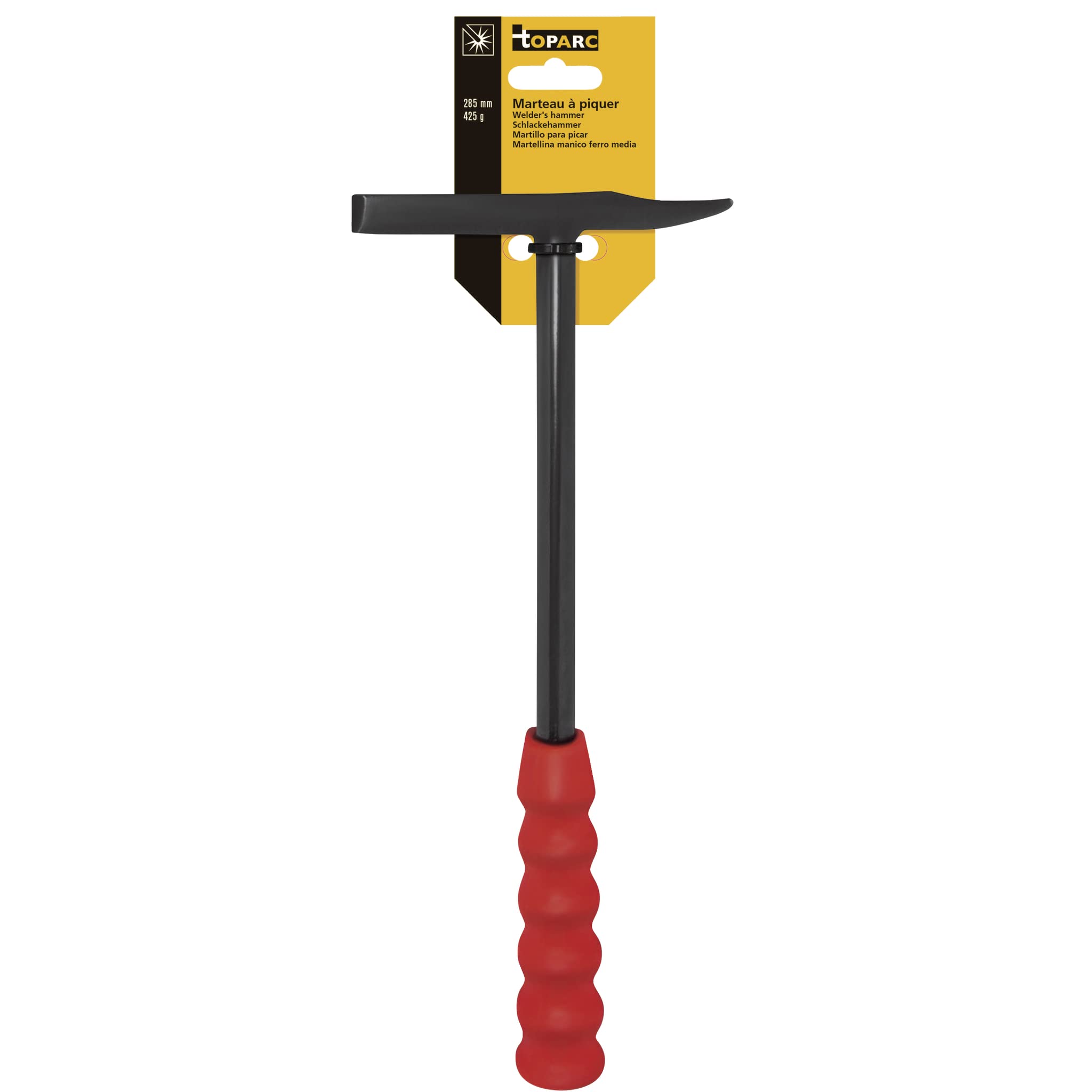
Image showing the GYS Model 044128 All-Steel Welding Chipping Hammer, featuring a yellow handle and a dual-purpose head for chipping.
2. Ozi nchekwa
Always prioritize safety when using any hand tool. Failure to follow these safety guidelines may result in injury or damage to the tool.
- Nchedo anya: Always wear appropriate safety glasses or a face shield to protect against flying debris, slag, and sparks.
- Nchekwa aka: Wear heavy-duty work gloves to protect your hands from sharp edges, heat, and impact.
- Mpaghara ọrụ: Ensure your work area is clean, well-lit, and free from obstructions. Keep bystanders away from the immediate work zone.
- Jide nke ọma: Maintain a firm grip on the hammer handle to prevent accidental slips.
- Ngwa nyocha: Before each use, inspect the hammer for any signs of damage, such as cracks in the head or handle. Do not use a damaged tool.
- Ezubere iji: Use the chipping hammer only for its intended purpose of removing welding slag and spatter. Do not use it as a pry bar, chisel, or for striking other hardened surfaces.
- Nchekwa: Store the hammer in a dry, secure place, out of reach of children.
3. Akụrụngwa
The GYS Model 044128 Welding Chipping Hammer consists of the following primary components:
- Isi Hammer: Constructed from durable alloy steel, featuring a dual design with a pointed end for tight corners and a chisel end for broader slag removal.
- Jikwaa: Made from alloy steel, providing strength and durability, with a comfortable grip for extended use.
4. Nhazi
The GYS Welding Chipping Hammer requires minimal setup. Follow these steps before initial use:
- Ịkwapu: Jiri nlezianya wepụ hama ahụ n'ime ngwugwu ya.
- Nyochaa: Visually inspect the entire tool for any manufacturing defects or shipping damage. Ensure the head is securely attached to the handle.
- Ọcha: Wipe down the hammer with a clean, dry cloth to remove any dust or residue from manufacturing or packaging.
The hammer is now ready for use.
5. Ntuziaka ọrụ
Follow these guidelines for effective and safe operation of your GYS Welding Chipping Hammer:
- Prepare Weld: Allow the welded material to cool sufficiently before attempting to chip slag. Chipping hot slag can be less effective and more hazardous.
- Select End: Choose the appropriate end of the hammer head for the task. The pointed end is ideal for reaching into tight corners and crevices, while the chisel end is suitable for removing slag from flatter, broader surfaces.
- Ọkwa: Hold the hammer firmly. Position the chosen end of the hammer against the slag.
- Chipping Motion: Apply controlled, firm strikes to the slag. Always direct your strikes away from your body and any bystanders. Avoid excessive force, which can damage the weld or the hammer.
- Hichapụ: After chipping, use a wire brush to remove any remaining small particles or dust from the weld area.
6. Nlekọta
Proper maintenance will extend the life of your GYS Welding Chipping Hammer:
- Nhicha: After each use, clean the hammer head and handle to remove any slag, dust, or debris. A wire brush can be used for the head, and a damp cloth for the handle.
- Nyocha: Regularly inspect the hammer for signs of wear, such as dulling of the chipping edges, cracks, or looseness between the head and handle.
- Sharpening (Optional): If the chipping edges become dull over time, they can be carefully sharpened using a grinder or file, maintaining the original angles. Always wear eye protection during this process.
- Nchekwa: Store the hammer in a dry environment to prevent rust. Applying a light coat of oil to the metal parts can offer additional protection if storing for extended periods.
7. Nchọpụta nsogbu
This section addresses common issues you might encounter with your welding chipping hammer.
| Nsogbu | Ihe nwere ike ime | Ngwọta |
|---|---|---|
| Ineffective slag removal | Dull chipping edges; slag too hot; insufficient force. | Sharpen edges if necessary; allow weld to cool completely; apply firm, controlled strikes. |
| Hammer head feels loose | Wear or damage to the connection point. | Discontinue use immediately. A loose head is a serious safety hazard. Replace the hammer. |
| Nchara na akụkụ ọla | Exposure to moisture; improper storage. | Clean off rust with a wire brush and apply a rust-inhibiting oil. Store in a dry environment. |
8. Nkọwapụta
Detailed specifications for the GYS Model 044128 All-Steel Welding Chipping Hammer:
| Njirimara | Nkọwa |
|---|---|
| Onye nrụpụta | NJ |
| Nọmba nlereanya | 044128 |
| Ibu Ibu | 480 grams |
| Akụkụ ngwaahịa | 14 x 30 x 3 cm |
| Agba | Odo |
| Ụdị | German |
| Ọnụọgụ nke ihe | 1 |
| Ụdị isi | Wide (Dual-purpose: pointed and chisel) |
| Ejikwa ọnọdụ | Edoziri |
| Ejikwa ihe | Alloy Steel |
| Isi ihe | Alloy Steel |
| Sistemụ nha | Metric |
| Ngwa gụnyere | PRO CHIPPING HAMMER 296mm / 425g - Plastic handle |
| Batrị achọrọ | Mba |
| ASIN | B0072CKA5Y |
9. Akwụkwọ ikike na nkwado
GYS products are manufactured to high-quality standards. For specific warranty information, please refer to the documentation included with your purchase or visit the official GYS website. If you require technical assistance or have questions regarding your GYS Model 044128 Welding Chipping Hammer, please contact GYS customer support through their official channels.


