1. Ngwaahịa gafereview
The StarTech.com 1-Port FTDI USB to Serial RS232 Adapter Cable (Model ICUSB2321F) converts an available USB 1.1 or 2.0 port into an RS232 serial DB9 port. This allows for connection, monitoring, and control of various serial devices. It features COM retention, ensuring the same COM port value is automatically re-assigned upon disconnection/reconnection or system reboot. The adapter utilizes an FTDI chipset, offering enhanced customization, advanced features, and broad compatibility across multiple operating systems.
Akụkụ ndị bụ isi:
- Ọrụ ọtụtụ ojiji: Ideal for digital signage, point-of-sale systems, and barcode scanners.
- Customizable Solution: FTDI chipset provides high customizability and compatibility.
- Nhazi kọmpat: USB powered, eliminating the need for external power adapters.
- Nwụnye dị mfe: Features COM port retention for robust serial connectivity and simplified setup.
- Ndakọrịta OS sara mbara: Supports Windows, Windows CE, Mac OS, and Linux.

Figure 1: StarTech.com 1-Port FTDI USB to Serial RS232 Adapter Cable. This image shows the adapter with its USB-A connector on one end and the DB9 serial port on the other, connected by a cable.
2. Ntọala na nwụnye
Follow these steps to set up your StarTech.com USB to Serial RS232 Adapter Cable:
- Jikọọ ihe nkwụnye ahụ: Plug the USB-A connector of the adapter cable into an available USB port on your computer.
- Nwụnye ọkwọ ụgbọala:
- For most modern operating systems (e.g., Windows 10/11, recent macOS versions), the necessary drivers for the FTDI chipset will install automatically upon connection.
- If automatic installation does not occur, or if you are using an older operating system, drivers can be downloaded from the StarTech.com website. A driver CD may also be included with the product.
- Nyochaa nwụnye: After driver installation, verify the adapter is recognized by your system.
- On Windows, open Device Manager and look under "Ports (COM & LPT)". You should see an entry for "USB Serial Port (COMX)", where X is the assigned COM port number.
- On macOS or Linux, consult your system's documentation for verifying serial port recognition.
- Connect Serial Device: Connect your RS232 serial device (e.g., modem, barcode scanner, digital camera, GPS, POS device) to the DB9 male connector on the adapter. Ensure the connection is secure.
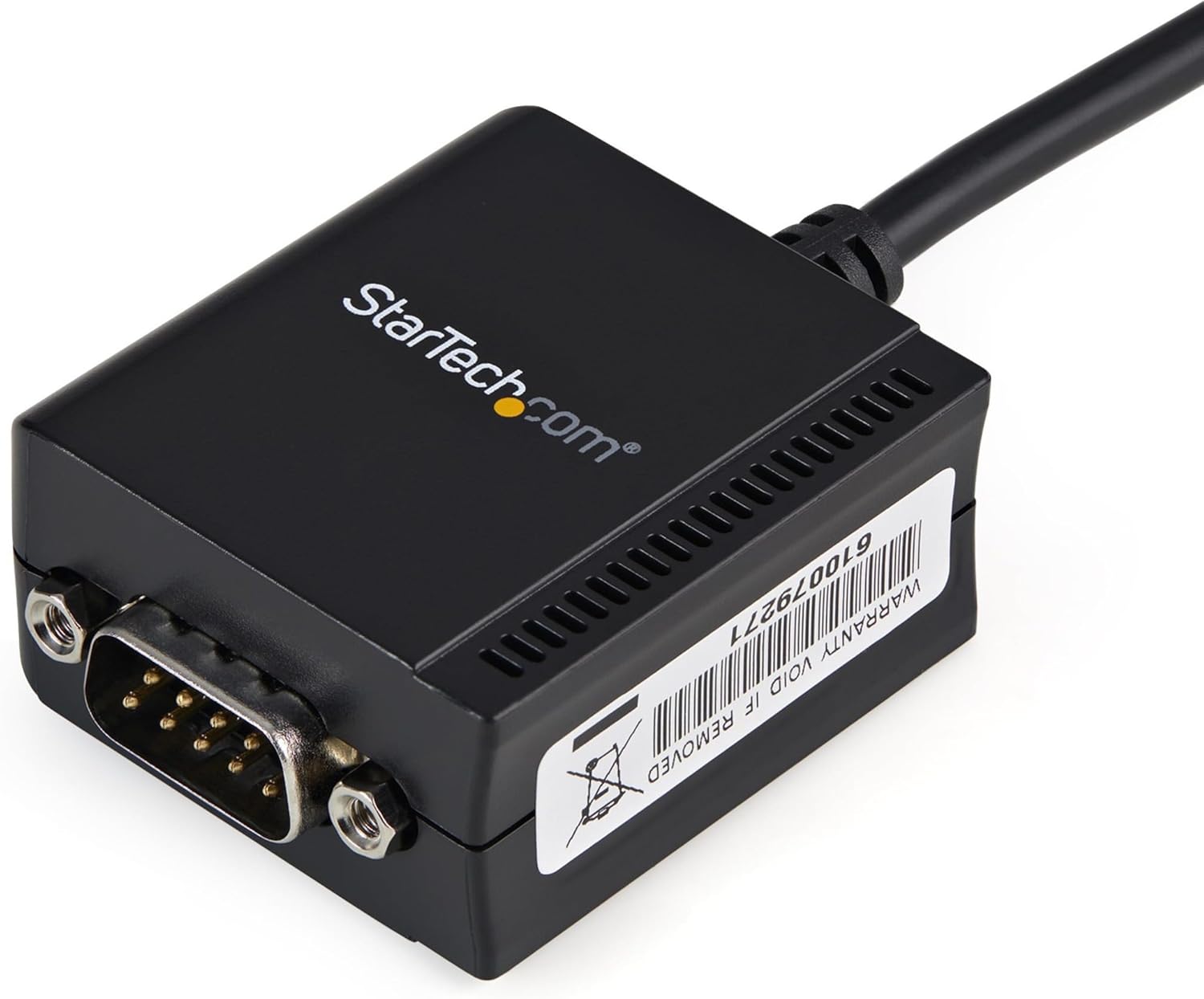
Ọgụgụ 2: nso nso view of the DB9 serial port on the adapter, showing the screw-in connectors for a secure attachment to a serial device.
3. Ntuziaka ọrụ
Once the adapter is installed and recognized by your operating system, it functions as a standard serial COM port. Applications that communicate via serial ports can now interact with your connected serial device.
- COM Port Retention: A key feature of this adapter is COM port retention. This means that if you disconnect the adapter from your computer and then reconnect it, or if you reboot your system, the operating system will automatically re-assign the same COM port number to the adapter. This eliminates the need to reconfigure your serial communication software each time.
- Nhazi ngwanrọ: Open your serial communication software (e.g., HyperTerminal, PuTTY, custom application) and select the COM port number assigned to the StarTech.com adapter. Configure the serial port settings (baud rate, data bits, parity, stop bits, flow control) to match those of your connected serial device.
- Nyefee data: Initiate communication through your software. The adapter will facilitate the data transfer between your computer's USB port and the serial device.
4. Nlekọta
The StarTech.com USB to Serial RS232 Adapter Cable requires minimal maintenance to ensure long-term performance:
- Nhicha: Use a soft, dry cloth to clean the exterior of the adapter. Avoid using liquid cleaners or solvents, which may damage the device.
- Nchekwa: Chekwaa ihe nkwụnye ọkụ n'ebe dị jụụ, kpọrọ nkụ pụọ na ìhè anyanwụ kpọmkwem na oke okpomọkụ.
- Ijikwa: Avoid bending or twisting the cable excessively, as this can damage internal wires. Do not apply excessive force when connecting or disconnecting the adapter.
- Firmware/Driver Updates: Periodically check the StarTech.com website for updated drivers or firmware, which may offer improved performance or compatibility.
5. Nchọpụta nsogbu
If you encounter issues with your StarTech.com USB to Serial RS232 Adapter Cable, refer to the following common troubleshooting steps:
| Nsogbu | Ngwọta enwere ike |
|---|---|
| Adapter not recognized by computer. |
|
| Serial device not communicating. |
|
| COM port number changes unexpectedly. |
|
6. Nkọwapụta
| Njirimara | Nkọwa |
|---|---|
| Akụkụ ngwaahịa (L x W x H) | 1.8 x 1.6 x 0.9 sentimita asatọ |
| Ibu Ibu | 3.17 ounces |
| Nọmba nlereanya | ICUSB2321F |
| Ụdị njikọ | DB-9, USB Type A |
| Chipset | FTDI FT232RL |
| Ọnụego Max Baud | 115.2kbps |
| Ihe nchekwa FIFO | 256 Bytes |
| Parity Modes | None/Odd/Even/Mark |
| Data Bits | 7 ma ọ bụ 8 |
| Kwụsị Bits | 1 ma ọ bụ 2 |
| Ogologo eriri USB | 6 ụkwụ (1.8 mita) |
| Agba | Nwa |
| Ngwa dakọtara | Monitor (general term for serial devices), Digital signage, Point of sale systems, Barcode scanners |
| Onye nrụpụta | StarTech.com |
7. Akwụkwọ ikike na nkwado
StarTech.com products are designed for reliability and performance. For detailed warranty information and technical support, please refer to the official StarTech.com websaịtị ma ọ bụ akwụkwọ agụnyere na ngwaahịa gị.
- Onye nrụpụta: StarTech.com
- Akwụkwọ ntuziaka onye ọrụ (PDF): For the most comprehensive information, you can download the official user manual from the StarTech.com support page or via this link: StarTech.com USB to Serial Adapter User Manual.
- Nkwado ndị teknuzu: Visit the StarTech.com support website for drivers, FAQs, and contact information for technical assistance.


