
SENIX 2000 PSI Electric Pressure Washer
Instruction Manual - Model: HPWE13-M2
Ntuziaka nchekwa dị mkpa
Please read and understand all safety warnings and instructions before operating this pressure washer. Failure to follow these instructions may result in electric shock, fire, and/or serious injury.
- Nchekwa Eletriki: Always connect the pressure washer to a grounded outlet. Do not use with damaged cords or plugs. Keep all connections dry and off the ground.
- Nchekwa mmiri: Ensure the water supply is clean and free of debris. Do not operate without water. Do not spray water towards electrical outlets or equipment.
- High Pressure Hazard: The high-pressure spray can cause serious injury. Never direct the spray at people, pets, or electrical devices. Always wear appropriate eye protection.
- Eji kemịkalụ: Use only pressure washer safe detergents. Follow detergent manufacturer's instructions for use and disposal.
- Nkwụsi ike: Mee ihe nrụnye nrụgide n'elu ụlọ kwụsiri ike, nke dị larịị iji gbochie ịkụnye n'ọnụ.
- Ụmụaka na ndị ọbịa: Debe ụmụaka na ndị na-ekiri ebe a na-arụ ọrụ.
- Sistemụ Nkwụsị niile (TSS): This unit is equipped with a Total Stop System (TSS) which automatically shuts off the pump when the trigger is released. This saves energy and prolongs pump life.
Ngwaahịa gafereview na akụrụngwa
The SENIX 2000 PSI Electric Pressure Washer is designed for efficient outdoor cleaning. Familiarize yourself with its components before assembly and operation.
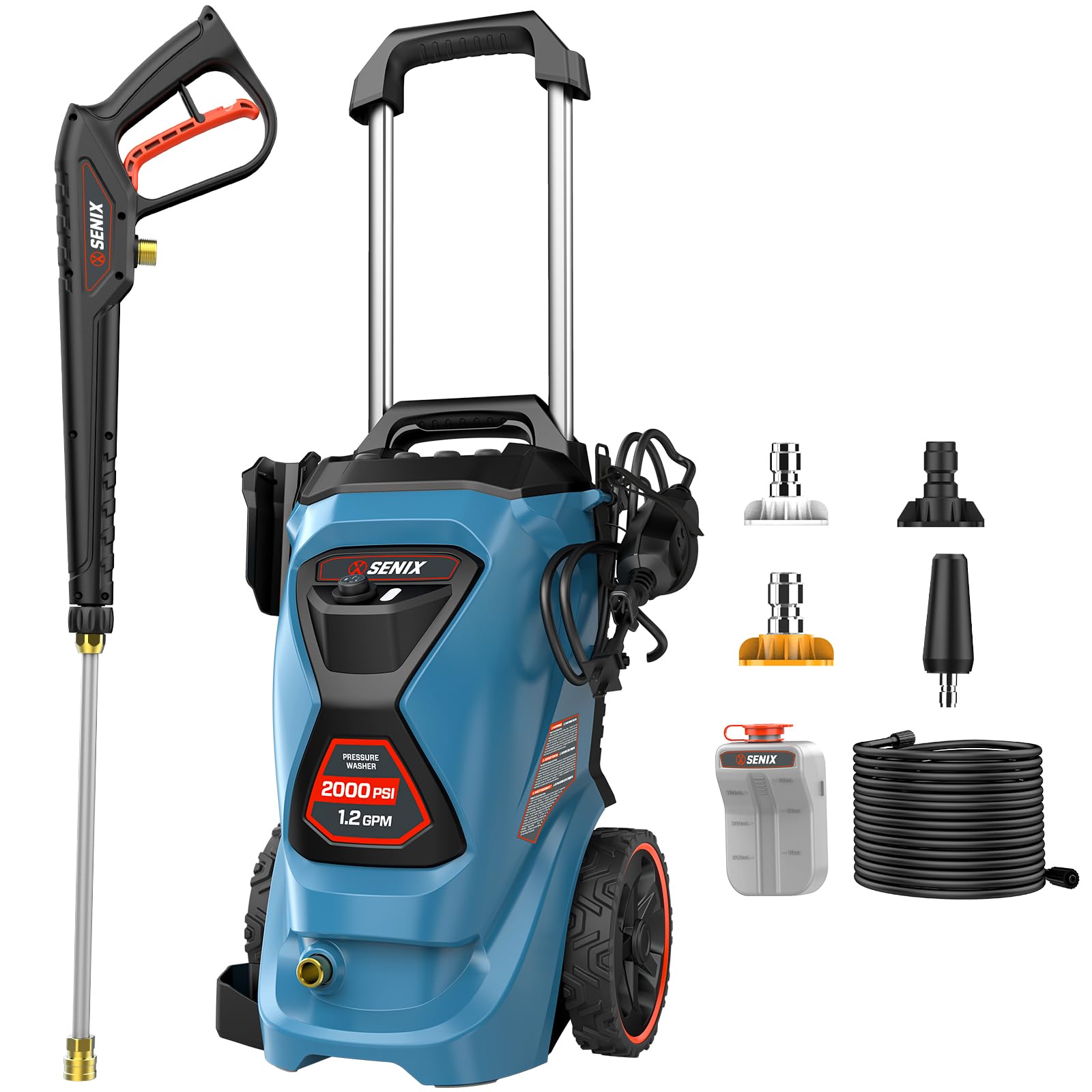
Ọgụgụ 1: N'ozuzu view of the SENIX 2000 PSI Electric Pressure Washer.
Key Features and Components:
- Dị ike 13-Amp moto: Generates up to 2000 PSI for effective cleaning.
- 4 Nozzles jikọọ ngwa ngwa: Includes 15°, 40°, Soap, and Turbo nozzles for various cleaning tasks.
- 25-ft High-Pressure Hose: Na-enye ample iru maka ihicha.
- 35-ft GFCI Cord: Ensures electrical safety and extended reach.
- Telescoping Handle & Wheels: For easy mobility and compact storage.
- Nchekwa n'ụgbọ: Conveniently stores nozzles, spray gun, and power cord.
- Integrated Soap Tank: For easy application of detergents.
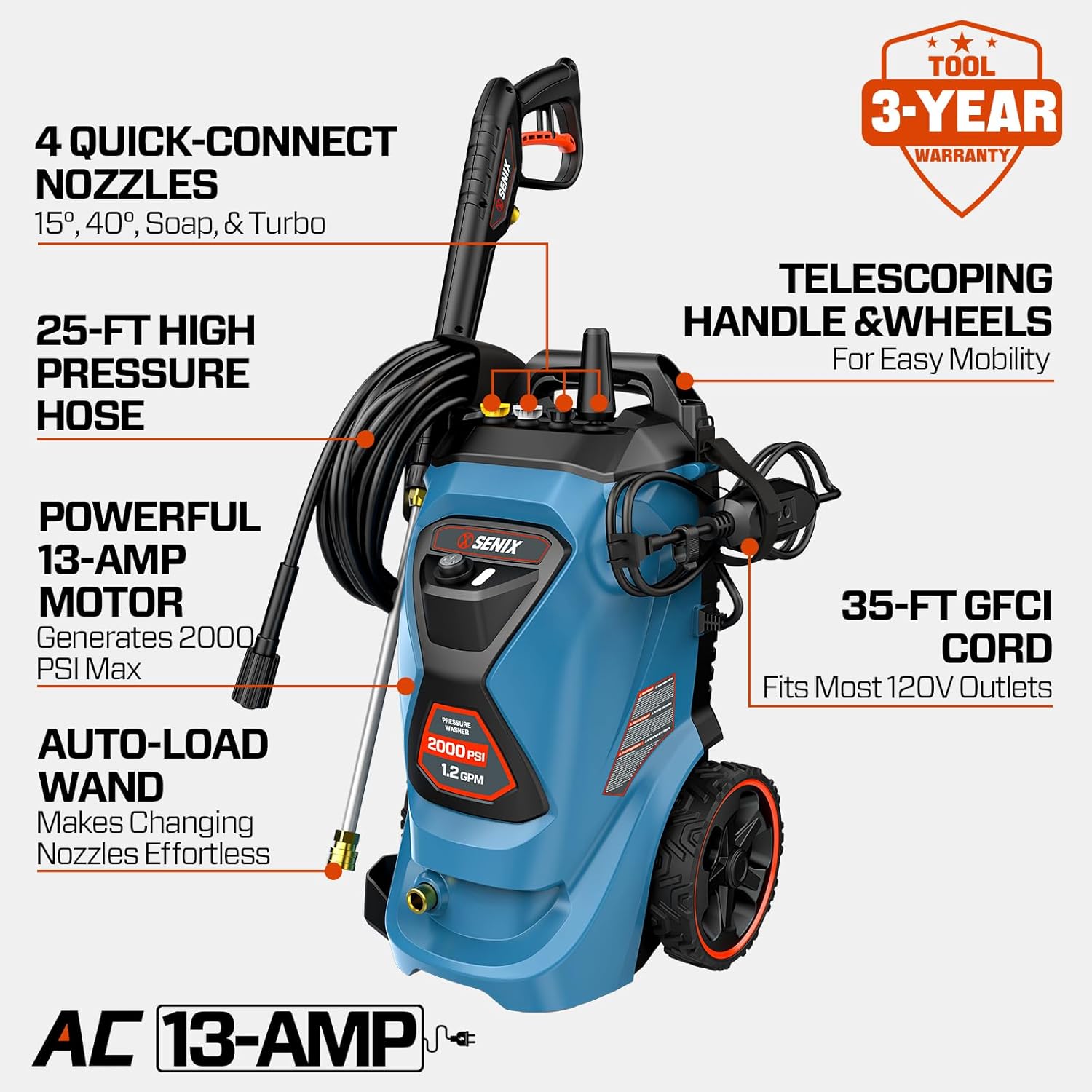
Figure 2: Labeled diagram highlighting key features such as nozzles, hose, motor, cord, and handle.
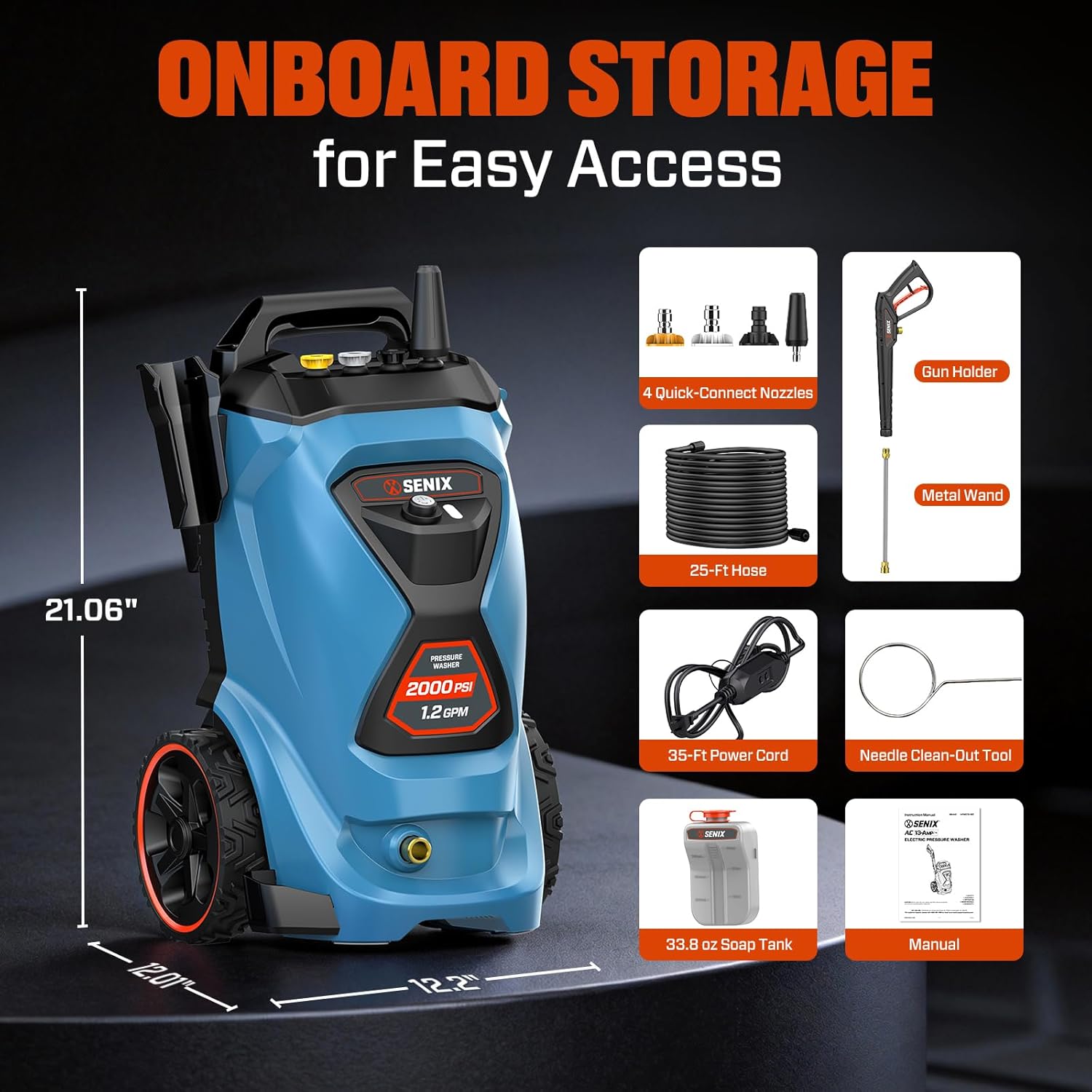
Foto 3: View of the pressure washer showing its dimensions and a display of included accessories like quick-connect nozzles, gun holder, metal wand, hose, power cord, soap tank, and manual.

Figure 4: All components included with the pressure washer, including the main unit, spray gun, wand, hose, nozzles, and soap tank.
Mgbakọ na Nhazi
- Iwepu: Carefully remove all components from the packaging. Check for any damage during shipping.
- Mgbakọ njikwa: Extend the telescoping handle to the desired height and secure it.
- Ijikọ hose nrụgide dị elu: Connect one end of the high-pressure hose to the pressure washer's outlet and the other end to the spray gun. Ensure connections are tight.
- Ijikọ ihe na-eweta mmiri: Attach a garden hose (not included) to the water inlet on the pressure washer. Ensure the garden hose is free of kinks and has a minimum diameter of 5/8 inch. Turn on the water supply fully.
- Connecting the Spray Gun and Wand: Insert the metal wand into the spray gun and twist to secure. Select the desired quick-connect nozzle and push it firmly into the end of the wand until it clicks into place.
- Adding Detergent (Optional): If using detergent, fill the integrated soap tank with pressure washer safe detergent.
- Njikọ ike: Plug the 35-ft GFCI power cord into a grounded 120V outlet. Ensure the GFCI is reset if necessary.

Ọgụgụ 5: Zuru ezu views of the push-button start, hose hook for organization, quick-connect nozzle system, and simple nozzle storage.
Ntuziaka ọrụ
- Purging Air from the System: Before starting the motor, squeeze the trigger on the spray gun for approximately 30 seconds to allow water to flow through the system and expel any trapped air. This prevents damage to the pump.
- Malite igwe nrụgide nrụgide: With the water supply on and air purged, press the power button to start the motor. The LED indicator will illuminate.
- Nhọrọ Nozzle: Choose the appropriate quick-connect nozzle for your cleaning task.
- Nozulu 15° (edo edo): Maka nhicha siri ike nke unyi isi ike n'elu ebe siri ike na-adịghị mma.
- 40° Nozulu (Ọcha): For general cleaning of larger areas, suitable for vehicles, patios, and siding.
- Soap Nozzle (Black): Maka itinye ncha na obere nrụgide.
- Turbo Nozzle: Provides a rotating jet for maximum cleaning power on tough stains.
- Usoro nhicha: Hold the spray gun firmly with both hands. Start spraying a few feet away from the surface and gradually move closer until the desired cleaning effect is achieved. Maintain a consistent distance and angle for even cleaning.
- Iji ncha: When using the soap nozzle, the pressure washer will operate at a lower pressure, allowing for effective detergent application. After applying detergent, switch to a high-pressure nozzle (15° or 40°) to rinse the surface thoroughly.
- Nkwụsị ọrụ: Release the trigger to engage the Total Stop System (TSS). For extended breaks, turn off the power switch and the water supply.

Figure 6: A person demonstrating the use of the pressure washer to clean an outdoor patio, highlighting its 2000 PSI and 1.2 GPM capabilities.

Figure 7: Visual guide to the four quick-connect nozzles (15°, 40°, Soap, Turbo) and their recommended applications, such as car washing with the soap nozzle.

Ọgụgụ 8: Ọpụamples of multiple cleaning scenarios where the pressure washer can be used, including cars, driveways, windows, and fences.
Nlekọta na Nchekwa
Mgbe ojiji ọ bụla:
- Turn off the pressure washer and water supply.
- Fanye ihe na-akpali egbe ịgba ka ịhapụ nrụgide ọ bụla fọdụrụ na sistemụ ahụ.
- Kwụpụ eriri ubi na eriri nrụgide dị elu.
- Drain any remaining water from the pump and hoses.
- Clean the nozzles with the provided needle clean-out tool if they become clogged.
- Jiri mgbasa ozi hichapụ otu ahụamp akwa .
Oge oyi (maka ihu igwe oyi):
To prevent damage from freezing, it is crucial to properly winterize your pressure washer if it will be stored in an area where temperatures may drop below freezing.
- Kwupu njikọ mmiri niile.
- Pour pressure washer pump protector (available at hardware stores) into the water inlet.
- Briefly turn on the pressure washer (for 1-2 seconds) until the pump protector solution exits the high-pressure outlet.
- Store the unit in a dry, frost-free location.
Nchekwa:
- Store the pressure washer in a clean, dry, and protected area.
- Utilize the onboard storage for nozzles, spray gun, and power cord to keep components organized.
- Coil the high-pressure hose neatly on the integrated hose hook.

Figure 9: The portable design of the pressure washer, featuring a telescopic handle and two 7-inch wheels for easy transport and storage.
Nchọpụta nsogbu
| Nsogbu | Ihe nwere ike ime | Ngwọta |
|---|---|---|
| moto anaghị ebido | Power cord not plugged in; GFCI tripped; No power at outlet; Power switch off. | Plug in cord; Reset GFCI; Check circuit breaker; Turn power switch ON. |
| Obere nrụgide | Insufficient water supply; Clogged nozzle; Air in pump; Inlet filter clogged. | Ensure full water flow; Clean or replace nozzle; Purge air from system; Clean inlet filter. |
| Ụgbọ ala na-akwụsị mgbe a na-arụ ọrụ | A na-arụ ọrụ oke ọkụ; Obere voltage; TSS engaged. | Allow motor to cool; Check power supply; Release trigger and restart. |
| Mmiri na-agbapụta | Njikọ rụrụ arụ; O-mgbanaka mebiri emebi; eriri mgbawa. | Tighten connections; Replace O-rings; Replace hose. |
| Ihe nchacha anaghị eme | Soap nozzle not installed; Detergent tank empty; Clogged detergent line. | Install black soap nozzle; Refill tank; Clean detergent line. |
Nkọwapụta
| Nkọwapụta | Uru |
|---|---|
| Ụdị | SENIX |
| Nọmba nlereanya | HPWE13-M2 |
| Isi Iyi Ike | AC (Electric) |
| Oke nrụgide | 2000 PSI |
| Ọnụego nfe kacha | 1.2 GPM |
| moto Ampoge | 13 Amp |
| Ogologo eriri | 25 ft (High-Pressure) |
| Ogologo eriri ike | 35 ft (GFCI protected) |
| Ibu Ibu | 15 pound |
| Akụkụ ngwaahịa (L x W x H) | 13.78" x 12" x 12.2" |
| Nozzles gụnyere | 15°, 40°, Soap, Turbo |
Akwụkwọ ikike na nkwado ndị ahịa
This SENIX pressure washer comes with a Akwụkwọ ikike dị afọ 3, providing confidence in its quality and performance. Please retain your proof of purchase for warranty claims.
For technical assistance, troubleshooting, or warranty inquiries, please contact SENIX customer support:
- Websaịtị: Visit the official SENIX websaịtị maka akụrụngwa nkwado na ozi kọntaktị.
- Ekwentị: Refer to your product packaging or the SENIX websaịtị maka nọmba ekwentị ọrụ ndị ahịa kacha ugbu a.
- Email: Contact support via email for non-urgent inquiries.
When contacting support, please have your model number (HPWE13-M2) and purchase date readily available.