1. Ntuziaka nchekwa dị mkpa
Please read all instructions before using this sewing machine. This machine is intended for household use only.
DANGER - To reduce the risk of electric shock:
- E kwesịghị ịhapụ ngwa ngwa n'echeghị ya mgbe etinyere ya.
- Wepụ ngwa a mgbe niile na oghere eletrik ozugbo i mechara ya na tupu ihicha ya.
- Kwụpụ mgbe niile tupu re-lamping. Dochie bọlbụ na otu ụdị nke 15 watts (mpaghara 110-120V) ma ọ bụ 15 watts (mpaghara 220-240V).
WARNING - To reduce the risk of burns, fire, electric shock, or injury to persons:
- Ekwela ka eji mee ihe egwuregwu ụmụaka. Nlebara anya nke ọma dị mkpa mgbe ụmụaka na-eji ngwa a ma ọ bụ nso.
- Jiri ngwa a naanị maka ebumnuche ya dịka akọwara n'akwụkwọ ntuziaka a. Jiri naanị mgbakwunye ndị nrụpụta tụrụ aro ka ọ dị na ntuziaka a.
- Ejila ngwa a rụọ ọrụ ma ọ bụrụ na ọ nwere eriri ma ọ bụ plọg mebiri emebi, ọ bụrụ na ọ naghị arụ ọrụ nke ọma, ọ bụrụ na awụda ya ma ọ bụ mebie ya, ma ọ bụ tinye ya na mmiri. Weghachite ngwa ahụ na onye na-ere ikike ma ọ bụ ebe ọrụ kacha nso maka nyocha, nrụzi, eletriki ma ọ bụ nrụzi.
- Ejikwala oghere ikuku ọ bụla mechie ngwa ngwa. Debe oghere ikuku nke igwe na-akwa akwa na onye na-ahụ maka ụkwụ ka ọ ghara ịchịkọta lint, uzuzu na akwa rụrụ arụ.
- Wepụ mkpịsị aka n'akụkụ akụkụ niile na-akpụ akpụ. Achọrọ nlekọta pụrụ iche na agịga igwe eji akwa akwa.
- Jiri efere agịga kwesịrị ekwesị mgbe niile. Efere na-ezighi ezi nwere ike ime ka agịga gbajie.
- Ejila agịga gbagọ agbagọ.
- Adọpụla ma ọ bụ ịkwanye ákwà mgbe ị na-akpa ihe. Ọ nwere ike tụgharịa agịga ahụ na-eme ka ọ gbajie.
- Always unplug sewing machine off ("O") when making any adjustments in the needle area, such as threading needle, changing needle, threading bobbin, or changing presser foot, and the like.
- Wepụ igwe ịkwa akwa mgbe niile na oghere eletrik mgbe ị na-ewepụ mkpuchi, mmanye mmanụ, ma ọ bụ mgbe ị na-eme mgbanwe maka ọrụ onye ọrụ ọ bụla a kpọtụrụ aha na ntuziaka ntuziaka.
- Dobela ma ọ bụ tinye ihe ọ bụla n'ime oghere ọ bụla.
- Ejila n'èzí.
- Emela ọrụ ebe a na-eji ngwaahịa aerosol spray ma ọ bụ ebe a na-enye oxygen.
- To disconnect, turn all controls to the off ("O") position, then remove plug from outlet.
- Akwụpụla eriri site na ịdọrọ eriri. Iji kwụpụ, jide plọg, ọ bụghị eriri.
- Ọkwa nrụgide ụda n'okpuru ọnọdụ ọrụ nkịtị bụ 75dB(A).
- Always turn off the machine or unplug when the machine is not operating properly.
- Edokwala ihe ọ bụla na njikwa ụkwụ.
- If the supply cord to the foot controller is damaged, it must be replaced by the manufacturer or its service agent or a similar qualified person in order to avoid a hazard.
- Ezubere ngwa a maka iji ndị mmadụ (gụnyere ụmụaka) nwere ike anụ ahụ, mmetụta uche ma ọ bụ nke uche, ma ọ bụ enweghị ahụmịhe na ihe ọmụma, ma ọ bụrụ na enyereghị ha nlekọta ma ọ bụ ntụziaka gbasara iji ngwa ahụ site n'aka onye na-ahụ maka nchekwa ha.
- Ekwesịrị ilekọta ụmụaka ka ha hụ na ha ejighi ngwa eji egwu egwu egwu.
Chekwaa ntuziaka ndị a
Image: Important Safety Instructions page from the Singer 2250 manual, detailing electrical and general safety warnings.
2. Nhazi
2.1 Ngwa
The Singer 2250 sewing machine comes with a set of standard accessories and supports various optional accessories for different sewing tasks.
- Ngwa ngwa ọkọlọtọ: All purpose foot, Button sewing foot, Zipper foot, Screwdriver, Seam ripper/brush, Pack of needles, Bobbin (3), Darning plate, Spool holder.
- Optional Accessories (not supplied with machine, available from SINGER® retailers): Edge/quilting guide, Zipper foot, Straight stitch foot, Overcasting foot, Hemmer foot, Blind hem foot, Satin stitch foot, Cording/embroidery foot, Second spool pin, Spool pin felt.
2.2 Ikuku Bobbin
- Place thread and corresponding spool holder onto the spool pin.
- Snap the thread into the thread guide.
- Wind the thread counterclockwise around the bobbin winder tension disc.
- Thread the bobbin as illustrated and place it on the spindle.
- Push the bobbin spindle to the right.
- Hold the thread end.
- Step on the foot control pedal to begin winding.
- Cut the thread once the bobbin is full.
- Push the bobbin spindle to the left and remove the wound bobbin.
Biko rụba ama: When the bobbin winder spindle is in the "bobbin winding" position, the machine will not sew and the hand wheel will not turn. To start sewing, push the bobbin winder spindle to the left (sewing position).

Image: Manual page illustrating standard and optional accessories, and a step-by-step guide for winding the bobbin.
2.3 Connecting to Power Source
Ensure the machine's power switch is in the "O" (off) position. Insert the machine plug into the electrical outlet. Always use a grounded outlet.
2.4 Raising the Presser Foot Lifter
The presser foot lifter is located at the back of the needle bar area. Lift it to raise the presser foot for placing fabric, and lower it to hold the fabric in place for sewing.
3. Ọrụ
3.1 Choosing Your Pattern
The Singer 2250 features a Pattern Selector Dial to choose various stitch patterns.
- Stitches indicated in black on the diagram correspond to the Pattern Selector Dial.
- For patterns indicated with the "S" color, turn the Pattern Selector Dial to "S", then use the Stitch Length Dial to adjust the desired stitch length.
- The Pattern Selector Dial can be turned in either direction.
3.2 Stitch Length Dial
The Stitch Length Dial controls the length of straight stitches and the density of zig-zag stitches.
- For Straight Stitching: Turn the Pattern Selector Dial to the straight stitch symbol. The stitch length increases as the dial approaches "4". Use longer stitches for heavier fabrics and thicker needles, shorter stitches for lighter fabrics and finer needles.
- For Zig-Zag Stitching: Turn the Pattern Selector Dial to "~~~ ". The density of zig-zag stitches increases as the setting of the stitch length dial approaches "0". Dense zig-zag stitches are known as satin stitches.

Image: Manual page detailing how to choose stitch patterns and adjust stitch length for various sewing applications.
3.3 Ịgbanye igwe
Proper threading is crucial for smooth sewing. Follow these general steps:
- Place the spool of thread on the spool pin.
- Guide the thread through the upper thread guides.
- Pass the thread through the tension discs.
- Bring the thread up through the take-up lever.
- Guide the thread down through the needle bar thread guide.
- Tinye eriri ahụ site n'ihu ruo n'azụ.
- Raise the bobbin thread by turning the handwheel towards you, catching the bobbin thread with the needle thread.
- Pull both threads under the presser foot and towards the back.
3.4 Sewing on Buttons
To sew buttons using your Singer 2250:
- Wụnye efere darning.
- Change the all-purpose foot to the button sewing tool.
- Position the fabric and button under the foot.
- Lower the button to the desired position and lower the foot.
- Set the Pattern Selector Dial on "---" and sew a few securing stitches.
- Select one of the two narrow zig-zag patterns (between 0.5 and 1.5) and sew through both holes of the button. Turn the handwheel to check needle clearance.
- Slowly sew the button with about 10 stitches.
- Select pattern "---" again and sew a few securing stitches.
- If a shank is required, place a darning needle on top of the button and sew.
- For buttons with 4 holes, sew through the front two holes first, then sew backwards and then sew through the back two holes.
3.5 Installing the Removable Extension Table
The removable extension table provides a larger work surface and also serves as an accessory box.
- Iji wụnye: Hold the removable extension table horizontally and push it in the direction of the arrow until it clicks into place.
- Iji wepu: Pull the extension table towards the left.
- The inside of the removable extension table can be used as an accessory box. To open, flip the cover down.
4. Nlekọta
4.1 Darning Plate
The darning plate is used for specific tasks like darning or free-hand embroidery.
- Nwụnye: Install the darning plate as illustrated in the manual.
- Mwepụ: Maka ịkwa akwa nkịtị, wepụ efere darning.
- For free-motion sewing, a darning/embroidery foot (optional accessory) is recommended.
4.2 Inserting & Changing Needles
Regularly change your needle, especially if sewing problems occur. Use SINGER® Brand Needles for best results.
- Turn the power switch to off ("O").
- Tọghee agịga clamp ịghasa.
- Insert the new needle with the flat side of the shaft facing the back, pushing it up as far as it will go.
- Gbanwee agịga clamp ịghasa.
Nlebara anya: Needles must be in perfect condition. Problems can occur with bent needles, damaged points, or blunt needles.
4.3 Changing the Bulb
To change the light bulb, ensure the machine is unplugged. Replace the bulb with the same type rated 15 watts (110-120V area) or 15 watts (220-240V area).
4.4 Nhicha
Regularly clean the lint and dust from the bobbin case area and feed dogs using the provided brush. Ensure the machine is unplugged before cleaning.
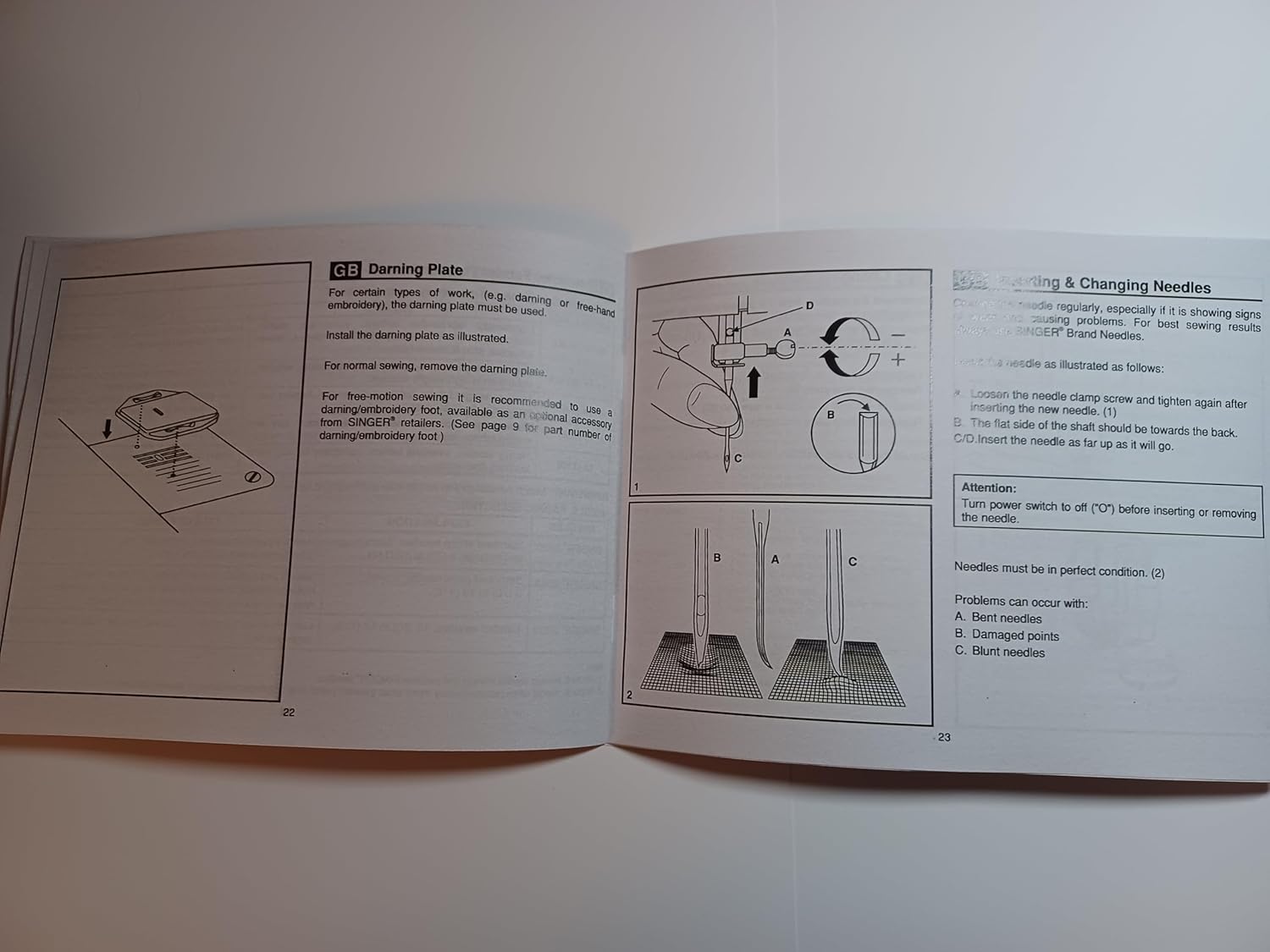
Image: Manual page illustrating procedures for sewing on buttons, installing the extension table, using the darning plate, and changing needles.
5. Nchọpụta nsogbu
If you encounter issues with your Singer 2250, refer to the following common problems and solutions:
- Stitches awụsara: Ensure the needle is inserted correctly, not bent, and is the appropriate size for the fabric and thread. Re-thread the machine.
- Na-agbaji eriri: Check for correct threading, proper tension, a bent or blunt needle, or burrs on the needle plate or bobbin case.
- Ịkwanye ákwà: Adjust tension settings, use the correct needle size, or ensure the presser foot pressure is appropriate for the fabric.
- Igwe Na-anaghị Enye Nri: Check if the feed dogs are raised. Ensure the presser foot is lowered.
- Ọrụ mkpọtụ: Clean and lubricate the machine as per maintenance instructions. Check for loose parts or a bent needle.
For persistent problems, contact an authorized Singer service center.
6. Nkọwapụta
| Akụkụ ngwaahịa | 8.5 x 5.5 x 0.1 sentimita asatọ |
| Ibu Ibu | 3 ounces |
| Nọmba nlereanya | SINGER 2250 Manual |
| Onye nrụpụta | TabSynth Design (for reproduction manual) |
| ASIN | B0G19M5M63 |
7. Akwụkwọ ikike na nkwado
This instruction manual is a reproduction for the Singer 2250 Sewing Machine. For warranty information regarding your Singer 2250 sewing machine, please refer to the original documentation provided with your machine or contact Singer customer support directly.
For support related to the operation or maintenance of your Singer 2250, please consult this manual. If further assistance is needed, contact an authorized Singer service center or your local Singer dealer.


