
1. Okwu mmalite
Welcome to the instruction manual for your Jectse WiFi 6 4G/5G CPE LTE Router. This document provides essential information on how to set up, operate, maintain, and troubleshoot your device. Please read this manual carefully before using the product to ensure optimal performance and longevity.
The Jectse WiFi 6 Router is designed to provide high-speed internet connectivity by converting a 4G LTE signal into a Wi-Fi hotspot, supporting multiple devices simultaneously. Its robust design with four antennas ensures stable and wide coverage.
2. Ngwaahịa gafereview
2.1 Atụmatụ
- 4G LTE Support: Compatible with multiple 4G LTE bands, including FDD B1, B3, B5, B7, B8, B20, TDD B38, B40, B41, and WCDMA B1, B5, B8. This ensures versatile connectivity across various networks.
- Ọsọ ọsọ: Experience 4G download speeds up to 150 Mbps and upload speeds up to 50 Mbps. Wireless transfer rates reach up to 300 Mbps for smooth streaming, gaming, and browsing.
- Ntọlite dị mfe: Simply insert a standard SIM card to transform the 4G LTE signal into a Wi-Fi hotspot. Enjoy immediate internet access with minimal configuration.
- High Device Capacity: Connect up to 32 devices simultaneously, including smartphones, tablets, and PCs, within a maximum coverage area of 300 square meters.
- 4-Antenna Design: Equipped with four antennas for enhanced signal coverage, faster network speeds, and stable connectivity throughout your space.
Ihe ngwugwu 2.2
Biko lelee igbe maka ihe ndị a:
- 1 x Jectse WiFi 6 4G/5G CPE LTE Router
- 1 x nkwụnye ọkụ
- 1 x eriri Ethernet
- 1 x eriri USB
- Akwụkwọ ntuziaka onye ọrụ 1 x (akwụkwọ a)

Image: Jectse WiFi 6 Router with its power adapter, Ethernet cable, and USB cable.
3. Nhazi ntuziaka
Follow these steps to set up your Jectse WiFi 6 Router:
- Wepụ router: Jiri nlezianya wepụ rawụta na ngwa niile na nkwakọ ngwaahịa.
- Fanye SIM kaadị: Locate the SIM card slot on the side of the router. Insert a standard-sized 4G LTE SIM card into the slot until it clicks into place. Ensure the SIM card is correctly oriented as indicated by the diagram near the slot.

Foto: Akụkụ view of the router highlighting the SIM card slot and USB/WAN/LAN ports.
- Njikọ Ike: Connect the power adapter to the router's power input port and then plug the adapter into a wall outlet. The router will power on automatically.
- Ike Na: Wait for the router's indicator lights to stabilize. The Wi-Fi and network status lights should indicate a successful connection.
- Optional: Wired Connection: If you prefer a wired connection, connect one end of the Ethernet cable to the WAN/LAN port on the router and the other end to your computer or another network device.
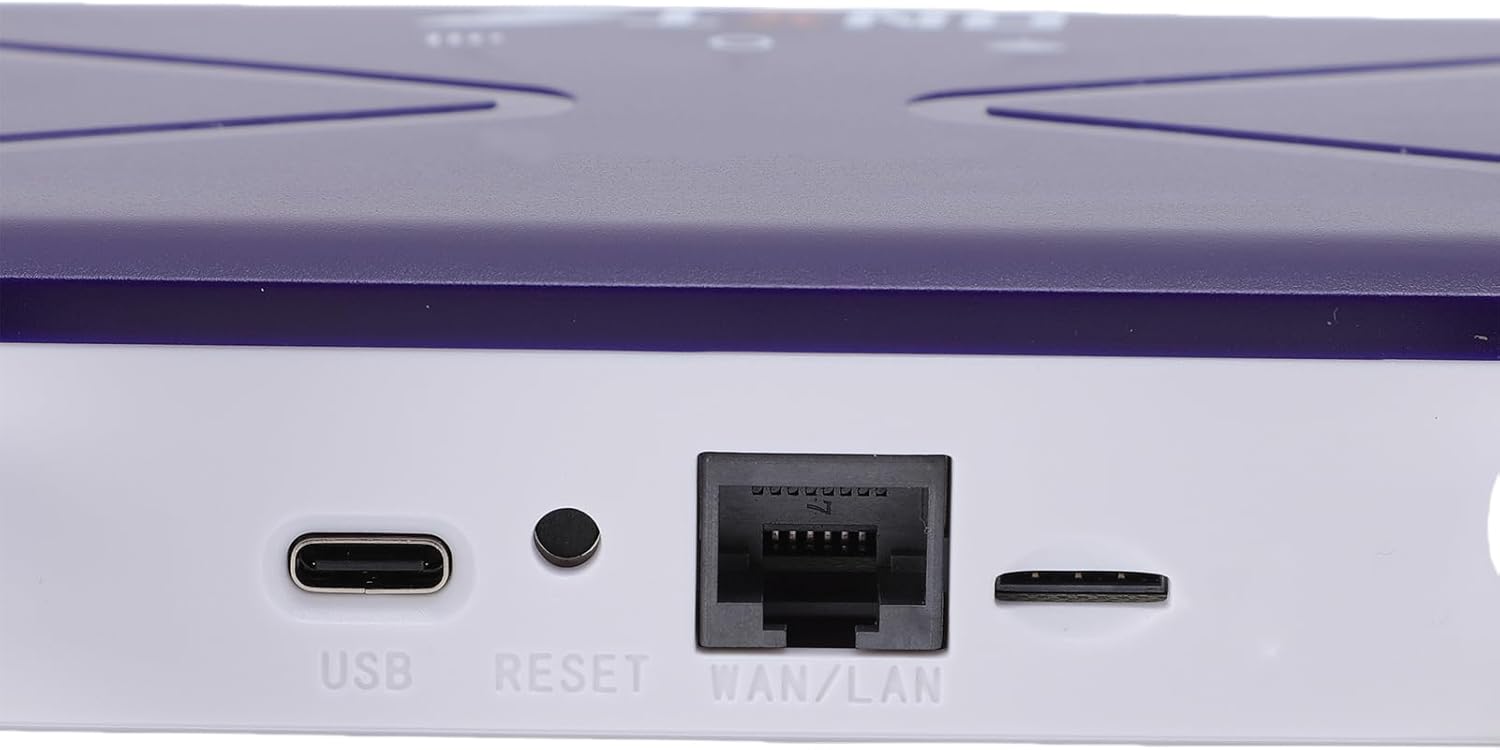
Image: Close-up of the router's rear panel showing the USB port, Reset button, and WAN/LAN port.
4. Ntuziaka ọrụ
4.1 Jikọọ na Wi-Fi
Iji jikọọ ngwaọrụ gị na netwọk Wi-Fi nke rawụta:
- Na ngwaọrụ gị (smartphone, mbadamba, laptọọpụ), mepee ntọala Wi-Fi.
- Chọọ maka available Wi-Fi networks. The router's default Wi-Fi network name (SSID) and password (Wi-Fi Key) are typically printed on a label on the bottom of the router.
- Select the router's SSID from the list.
- Enter the Wi-Fi Key when prompted. The default Wi-Fi Key is usually 1234567890.
- Once connected, your device should have internet access.

Image: Bottom label of the router displaying default Wi-Fi Key and Web adreesị IP.
4.2 Accessing Router Settings
To manage your router settings, such as changing the Wi-Fi name or password, or configuring advanced network options:
- Connect your device to the router's Wi-Fi network or via an Ethernet cable.
- Mepee a web ihe nchọgharị (dịka, Chrome, Firefox, Edge).
- In the address bar, type the default Web Adreesị IP: 192.168.100.1 wee pịa Tinye.
- You will be prompted for a username and password. Refer to the label on the bottom of your router for default login credentials.
- Once logged in, you can customize your network settings.
4.3 Network Coverage
The router provides Wi-Fi wireless coverage and supports network port wired output for various environments.

Image: Diagram showing the router's Wi-Fi coverage and wired output capabilities.
5. Nlekọta
To ensure the optimal performance and longevity of your router, consider the following maintenance tips:
- Nkwanye: Debe rawụta ahụ n'ebe etiti, pụọ na mgbochi, nnukwu ihe igwe, na ngwaọrụ eletrọnịkị ndị ọzọ nwere ike ibute ndabichi.
- Igwe ikuku: Ensure the router has adequate ventilation. Do not cover the ventilation holes or place it in an enclosed space.
- Nhicha: Gently clean the router's exterior with a soft, dry cloth. Avoid using liquid cleaners or aerosols.
- Mmelite femụwe: Lelee nke onye nrụpụta oge ụfọdụ website for firmware updates. Keeping your router's firmware up-to-date can improve performance, security, and add new features.
- okirikiri ike: If you experience minor network issues, try power cycling the router by unplugging it from the power outlet for 10-15 seconds and then plugging it back in.
6. Nchọpụta nsogbu
Ọ bụrụ na ị na-enwe nsogbu na rawụta gị, lee nsogbu na ngwọta ndị a na-ahụkarị:
- Enweghị njikọ ịntanetị:
- Lelee ma etinyere kaadị SIM nke ọma ma rụọ ọrụ.
- Verify that the router's network indicator lights are stable and show a connection.
- Ensure your SIM card has an active data plan.
- Try power cycling the router.
- Ọsọ Wi-Fi dị nwayọ:
- Gaa nso na rawụta iji kwalite ike mgbaama.
- Reduce the number of connected devices if many are actively using bandwidth.
- Lelee maka ndabichi sitere na ngwaọrụ eletrọnịkị ndị ọzọ.
- Malitegharịa ekwentị rawụta.
- Enweghị ike ijikọ na Wi-Fi:
- Ensure you are entering the correct Wi-Fi password (Wi-Fi Key).
- Check if the Wi-Fi function on the router is enabled (refer to router settings via web interface).
- Malitegharịa ma rawụta ahụ ma ngwaọrụ njikọ gị.
- Router anaghị aza:
- Perform a hard reset by pressing and holding the 'RESET' button (located near the WAN/LAN port) with a pin for about 10 seconds until the lights flash. This will restore the router to factory default settings, including the default Wi-Fi name and password.
7. Nkọwapụta
| Njirimara | Nkọwapụta |
|---|---|
| Nọmba nlereanya | Jectseak28xtdzqf |
| -Kpụrụ Wi-Fi | 802.11b/g/n |
| Ugboro ikuku | 2.4 GHz |
| 4G LTE Bands (FDD) | B1, B3, B5, B7, B8, B20 |
| 4G LTE Bands (TDD) | B38, B40, B41 |
| Ndị otu WCDMA | B1, B5, B8 |
| Ọsọ nbudata kacha | 150 Mbps |
| Ọsọ nbudata kacha | 50 Mbps |
| Wireless Transfer Rate | 300 Mbps |
| Oghere kaadi SIM | SIM ọkọlọtọ |
| Antenna | 4 |
| Firewall arụnyere n'ime ya | Ee |
| Ngwa ejikọrọ kacha | 32 |
| Mpaghara mkpuchi | Ihe ruru 300 m² |
| Onye nrụpụta | Jectse |
| Mba onye si | China |
8. Akwụkwọ ikike na nkwado
8.1 Ozi akwụkwọ ikike
This Jectse WiFi 6 4G/5G CPE LTE Router comes with a Akwụkwọ ikike onye nrụpụta afọ 2 site na ụbọchị ịzụrụ. Akwụkwọ ikike a na-ekpuchi ntụpọ dị na ngwa na arụ ọrụ n'okpuru ojiji nkịtị. Biko dowe ihe akaebe nke ịzụrụ ihe maka akwụkwọ ikike.
The warranty does not cover damage caused by misuse, accidents, unauthorized modifications, or external factors such as power surges.
8.2 Nkwado ndị ahịa
For technical assistance, troubleshooting beyond this manual, or warranty inquiries, please contact your retailer or the Jectse customer support team. Refer to the contact information provided with your purchase or visit the official Jectse websaịtị maka akụrụngwa nkwado.