
1. Okwu mmalite
Thank you for choosing the GKU D1000 3-Camera 4K Dash Cam. This device is designed to provide comprehensive vehicle surveillance with its advanced features, including 4K front recording, 2.5K interior recording, 1080P rear recording, enhanced night vision, 5GHz WiFi connectivity, GPS tracking, G-sensor emergency recording, and 24-hour parking monitoring. This manual will guide you through the setup, operation, and maintenance of your dash cam to ensure optimal performance and safety.
2. Ngwaahịa gafereview
2.1. Ihe ngwugwu
Biko lelee ngwungwu maka ihe ndị a:
- GKU D1000 Dash Cam Main Unit
- Rear Camera (6m cable)
- Cigarette Lighter Power Cable (3m)
- 64GB SD kaadị
- 3M Double-Sided Tape (x2)
- Electrostatic Protection Film (x2)
- Japanese User Manual
- Kpaa Mwepụ Ngwá Ọrụ
- Clips USB

Ọgụgụ 2.1: Ihe ngwugwu
2.2. Device Layout and Camera Views
The GKU D1000 features a compact design with integrated front and interior cameras, and a separate rear camera. The interior camera offers 360-degree rotation for flexible monitoring.

Figure 2.2: GKU D1000 Dash Cam Overview

Figure 2.3: 3-Camera Recording Modes

Figure 2.4: Adjustable Camera Angles
3. Nhazi
3.1. Nwụnye
- Clean the windshield area where the dash cam will be mounted.
- Apply the electrostatic protection film to the windshield, then attach the 3M double-sided tape to the dash cam mount and secure it to the film.
- Connect the power cable to the dash cam and route it along the windshield trim to the cigarette lighter socket.
- Install the rear camera on the rear windshield. Route its cable to the main unit and connect it.
- Adjust the front and interior camera angles to ensure optimal coverage.

Figure 3.1: Dash Cam Installation Diagram
3.2. Initial Power On and SD Card Insertion
Insert the provided 64GB SD card into the dash cam's SD card slot. The device will automatically power on and begin recording when connected to your vehicle's power supply. It is recommended to format the SD card upon first use and periodically thereafter to maintain optimal performance.
4. Ntuziaka ọrụ
4.1. Ndekọ Isi
Once powered on, the dash cam automatically starts continuous loop recording. Video files are saved in segments (e.g., 1, 3, or 5 minutes) and the oldest files are overwritten when the SD card is full, ensuring continuous recording.
4.2. Emergency Recording (Manual)
Press the emergency button on the dash cam to manually trigger emergency recording. This locks the current video segment, preventing it from being overwritten by loop recording. These files are stored in a dedicated folder.

Figure 4.1: Manual Emergency Recording
4.3. Voice Guidance
The dash cam provides voice prompts for key operations and status updates, such as "Recording started," "Emergency recording activated," or "SD card formatted." This allows you to operate the device without diverting your attention from the road.

Foto nke 4.2: Njirimara Nduzi Olu
5. Advanced Atụmatụ
5.1. Enhanced Night Vision (WDR & IR)
The GKU D1000 is equipped with an F/1.8 large aperture lens and a 6-layer glass lens for superior light capture. Wide Dynamic Range (WDR) technology balances exposure in high-contrast scenes, preventing overexposure and underexposure. The interior camera features 4 infrared (IR) lights, ensuring clear recording of the cabin even in complete darkness.
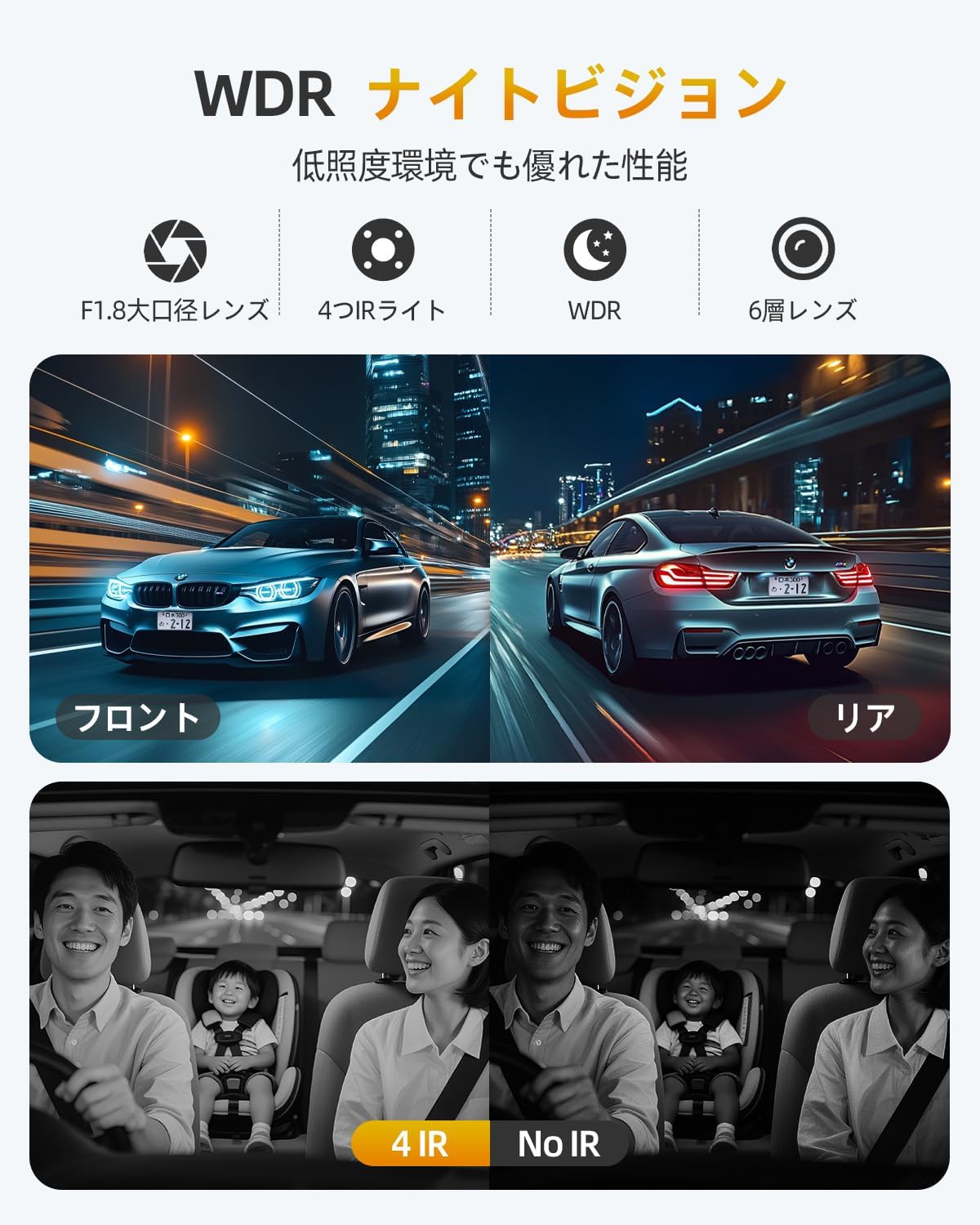
Figure 5.1: Night Vision Performance
5.2. 5GHz WiFi & Smartphone App Control
Connect your dash cam to your smartphone via 5GHz WiFi using the dedicated "GKU GO" app. This allows for high-speed transfer of video and photo files, real-time viewing, playback, and sharing. You can also manage dash cam settings directly from your phone.

Figure 5.2: 5GHz WiFi and App Control
5.3. GPS Route Tracking
The built-in GPS module accurately records your driving route, location, and speed. This data can be viewed n'akụkụ gị video footage using the "GKU GO" app or a dedicated PC player, providing crucial evidence in case of an incident.

Figure 5.3: GPS Route Tracking
5.4. Loop ndekọ
The dash cam continuously records video in a loop. When the memory card is full, the oldest unlocked files are automatically overwritten by new recordings. This ensures that you always have the most recent footage without manually managing storage. The device supports SD cards from 32GB up to 512GB (U3 specification recommended).

Foto nke 5.4: Ọrụ Ndekọ Mkpọchi
5.5. G-Sensor Emergency Recording (Automatic)
The built-in G-sensor detects sudden impacts or collisions. When an event is detected, the current video segment is automatically locked and saved to a protected folder, preventing it from being overwritten. The G-sensor sensitivity can be adjusted through the settings (6 levels: Off, Highest, High, Medium, Low, Lowest).

Figure 5.5: G-Sensor Activated Emergency Recording
5.6. Nlekota Ebe A Na-adọba Ụgbọala Awa 24
The GKU D1000 offers 24-hour parking monitoring to protect your vehicle while parked. This feature requires a dedicated ACC hardwire kit (sold separately, ASIN: B0F4MWB1Z3 / B0CD222SYB) to connect directly to your car's fuse box.
- Ndekọ agafeghị oge: Records continuously at a low frame rate, saving storage space and power.
- Impact Detection Recording: If an impact is detected while parked, the G-sensor triggers emergency recording to capture the event.

Foto nke 5.6: Nlekọta Ebe A Na-adọba Ụgbọala Awa 24
5.7. LED Signal Light Interference Countermeasures
The recording frame rate has been adjusted from the traditional 30fps to 27.5fps to prevent the "signal light disappearing phenomenon" caused by synchronization with LED traffic light cycles. This ensures clear recording of traffic signals, providing reliable evidence.
6. Nlekọta
6.1. Njikwa kaadị SD
Regularly format your SD card (at least once a month) to prevent data corruption and ensure smooth operation. Use a high-quality U3 speed class SD card for best performance. If the SD card is not recognized or shows errors, try formatting it or replacing it.
6.2. Nhicha
Gently wipe the camera lenses with a soft, lint-free cloth to remove dust or smudges. Avoid using abrasive cleaners or solvents that could damage the lens coating. Keep the dash cam unit clean and free from obstructions.
7. Nchọpụta nsogbu
| Nsogbu | Ihe nwere ike ime | Ngwọta |
|---|---|---|
| Igwefoto dash anaghị agbanye. | No power supply; faulty power cable; loose connection. | Check power connection; try a different power source; ensure cable is securely plugged in. |
| Nkwụsị ndekọ ma ọ bụ friza. | SD card error; low-quality SD card; full SD card. | Format the SD card; use a U3 speed class SD card; replace the SD card. |
| Ọdịdị vidiyo adịghị mma (nke na-acha anụnụ anụnụ, ọchịchịrị). | oghere ruru unyi; ntọala ezighi ezi; ọnọdụ ọkụ dị ala. | Clean the lens; adjust exposure settings; ensure WDR is enabled. |
| Nsogbu njikọ WiFi. | Incorrect password; out of range; app issues. | Verify WiFi password; move closer to the dash cam; restart the app and dash cam. |
| Igwefoto azụ anaghị egosi. | Loose cable connection; faulty rear camera. | Check the rear camera cable connection to the main unit. |
8. Nkọwapụta
| Njirimara | Nkọwapụta |
|---|---|
| Ụdị | GKU |
| Nọmba nlereanya | D1000 |
| Akụkụ ngwaahịa | 7D x 11W x 14H cm |
| Ibu ngwaahịa | 300 grams |
| Oke oghere | f/1.8 |
| Ndokwa | N'ihu, azụ |
| Batrị gụnyere | Ee |
| Included Memory Card Capacity | 64 GB |
| Akwụkwọ ikike | Afọ 1 |
9. Akwụkwọ ikike na nkwado
9.1. Akwụkwọ ikike Ozi
The GKU D1000 Dash Cam comes with a 1-year manufacturer's warranty from the date of purchase. This warranty covers defects in materials and workmanship under normal use. Please retain your proof of purchase for warranty claims.
9.2. Nkwado ndị ahịa
For technical assistance, troubleshooting, or warranty inquiries, please contact GKU customer support through the Amazon platform or visit the official GKU website. Our support team is available to help you with any questions or issues you may encounter.