
Pisichen 21.5INTS-White-NEW
Pisichen 21.5-Inch Touchscreen Monitor User Manual
Model: 21.5INTS-White-NEW
Okwu mmalite
This user manual provides comprehensive instructions for the setup, operation, maintenance, and troubleshooting of your Pisichen 21.5-Inch Touchscreen Monitor. Please read this manual thoroughly before using the product to ensure proper functionality and to prevent damage.
The Pisichen 21.5-inch touch monitor is designed to enhance your work efficiency and provide an interactive experience with its responsive 10-point capacitive touchscreen. It features a Full HD 1920x1080 resolution display, built-in speakers, and versatile connectivity options including HDMI, VGA, and USB for touch functionality.
Atụmatụ igodo
- Sensitive 10-Point Capacitive Touchscreen: Offers seamless and responsive interaction, allowing direct engagement with content and simultaneous multi-finger input.
- Stunning FHD 1080P Display: A 21.5-inch Full HD (1920x1080) resolution screen with a 1000:1 contrast ratio, 250cd/㎡ brightness, 170° viewing angle, and 60Hz refresh rate for clear and smooth visuals. Includes low-blue-light and eye-care technology.
- Ndakọrịta ngwaọrụ sara mbara: Equipped with USB2.0 (for touch), HDMI, VGA, and DC ports for easy connection to PCs, laptops, PS3/4, and gaming consoles.
- Ụdị ngosi ọtụtụ: Supports duplicate, extend, and second-screen modes to enhance productivity and workspace.
- Built-in Speakers and VESA Mounting: Integrated speakers provide audio, and the 75x75mm VESA mount allows for flexible installation options.
Ihe ngwugwu
Biko hụ na ihe niile dị na ngwugwu ahụ tupu ịmalite nhazi ahụ.

The package includes the Pisichen 21.5-inch touchscreen monitor, a user manual, an HDMI cable, a USB cable, and a power adapter, ensuring it is ready for immediate use.
- Pisichen 21.5-Inch Touchscreen Monitor
- Ihe nkwụnye ọkụ
- HDMI USB
- USB Cable (for touch function)
- Akwụkwọ ntuziaka onye ọrụ
Ntuziaka nhazi
1. Ijikọ Monitor
The monitor offers various connection options to suit your needs. Ensure all connections are secure before powering on the device.

Zuru ezu view of the monitor's input/output ports, including HDMI, VGA, headphone, DC power, and USB 2.0 touch ports.
- Njikọ ike: Connect the provided power adapter to the DC power port on the monitor and then plug it into a wall outlet.
- Njikọ vidiyo (HDMI): Use the HDMI cable to connect the monitor's HDMI port to the HDMI output port on your computer, laptop, or gaming console.
- Njikọ vidiyo (VGA): Alternatively, use a VGA cable to connect the monitor's VGA port to the VGA output port on your computer or laptop.
- Touch Function Connection: To enable the touch function, connect the included USB cable from the monitor's USB 2.0 touch port to an available USB port on your computer. This step is crucial for touch signal transmission.
- Mbupụ ọdịyo (Nhọrọ): If you prefer external audio, you can connect headphones or external speakers to the headphone jack. The monitor also has built-in speakers.
2. Nhọrọ nrịgo
The Pisichen monitor supports both desktop placement and VESA wall mounting for flexible setup.
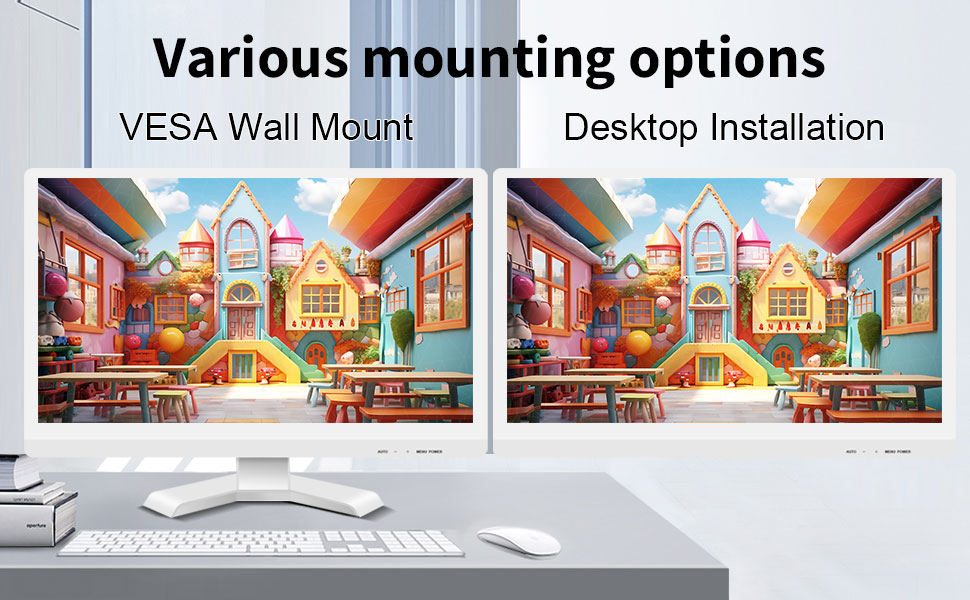
The monitor can be set up on a desktop stand or mounted on a wall using a VESA compatible bracket.
- Nwụnye Desktop: Attach the provided stand to the monitor base and place it on a stable, flat surface.
- Ugwu mgbidi VESA: The monitor features a 75x75mm VESA mounting pattern. Use a compatible VESA bracket (not included) to mount the monitor on a wall or an adjustable arm. Ensure the mount can support the monitor's weight (9.88 pounds).

N'azụ view of the monitor highlighting the VESA 75x75mm mounting pattern and overall dimensions.
Ntuziaka ọrụ
1. Ịgbanye / gbanyụọ
Locate the power button on the monitor. Press it to turn the monitor on or off. The power indicator light will illuminate when the monitor is on.
2. Using the Touchscreen Function
Once the USB cable is connected to your computer, the 10-point capacitive touch function will be active. You can interact with the screen using your fingers or a passive capacitive stylus.

The monitor supports direct touch interaction for intuitive control.
- Otu aka: Dakọtara na ịpị òké.
- Kpatụ ma jide: Ọ dabara na ịpị aka nri.
- Dọrọ: Move items by touching and dragging.
- Tụọ-gaa-mbugharị: Jiri mkpịsị aka abụọ mee ka ihe dị n'ime dịkwuo elu ma ọ bụ dị elu.
- Ọtụtụ mmetụ: The monitor supports up to 10 simultaneous touch points, enabling collaborative work or complex gestures.

The 10-point multi-touch feature allows for multiple users or complex interactions simultaneously.
Ihe ndetu dị mkpa: The touch functionality is disabled on Mac OS, iPad OS, and iOS. This monitor only supports passive capacitive styluses.
3. Ụdị ngosi
Ihe nlele ahụ na-akwado ụdị ngosipụta dị iche iche mgbe ejikọtara ya na kọmputa:
- Ụdị oyiri: Displays the same content on both your primary screen and the Pisichen monitor.
- Gbatịkwuo ọnọdụ: Extends your desktop across both screens, providing more workspace.
- Second Screen Only Mode: Displays content only on the Pisichen monitor, turning off your primary screen.
You can typically switch between these modes through your operating system's display settings (e.g., Windows Display Settings).
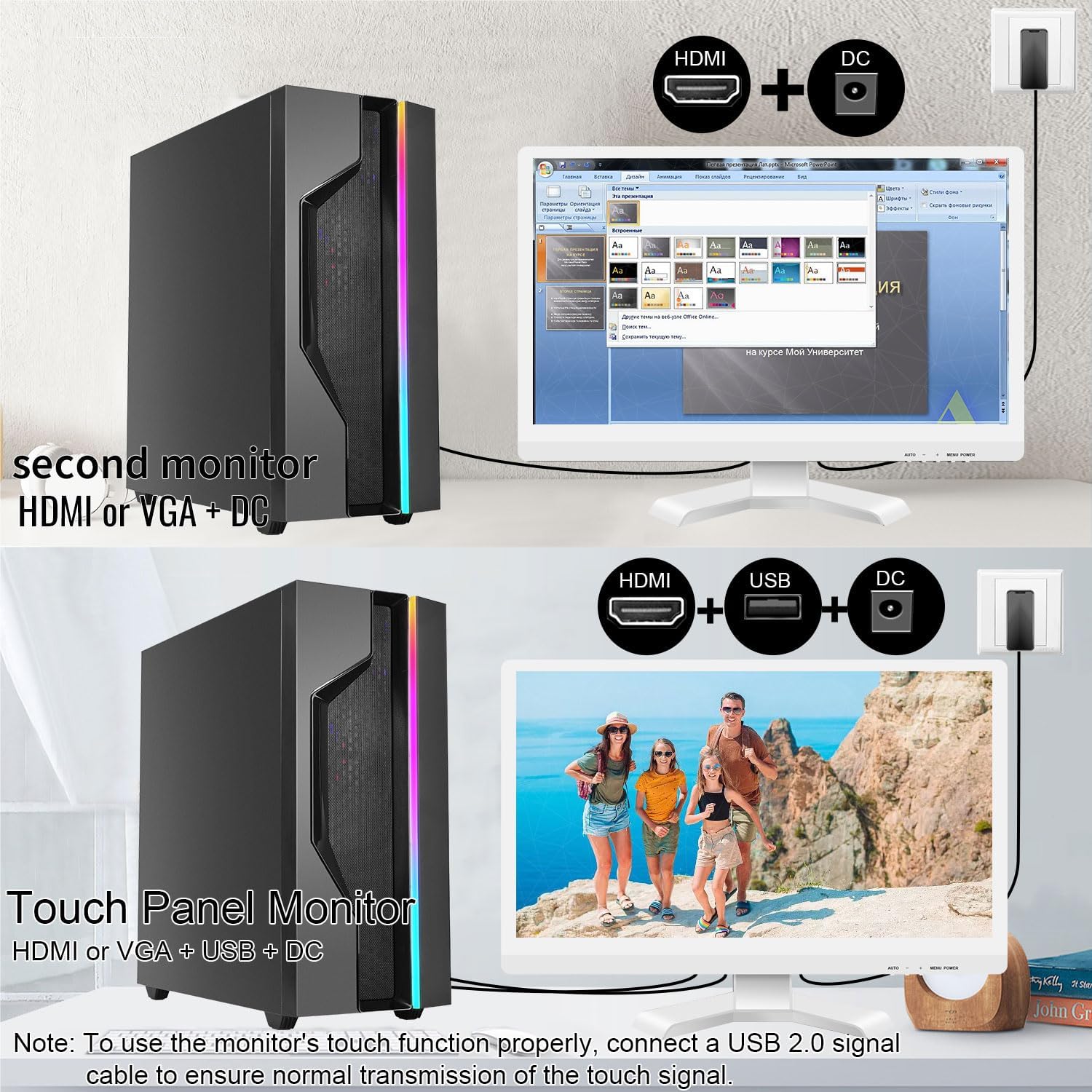
Illustrations of connecting the monitor as a secondary display or as a touch-enabled display.
4. Ngosipụta ihuenyo (OSD) NchNhr
The monitor features an OSD menu for adjusting display settings. Use the buttons located on the monitor's frame (usually on the bottom right) to navigate and select options.
- Bọtịnụ menu: Mepee menu OSD.
- Bọtịnụ elu/ala: Gaa na nhọrọ menu.
- Enter/Select Button: Na-akwado nhọrọ ma ọ bụ tinye obere menu.
- Wepụ bọtịnụ: Na-apụ na menu dị ugbu a ma ọ bụ OSD.
Common OSD settings include brightness, contrast, color temperature, input source selection, and aspect ratio.
Nlekọta na nlekọta
- Na-ehicha ihuenyo:
Always power off the monitor and unplug it before cleaning. Use a soft, lint-free cloth lightly dampened with water or a non-abrasive, monitor-specific cleaning solution. Do not spray liquid directly onto the screen. Avoid using alcohol, ammonia, or abrasive cleaners, as they can damage the screen surface.
- Na-ehicha Casing:
Hichapụ ihe nleba anya casing with a soft, dry cloth. If necessary, a slightly damp cloth can be used, but ensure no moisture enters the vents or ports.
- Nchekwa:
When not in use for extended periods, store the monitor in a cool, dry place, away from direct sunlight and extreme temperatures. If possible, use the original packaging for protection.
- Igwe ikuku:
Ensure the monitor's ventilation openings are not blocked. Proper airflow is essential to prevent overheating.
- Ijikwa:
Handle the monitor with care. Avoid dropping it or subjecting it to strong impacts. Do not place heavy objects on top of the monitor.
Nchọpụta nsogbu
| Nsogbu | Ihe nwere ike ime | Ngwọta |
|---|---|---|
| Enweghị onyonyo na ihuenyo |
|
|
| Ihuenyo mmetụ anaghị aza |
|
|
| Onyonyo na-agbagọ ma ọ bụ agbagọ |
|
|
| Enweghị ụda sitere na igwe okwu arụnyere arụnyere |
|
|
Nkọwapụta
| Nọmba nlereanya | 21.5INTS-White-NEW |
| Nha ihuenyo | 21.5 sentimita asatọ |
| Mkpebi | Pikselụ 1920 x 1080 (FHD 1080p) |
| Akụkụ akụkụ | 16:9 |
| Icha ọkụ | 250 Candela (cd/㎡) |
| Ọnụọgụ ọdịiche | 1000:1 |
| Viewna n'akuku | 170° |
| Ọnụego ume ọhụrụ | 60Hz |
| Teknụzụ Aka | 10-Point Capacitive Touch |
| Ntinye ọdụ ụgbọ mmiri | HDMI, VGA, USB 2.0 (for touch), DC Power |
| Audio | Built-in Speakers, Headphone Jack |
| VESA Ugwu ndakọrịta | 75x75mm |
| Akụkụ ngwaahịa (L x W x H) | 0.78 x 20.4 x 14.9 sentimita asatọ |
| Ibu Ibu | 9.88 pound |
| Onye nrụpụta | Shenzhen Konowa Electronics Co., LTD |
| Mba onye si | China |
Akwụkwọ ikike na nkwado
For warranty information and technical support, please refer to the official Pisichen websaịtị ma ọ bụ kpọtụrụ ndị ahịa ha ozugbo. A na-enyekarị nkọwapụta na nkwakọ ngwaahịa ma ọ bụ ọwa nkwado onye nrụpụta.
Ị nwere ike ịga na Pisichen Store on Amazon for more product information and potential support contacts.
Ask a question about this manual
Ask about setup, troubleshooting, compatibility, parts, safety, or missing instructions. Manuals+ will review the question and use this page’s manual context to help answer it.