
KERUI M523
KERUI Wireless Doorbell (Model M523) User Manual
Model: M523 | Brand: KERUI
Okwu mmalite
Thank you for choosing the KERUI Wireless Doorbell. This system is designed to provide a reliable and convenient notification solution for your home or office. Featuring an IP55 waterproof push button, a plug-in receiver with 32 selectable chimes, 4 adjustable volume levels, and a long operating range, this doorbell ensures you never miss a visitor. Please read this manual carefully before installation and use to ensure optimal performance and longevity of your device.
Ihe ngwugwu
Chọpụta na ihe niile dị na ngwugwu gị:
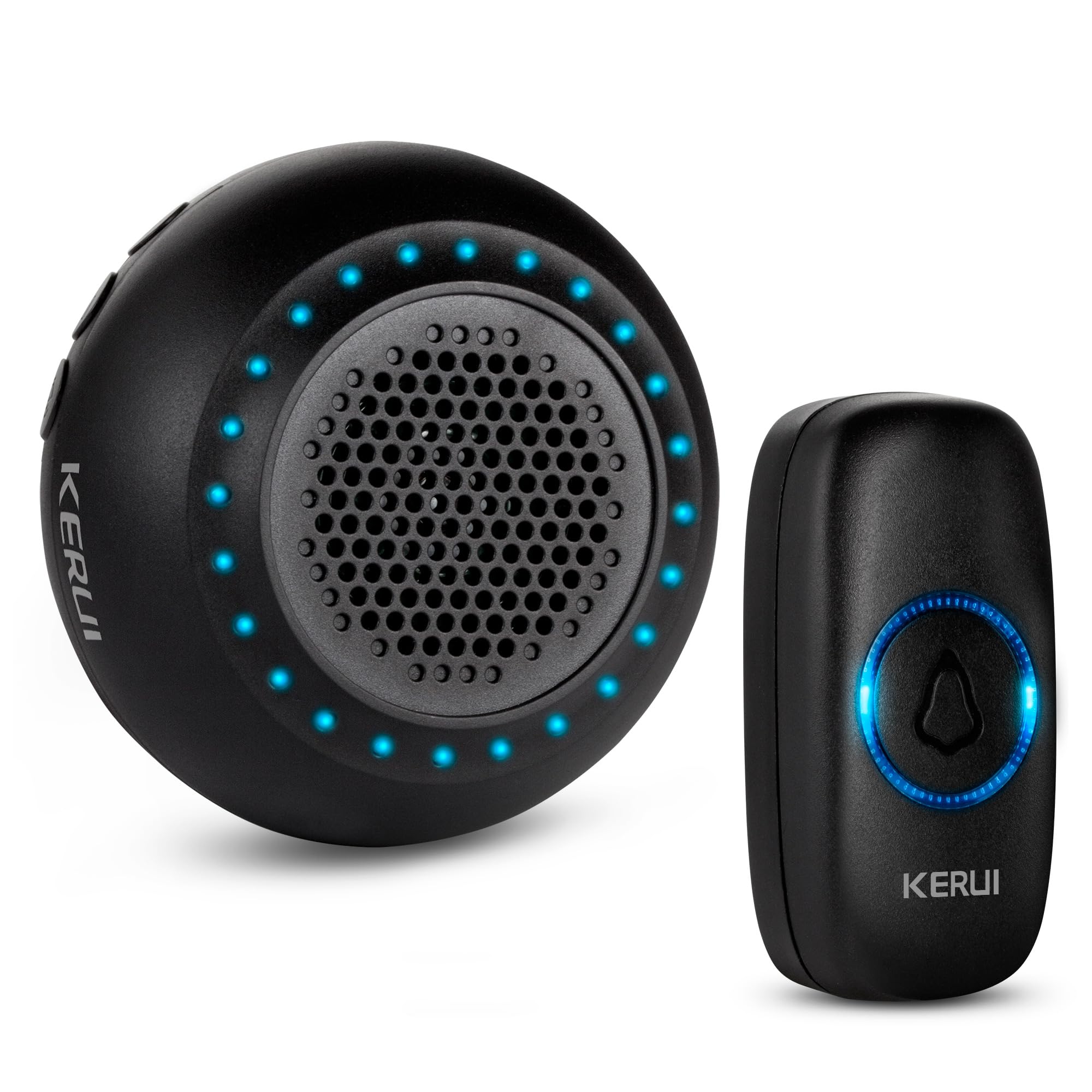
- 1 x Doorbell Receiver (Black)
- 1 x Push Button (Black)
- Mounting Accessories for Push Button (screws, anchors, adhesive tape)
- 1 x Akwụkwọ ntuziaka onye ọrụ
Ngwaahịa gafereview
Familiarize yourself with the components and features of your KERUI Wireless Doorbell system.
Video 1: KERUI Wireless Doorbell Product Overview. Vidiyo a na-enye nkọwa zuru okeview of the KERUI wireless doorbell, showcasing its features and components.


Ntuziaka nhazi
1. Push Button Installation
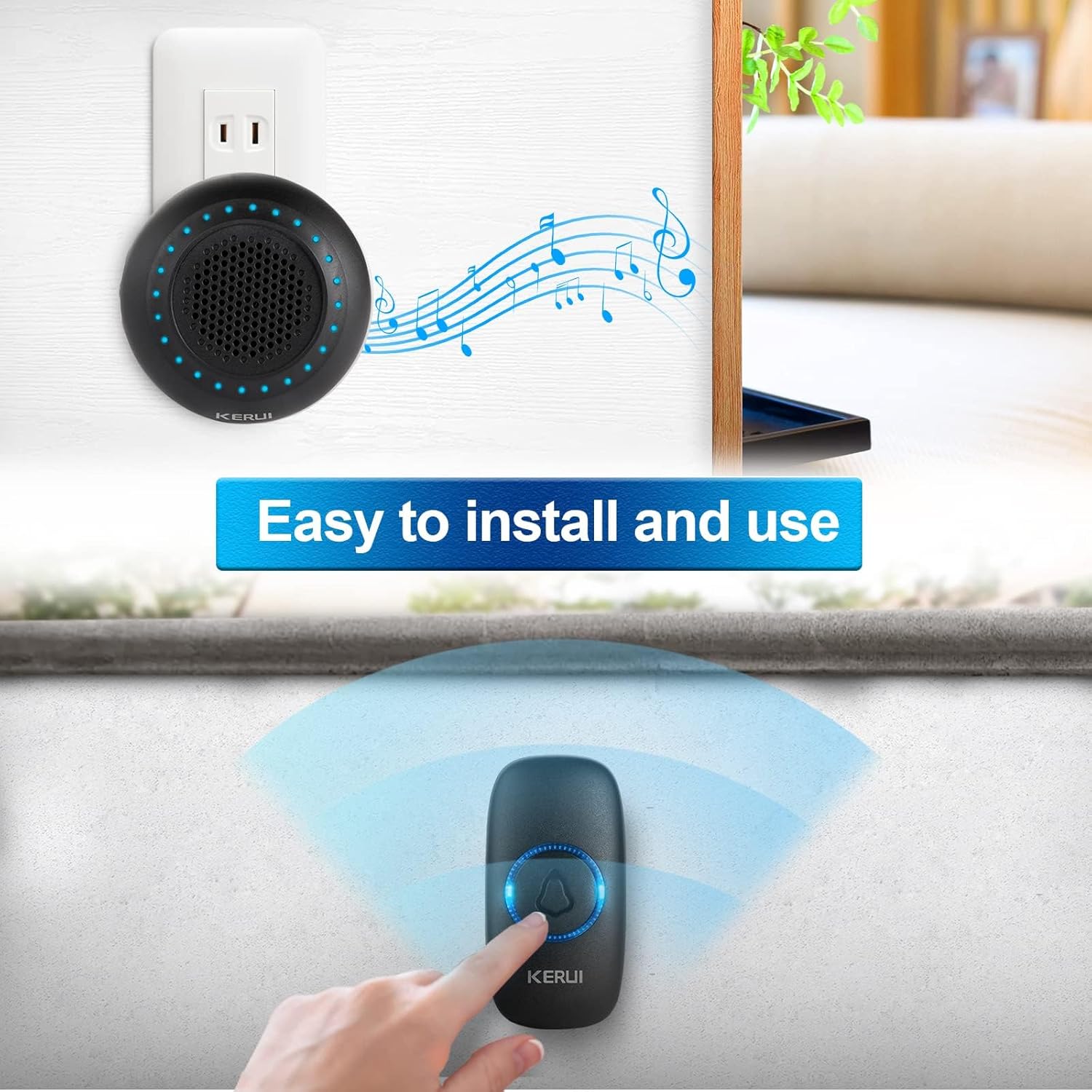
The push button can be installed using either the provided adhesive tape or screws.
- Choose a suitable location for the push button, typically near your door.
- Using Adhesive Tape: Clean the surface thoroughly. Peel off one side of the double-sided adhesive tape and stick it to the back of the push button. Peel off the other side and firmly press the button onto the desired surface for 30 seconds.
- Iji skru: Open the back cover of the push button (refer to the Maintenance section for battery replacement for guidance on opening). Mark the screw holes on the wall. Drill pilot holes if necessary and insert the wall anchors. Secure the back cover to the wall with the screws, then reattach the front part of the push button.
2. Receiver Setup
Plug the doorbell receiver into any standard electrical outlet within range of the push button. The receiver will light up and emit a default chime.

3. Pairing the Devices
Your doorbell kit is pre-paired at the factory. If re-pairing is needed or you add new push buttons, follow these steps:
- Tinye ihe nnata n'ime oghere ọkụ.
- Pịa ogologo bọtịnụ ntọala (gear icon) on the receiver for approximately 5 seconds until the LED indicators flash and the receiver beeps once. This indicates it has entered pairing mode.
- Within 8 seconds, short press the push button. The receiver will emit two "Ding" sounds and the LED light will flash, confirming successful pairing.
- Mkpirisi pịa bọtịnụ ntọala again to exit pairing mode. The LED indicators will turn off.
Video 2: KERUI Wireless Doorbell Pairing Operation. This video demonstrates the step-by-step process of pairing the push button with the receiver.
Video 3: How to Pair the Doorbell. A visual guide on how to successfully pair your doorbell components.
Ntuziaka ọrụ
1. Changing the Ringtone
The receiver offers 32 different melodies. To select a ringtone:
- Pịa Music Select Button (musical note icon) on the receiver to cycle through the available melodies.
- Once you hear a melody you like, stop pressing the button. The selected melody will be saved automatically.
- If you wish to assign a specific ringtone to a particular push button, enter pairing mode (as described in the Setup section), select your desired ringtone, then press the push button to confirm.
Video 4: How to Change Ringtone and Re-pair Doorbell. This video illustrates how to change the ringtone and re-pair the doorbell if needed.
Video 5: How to Choose Your Favorite Ringtone. A visual guide on selecting and setting your preferred ringtone.
2. Na-agbanwe olu
The receiver has 4 adjustable volume levels, including a mute mode. Press the Bọtịnụ njikwa olu (speaker icon) on the receiver repeatedly to cycle through the volume levels until you reach your desired setting.
3. Ogbi na ọnọdụ
To activate mute mode, press the Bọtịnụ njikwa olu until the volume is set to the lowest level or the mute indicator is shown (if applicable). In mute mode, the receiver's LED flash will still activate when the push button is pressed, providing a visual alert without sound.
Nlekọta
1. Push Button Battery Replacement
The push button is powered by a CR2032 Lithium Ion battery (included). When the button's LED indicator no longer lights up or the signal range decreases significantly, it's time to replace the battery.
- Carefully pry open the back cover of the push button using a small flat-head screwdriver or the provided tool, inserting it into the notch at the bottom.
- Wepu batrị CR2032 ochie.
- Tinye batrị CR2032 ọhụrụ, na-ahụ na akụkụ dị mma (+) na-eche ihu elu.
- Snap the back cover firmly back into place.
Video 6: How to Replace the Battery. This video provides a visual guide on replacing the battery in the push button transmitter.
Mara: Tụfuo batrị ochie nke ọma dịka iwu obodo siri dị.
Nchọpụta nsogbu
| Nsogbu | Ihe nwere ike ime | Ngwọta |
|---|---|---|
| Mgbịrịgba ọnụ ụzọ anaghị akụ. |
|
|
| Ogologo ọrụ dị mkpụmkpụ. |
|
|
| Receiver rings randomly. |
|
|
Nkọwapụta
- Akara: KERUI
- Nọmba nlereanya: M523
- Ibu ihe: 3.52 ounces
- Akụkụ ngwaahịa: 4 x 3 x 3 sentimita asatọ
- Pịa bọtịnụ batrị: 1 x Lithium Ion (CR2032)
- Ọnụọgụ enweghị mmiri: IP55 (Bọtịnụ Pịa)
- Oke arụ ọrụ: Up to 1000ft (in open area)
- Chimes: 32 egwu enwere ike họrọ
- Ọkwa olu: 4 adjustable levels (including mute)
- Ngwa gụnyere: 1 Doorbell Receiver, 1 Push Button
Akwụkwọ ikike na nkwado
For warranty information or technical support, please refer to the contact details provided with your product packaging or visit the official KERUI websaịtị. Debe nnata nzụta gị ka ihe akaebe nke ịzụrụ.
Ask a question about this manual
Ask about setup, troubleshooting, compatibility, parts, safety, or missing instructions. Manuals+ will review the question and use this page’s manual context to help answer it.