
1. Okwu mmalite
The FORA Diamond GD50 DM10 Blood Glucose Test Strips are designed for self-testing of blood glucose levels using the FORA Diamond GD50 Blood Glucose Meter. These strips are intended for na vitro diagnostic use only, meaning for testing outside the body. Regular monitoring of blood glucose is crucial for effective diabetes management. This manual provides essential information for the safe and accurate use of these test strips.
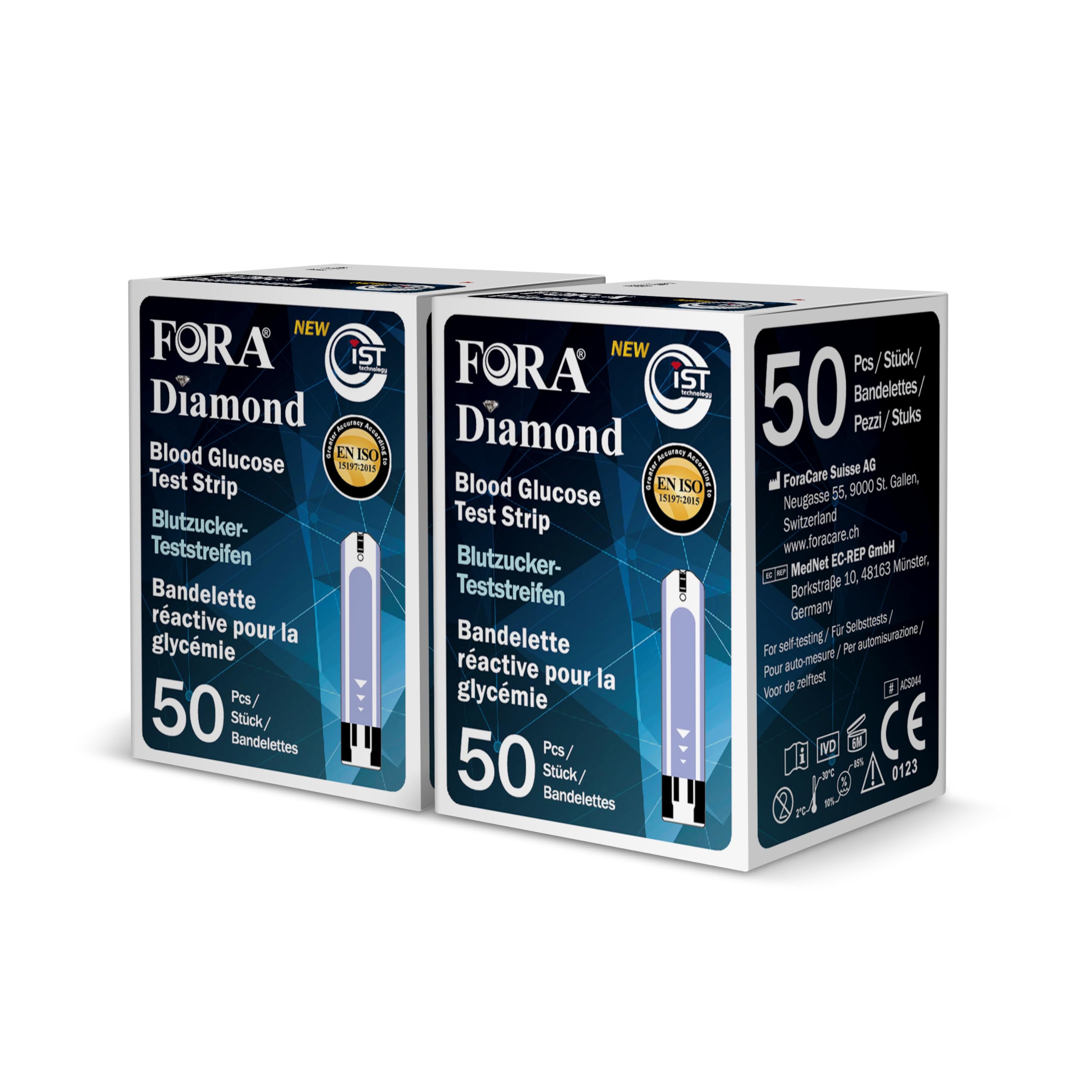
Image 1.1: Packaging for FORA Diamond GD50 DM10 Blood Glucose Test Strips, containing 100 strips.
2. Akụrụngwa Ngwaahịa
- Nsonaazụ ngwa ngwa: Provides blood glucose readings in just 5 seconds.
- Advanced Enzyme Technology: Utilizes GDH-FAD enzyme for accurate measurements.
- Obere Sampna olu: Requires only 0.5 µl of blood for testing.
- Oke nha nha: Capable of measuring blood glucose from 20 to 600 mg/dL.
- Versatile Sampna Ụdị: Can be used with both capillary and venous blood samples.
3. Ozi nchekwa dị mkpa
Please read all instructions carefully before using the FORA Diamond GD50 DM10 Blood Glucose Test Strips. Failure to follow instructions may lead to inaccurate results.
- For In Vitro Diagnostic Use Only: Do not use for diagnosis of diabetes or screening of newborns.
- Ejighachila: Test strips are for single use only. Reusing strips can lead to inaccurate results and potential infection.
- Debe ka ụmụaka na-enwetaghị: Test strips and lancets can be a choking hazard.
- Kpọtụrụ ọkachamara nlekọta ahụike: Always consult your doctor or healthcare professional before making any medical decisions based on your test results.
- Ụbọchị mmebi: Do not use test strips past their expiration date.
4. Nhazi na Nkwadebe
Before performing a blood glucose test, ensure you have all necessary items:
- FORA Diamond GD50 Blood Glucose Meter (sold separately)
- FORA Diamond GD50 DM10 Blood Glucose Test Strips
- Ngwaọrụ ịla azụ
- Sterile lancets
- Alcohol wipes (optional)
Nzọụkwụ Nkwadebe:
- Wash your hands thoroughly with soap and warm water, then dry them completely.
- Remove one test strip from the vial. Immediately close the vial cap tightly to protect the remaining strips from moisture.
- Insert the test strip into the meter's test strip port. The meter will turn on automatically.
- Prepare your lancing device with a new, sterile lancet according to its instructions.

Foto 4.1: Ọpụample of FORA blood glucose meters and compatible test strips.

Image 4.2: Various types of FORA lancets and pen needles used for obtaining blood samples.
5. Operating Instructions: Performing a Blood Glucose Test
- Nweta ọbara SampLe: Use the lancing device to prick the side of your fingertip. Gently squeeze your finger until a small drop of blood forms.
- Apply Blood to Strip: Touch the absorbent tip of the test strip to the blood drop. The blood will be drawn into the strip automatically. Do not smear the blood.
- Wait for Result: The meter will begin counting down. After 5 seconds, your blood glucose result will appear on the display.
- Record Result: Note down your blood glucose reading, date, and time.
- Tụfuo nke ọma: Carefully remove the used test strip and lancet from the meter and lancing device. Dispose of them in a sharps container or according to local regulations.

Image 5.1: A FORA blood glucose meter displaying a blood glucose reading after a test.
6. Understanding Your Results
Your blood glucose meter provides a numerical value representing your current blood glucose level. It is important to understand what these numbers mean for your health.
- Target Ranges: Discuss your personal target blood glucose ranges with your healthcare provider. These ranges can vary based on individual health conditions, age, and other factors.
- High or Low Readings: If your results are consistently outside your target range, or if you experience symptoms of high or low blood sugar, contact your healthcare provider immediately.
- Usoro: Regularly tracking your blood glucose levels can help you and your doctor identify patterns and adjust your diabetes management plan as needed.
7. Nchekwa na njikwa
Proper storage and handling of your test strips are essential for accurate results.
- Store in Original Vial: Always keep test strips in their original vial with the cap tightly closed. Do not transfer strips to another container.
- Okpomọkụ na iru mmiri: Store at room temperature, between 4°C and 30°C (39°F and 86°F), and at a relative humidity between 10% and 90%. Avoid direct sunlight, heat, and moisture. Do not refrigerate or freeze.
- Ụbọchị mmebi: Use test strips before the expiration date printed on the vial label and carton.
- Vial Open Date: Once the vial is opened, use the test strips within 6 months. Write the opening date on the vial label to keep track.
8. Nlekọta na mkpofu
Nlekọta mita:
Keep your FORA Diamond GD50 Blood Glucose Meter clean by wiping its exterior with a soft, damp cloth. Do not immerse the meter in water or use harsh cleaning agents.
mkpofu:
Used test strips and lancets are considered biohazardous waste. Dispose of them immediately after use in a puncture-resistant sharps container. Follow your local regulations for proper disposal of sharps containers.
9. Nchọpụta nsogbu
If you encounter issues during testing, refer to the following common problems and solutions:
| Nsogbu | Ihe nwere ike ime | Ngwọta |
|---|---|---|
| Mita anaghị agba ọkụ | Dead batteries, incorrect strip insertion | Replace batteries, reinsert strip correctly |
| Error message (e.g., "Er1") | Ọbara ezughi oke sample, damaged strip, temperature out of range | Repeat test with new strip and sufficient blood, ensure proper temperature |
| Nsonaazụ na-ekwekọghị ekwekọ | Expired strips, improper storage, dirty meter, technique error | Check strip expiration, ensure proper storage, clean meter, review testing steps |
If problems persist, refer to your FORA Diamond GD50 Blood Glucose Meter's user manual or contact FORA customer support.
10. Nkọwapụta
- Akụkụ ngwaahịa (L x W x H): 16 x 11.5 x 4.5 cm (packaging)
- Arọ ngwaahịa: 120 grams (packaging)
- Onye nrụpụta: Ụgwọ nke ụlọ ọrụ ForaCare Suisse AG
- Ntuziaka onye nrụpụta: 810-4365100-006
- Akara: N'èzí
- Ọnụọgụ nke Mpekere: 100 ibe ule
- Atụmatụ pụrụ iche: Self-test, Easy to use, Disposable, Rapid test
- Ihe eji eme ihe maka ngwaahịa: Blood glucose testing
- Diagnostic Test Sampna Ụdị: Blood (capillary or venous)
- Enzyme: GDH-FAD
- Ọbara Sampna olu: 0.5 µl
- Oge nledo: 5 sekọnd
- Oke nha: 20 ~ 600 mg/dL
11. Akwụkwọ ikike na nkwado ndị ahịa
For information regarding the warranty of your FORA Diamond GD50 Blood Glucose Meter or any inquiries about the FORA Diamond GD50 DM10 Blood Glucose Test Strips, please refer to the warranty card included with your meter or contact FORA customer service directly. Contact details can typically be found on the product packaging or the official FORA websaịtị.